Is Flat Tire Part of Self drive Experience in Tanzania: The Sound Every Self-Driver Knows
Is Flat Tire Part of Self drive Experience in Tanzania, Why Every Great Self-Drive Safari in Tanzania Comes With a Little Dust, a Little Grit, and Sometimes, a Flat Tire
There is a particular sound that every self-drive traveler in Tanzania eventually comes to know: a soft thud-thud-thud rising from beneath the vehicle, growing louder with each rotation of the wheel, until there is no denying it. A tire has gone flat. It might happen on the rutted tracks of Tarangire, the black cotton soil of the southern Serengeti after rain, or a lonely stretch of gravel road between Karatu and Mto wa Mbu. Wherever it happens, the reaction of a seasoned overlander is rarely panic. It is, more often, a shrug, a smile, and the words every guidebook forgets to print: the flat tire is part of the experience.
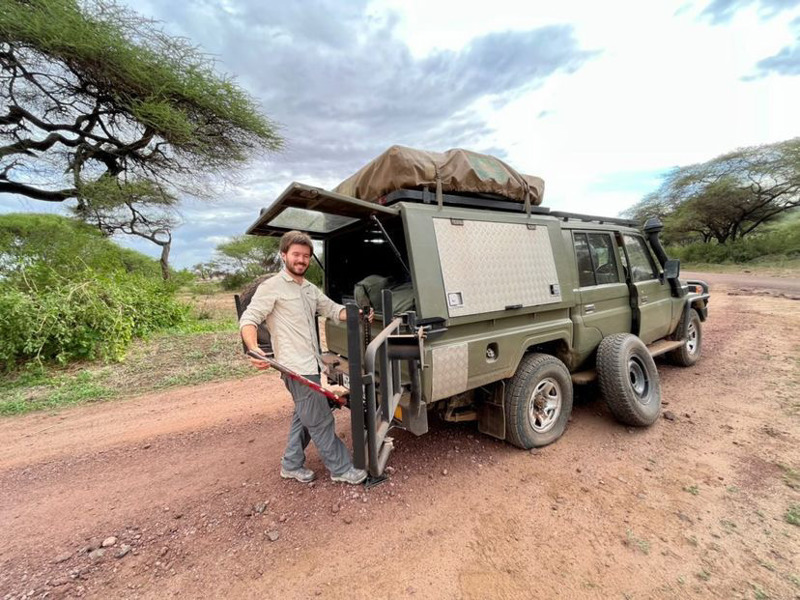
This article is written for travelers planning a self-drive safari in Tanzania who want the full picture, not just the postcard version. Renting a 4×4, packing camping gear, and setting off into the Serengeti or Ngorongoro Conservation Area is one of the most rewarding ways to experience East Africa. But the roads that make the adventure so memorable, unpaved, sunbaked, rain-carved, and remote, are also the roads that puncture tires. Understanding this upfront, and preparing for it properly, is what separates a stressful breakdown from a genuinely good story told over dinner at camp that night.
Why Flat Tires Are So Common on Tanzania’s Safari Roads
Unlike a highway drive in Europe or North America, a self-drive route through Tanzania’s national parks rarely touches tarmac. Roads inside Serengeti National Park, Tarangire National Park, Ruaha, and Nyerere (formerly Selous) are almost entirely murram, gravel, or compacted earth tracks maintained by park authorities with limited resources. Add in the country’s dramatic seasonal shifts between bone-dry dust and heavy rain, and the surface conditions change constantly, sometimes within the same drive.
A number of specific factors make punctures and blowouts more likely on these routes:
- Sharp acacia thorns, some over five centimeters long, that litter the roadside where vehicles pull over to view wildlife.
- Sun-baked ruts and eroded gullies that turn hard and jagged during the dry season, from June through October.
- Volcanic rock fragments, particularly around the Ngorongoro Highlands and Crater rim road.
- Loose gravel and washboard corrugations that gradually wear down sidewalls on long stretches like the Serengeti-to-Ngorongoro road.
- Overloaded vehicles, common when self-drivers pack extra fuel, water, and camping equipment beyond the tire’s rated capacity.
- Old or under-inflated tires on rental vehicles that have seen years of safari duty.
None of this is a reason to avoid self-driving in Tanzania. It is simply the terrain doing exactly what makes it so spectacular for wildlife viewing: raw, undeveloped, and far from the manicured infrastructure of a typical road trip. The dirt that punctures a tire is the same dirt that carries lion prints, elephant trails, and the tracks of a thousand migrating wildebeest.
| Local Insight
Tanzanian safari guides often say a self-drive trip “isn’t complete” until you’ve changed at least one tire. It has become something of a rite of passage among overlanders on the northern circuit, a shared experience swapped over campfire stories at Simba Campsite or Twiga Lodge. |
Reframing the Flat Tire: From Setback to Story
Ask any experienced overlander what they remember most from a Tanzania self-drive trip, and it is rarely the smooth, uneventful stretches. It is the afternoon the Land Cruiser sank into black cotton soil near Ndutu, the flat tire changed under an acacia tree while a herd of giraffe watched from a distance, or the roadside assistance from a passing safari guide who stopped, without being asked, to help. These moments become part of the narrative of the trip, proof that the journey was real, unscripted, and earned rather than packaged.
Reframing a flat tire as part of the adventure, rather than a failure of planning, changes how travelers experience the entire trip. It shifts the mindset from anxious vigilance to relaxed preparedness. Travelers who arrive expecting perfect roads and zero interruptions often find the reality jarring. Travelers who arrive expecting the occasional puncture, and who are equipped to handle it, find that a flat tire becomes a fifteen to thirty-minute pause, not a crisis.
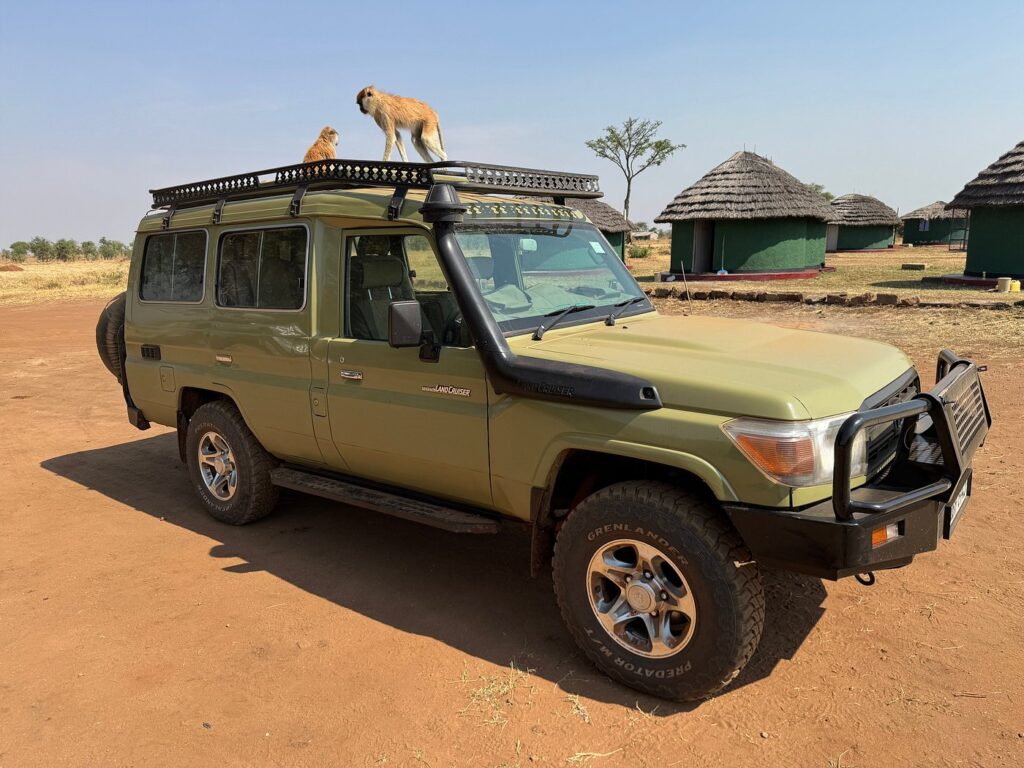
Before You Go: Preparing for the Inevitable Flat
Good preparation is what makes a flat tire a minor inconvenience rather than a genuine emergency. Before setting off on any self-drive itinerary in Tanzania, whether a short loop through Arusha National Park or a multi-week overlanding route across the northern circuit and into the south, confirm the following with the rental company and pack accordingly.
| Essential Item | Why It Matters |
| Full-size spare tire (not a space-saver) | Safari terrain demands a proper spare that can handle further rough driving, not a temporary highway spare. |
| Second spare tire, if possible | On multi-day remote routes such as Ruaha or Katavi, a second spare is strongly recommended since help may be hours away. |
| Functioning jack and wheel brace | Rental agency jacks are sometimes worn or mismatched to the vehicle; test it before departure. |
| Tire pressure gauge and portable compressor | Under-inflated tires are far more prone to punctures on corrugated roads. |
| Tire repair or plug kit | Useful for small punctures that do not require a full tire change. |
| Sturdy gloves and a groundsheet or mat | Protects hands and clothing when working in dusty or muddy conditions. |
| Wheel chocks or large rocks | Prevents the vehicle from rolling on uneven or sloped terrain while jacked up. |
| Reflective triangle or hazard markers | Improves visibility to other vehicles on narrow park tracks. |
| Satellite communicator or local SIM with data | Mobile network coverage is unreliable in many parks; a satellite device provides a safety margin. |
| Emergency contact list | Save the rental company’s 24-hour roadside assistance number and the nearest park ranger post. |
It is worth spending ten minutes at the rental depot in Arusha, Moshi, or Dar es Salaam physically locating the spare tire, jack, and brace, and confirming they fit the vehicle before driving away. This single step resolves the majority of on-road frustrations that self-drivers report.
What to Do When You Get a Flat Tire in the Bush
Changing a tire on a Tanzanian park road is not fundamentally different from changing one anywhere else, but the setting adds a few important considerations, chiefly wildlife awareness and vehicle stability on uneven ground.
- Assess your surroundings before stepping out. Scan for wildlife, particularly near water points, thick bush, or riverine forest where lion, buffalo, and elephant are more likely to be close by.
- Move the vehicle, if it is still drivable, to a flat, open, and visible section of road, away from blind bends.
- Engage the handbrake, put the vehicle in gear or park, and place wheel chocks or rocks against the wheels diagonally opposite the flat.
- Loosen the wheel nuts slightly before jacking the vehicle up, then raise it until the flat tire clears the ground.
- Remove the wheel nuts fully, take off the flat tire, and mount the spare, tightening the nuts by hand first in a star pattern.
- Lower the vehicle and fully tighten the wheel nuts with the wheel brace, using your body weight for leverage if needed.
- Check the spare’s pressure with a gauge as soon as possible, and inspect the damaged tire to decide whether it can be patched or needs replacing in the next town.
- Report the incident to the rental company, especially if a replacement tire will be needed before the next leg of the trip.
The entire process typically takes fifteen to twenty-five minutes for a driver with basic familiarity. Practicing a tire change once before departure, even in the rental company’s parking lot, makes an enormous difference to confidence and speed once out on an actual game track.
| Safety First
Never attempt a tire change in an area with visible wildlife nearby, or step far from the vehicle to relieve yourself while stopped. If animals are present, remain inside the vehicle, sound the horn briefly to assess reaction, and wait for the area to clear or for another vehicle to pass and assist. Rangers generally recommend staying within arm’s reach of an open door at all times in game-viewing areas. |
Where Flat Tires Are Most Common on Tanzania’s Self-Drive Routes
Some stretches of road are simply harder on tires than others. Self-drive travelers planning routes through the northern and southern circuits should budget extra time and caution on the following sections.
- The Naabi Hill Gate to Seronera road in central Serengeti, known for sharp loose stone and washboard corrugation.
- The descent road into Ngorongoro Crater, steep, rocky, and hard on sidewalls.
- The Serengeti to Ndutu area during the wet season, where black cotton soil hides sharp embedded rock beneath standing water.
- Tarangire’s back tracks toward Silale Swamp, where thorn scrub encroaches on narrower routes.
- The remote southern circuit roads through Ruaha and Nyerere National Park, where roads receive far less grading and repair.
- Rural connector roads between towns such as Karatu, Mto wa Mbu, and Babati, which mix tarmac with unpredictable stretches of pothole and gravel.
None of these routes should be avoided; they are, in fact, among the most rewarding for wildlife density and scenery. They simply require respect, reduced speed, and the preparation outlined above.
Practical Tips to Reduce the Odds of a Flat Tire
While no self-drive trip in Tanzania can guarantee a puncture-free journey, a handful of driving habits significantly reduce the risk.
- Slow down on corrugated and rocky sections; excess speed is the single biggest contributor to blowouts.
- Keep tire pressure slightly lower than highway settings for better grip and shock absorption on gravel, but not so low that sidewalls are vulnerable, consult the rental company’s recommended off-road pressure.
- Avoid driving directly over visible thorns, sharp rock, or debris when it is safe to steer around them.
- Inspect tires each morning before departure, checking for embedded thorns, cuts, or unusual wear.
- Avoid night driving inside parks, both for wildlife safety and because road hazards are far harder to spot.
- Do not overload the vehicle beyond its rated capacity; excess weight increases tire stress substantially.
- Choose a reputable rental company that maintains its fleet regularly and replaces tires before they are overly worn.
Frequently Asked Questions
Is a flat tire dangerous during a Tanzania self-drive safari?
A flat tire itself is rarely dangerous if handled calmly and with basic preparation. The greater risk comes from changing a tire in an area with wildlife nearby or losing control of a vehicle at speed when a tire blows out unexpectedly. Slowing down on rough sections and staying alert to surroundings resolves most of the risk.
Do rental companies expect self-drivers to fix their own tires?
Yes. Nearly all self-drive rental agreements in Tanzania expect the renter to change a flat tire using the provided spare, jack, and tools. Most companies offer a 24-hour helpline for guidance or assistance with more serious mechanical issues, but a routine puncture is considered a normal part of self-driving.
How many spare tires should I bring on a self-drive trip?
One full-size spare is the minimum for shorter northern circuit routes with regular traffic, such as Serengeti, Ngorongoro, and Tarangire. For longer or more remote itineraries, particularly in the southern circuit or far western parks, a second spare is highly recommended given the distance to the nearest town or repair shop.
What should I do if I cannot fix the tire myself?
Contact the rental company’s roadside assistance line immediately, note the nearest park gate or ranger post, and remain with the vehicle. Other self-drive travelers and safari guides on the same route are generally quick to stop and help, roadside courtesy is a strong tradition on Tanzania’s park roads.
Conclusion: Embracing the Dust, the Detours, and the Flat Tires
A self-drive safari through Tanzania is not a curated theme-park experience. It is a genuine journey across some of Africa’s wildest and most beautiful terrain, and that terrain occasionally punishes a tire. Travelers who prepare properly, packing the right spare equipment, learning the basics of a roadside change, and slowing down on the roughest stretches, transform the flat tire from a dreaded inconvenience into simply another chapter of the trip.
The next time a Land Cruiser rolls to a stop on a dusty Serengeti track with a slow leak hissing from the rear tire, remember that this is not the trip going wrong. This is the trip going exactly as a real Tanzania self-drive adventure should: unpredictable, hands-on, and utterly unforgettable.
Planning your own self-drive safari across Tanzania’s northern or southern circuit? Prepare your vehicle, pack your spares, and let the road tell its own story. reach out to us we can assist you organize every thing