Is Road Tripping in Tanzania Safe?
The Complete 2026 Self-Drive Safety Guide — Roads, Wildlife, Crime, and Practical Precautions
Tanzania is one of Africa’s most rewarding self-drive destinations — a country where a single road can carry you from the acacia plains of the Serengeti to the crater rim of Ngorongoro and on to the palm-fringed coast at Dar es Salaam. For travelers weighing a self-drive itinerary against a guided safari, the central question is simple: is road tripping in Tanzania actually safe? The short answer is yes — with the right vehicle, sensible planning, and respect for local driving conditions, self-drive travel in Tanzania has an excellent safety record and is enjoyed by thousands of independent travelers every year. This guide breaks down exactly what makes it safe, where the real risks lie, and how to prepare for a smooth, secure journey.
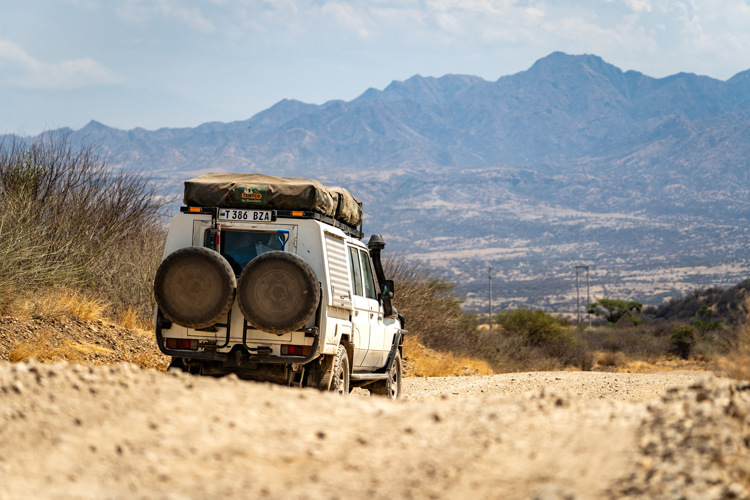
| Quick Safety Snapshot
● Tanzania’s main tourist corridors (Arusha–Serengeti–Ngorongoro–Tarangire) are well maintained and heavily used by safari traffic. ● Violent crime against tourists is rare; petty theft is the main concern in cities like Dar es Salaam, Arusha, and Stone Town. ● Night driving is the single biggest risk factor — plan to reach your lodge or campsite before dark. ● A well-serviced 4×4 with spare tires, recovery gear, and offline maps removes most mechanical and navigation risk. ● Self-drive is officially permitted in nearly all national parks, though some require a registered guide or have strict speed limits. |
Road Conditions Across Tanzania
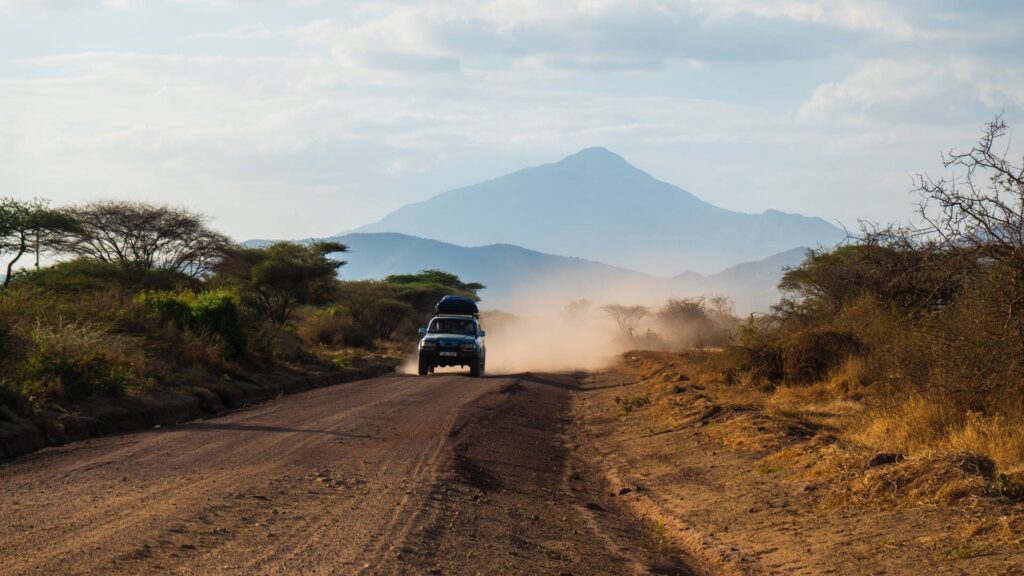
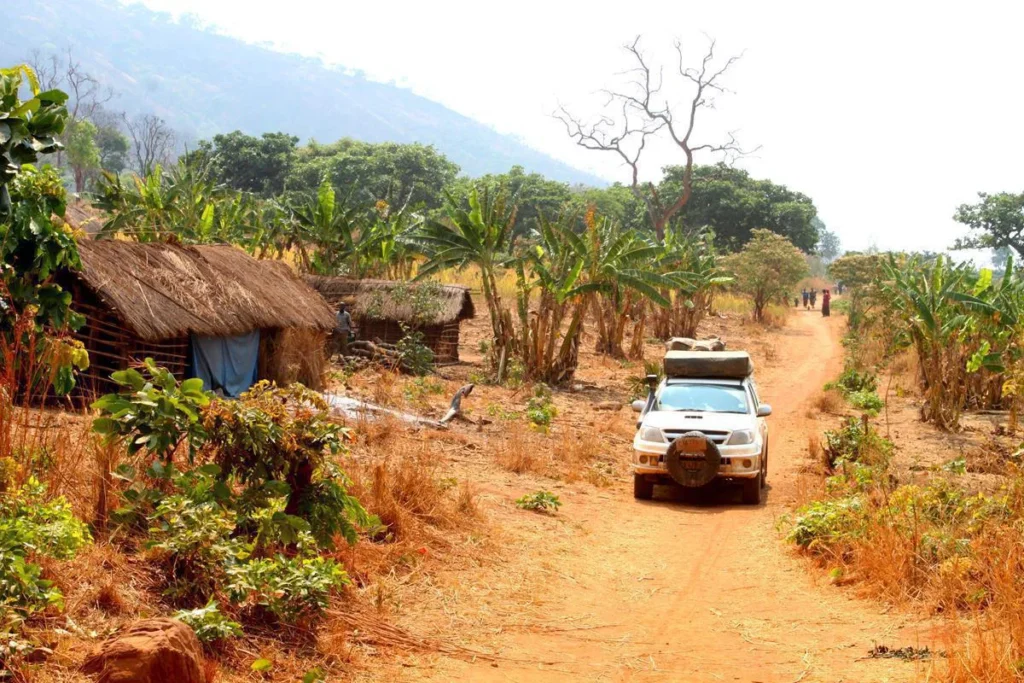
By East African standards, Tanzania’s roads are in relatively good shape, particularly on the routes tourists use most. Paved highways connect Arusha, Moshi, Dodoma, and Dar es Salaam, while gravel and dirt roads take over on the final stretch into most national parks. Expect frequent speed bumps through villages, occasional potholes, and washboard sections once you’re inside park boundaries.
- Paved routes: Main highways link major cities and are generally smooth, though Land Cruisers are legally classified as trucks and capped at 80 km/h.
- Gravel access roads: The final approach to most park gates and lodges involves gravel, averaging around 25 km/h in dry conditions.
- Inside the parks: Expect rocky, rutted surfaces with washboard ribbons — the Serengeti and the Lake Natron route are the most technical.
- Seasonal impact: Gravel and dirt roads deteriorate significantly in the March–May and November rains, so build extra time into wet-season itineraries.
Traffic Laws and Speed Limits
Tanzania drives on the left, and speed limits are enforced through a mix of fixed checkpoints and mobile police patrols on the main highways. Carrying your passport, driving license, and vehicle papers at all times will make routine stops quick and painless.
| Zone | Speed Limit | Notes |
| Open highway | 80 km/h (4x4s) | Land Cruisers/trucks capped lower than sedans |
| Towns & villages | 40 km/h | Highways often pass directly through towns |
| Inside national parks | 25–40 km/h | Varies by park; Serengeti tracks require extra caution |
Common fines include speeding ($30–100), mobile phone use while driving ($50–100), seatbelt violations ($20–50), and missing documentation ($50–200). Always request a written citation for any violation, and keep a copy of your license, International Driving Permit (if carried), and rental agreement in the vehicle at all times.
Common Risks and How to Manage Them
1. Night Driving
This is consistently flagged as the greatest hazard for self-drive travelers. Poor or absent road lighting, unmarked hazards, wandering livestock, and pedestrians walking along unlit shoulders combine to make after-dark driving significantly riskier than daytime travel. Most lodges and campsites also close their gates at sunset, so arriving late can mean being turned away entirely. Build conservative daily driving times, and treat sunset as a hard deadline for reaching your destination.
2. Wildlife on the Road
Elephants, giraffes, buffalo, and various antelope cross roads throughout Tanzania — not only inside park boundaries. Animals are generally cautious of vehicles and will usually move off the road on their own, but sudden braking or attempting to pass too closely can provoke a defensive reaction, particularly from elephants and buffalo. Inside parks, never leave your vehicle except at officially marked and ranger-approved rest points.
3. Petty Crime in Urban Areas
Tourist-targeted crime in Tanzania is overwhelmingly limited to pickpocketing and bag-snatching in crowded markets and bus stations in Dar es Salaam, Arusha, and Stone Town. Rural areas and safari routes see very little of this. Avoid displaying cash, cameras, or jewelry openly, use registered taxis or hotel transport at night, and keep your travel documents and cash in a single secure pouch rather than spread across pockets and bags.
4. Fatigue and Overly Ambitious Itineraries
The most frequent cause of breakdowns and accidents on Tanzanian self-drive trips isn’t the road — it’s the schedule. Packed itineraries push drivers into long days, speeding to make up time, and driving into the evening. Build in buffer time, add roughly 30% to whatever Google Maps estimates for gravel and park roads, and resist the urge to cover too much ground in a single day.
5. Breakdowns and Remote Areas
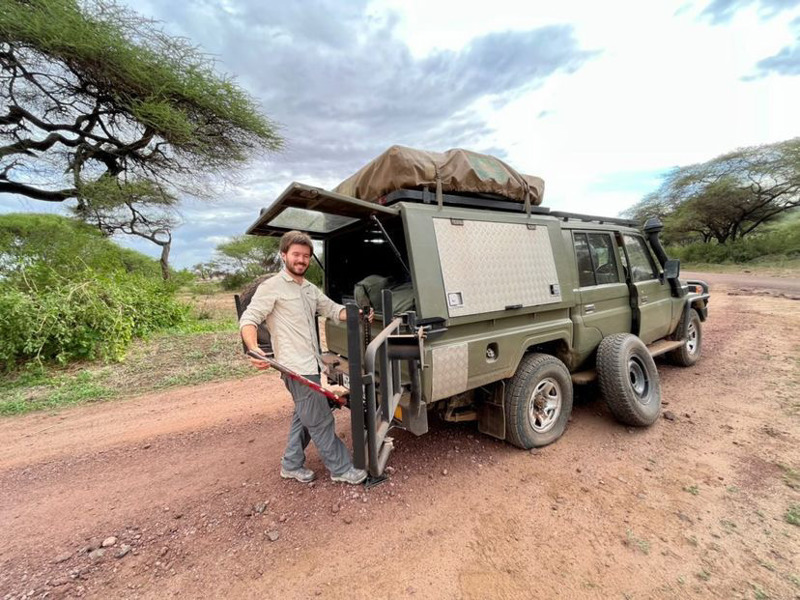
Punctures, dust-related engine issues, and mud are the most common mechanical problems, particularly during the rainy season. A well-maintained 4×4 with dual spare tires, a basic toolkit, and a satellite communicator or emergency app dramatically reduces the risk of being stranded. If you do break down, move off the road, activate hazard lights, place a warning triangle 50–100 meters behind the vehicle, and contact your rental company or tour operator’s emergency line immediately.
| If You Break Down
● Pull fully off the roadway and switch on hazard lights. ● Place a warning triangle 50–100 meters behind the vehicle. ● Stay with the vehicle — it’s more visible than you are on foot. ● Call your rental company’s 24/7 support line before attempting major repairs yourself. ● In remote or unfamiliar areas, remain inside the vehicle with doors locked until help arrives. |
Best Practices for a Safe Self-Drive Trip
- Plan for daylight arrivals: Reach your lodge, campsite, or park gate before sunset — treat it as non-negotiable.
- Go offline-ready: Download offline maps (Google Maps offline or Maps.me) before you lose signal, since mobile coverage disappears inside most parks.
- Rent the right vehicle: Choose a 4×4 in good mechanical condition, ideally with dual batteries, all-terrain tires, and a full recovery kit.
- Pad your schedule: Match your route ambitions to the road conditions rather than to a straight-line map distance.
- Keep an analogue backup: Carry a paper or laminated map as backup, since GPS coordinates can be unreliable on unnamed park tracks.
- Consider a driver-guide for your first trip: A local driver-guide adds negligible cost relative to a full tour package while removing nearly all navigation and mechanical risk for first-time visitors.
- Keep documents together: Passport, license, insurance documents, and rental agreement should stay together in one accessible pouch.
- Carry cash and a local SIM: US dollars and a local SIM with data are the most reliable combination; park fees are rarely payable by card.
Safety by Route and Region
| Route | Road Character | Safety Notes |
| Northern Circuit (Arusha–Tarangire–Manyara–Ngorongoro–Serengeti) | Well-signed, mostly paved with gravel park approaches | Most tourist-friendly route; ideal for first-time self-drivers |
| Lake Natron / Loliondo | Rough volcanic terrain, minimal signage | Technical driving; recommended only for experienced 4×4 drivers |
| Southern Circuit (Nyerere/Selous, Ruaha) | Long gravel gateways (90–110 km stretches) | Fewer services; carry extra fuel, water, and recovery gear |
| Coastal & Dar es Salaam | Paved but congested urban traffic | Petty theft risk in markets; secure parking at night |
The Verdict: Is It Safe?
Tanzania has maintained a long-standing reputation as one of East Africa’s most stable and tourism-friendly countries, and that reputation extends directly to its road network. The core tourist corridors — Arusha, the Serengeti, Ngorongoro, Tarangire, and the coast — are heavily used, well maintained relative to regional standards, and supported by tourism police units, multilingual assistance hotlines, and an established network of rental operators offering 24/7 roadside support. The real risks in Tanzania come not from crime or hostility, but from ordinary road-trip hazards: fatigue, overambitious schedules, night driving, and underprepared vehicles. Manage those four factors, and a Tanzania self-drive road trip is not just safe — it’s one of the most rewarding ways to experience the country.
| Final Checklist Before You Go
● 4×4 vehicle serviced and fitted with a full-size spare, jack, and basic tools ● Offline maps downloaded for your entire route ● Daily driving plan that guarantees arrival before sunset ● Cash reserve in US dollars plus a local SIM card ● Travel and medical insurance confirmed, including evacuation cover ● Emergency contact numbers for your rental company saved offline |