4×4 Rental with Camping Gear in Arusha, Tanzania
4×4 Rental with Camping Gear in Arusha, The Complete 2026 Guide to Vehicles, Rooftop & Ground Tents, Camping Equipment, Campsites, Costs and Self-Drive Itineraries on the Northern Circuit
| Quick Answer
A 4×4 rental with camping gear in Arusha typically costs USD 90–250 per day, depending on the vehicle and gear package. A fully equipped Toyota Land Cruiser or Prado with a rooftop tent, fridge, dual battery, kitchen box and recovery kit is the most popular setup for self-drive camping in Tarangire, Lake Manyara, Ngorongoro and the Serengeti. Public campsites inside Tanzania’s national parks cost about USD 35.40 per person per night (VAT included), and all park payments are cashless — by Visa or Mastercard. |
Why Rent a 4×4 with Camping Gear in Arusha?
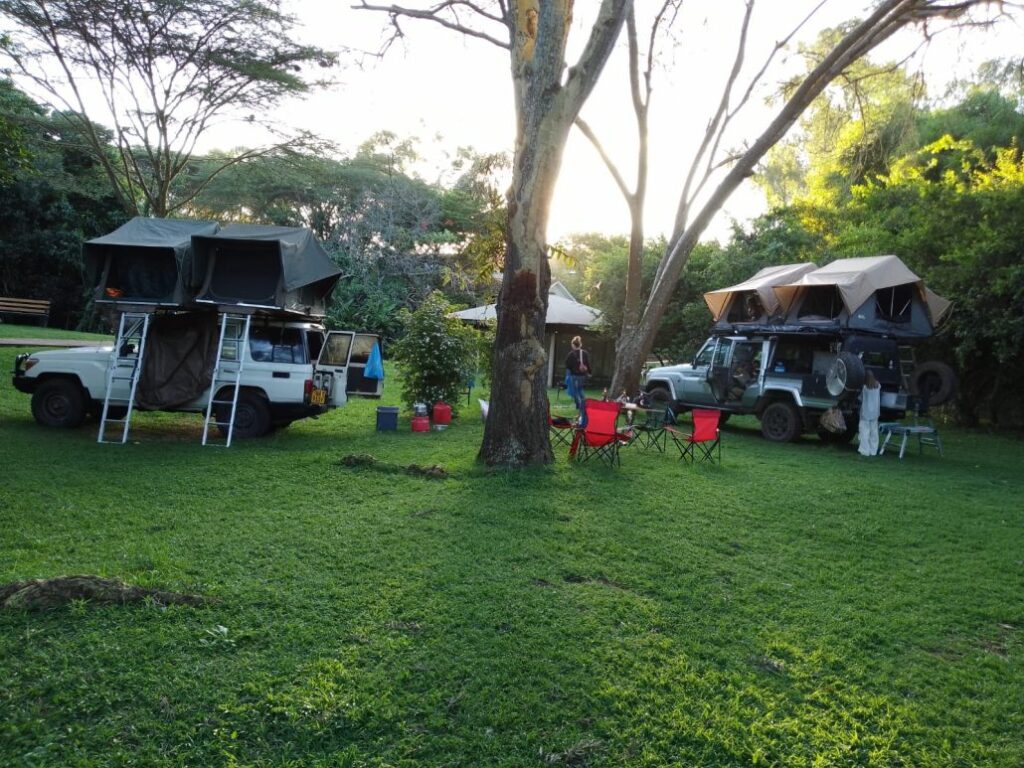
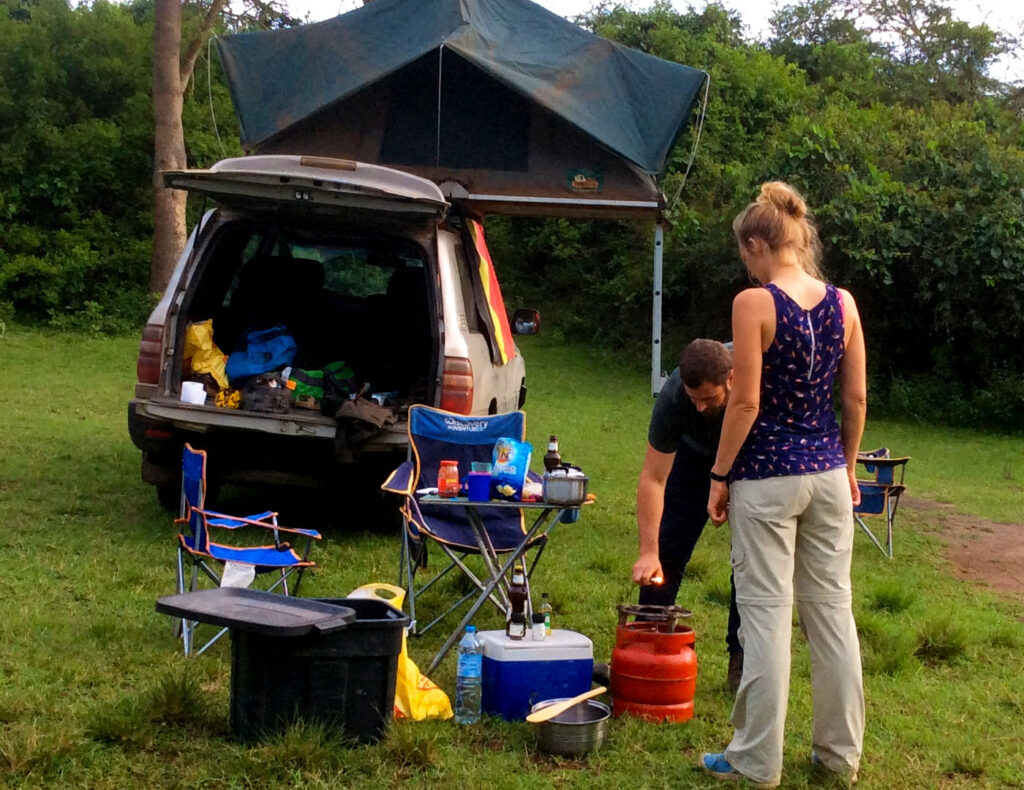
Arusha is the safari capital of Tanzania and the natural starting point for the Northern Circuit — Tarangire, Lake Manyara, the Ngorongoro Conservation Area and the Serengeti all lie within a day’s drive. For travellers who want freedom, flexibility and a closer connection to the wilderness, renting a 4×4 vehicle fully kitted with camping gear is one of the most rewarding ways to experience northern Tanzania.
Instead of being tied to lodge check-in times and fixed group tours, you set your own pace: dawn game drives straight from your tent, sundowners beside the vehicle, and nights under a sky full of stars with lions calling in the distance. Camping also dramatically reduces accommodation costs, which can otherwise exceed USD 400–1,000 per person per night at lodges inside the parks.
This guide covers everything you need to know about 4×4 rental with camping gear in Arusha — the best vehicles, rooftop tent versus ground tent setups, a complete gear inventory, package pricing, campsites and fees, a sample itinerary, rental requirements, and practical safety advice for self-drive camping in Tanzania.
Who Is This Setup For?
- Independent travellers and couples seeking an affordable, flexible Northern Circuit safari.
- Families and small groups who want to travel at their own pace with children.
- Photographers who need early starts and the freedom to linger at sightings.
- Overlanders continuing on to Kenya, Uganda or Rwanda (with cross-border authorization).
- Repeat safari-goers who want a more authentic, back-to-nature experience.
Best 4×4 Vehicles for Camping in Arusha
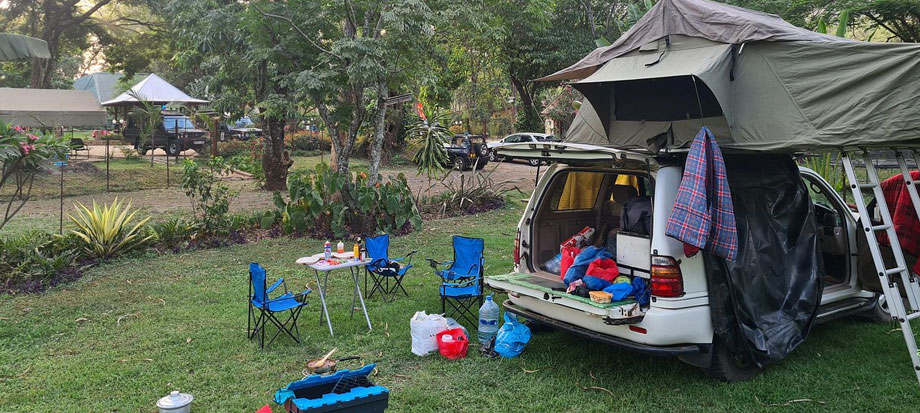
Tanzania’s park roads range from smooth tarmac to heavily corrugated gravel, black-cotton mud in the rains, and steep crater descents. A genuine 4×4 with good ground clearance is essential. These are the most common camping-equipped vehicles available from Arusha rental companies:
| Vehicle | Seats / Sleeps | Tent Setup | Best For | Indicative Daily Rate* |
| Toyota RAV4 (4WD) | 4 / 2 | Ground tent or small rooftop tent | Couples on a budget; Arusha, Tarangire, Manyara | USD 90–120 |
| Toyota Land Cruiser Prado | 5 / 2–3 | Rooftop tent + optional ground tent | Couples and small families; full Northern Circuit | USD 150–190 |
| Toyota Hilux Double Cab | 5 / 2–4 | Rooftop tent on canopy + ground tent | Adventurous travellers; rugged routes, extra load space | USD 130–170 |
| Land Cruiser 76 / 78 / 79 (Hard Top or Pick-up) | 2–5 / 2–4 | One or two rooftop tents | Serious overlanders; remote areas, Lake Natron, long trips | USD 180–250 |
| Land Cruiser 70-Series Safari (Pop-up Roof) | 6–7 / 4+ (ground tents) | Multiple ground tents | Groups and families wanting game-viewing roof hatch | USD 200–250 |
*Indicative 2026 rates including the vehicle and standard camping package; prices vary by season, rental length, insurance level and operator. Always confirm a written quote.
Choosing the Right Vehicle
For most Northern Circuit camping trips, the Toyota Land Cruiser Prado with a rooftop tent offers the best balance of comfort, reliability, fuel economy and off-road ability. If you plan remote routes — Lake Natron, the northern Serengeti (Lobo, Kogatende) or the Western Corridor in the rainy season — upgrade to a Land Cruiser 79 with long-range fuel tanks and heavier-duty suspension. The RAV4 is fine for budget trips to Tarangire, Lake Manyara and Arusha National Park in the dry season but is less suited to the rough Serengeti plains and the steep Ngorongoro crater roads.
| Insider Tip
Toyota dominates the Tanzanian safari market for a reason: spare parts and mechanics are available in Arusha, Karatu, Mto wa Mbu and even at Seronera in the central Serengeti. Choosing a Toyota greatly reduces the risk of a breakdown ruining your trip. |
Rooftop Tent vs Ground Tent: Which Is Better?
The biggest decision when renting a camping 4×4 in Arusha is whether to sleep on top of the vehicle or on the ground. Both are excellent options; the right choice depends on your budget, group size and comfort preferences.
| Factor | Rooftop Tent | Ground Tent |
| Setup time | 3–5 minutes (fold-out or pop-up) | 10–20 minutes |
| Comfort | Built-in foam mattress, flat and dry | Depends on mattress/stretcher quality |
| Safety & sense of security | Elevated off the ground; feels safer in parks | At ground level; follow strict campsite rules |
| Protection from mud and rain | Excellent — stays off wet ground | Can get muddy in the rainy season |
| Capacity | Usually 2 adults per tent (some fit 3–4) | Flexible — 2, 3 or 4-person tents |
| Flexibility | Must pack up before every drive | Can leave pitched while you go on game drives |
| Cost | Higher (USD 25–45/day add-on) | Lower (USD 10–20/day add-on) |
| Best for | Couples, short stops, frequent camp moves | Families, groups, multi-night stays at one camp |
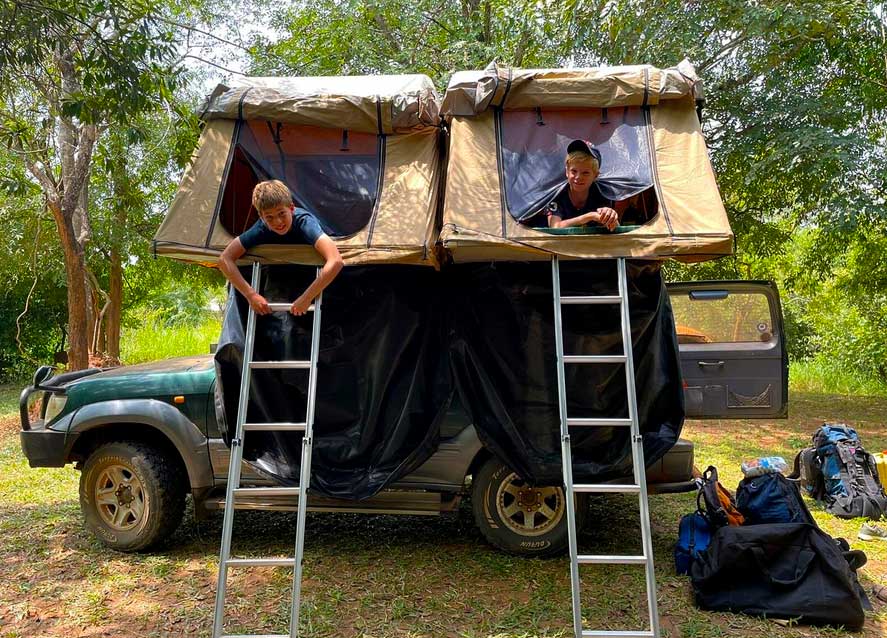
Many renters choose a hybrid setup: a rooftop tent for the adults and a ground tent for children or extra travellers. This is especially popular on the Land Cruiser and Hilux.
Complete Camping Gear List: What a Full Package Includes
A quality camping package from an Arusha rental company should allow you to be completely self-sufficient for several days. Below is the standard inventory of a fully equipped 4×4 camping rental. Check this list against your quote and the handover inventory before you sign.
1. Sleeping Equipment
| Item | Details | Typically Included? |
| Rooftop tent or ground tent | 2–4 person; with rain fly and mosquito mesh | Yes |
| Mattresses | High-density foam (rooftop) or roll mats / stretchers (ground) | Yes |
| Sleeping bags | Rated for cold nights — essential at Ngorongoro rim | Yes |
| Pillows | Standard camping pillows | Yes |
| Bed linen / duvets | Sheets and duvet as an alternative to sleeping bags | On request |
| Extra blankets | Recommended for Simba campsite (2,300 m altitude) | On request |
2. Kitchen and Cooking Equipment
| Item | Details | Typically Included? |
| Gas cooker and gas cylinder | Two-plate burner; cylinder refillable in Arusha | Yes |
| Cooking pots, frying pan, kettle | Full cookset for 2–5 people | Yes |
| Plates, bowls, mugs, cutlery | Enamel or melamine, per number of travellers | Yes |
| Chopping board, knives, utensils | Spatula, ladle, tongs, can and bottle opener | Yes |
| Kitchen / chuck box | Lockable storage box keeping everything organised | Yes |
| Washing-up basin & dish rack | With sponge and biodegradable soap | Yes |
| Fridge / freezer | 35–60 litre 12V compressor fridge (e.g. Engel, National Luna) | Yes (mid & premium packages) |
| Water containers | 20–40 litre jerry cans for drinking and washing | Yes |
| Braai grid / grill | For campfire cooking where fires are permitted | Usually |
| Cooler box | Alternative where no fridge is supplied | Budget packages |
3. Camp Furniture and Comfort
| Item | Details | Typically Included? |
| Folding camp table | Lightweight aluminium | Yes |
| Camping chairs | One per traveller | Yes |
| Awning | Side awning attached to the vehicle for shade and rain cover | Prado / Land Cruiser / Hilux |
| Camp lantern / LED lights | Rechargeable lanterns plus LED strip lights | Yes |
| Head torches | Highly recommended for night bathroom trips | Sometimes — bring your own |
| Solar shower | Portable heated shower bag | On request |
| Groundsheet / camp mat | Keeps sand and dust out of the tent | Usually |
4. Power, Navigation and Communication
| Item | Details | Typically Included? |
| Dual battery system | Second battery to run the fridge and charge devices without draining the starter battery | Yes (mid & premium) |
| Inverter & USB charging | 220V inverter and USB ports for cameras, phones and laptops | Yes |
| Solar panel | Portable panel to top up batteries at longer camps | Premium packages |
| GPS / offline maps | Tracks4Africa, Maps.me or a GPS unit preloaded with routes | Often — confirm |
| Local SIM card / Mi-Fi | Vodacom, Airtel or Yas (Tigo) data — coverage patchy in parks | On request |
| Satellite phone | Recommended for remote areas such as Lake Natron and northern Serengeti | Premium / on request |
5. Recovery, Safety and Vehicle Equipment
| Item | Details | Typically Included? |
| Two spare tyres | Strongly recommended — punctures are common on Serengeti roads | Yes (insist on two) |
| High-lift jack & wheel spanner | Plus a base plate for soft ground | Yes |
| Tow rope / snatch strap & shackles | For mud and sand recovery | Yes |
| Shovel | For digging out in mud | Yes |
| Tyre compressor & pressure gauge | To deflate/reinflate tyres for different terrain | Usually |
| Basic tool kit | Spanners, screwdrivers, cable ties, duct tape | Yes |
| First aid kit | Bandages, antiseptic, painkillers, rehydration salts | Yes |
| Fire extinguisher & warning triangles | Required by Tanzanian traffic law (two triangles) | Yes |
| Long-range fuel tank / jerry can | Extends range on remote routes | Land Cruiser 79 / on request |
| Handover Checklist Tip
Before leaving the Arusha depot, photograph every item, test the fridge, cooker, tent, compressor and jack, and check both spare tyres for tread and pressure. Note any missing items on the inventory sheet — this protects you from deposit deductions at drop-off. |
Camping Packages and Prices in Arusha (2027)
Most Arusha Car rental offer tiered camping packages. The figures below are indicative 2026 ranges to help you budget; actual rates depend on season (July–October and December–February are the busiest), rental duration and the insurance cover you select.
| Package | Typical Vehicle | What’s Included | Indicative Daily Rate |
| Budget Camping | RAV4 / older Prado | Ground tent, mattresses, sleeping bags, basic cookset, gas cooker, cooler box, chairs and table | USD 90–130 |
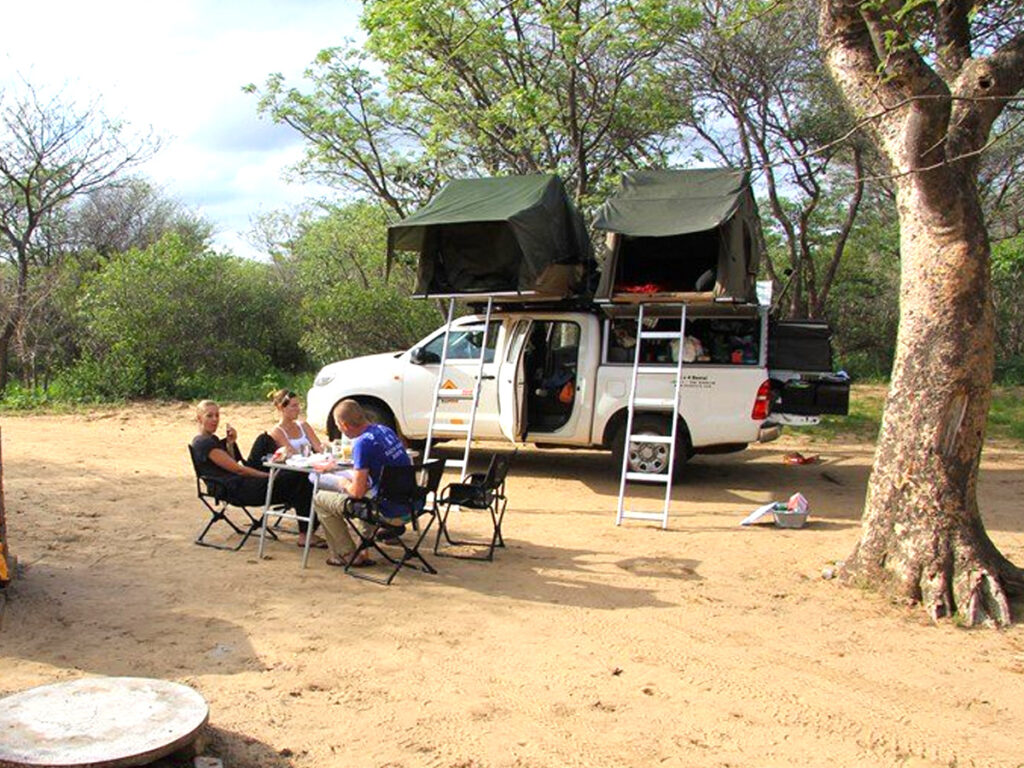
| Standard Camping | Land Cruiser Prado / Hilux | Rooftop tent, full kitchen box, 40L fridge, dual battery, inverter, awning, recovery kit, two spares | USD 140–190 |
| Premium Overland | Land Cruiser 79 / 76 | One or two rooftop tents, 60L fridge, solar panel, long-range tank, water tank, full recovery gear, sat-phone option | USD 190–250 |
| Gear Only (add-on) | Any rented 4×4 | Individual items: ground tent USD 10–15, rooftop tent USD 25–45, fridge USD 10–15, sleeping bag USD 3–5, kitchen box USD 10–15 per day | Priced per item |
Other Costs to Budget For
| Cost Item | Indicative Amount | Notes |
| Fuel | Approx. USD 1.20–1.40 per litre (diesel) | A Land Cruiser uses roughly 12–15 L/100 km on park roads |
| Security deposit | USD 500–2,000 (refundable) | Usually blocked on a credit card |
| Collision damage waiver / super cover | USD 10–30 per day | Reduces your excess in case of damage |
| Driver guide (optional) | USD 40–60 per day | Plus guide’s accommodation and park fees |
| Airport delivery / collection | USD 30–60 each way | Kilimanjaro International Airport (JRO) or Arusha Airport |
| One-way drop-off fee | Varies by city | e.g. ending in Dar es Salaam, Mwanza or Nairobi |
| Cross-border authorisation | USD 100–250 | For Kenya, Uganda or Rwanda; plus COMESA insurance |
Park Entry and Camping Fees (Non-Residents)
When self-driving with camping gear, you pay park fees directly at the gate. Tanzania’s parks operate a strictly cashless system — carry a Visa or Mastercard with sufficient balance. Fees below are for foreign non-resident adults and include 18% VAT; always verify current rates with TANAPA and the NCAA before travelling.
| Fee | Amount (USD) | Notes |
| Serengeti National Park entry | 82.60 per person / 24 hrs | Premium-tier park |
| Ngorongoro Conservation Area entry | 70.80 per person / 24 hrs | Managed by NCAA, not TANAPA |
| Tarangire, Lake Manyara, Arusha NP entry | Lower standard-tier rates | Check current TANAPA schedule |
| Public campsite (TANAPA and NCAA) | 35.40 per person / night | e.g. Seronera, Simba, Tarangire public campsites |
| Special campsite | Approx. 59–70.80 per person / night | Exclusive-use sites; book in advance |
| Ngorongoro Crater service fee | 295 per vehicle per descent | Charged in addition to entry fees |
| Vehicle entry fee | Based on vehicle tare weight | Foreign-registered vehicles pay more |
| Important
Park entry is charged in 24-hour blocks, not calendar days. Plan your gate entry and exit times carefully — leaving a park even an hour late can trigger a full extra day of fees for every person in the vehicle. |
Best Campsites for 4×4 Camping Around Arusha and the Northern Circuit
| Campsite | Location | Type | Highlights |
| Masai Camp | Arusha town | Private | Secure base for your first or last night; bar and restaurant |
| Meserani Snake Park Campsite | 35 km west of Arusha | Private | Popular overlander stop on the Dodoma road towards Tarangire |
| Lake Duluti area camps | Near Arusha (Tengeru) | Private | Quiet lakeside camping close to Arusha National Park |
| Tarangire Public Campsite | Inside Tarangire NP | Public (TANAPA) | Elephants and baobabs; book early in the dry season |
| Mto wa Mbu campsites (e.g. Twiga, Kiboko) | Village near Lake Manyara | Private | Hot showers, pools, cheap fees; avoid park camping charges |
| Simba Campsite | Ngorongoro Crater rim | Public (NCAA) | Spectacular crater-rim setting; very cold nights (2,300 m) |
| Seronera Public Campsites (Pimbi, Nyani, Dikdik, Tumbili, etc.) | Central Serengeti | Public (TANAPA) | Year-round big-cat territory; basic ablutions |
| Lobo Public Campsite | Northern Serengeti | Public (TANAPA) | Quieter; good for the migration from August–October |
| Karatu campsites | Between Manyara and Ngorongoro | Private | Last major fuel and supplies stop before Ngorongoro |
| Lake Natron & Lake Eyasi camps | Off the main circuit | Private / community | Flamingos, Ol Doinyo Lengai, Hadzabe cultural visits |
| Campsite Tip
Public campsites inside the parks are unfenced. Wild animals — including lions, hyenas, buffalo and elephants — regularly walk through. Never leave food outside, store rubbish in the vehicle, and always use a torch after dark. |
Sample 7-Day Self-Drive Camping Itinerary from Arusha
| Day | Route | Driving Time | Overnight Camp |
| Day 1 | Collect vehicle in Arusha → stock up on supplies → Tarangire NP afternoon game drive | 2–2.5 hrs | Tarangire Public Campsite |
| Day 2 | Full day in Tarangire (Silale Swamp, baobab country, elephant herds) | Game drives | Tarangire Public Campsite |
| Day 3 | Tarangire → Lake Manyara NP (tree-climbing lions, flamingos) → Mto wa Mbu | 1.5 hrs + game drive | Mto wa Mbu campsite |
| Day 4 | Mto wa Mbu → Karatu (refuel) → Ngorongoro → central Serengeti, game drive en route | 5–6 hrs | Seronera Public Campsite |
| Day 5 | Full day exploring Seronera Valley, Moru Kopjes and Retima Hippo Pool | Game drives | Seronera Public Campsite |
| Day 6 | Morning in Serengeti → drive to Ngorongoro rim | 4–5 hrs | Simba Campsite |
| Day 7 | Early crater descent (6 hrs max on floor) → return to Arusha and drop off vehicle | 4–5 hrs + crater | — |
Timing tip: Plan Ngorongoro carefully to minimise fees. Driving through the conservation area on the way to the Serengeti requires an NCAA transit permit; your crater descent is best saved for the final morning when camping at Simba.
Rental Requirements and Documents
- Minimum age: usually 23–25 years, with at least 2–3 years of driving experience.
- Driving licence: a valid national licence in English; an International Driving Permit (IDP) is strongly recommended.
- Passport and visa: Tanzania e-Visa or visa on arrival (check current entry requirements).
- Credit card: for the security deposit and cashless park payments.
- Rental agreement and insurance documents: keep copies in the vehicle at all times for police checkpoints.
- Cross-border letter: if you plan to drive into Kenya, Uganda or Rwanda, you need written authorization, COMESA Yellow Card insurance and a Temporary Import Permit.
- Yellow fever certificate: required if arriving from or via a yellow-fever-endemic country.
How to Book a 4×4 with Camping Gear in Arusha
- Decide on your route, travel dates and number of travellers.
- Choose your vehicle and tent configuration (rooftop, ground or hybrid).
- Request a written quote listing every item in the camping package and the insurance excess.
- Book public and special campsites inside the parks where required, especially in peak season.
- Pay the booking deposit and receive your confirmation and vehicle details.
- On collection day, complete a full vehicle inspection and gear handover in Arusha or at Kilimanjaro Airport.
- Ask for a briefing on the tent, fridge, dual battery, recovery gear and emergency contacts.
Safety Tips for Self-Drive Camping in Tanzania
Driving Safety
- Observe park speed limits (generally 50 km/h; lower in sensitive zones) and drive only on designated tracks — off-road driving attracts heavy fines.
- Never drive at night outside towns; wildlife, livestock and unlit vehicles make roads dangerous after dark.
- Refuel whenever possible. Arusha, Mto wa Mbu and Karatu have reliable stations; fuel at Seronera is limited and more expensive.
- Reduce tyre pressure slightly on corrugated gravel for a smoother ride, and reinflate on tarmac.
- Expect police checkpoints — stop, stay polite and have your licence and rental papers ready.
Campsite Safety
- Arrive at your campsite before the park gates close (usually 6:00–6:30 pm).
- Stay inside your tent or vehicle at night if you hear animals nearby; never walk away from camp in the dark.
- Keep all food, fruit and rubbish locked in the vehicle — baboons and hyenas are skilled thieves.
- Pitch ground tents close to the vehicle and away from obvious animal paths.
- Pack warm clothing for Ngorongoro, where night temperatures can drop to 5–8°C.
- Drink only treated or bottled water and carry at least 20 litres as a reserve.
What to Pack (Not Included in Rental Gear)
| Category | Items to Bring |
| Clothing | Neutral-coloured layers, warm fleece/jacket, rain jacket, hat, sturdy shoes, flip-flops for showers |
| Health | Malaria prophylaxis, insect repellent (DEET), sunscreen, personal medication, hand sanitiser |
| Electronics | Binoculars, camera with zoom lens, power bank, car charger cables, head torch |
| Food & drinks | Buy in Arusha supermarkets (e.g. Shoprite/Village Supermarket area) — fresh produce, dry goods, drinking water |
| Essentials | Toilet paper, quick-dry towel, rubbish bags, wet wipes, cash in TZS for small purchases outside parks |
Best Time for 4×4 Camping Safaris from Arusha
| Season | Months | Conditions for Camping |
| Long dry season | June – October | Best overall: dry roads, excellent game viewing, cool nights; peak demand — book early |
| Short rains | November – December | Brief afternoon showers; greener landscapes, fewer crowds |
| Green / calving season | January – February | Wildebeest calving in southern Serengeti (Ndutu); hot days, mostly good roads |
| Long rains | March – May | Muddy tracks and heavy rain; best avoided for camping unless experienced; lowest rates |
Frequently Asked Questions
How much does it cost to rent a 4×4 with camping gear in Arusha?
Expect roughly USD 90–130 per day for a budget package, USD 140–190 for a fully equipped Prado or Hilux, and USD 190–250 for a premium Land Cruiser 79 overland setup. Fuel, park fees and campsite fees are extra.
Can I self-drive in the Serengeti and Ngorongoro?
Yes. Self-drive is permitted in Tanzania’s national parks, including the Serengeti and Ngorongoro Crater, as long as you pay the required entry, vehicle and campsite fees and follow park rules.
Is it safe to camp in Tanzania’s national parks?
Yes, provided you follow campsite rules: keep food in the vehicle, stay in your tent at night, and never wander from camp after dark. Rooftop tents offer extra peace of mind.
Do I need to book campsites in advance?
Public campsites generally work on a first-come basis and are paid at the gate, while special campsites must be booked in advance. In peak season, confirm arrangements through your rental company or the park authority.
Can I pick up the vehicle at Kilimanjaro International Airport?
Most Arusha rental companies deliver to Kilimanjaro International Airport (JRO) and Arusha Airport for a small fee.
Can I take the rental car to Kenya or Uganda?
Many companies allow cross-border travel with prior written authorization, COMESA insurance and additional fees. Inform the company at booking stage.
Is a rooftop tent worth the extra cost?
For couples moving camp frequently, yes — setup is fast, the mattress is comfortable and you sleep off the ground. Families staying several nights at one camp may prefer cheaper ground tents.
Can I hire a driver guide with a camping vehicle?
Yes. Many operators offer a driver guide for about USD 40–60 per day plus their park fees — ideal if you want local expertise while still camping.
Conclusion
Renting a 4×4 with camping gear in Arusha is the most flexible and affordable way to explore Tanzania’s legendary Northern Circuit. With the right vehicle, a complete camping package and careful planning around park fees and campsites, you can wake up beside elephants in Tarangire, watch the sun set over the Serengeti plains and spend a frosty night on the rim of the Ngorongoro Crater — all on your own schedule.
| Plan Your Camping Safari with Arusha Car Rental
Our fully equipped Toyota Land Cruisers, Prados and Hilux double cabs come with rooftop or ground tents, fridges, dual batteries, complete kitchen kits and recovery gear — plus a thorough handover briefing and 24/7 roadside support. Contact our Arusha team today for a free, no-obligation quote. |