Things to know before traveling to Tanzania on self drive
The complete 2027 guide to visas, vehicles, road rules, park fees, fuel, safety and etiquette for independent travellers
Tanzania is one of the most rewarding countries in Africa to explore behind the wheel. Picture yourself watching the Great Migration thunder across the Serengeti plains, descending into the Ngorongoro Crater at sunrise, or pulling up beside a herd of elephants among the giant baobabs of Tarangire, all on your own schedule and with nobody rushing you to the next sighting.
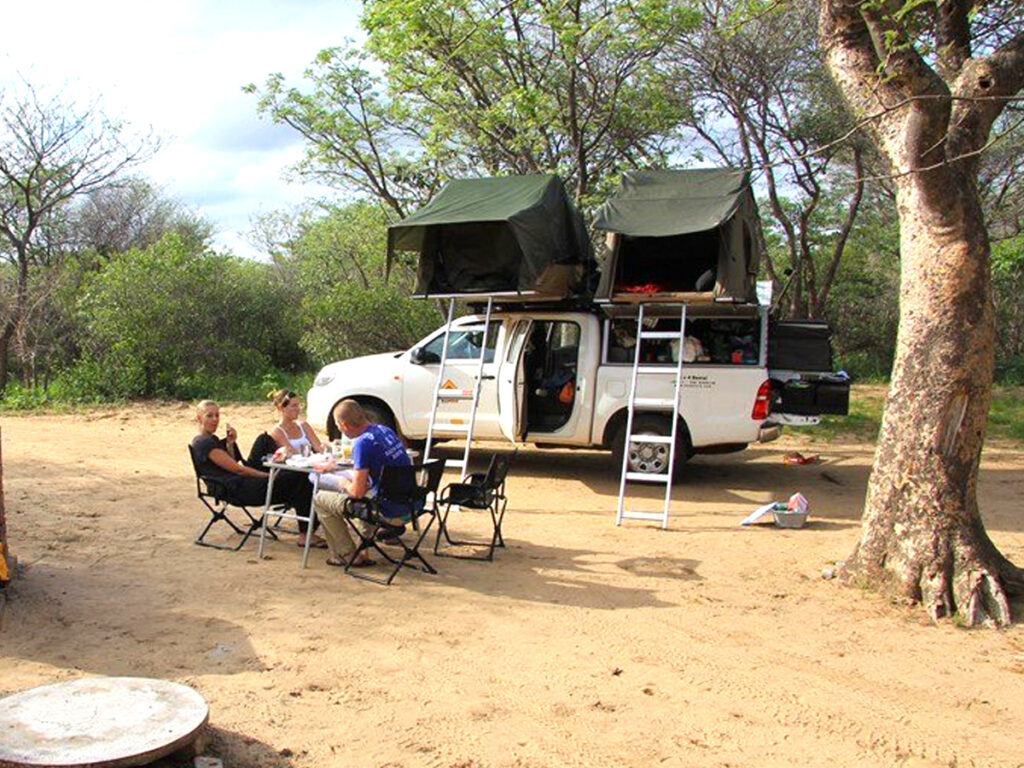
But a self-drive safari in Tanzania is not the same as a road trip at home. You will drive on the left, share the road with buses, trucks, cyclists and livestock, pass through regular police checkpoints, tackle corrugated gravel roads inside the parks, and pay park fees that work very differently from what most visitors expect. A little preparation makes the difference between a stressful trip and the adventure of a lifetime.
This guide brings together everything you should know before you travel to Tanzania on a self-drive safari: entry requirements, licences, choosing the right 4×4, road rules, park fees and payment, fuel planning, safety, money, connectivity and local etiquette.
Tanzania Self-Drive at a Glance
| Item | What You Need to Know |
| Driving side | Left-hand side of the road; most vehicles are right-hand drive |
| Currency | Tanzanian Shilling (TZS); US dollars widely used for park fees, lodges and visas |
| Languages | Swahili (national language) and English (widely spoken in tourism) |
| Time zone | East Africa Time (EAT), UTC+3; no daylight saving |
| Emergency number | 112 (general emergency line) |
| Tourist visa | About USD 50 single entry for most nationalities; USD 100 multiple entry for US citizens |
| Licence | Valid home licence plus an International Driving Permit (IDP) strongly recommended |
| Recommended vehicle | 4×4 with high clearance (Land Cruiser, Prado, Hilux or RAV4 for easier routes) |
| Park fee payment | Card only (Visa/Mastercard) at TANAPA gates; cash is not accepted |
| Best time for game viewing | June to October (dry season); January to February for Serengeti calving |
| Power sockets | Type D and G, 230V; bring a universal adapter and a 12V car charger |
Is a Self-Drive Safari in Tanzania Right for You?
Self-driving suits confident, patient drivers who enjoy planning and do not mind a bit of dust and uncertainty. It is not the right choice for everyone, so weigh up the trade-offs honestly before you book.
| Advantages | Challenges |
| Complete freedom to set your own pace and linger at sightings | Long driving days on rough roads, especially Karatu to the Serengeti |
| Usually cheaper than a guided safari for couples, families and small groups | No professional guide to spot wildlife or explain behaviour |
| Private, flexible experience with no fixed group itinerary | You handle navigation, flat tyres, fuel planning and checkpoints yourself |
| Freedom to combine lodges, public campsites and rooftop tent camping | Mobile signal disappears in large parts of the parks |
| Great for repeat safari travellers and overland enthusiasts | Some remote parks demand strong off-road experience |
| Middle-Ground Option
Not fully convinced? Many rental companies offer a 4×4 with a driver-guide for part of the trip. A popular approach is to self-drive the easier sections (Arusha, Tarangire, Lake Manyara) and bring a driver-guide for the Serengeti and Ngorongoro Crater, where local knowledge makes a real difference to sightings. |
Entry Requirements: Passport, Visa and Health Documents
Passport
Your passport should be valid for at least six months beyond your arrival date and have at least two blank pages for entry stamps. Keep a printed and digital copy separate from the original.
Tanzania Visa
Most visitors need a visa. The safest route is to apply online through the official Tanzania Immigration e-Visa portal (eservices.immigration.go.tz) at least two to four weeks before travel. Avoid third-party websites that add large service fees.
| Visa Type | Approximate Fee | Notes |
| Ordinary (single-entry) tourist visa | USD 50 | Valid for up to 90 days; applies to most nationalities |
| Multiple-entry visa (US citizens) | USD 100 | US passport holders receive a 12-month multiple-entry visa |
| Transit visa | USD 30 | Short transit only; not suitable for safaris |
| EAC citizens | Generally visa-free | Uganda, Kenya, Rwanda, Burundi and other EAC nationals |
| Important: Tanzania Is Not on the East Africa Tourist Visa
The East Africa Tourist Visa covers Kenya, Uganda and Rwanda only. If you are combining Tanzania with those countries on a cross-border self-drive, you will need a separate Tanzania visa, regardless of what some online guides suggest. |
Yellow Fever and Vaccinations
A yellow fever vaccination certificate is required if you arrive from, or have transited for more than 12 hours through, a country with yellow fever risk. This includes Kenya and Uganda, so it matters for overland travellers crossing at Namanga, Isebania, Holili or Mutukula. Speak to a travel clinic about other routine vaccines such as hepatitis A, typhoid and tetanus.
Driving License and International Driving Permit
To self-drive in Tanzania, you need:
- A valid full driving licence from your home country, held for at least two years (many rental firms require this).
- An International Driving Permit (IDP), issued in your home country before travel. It is essential if your licence is not in English and strongly recommended even if it is, as police at checkpoints often ask for it.
- Minimum age: 18 is the legal driving age, but most rental companies require drivers to be 23 to 25 or older, with young-driver surcharges in some cases.
- Original documents only. Photocopies of licences are not accepted at checkpoints.
Foreign licences are typically accepted for visitors on short stays. If you plan to live or stay long-term, you will need to convert to a Tanzanian licence.
Choosing the Right Vehicle
The single most important decision on a Tanzania self-drive is your vehicle. Inside the parks you will face corrugated gravel, rocky crater roads, sand and, in the rains, sticky black cotton soil. A high-clearance 4×4 is essential for the Serengeti, Ngorongoro, Ruaha and Katavi. Saloon cars are only suitable for city driving and tarmac transfers.
| Vehicle | Best For | Seats | Consider |
| Toyota RAV4 | Couples; tarmac-heavy routes; Tarangire, Manyara, Mikumi | 2–4 | Lower clearance; limited luggage space; not ideal for deep Serengeti tracks |
| Toyota Land Cruiser Prado | Northern circuit; comfort plus capability | 4–5 | Excellent all-rounder; higher fuel use than a RAV4 |
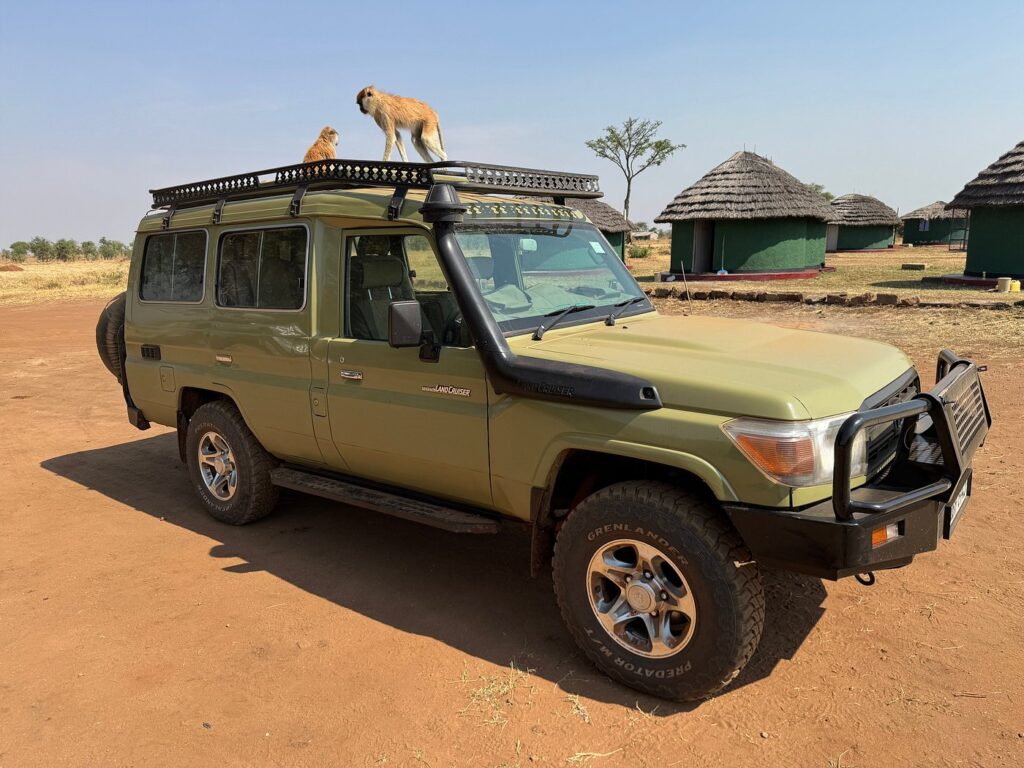
| Land Cruiser 76/78/79 (pop-up roof) | Serious game viewing; families; photographers | 4–7 | Pop-up roof for 360° viewing; the classic safari choice |
| Toyota Hilux double cab (rooftop tent) | Camping safaris; overlanders | 2–4 | Self-contained camping setup; covered load bed for gear |
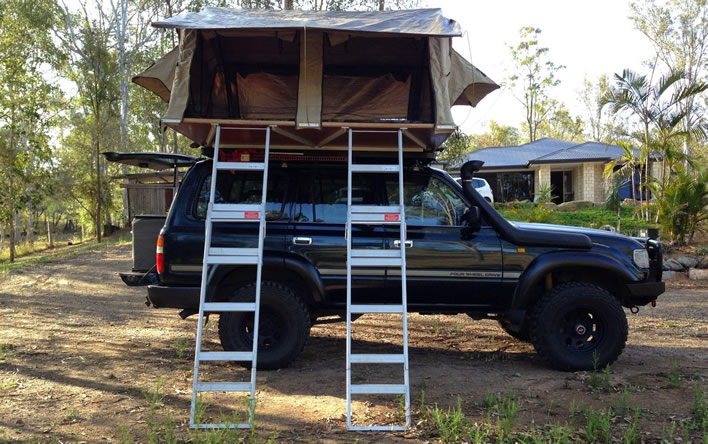
| Land Cruiser with rooftop tent | Remote parks; long itineraries | 2–4 | Most capable camping option; highest daily rate |
What a Good Rental Should Include
- Two spare tyres, a high-lift or bottle jack, wheel spanner and a basic tool kit
- Fire extinguisher, two reflective warning triangles and a first aid kit (police check for these)
- Comprehensive insurance (Collision Damage Waiver and third-party cover) and a clear statement of your excess
- Unlimited mileage (Tanzania distances are long, and capped mileage becomes expensive quickly)
- 24/7 roadside assistance with a phone number that actually answers
- Fridge or cool box, dual-battery system and 12V charging points, especially for camping trips
- GPS or preloaded offline maps (Tracks4Africa is widely regarded as the most reliable for parks)
- Tanzania registration. Foreign-registered vehicles pay considerably higher park vehicle fees
| Questions to Ask Your Rental Company
What is the insurance excess, and does it cover tyres, windscreens and undercarriage damage? Can I take the vehicle into the Ngorongoro Crater and cross borders (Kenya, Uganda, Rwanda)? Is there a one-way drop-off fee if I end in Dar es Salaam, Mwanza or Kilimanjaro? What happens if the vehicle breaks down deep inside the Serengeti? |
Tanzania Road Rules You Must Follow
| Rule | Details |
| Drive on the left | Overtake on the right. Give way to traffic already on roundabouts (coming from the right). |
| Speed limits | Usually 50 km/h in towns and villages (often lower where posted) and up to 80–100 km/h on open highways where signed. Inside national parks, typically 50 km/h or less. |
| Seat belts | Mandatory for the driver and front passengers; wear them in the back too. |
| Alcohol | Legal limit is 0.08% BAC. Roadside breath tests happen. The best rule: do not drink and drive. |
| Mobile phones | Handheld phone use while driving is prohibited. |
| Speed cameras | Police use handheld speed guns, often just after the speed limit drops entering a village. |
| Night driving | Legal on public roads but strongly discouraged; prohibited inside most parks outside gate hours. |
Unwritten Rules of the Road
- Speed bumps are everywhere, often unpainted and unsigned, at village entrances. Slow down whenever you see houses or roadside stalls.
- Indicator signals from trucks: a right indicator from the vehicle ahead often means “do not overtake, oncoming traffic”; a left indicator can mean “clear to pass”. Never rely on this alone; always check yourself.
- Buses and trucks overtake aggressively. Give them space and move left where it is safe.
- Livestock, cyclists, pedestrians and boda bodas (motorcycle taxis) appear suddenly, especially near towns.
- Flashing headlights from an oncoming vehicle can mean a police check, a hazard or animals on the road ahead.
Police Checkpoints: What to Expect
Traffic police checkpoints are a normal part of driving in Tanzania, especially on the Arusha–Makuyuni–Karatu road and on highways around Dar es Salaam, Morogoro and Dodoma. Officers are usually in white uniforms and stand at the roadside to wave vehicles over.
What they typically check
- Driving licence and IDP, passport, and the vehicle registration and insurance documents
- Fire extinguisher, two warning triangles and first aid kit
- Tyre condition, lights, indicators and seat belt use
- Speed, if they are operating a speed gun
How to handle a stop
- Slow down early, pull over fully and switch off the engine if asked.
- Greet the officer politely (a friendly “Shikamoo” or “Habari” goes a long way) and stay calm.
- Keep all documents together in a folder so you can hand them over quickly.
- If you are told you committed an offence, ask which offence it is. Legitimate fines are issued with an official receipt or a government payment control number; pay only against these.
- Never offer money informally. Politely ask for a written citation if anything seems unclear.
| Pro Tip
Most stops for tourists last only a minute or two. A smile, patience and complete paperwork are your best tools. Carry your rental company’s 24/7 number so they can speak to the officer if there is any misunderstanding. |
Road Conditions and Driving Distances
Tanzania’s main corridors are mostly well-paved tarmac, including Arusha–Karatu, Arusha–Moshi, Dar es Salaam–Morogoro–Iringa and Arusha–Dodoma. Conditions change sharply once you leave the highway.
- Serengeti roads are gravel and notoriously corrugated. Expect bone-rattling washboard surfaces between Naabi Hill Gate and Seronera. Lowering tyre pressure slightly (ask your rental company for guidance) makes the ride more comfortable.
- Ngorongoro Crater roads are steep, rocky and sometimes slippery. Descents and ascents follow one-way routes; low-range 4×4 is valuable.
- Rainy season (March–May and November–December) turns black cotton soil into deep, sticky mud. Some tracks become impassable, particularly in the western Serengeti, Katavi and parts of Ruaha.
- Travel times are longer than maps suggest. Budget roughly 40–50 km/h average on gravel and 20–30 km/h on game drive tracks.
| Route | Approx. Distance | Approx. Drive Time | Road Type |
| Arusha – Tarangire NP (gate) | 120 km | 2 hrs | Tarmac |
| Arusha – Karatu / Lake Manyara | 140 km | 2.5 hrs | Tarmac |
| Karatu – Seronera (Central Serengeti) | 150 km | 4–5 hrs | Gravel, crosses Ngorongoro CA |
| Seronera – Kogatende (Northern Serengeti) | 190 km | 5–6 hrs | Gravel and tracks |
| Dar es Salaam – Mikumi NP | 290 km | 5–6 hrs | Tarmac, heavy traffic |
| Iringa – Ruaha NP (gate) | 120 km | 2.5–3 hrs | Gravel |
| Arusha – Dar es Salaam | 640 km | 10–11 hrs | Tarmac; split over two days |
Distances and times are estimates and vary with road works, weather, checkpoints and wildlife stops.
| Golden Rule: Do Not Drive After Dark
Outside the parks, unlit trucks, pedestrians, livestock and potholes make night driving genuinely dangerous. Inside the parks, driving outside gate hours (usually about 6:00 am to 6:00–6:30 pm) is prohibited and can lead to heavy fines. Plan every driving day to arrive at your lodge or campsite at least an hour before sunset. |
Park Fees and How to Pay Them
Park fees are one of the biggest costs of any Tanzania self-drive, and they catch many travellers off guard. Most national parks are managed by the Tanzania National Parks Authority (TANAPA), while the Ngorongoro Conservation Area is managed separately by the Ngorongoro Conservation Area Authority (NCAA).
How the Fee System Works
- Fees are charged per person, per 24 hours, not per calendar day. Entering at 2:00 pm means your permit expires at 2:00 pm the next day.
- Card payment only at TANAPA gates. Bring at least two Visa or Mastercard credit cards; cash and many debit cards are not accepted.
- Vehicle entry fees are charged on top of personal fees and are much lower for Tanzania-registered vehicles than foreign ones.
- Camping or concession fees apply per person per night, depending on where you stay.
- Transit through Ngorongoro: driving from Karatu to the Serengeti means paying NCAA fees even if you only pass through.
- Tariffs are reviewed each July, so confirm the current rates when you book.
Approximate Non-Resident Park Fees (Adults, per 24 Hours, incl. VAT)
| Park / Area | Approx. Fee (USD) | Notes |
| Serengeti National Park | 82.60 | Plus camping or concession fees for overnight stays |
| Nyerere National Park | 82.60 | Southern circuit; boat safaris cost extra |
| Ngorongoro Conservation Area | 70.80 | Also charged as a transit fee en route to the Serengeti |
| Ngorongoro Crater service fee | Approx. 295 per vehicle | Per vehicle, per descent; strict time limit inside the crater |
| Tarangire National Park | 59.00 | Great dry-season elephant viewing |
| Lake Manyara National Park | 59.00 | Easy half-day or full-day self-drive |
| Arusha National Park | 53.10 | Walking safaris possible with a ranger |
| Mikumi / Ruaha / Katavi | From approx. 35.40 | Lower fees but longer distances |
Children aged 5–15 pay reduced rates; under-5s usually enter free. Figures are indicative and should be verified against the latest TANAPA and NCAA tariffs before travel.
| Budget Example: Two Adults, Arusha to Serengeti
A classic Karatu–Ngorongoro–Serengeti–Ngorongoro Crater loop quickly adds up. Two adults spending two nights in the Serengeti, transiting Ngorongoro both ways and doing one crater descent can easily spend USD 900–1,200 in park, transit, crater and camping fees alone, before fuel, food and accommodation. Plan for this in your budget. |
9. Park Rules for Self-Drivers
- Stay on designated roads. Off-road driving is banned in most areas of the Serengeti and Ngorongoro, and rangers issue heavy fines.
- Stay inside your vehicle except at designated picnic sites, campsites, viewpoints and toilet stops.
- Respect gate hours. Be out of the park or at your accommodation before the gates close.
- Keep your distance. Do not crowd animals, block their paths, or cut between a predator and its prey.
- Never feed wildlife, and keep food sealed away from baboons and monkeys at campsites.
- No drones without prior permits from the Tanzania Civil Aviation Authority and park authorities.
- Plastic bags are banned throughout Tanzania; bags may be confiscated on arrival.
- Ngorongoro Crater: follow the one-way descent and ascent roads and observe the time limit inside the crater floor (typically about six hours).
10. Best Time to Visit Tanzania for a Self-Drive
| Season | Months | Driving Conditions | Wildlife Highlights |
| Long dry season | June – October | Best overall; dusty but firm tracks | Peak game viewing; Mara River crossings in the northern Serengeti (Jul–Oct) |
| Short rains | November – December | Brief afternoon showers; mostly manageable | Migration heads south; green landscapes; fewer crowds |
| Short dry season | January – February | Good; some muddy patches | Calving season in Ndutu and the southern Serengeti |
| Long rains | March – May | Most challenging; some tracks impassable | Lowest prices; lush scenery; not ideal for first-time self-drivers |
| Our Recommendation
First-time self-drivers should aim for late June to October or January to February. If you must travel during the long rains, stick to tarmac-accessible parks such as Tarangire, Lake Manyara, Arusha and Mikumi, and add extra days as a buffer. |
Money, Payments and Budgeting
- Tanzanian Shillings (TZS) are best for fuel, small shops, markets and local restaurants.
- US dollars are widely accepted for lodges and some services. Bring clean, recent-series notes; older or damaged bills are frequently refused.
- ATMs are available in Arusha, Moshi, Karatu, Mto wa Mbu, Dodoma, Iringa, Morogoro and Dar es Salaam, but are scarce or absent near remote parks. Withdraw enough cash before heading into the bush.
- Cards are needed for TANAPA fees and accepted at most lodges, often with a surcharge of 3–5%.
- Mobile money (M-Pesa, Airtel Money) is used everywhere and is handy for small payments once you have a local SIM card.
- Tipping is customary: campsite staff, lodge staff and any guides or rangers appreciate a tip in cash.
Fuel Planning
Fuel is one of the areas where self-drivers most often run into trouble. Stations are plentiful along main highways but very limited near parks.
- Fill up in Karatu or Mto wa Mbu before entering the Ngorongoro Conservation Area and the Serengeti.
- Seronera in the central Serengeti has limited fuel, which can run out or be expensive. Do not depend on it.
- Keep your tank above half at all times on rural routes, and top up whenever you have the chance.
- Carry a jerrycan of spare fuel for remote parks such as Ruaha, Katavi and the northern Serengeti.
- Confirm the fuel type (diesel or petrol) at pick-up. Most safari 4x4s run on diesel.
- Cash is king at rural stations; card machines are not always working.
Navigation, SIM Cards and Connectivity
- Buy a local SIM card on arrival from Vodacom, Airtel or Yas. SIM registration is biometric, so bring your passport.
- Coverage is good in towns and along major highways but patchy or absent in much of the Serengeti, Ruaha and Katavi.
- Download offline maps before you go. Tracks4Africa, Maps.me and Google Maps offline areas all help; Tracks4Africa is the most detailed for park tracks.
- Carry a paper map of each park (available at gates and in Arusha bookshops) as a back-up.
- Share your daily route with your rental company or someone back home, and check in each evening.
Accommodation and Camping
Tanzania offers everything from simple public campsites to luxury tented camps, and self-drivers can mix and match.
| Option | What to Expect | Booking |
| Public campsites | Basic facilities: toilets, sometimes showers and cooking shelters. Unfenced, so wildlife may wander through. | Paid at the gate; usually no advance booking needed |
| Special campsites | Exclusive, remote sites with no facilities; a truly wild experience. | Must be booked in advance through the park authority |
| Mid-range lodges and tented camps | Comfortable rooms, meals, secure parking; concession fees may apply inside parks. | Book early for June–October and holidays |
| Lodges outside parks | In Karatu, Mto wa Mbu or near gates; lower rates and no concession fees. | Great value for Tarangire, Manyara and Ngorongoro |
Health and Safety
Health
- Malaria is present throughout most of Tanzania. Talk to a travel clinic about antimalarials, use repellent and sleep under a net.
- Drink bottled or filtered water and carry plenty in the vehicle; long, hot drives dehydrate you quickly.
- Sun protection is essential: hat, sunglasses, high-SPF sunscreen and long sleeves.
- Tsetse flies are common in Tarangire, Ruaha and parts of the Serengeti. Wear neutral colours and avoid dark blue and black.
- Travel insurance with medical evacuation cover is essential, as serious cases may need to be flown to Nairobi or Dar es Salaam.
Personal and Wildlife Safety
- Keep doors locked and valuables out of sight when driving through towns and parking in cities.
- Never leave the vehicle near wildlife, and do not approach elephants with calves or buffalo at close range.
- At unfenced campsites, check around your tent with a torch before stepping out at night.
- If you get stuck in mud or sand inside a park, stay in the vehicle and call for assistance rather than walking for help.
If You Break Down or Have an Accident
- Pull over safely, switch on hazard lights and place warning triangles well behind (and in front of) the vehicle.
- Call your rental company’s 24/7 assistance line immediately.
- In an accident, call the police on 112 and do not move the vehicle unless it is dangerous to remain.
- Get a police report; you will need it for any insurance claim.
Culture, Etiquette and Useful Swahili
Tanzanians are famously warm and welcoming, and a little courtesy is always appreciated.
- Greetings matter. Always greet people before asking a question or making a request.
- Ask before photographing people, especially Maasai communities. Some may expect a small fee.
- Dress modestly in towns, villages and particularly in coastal and Muslim-majority areas such as Zanzibar.
- Use your right hand to give and receive items and money.
- Photography of government buildings, military sites, police and border posts is not allowed.
| Swahili | English | When to Use |
| Jambo / Habari | Hello / How are you? | General greeting |
| Shikamoo | Respectful greeting | To elders and officials, including police |
| Asante (sana) | Thank you (very much) | Everywhere |
| Pole pole | Slowly, slowly | A way of life, and good driving advice |
| Mafuta | Fuel | At petrol stations |
| Barabara | Road | Asking for directions |
| Tafadhali | Please | Requests |
| Hakuna matata | No problem | The real phrase, widely used |
Self-Drive Packing Checklist
Documents
- Passport (6+ months validity) and printed e-Visa
- Driving licence and International Driving Permit
- Yellow fever certificate (if applicable)
- Rental agreement, insurance papers and emergency contacts
- Travel insurance with medical evacuation cover
- Two Visa/Mastercard credit cards plus US dollar and TZS cash
Vehicle and Driving
- Offline maps and a paper map for each park
- Tyre pressure gauge and compact air compressor (if not supplied)
- Tow strap, torch and spare vehicle fuses
- 12V car charger and power bank
- Jerrycan for remote parks
Personal
- Binoculars (one pair per person if possible)
- Neutral-coloured clothing and a warm layer for early mornings and Ngorongoro
- Hat, sunglasses, sunscreen and insect repellent
- Personal medication, rehydration salts and a small first aid kit
- Reusable water bottles, snacks and wet wipes
- Camera with extra batteries and memory cards
Common Mistakes to Avoid
| Mistake | How to Avoid It |
| Underestimating driving times | Plan no more than 4–6 hours of driving per day and leave buffer days. |
| Relying on cash for park fees | Carry at least two credit cards; TANAPA gates are card-only. |
| Arriving late at park gates | Know gate closing times and arrive with plenty of margin. |
| Choosing too small a vehicle | Book a proper 4×4 for Serengeti and Ngorongoro routes. |
| Running low on fuel | Refuel in Karatu or Mto wa Mbu; carry a jerrycan for remote parks. |
| Forgetting the IDP | Get an International Driving Permit before leaving home. |
| Going off-road for a better photo | Stay on marked tracks; fines are heavy and damage is lasting. |
| Skipping the vehicle inspection | Check tyres, spares, jack, fluids and safety kit at pick-up and photograph the vehicle. |
7-Day Northern Circuit Self-Drive Route
| Day | Route | Overnight |
| Day 1 | Arrive Kilimanjaro Airport; collect vehicle; drive to Arusha | Arusha |
| Day 2 | Arusha to Tarangire NP; afternoon game drive | Tarangire or nearby |
| Day 3 | Morning in Tarangire; drive to Lake Manyara for an afternoon game drive | Mto wa Mbu or Karatu |
| Day 4 | Refuel in Karatu; transit Ngorongoro CA to the central Serengeti | Seronera area |
| Day 5 | Full day exploring the central Serengeti (Seronera River Valley, kopjes) | Seronera area |
| Day 6 | Morning game drive; return to the Ngorongoro Crater rim | Crater rim or Karatu |
| Day 7 | Early Ngorongoro Crater descent; afternoon drive back to Arusha | Arusha / departure |
Frequently Asked Questions
Is it safe to self-drive in Tanzania?
Yes, for prepared and cautious drivers. The main risks are road-related: fast buses, speed bumps, livestock and driving after dark. Follow local road rules, avoid night driving and keep your rental company’s emergency number handy.
Can I self-drive in the Serengeti and Ngorongoro Crater?
Yes. Self-drive vehicles are allowed in both, provided you pay the relevant fees and follow park rules. A high-clearance 4×4 is strongly recommended, and the crater has its own per-vehicle service fee and time limit.
Do I need an International Driving Permit in Tanzania?
It is required if your licence is not in English and strongly recommended in all cases, as police frequently ask for it at checkpoints.
Can I pay park fees in cash?
Not at TANAPA gates, which accept Visa and Mastercard only. Bring at least two cards in case one is declined.
What side of the road do they drive on in Tanzania?
On the left. Most vehicles are right-hand drive, which is familiar for UK, South African, Kenyan and Ugandan drivers.
How much does a self-drive safari in Tanzania cost?
Costs vary widely, but plan for vehicle rental, fuel, park fees and accommodation. Park fees alone are often the largest single expense on a northern circuit trip.
Can I drive from Uganda or Kenya into Tanzania?
Yes, with the right cross-border paperwork: rental authorisation letter, COMESA Yellow Card insurance, temporary import permit and a Tanzania visa. Confirm cross-border permission with your rental company first.
What is the best time for a Tanzania self-drive?
June to October offers the best road conditions and game viewing. January and February are also excellent, especially for the calving season in the southern Serengeti.
Final Thoughts
A self-drive safari in Tanzania is one of the most memorable ways to experience East Africa. With the right vehicle, the correct paperwork, a realistic itinerary and respect for local road rules and park regulations, you can enjoy the freedom of exploring the Serengeti, Ngorongoro, Tarangire and beyond entirely on your own terms.
Take it pole pole, slowly, slowly. Build in extra time, keep your tank full, arrive before dark, and let the journey itself become part of the adventure.
| Ready to Plan Your Tanzania Self-Drive?
Marriott Safaris Africa offers well-equipped 4×4 vehicles, including Land Cruisers with pop-up roofs and rooftop tents, with full safety kit, 24/7 roadside support and cross-border options across East Africa. Contact our team for a tailored quote and route advice. |