Self-Drive Car Rental in Tanzania Destinations
Self-Drive Car Rental in Tanzania Destinations , Tanzania is one of the few countries in East Africa where a visitor with a 4×4, a good map, and a sense of adventure can realistically explore world-class national parks without joining an organised group tour. Self-drive safari travel has grown steadily in popularity over the past decade, driven by improved road infrastructure on the northern circuit, a wide selection of rental operators in Arusha and Dar es Salaam, and a generation of travellers who want the freedom to set their own pace between Tarangire, Lake Manyara, Ngorongoro Crater, and the Serengeti.
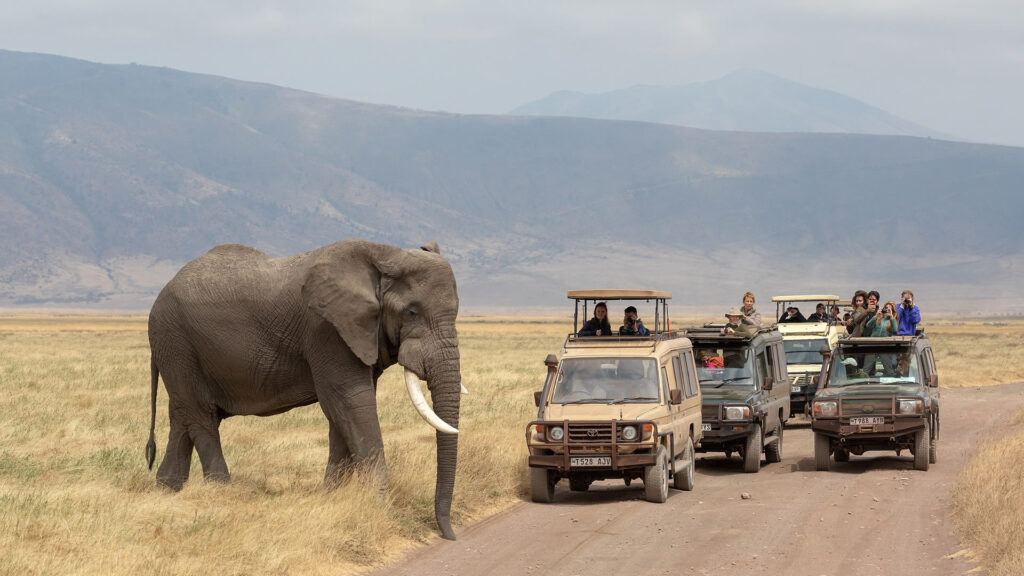
Self-driving is not the right choice for every park or every traveller, and this guide is built around that reality. Some destinations, such as the Serengeti’s central Seronera region or the steep crater walls of Ngorongoro, are genuinely manageable in a rented 4×4. Others, such as the deep wilderness of Ruaha or the seasonal black-cotton mud roads of the southern circuit, demand more caution, local knowledge, and in some cases a compulsory guide. The sections below work through the practical decisions destination by destination: which vehicle to choose, what a realistic budget looks like, what documents are required, and what road and park conditions to expect.
Planning Your Self-Drive Trip
Who Self-Drive Safaris Suit Best
Self-driving works well for travellers who already have some experience with off-road or unfamiliar-terrain driving, who are comfortable navigating without constant guidance, and who would rather spend an extra hour stationary watching a leopard than rush to a fixed itinerary. It also suits budget-conscious travellers, since a rented 4×4 split between two or more people is almost always cheaper than a chauffeur-driven safari vehicle plus a private guide.
It suits less well first-time visitors travelling alone, anyone uneasy with manual transmissions on rough terrain, and travellers visiting only once who would rather have a guide’s spotting skills and park knowledge than handle navigation themselves.
Required Documents and Permits
- Driving licence: An International Driving Permit (IDP) is recommended alongside your national licence; most rental companies in Arusha and Dar es Salaam will also accept a valid licence from your home country for short stays, but an IDP avoids any ambiguity at park gates.
- Passport and visa: Carry your passport at all times. Most nationalities can obtain a Tanzania visa on arrival or online in advance; park rangers and police checkpoints routinely ask for identification.
- Rental agreement: Reputable rental companies provide a logbook and an insurance certificate that must travel with the vehicle. Self-drive rentals destined for national parks should carry proof of comprehensive insurance, since park authorities can ask to see it.
- Park entry permits: These are purchased at each park gate (cash in USD, or increasingly by card/mobile payment) and are valid for 24 hours from the time stamped on the ticket, not the calendar day.
- Vehicle entry fee: Self-drive vehicles, including rentals, are charged a separate vehicle fee at most park gates, on top of the per-person conservation fee.
Choosing a Vehicle
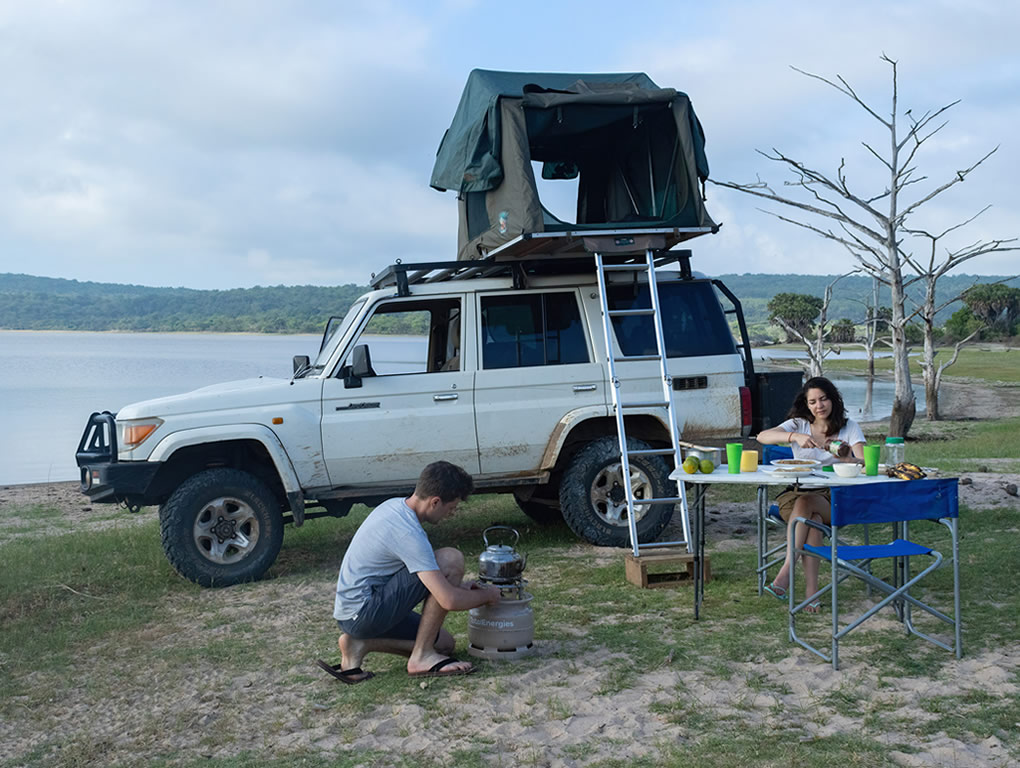
The single most important decision in a Tanzania self-drive trip is the vehicle. Two-wheel-drive saloon cars are unsuitable for any of the major parks and are best reserved for city use in Dar es Salaam or Arusha town. For the national parks, a high-clearance 4×4 with a manual or automatic low-range gearbox is the realistic minimum.
| Vehicle Type | Best For | Approx. Daily Rate (USD) |
| Toyota RAV4 (4×4) | Tarmac and graded roads, Arusha NP, light Tarangire use | 55 – 80 |
| Suzuki Jimny / Vitara | Budget travellers, easy terrain, two people, light luggage | 45 – 70 |
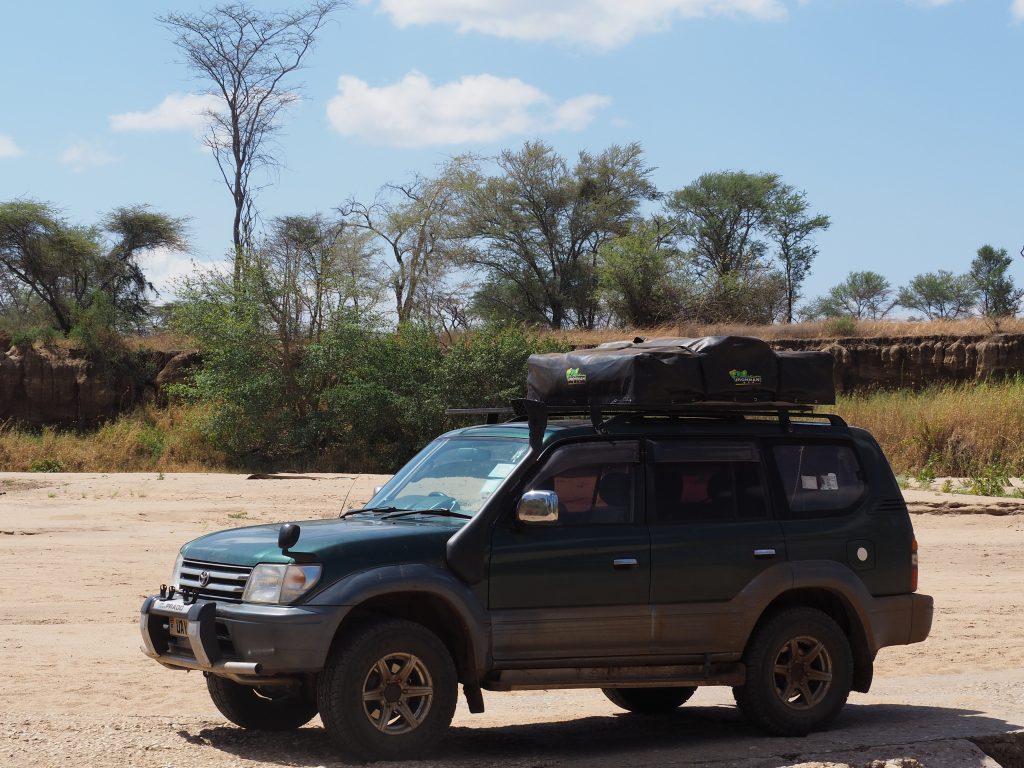
| Toyota Land Cruiser Prado | All major parks, family groups, comfort on long drives | 100 – 160 |
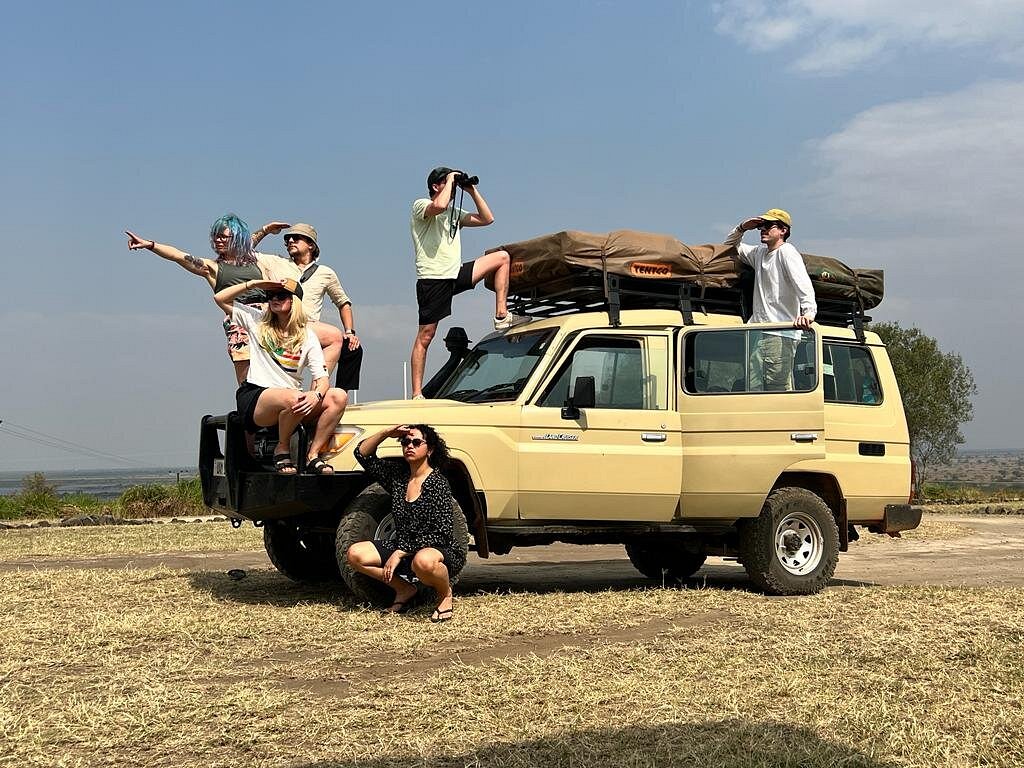
| Toyota Land Cruiser (hardtop/pop-up roof) | Serious off-road circuits, photography, Ngorongoro descent | 130 – 220 |
| Roof-tent equipped 4×4 | Self-drive campers using public and special campsites | 120 – 200 |
Rates vary by season, rental duration, and whether the vehicle includes unlimited mileage, a rooftop tent, camping equipment, and a satellite phone or VHF radio (strongly advisable for any multi-day trip into remote parks).
Typical Rental Costs and What They Include
| Cost Item | Typical Range (USD) | Notes |
| Daily 4×4 rental | 45 – 220 | Depends on vehicle class and season |
| Insurance (CDW/theft) | 10 – 25 per day | Always confirm the excess/deductible amount |
| Unlimited mileage | Often included | Some budget operators cap daily kilometres |
| One-way / drop-off fee | 50 – 250 | Applies for routes such as Arusha to Dar es Salaam |
| Camping/roof-tent add-on | 15 – 30 per day | Includes tent, bedding, basic cooking gear |
| Satellite phone/radio rental | 10 – 20 per day | Recommended for southern circuit and remote routes |
| Security deposit | 500 – 2,000 | Refundable, usually held on a credit card |
Fuel, Repairs, and Roadside Realities
Fuel stations are reliable in Arusha, Moshi, Dar es Salaam, and along the main tarmac highways, but become sparse near park boundaries. It is standard practice to fill the tank completely before entering Tarangire, Lake Manyara, Ngorongoro, or the Serengeti, and to carry a full reserve jerry can for any route into the southern circuit or to Zanzibar-bound ferry ports.
Punctures are the most common breakdown on safari roads; confirm the rental vehicle carries two full-size spares, a working jack, and a tyre repair kit. Tow and recovery services exist around Arusha and major gates but can take hours to reach a stranded vehicle inside a park, which is why most rental contracts require the renter to call the company’s emergency line rather than attempt major repairs independently.
Self-Drive by Destination
Arusha: The Northern Circuit Gateway
Arusha is the practical starting point for almost every northern-circuit self-drive trip and the centre of Tanzania’s rental industry. The town-to-park roads are tarmac as far as Mto wa Mbu, after which conditions vary by destination. Most travellers collect their vehicle in Arusha, spend a night or two acclimatising and stocking up on supplies, then head out in a loop covering Tarangire, Lake Manyara, Ngorongoro, and the Serengeti before returning.
- Vehicle collection: Confirm a full handover inspection, photographed scratches, and a test of the spare tyre and jack before leaving the rental yard.
- Supplies: Arusha’s supermarkets are the last reliable stock-up point for food, water, and fuel before the parks; prices inside park areas are significantly higher.
- Suzuki and RAV4 rentals: Arusha has a strong supply of compact 4x4s suited to Arusha National Park and short Tarangire trips, generally at the lower end of the daily rate scale.
Arusha National Park
Arusha National Park is the most forgiving destination for a first-time self-drive traveller in Tanzania. It sits less than an hour from Arusha town, its internal roads are well graded, and a compact 4×4 such as a RAV4 or Suzuki handles the terrain comfortably in dry conditions. The park does not host lions, which removes one of the main safety concerns around walking-adjacent activities, and several short, ranger-led walking trails are available alongside the driving circuit.
Visitors can complete a satisfying loop in half a day, taking in the Momella Lakes, the Ngurdoto Crater viewpoint, and forest sections favoured by colobus monkeys, before continuing toward Mount Meru’s lower slopes. Because it requires no specialist off-road skill, it is often recommended as the trip on which a newly arrived renter tests the vehicle before heading into more demanding parks.
Tarangire National Park
Tarangire is a step up in difficulty from Arusha National Park but remains very manageable for self-drive in the dry season (roughly June to October), when its sandy river-bed tracks firm up and its baobab-studded plains become some of the most rewarding self-drive terrain in northern Tanzania. The park is known for its elephant concentrations, particularly along the Tarangire River, and for game viewing that rewards travellers who can move at their own pace and wait at water points.
During the wet season, sections of black-cotton soil away from the main circuit become difficult or impassable for two-wheel-drive vehicles and even some 4x4s without good clearance; a Land Cruiser or Prado is the safer choice between November and May. Tarangire’s road network is less signposted than Arusha National Park’s, so a GPS unit, a paper map from the gate, or a downloaded offline map is strongly recommended.
Lake Manyara National Park
Lake Manyara is compact, with a single main loop running along the base of the Rift Valley escarpment between groundwater forest and the lake’s open shoreline. Roads are generally well maintained and suit a standard 4×4 in most conditions, making it an easy half-day addition to a Tarangire-to-Ngorongoro route. The park’s tree-climbing lions and large hippo pools are the main draw, and because distances are short, it is a relatively low-stress self-drive day.
Ngorongoro Conservation Area
The descent into Ngorongoro Crater is the most technically demanding short drive most self-drive travellers attempt in Tanzania. The access road drops roughly 600 metres over a series of tight switchbacks, and rules on self-drive access and compulsory guides inside the crater are reviewed periodically by the conservation authority and should be confirmed directly before travel.
A 4×4 with strong low-range gearing and reliable brakes is essential; rental companies in Arusha will generally decline to send a compact crossover-style vehicle into the crater. Inside the crater, the road network is one-way in sections and can become congested with safari vehicles around midday, so an early descent improves both game viewing and driving conditions. The crater rim itself, where many lodges and campsites sit, is reached via good tarmac and graded roads from Karatu.
Serengeti National Park
The Serengeti is large enough that self-drive experience varies enormously by region. The central Seronera area has a dense, well-used road network that is straightforward to navigate with a paper map or GPS, and it is the most realistic self-drive zone for travellers without a guide. The western corridor and the more remote Lobo and Ndutu areas have sparser roads, less mobile signal, and a higher risk of becoming lost or stuck, particularly in the wet season when many tracks turn to deep mud.
Fuel must be carried in or topped up at the limited stations near Seronera, since long detours for fuel are not realistic mid-circuit. Travellers attempting to follow the wildebeest migration into Ndutu or the far north toward the Mara River in their own vehicle should budget extra days, carry a satellite communication device, and ideally travel in convoy with at least one other vehicle.
Southern Circuit: Mikumi and Ruaha
Mikumi National Park, reached via tarmac road from Dar es Salaam in around four to five hours, is the most accessible southern-circuit park for self-drive travellers and a popular weekend trip for residents of the capital. Its main circuit follows open floodplain similar in feel to the Serengeti’s plains, and road conditions are generally good in the dry season.
Ruaha National Park, further inland and considerably larger, is a different proposition. Its road network is sparser, distances between landmarks are greater, fuel and mechanical support are far away, and many of its tracks are unmarked outside the core circuit near the park headquarters at Msembe. Self-drive in Ruaha is realistic only with a high-clearance 4×4, full recovery equipment, and ideally a hired park guide picked up at the gate.
Dar es Salaam: Car Rental and City Driving
Dar es Salaam functions as both a rental hub for southern-circuit trips and a starting point for travellers heading north overland or by domestic flight transfer. City driving is congested, particularly during morning and evening rush hours along Bagamoyo Road and the routes toward the ferry terminals, and a standard saloon or RAV4 is sufficient for city use and short coastal trips. Renters planning to continue on to Mikumi, Ruaha, or further inland should upgrade to a Land Cruiser-class vehicle before leaving the city, since options for swapping vehicles become limited once outside Dar es Salaam.
Zanzibar: A Note on Transfers
Self-drive rental vehicles from mainland Tanzania cannot be taken onto the Zanzibar ferry; vehicles are mainland-registered and insured for mainland use only. Travellers combining a self-drive safari with a Zanzibar beach extension should plan to drop the rental vehicle in Dar es Salaam or Arusha, take the ferry or a flight to Zanzibar, and arrange a separate local car or driver on the island if needed.
Safety, Road Conditions, and Seasonal Planning
Seasonal Considerations
| Season | Months | Self-Drive Conditions |
| Long dry season | June – October | Best conditions across all parks; firm tracks, high game visibility |
| Short dry spell | Late December – February | Generally good; popular calving season in southern Serengeti/Ndutu |
| Long rains | March – May | Many tracks become difficult or impassable; some camps and roads close |
| Short rains | November | Variable; localized mud, generally still manageable on main circuits |
| Quick Safety Checklist Before You Set Off
• Confirm two full-size spare tyres, a working jack, and a tyre repair kit are on board. • Carry a printed park map plus an offline GPS app, since mobile signal disappears in most parks. • Fill the fuel tank completely before entering any park; carry a reserve jerry can on remote routes. • Save the rental company’s 24-hour emergency contact number in your phone before departure. • Never exit the vehicle in Big Five areas except at designated picnic or viewpoint sites. • Plan to be back at camp or a lodge before dark; most parks require exit by a fixed gate-closing time. • Carry sufficient drinking water and a basic first-aid kit independent of what the rental company supplies. |
Driving Etiquette and Park Rules
- Speed limits: Most parks enforce a maximum of 25-50 km/h on internal roads; rangers do issue fines for speeding.
- Off-track driving: Strictly prohibited in all Tanzanian national parks; vehicles must stay on designated roads and tracks at all times.
- Wildlife distance: Maintain a respectful distance from animals and never attempt to encircle or block a sighting for other vehicles.
- Gate hours: Parks open at sunrise and close at sunset; arriving after closing or failing to exit on time can result in fines or being required to overnight inside the park.
- Right of way: Give way to safari vehicles already stopped at a sighting, and avoid sudden stops on narrow tracks.
Sample 10-Day Self-Drive Itinerary
The itinerary below illustrates how the destinations above connect into a realistic northern-circuit self-drive loop out of Arusha, suitable for a Land Cruiser-class 4×4 in dry-season conditions.
| Day | Route / Activity | Drive Time (approx.) |
| 1 | Arrive Arusha, collect vehicle, town orientation | — |
| 2 | Arusha National Park day loop | 45 min each way |
| 3-4 | Drive to Tarangire National Park, two nights in the park area | 2.5 hrs |
| 5 | Tarangire to Lake Manyara National Park (half-day loop) | 1.5 hrs |
| 6-7 | Lake Manyara to Ngorongoro Crater rim, crater floor game drive | 2 hrs |
| 8-9 | Ngorongoro to Serengeti (Seronera area), game drives | 3.5 hrs |
| 10 | Serengeti to Arusha, drop off vehicle | 5-6 hrs |
Final Considerations
Self-drive car rental opens up a version of Tanzania that fixed-itinerary group tours rarely allow: the freedom to linger at a sighting, choose an unconventional route, or simply drive at the pace the landscape deserves. It rewards preparation rather than spontaneity, however. Matching the right vehicle to the right destination, carrying proper recovery and navigation equipment, and being honest about which parks suit an unguided traveller and which do not are the decisions that separate a smooth self-drive trip from a difficult one.
Travellers uncertain about any specific park’s current self-drive rules, particularly around Ngorongoro Crater access or guide requirements in Ruaha, should confirm directly with the relevant park authority or a reputable Arusha-based rental company before finalising their route, since regulations are reviewed periodically and can change between seasons.