21 Days self drive car rental in Tanzania
21 days self drive car rental in Tanzania, Tanzania is one of Africa’s most rewarding self-drive destinations. With more than 38% of its land mass protected as national parks, game reserves, and conservation areas, the country offers an unmatched combination of iconic wildlife, volcanic landscapes, and pristine Indian Ocean coastline — all linked by an increasingly navigable network of roads.
Unlike guided-tour safaris that lock you into fixed schedules, a self-drive adventure puts you completely in control. You decide when to leave camp, how long to watch a lion pride at dawn, and whether to linger at a roadside market or push on to the next horizon. For travelers who value independence and want genuine immersion in the Tanzanian landscape, renting a car and driving yourself is the most rewarding way to see the country.
This 21-day itinerary has been designed to give you the very best of Tanzania: the world-famous Northern Circuit — Arusha, Tarangire, Lake Manyara, Ngorongoro, and the Serengeti — combined with a southern detour through Selous Game Reserve and a final week of relaxation on Zanzibar Island. The route is realistic for self-drive, balancing daily distances, road quality, and game-viewing time.
Key Statistics at a Glance
| Trip Overview | |
| Total Duration | 21 days / 20 nights |
| Total Distance | Approximately 3,200 km |
| Best Season | June – October (dry season) & January – February (short dry) |
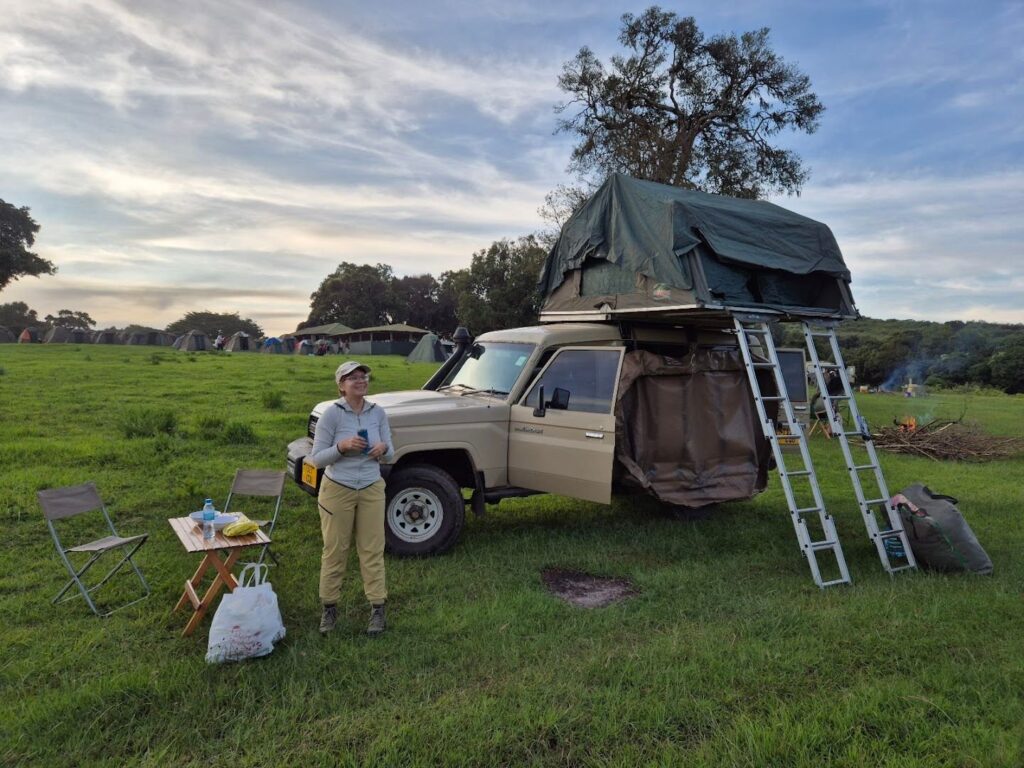
| Recommended Vehicle | 4WD Toyota Land Cruiser or 4WD Safari Popup |
| International Airports | Julius Nyerere Int’l (DAR), Kilimanjaro Int’l (JRO), Abeid Karume Int’l (ZNZ) |
| Currency | Tanzanian Shilling (TZS) — USD widely accepted |
| Driving Side | Left-hand side (same as Kenya, UK, Australia) |
| Languages | Swahili (official), English widely spoken |
Planning & Logistics
Choosing Your Rental Car
Vehicle selection is the single most important decision you will make for a Tanzania self-drive. The road network ranges from smooth tarmac on the main highways to deeply rutted, corrugated dirt tracks inside national parks. A standard saloon or 2WD crossover will leave you stranded the moment you turn off the main road. Do not compromise on this.
Recommended Vehicle Types
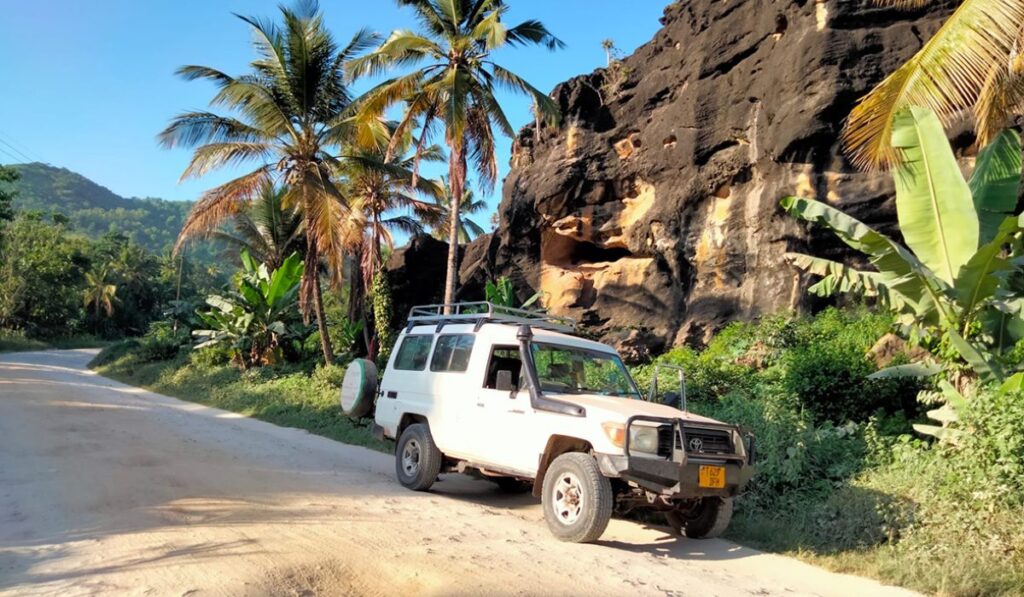
- Toyota Land Cruiser 70 or 78 Series (top choice) — bulletproof reliability, high ground clearance, genuine 4WD low-range capability, and parts available everywhere in Tanzania. The preferred choice of professional safari operators.
- Toyota Land Cruiser Prado 150 — more comfortable on-road, adequate off-road capability, better fuel economy. Ideal if your route sticks mainly to the Northern Circuit main tracks.
- Toyota Land Cruiser 200 Series — maximum comfort and power; slightly heavier but excellent for mixed terrain.
- Mitsubishi Pajero / Montero — solid alternative, good clearance, proven on East African roads.
- Toyota Hilux 4×4 Double Cab — best option if you want to carry camping equipment in the tray; less comfortable for passengers on long days.
Essential Vehicle Features to Confirm
- Full-time or part-time 4WD with low-range transfer case
- High ground clearance (minimum 200 mm)
- Pop-up roof for game viewing (strongly recommended for park driving)
- Dual spare tyres (mandatory — punctures are frequent on park tracks)
- Full-size steel spare wheels (alloy wheels are too easily damaged)
- Recovery kit: hi-lift jack, traction boards (e.g., MaxTrax), tow rope, shovel
- Roof rack and jerrycans for extra fuel (Serengeti has only one fuel point)
- Satellite communicator or GPS (do not rely solely on phone signal)
- First-aid kit, fire extinguisher, and reflective triangles
Rental Companies & Booking
Book your vehicle at least 4–6 months in advance for peak season (June–October). Reputable operators fill up quickly, and last-minute bookings often yield inferior vehicles.
Top Rental Companies in Tanzania
- Arusha-based operators — most self-drive rental companies are headquartered in Arusha near Kilimanjaro International Airport, which is the logical starting point for the Northern Circuit. Look for companies that include campsite bookings, permit assistance, and satellite phone rental.
- Dar es Salaam operators — better suited if you plan to start in the South and work north. Selous/Nyerere National Park is most easily accessed from Dar.
- International agencies (Hertz, Budget, Europcar) — available at main airports but generally offer smaller, less capable vehicles and limited safari-specific equipment. Use only for Zanzibar driving or city transfers.
What to Check in Your Rental Agreement
- Unlimited mileage — do not accept a daily kilometre cap on a 21-day Tanzania itinerary.
- Comprehensive insurance including wildlife damage, windscreen, and tyre coverage.
- 24-hour breakdown assistance with a guaranteed response time.
- Cross-border permission if you plan to enter Kenya (Masai Mara add-on).
- Fuel policy — confirm whether you receive and return full, and whether diesel or petrol.
- Rooftop tent or camping equipment inclusion and condition.
- Park permit assistance — some operators include pre-booked permits.
Permits, Fees & Park Entry
Tanzania’s national parks are managed by TANAPA (Tanzania National Parks Authority). All fees must be paid electronically via the TANAPA online portal or at the gate. Cash payments are no longer routinely accepted at major parks. Carry a Visa/Mastercard and have your booking confirmations printed.
| Approximate Park Fees (USD per 24-hour period — verify current rates) | |
| Serengeti NP | $82 per adult non-resident + $40 per vehicle |
| Ngorongoro Conservation | $82 per adult + $295 Crater access fee per vehicle per descent |
| Tarangire NP | $53 per adult + $40 per vehicle |
| Lake Manyara NP | $53 per adult + $40 per vehicle |
| Nyerere / Selous NP | $50 per adult + $40 per vehicle |
| Ruaha NP | $50 per adult + $40 per vehicle |
| Zanzibar Island | No park fee for general driving; Jozani Forest ~$15 per person |
Camping vs. Lodges
Self-drive travellers have two main accommodation options: public campsites, private campsites, and lodges. Most self-drive visitors combine all three — camping in the parks to maximise wildlife time and budget, and treating themselves to a lodge on rest days.
Campsite Types
- Public Campsites (TANAPA) — basic facilities (long-drop toilets, sometimes cold showers). Fee approximately USD 40–50 per person per night. Book through the TANAPA portal well in advance.
- Special/Private Campsites — exclusive-use sites set in prime game areas; no facilities but outstanding wildlife access. USD 80–100 per person per night. Require advance booking.
- Private Lodge Campsites — attached to lodges, full facilities including hot showers and restaurant access. USD 25–60 per person per night.
Road Conditions & Driving Tips
Tanzania drives on the left. The Northern Circuit roads connecting Arusha, Tarangire, Manyara, Ngorongoro, and Serengeti are well-travelled and manageable in a capable 4WD. Inside parks, tracks are graded dirt or sand — your low-range 4WD and tyre pressure management will get you through almost everything.
Key Driving Rules
- Speed limit in parks: 50 km/h on main tracks, 25 km/h in high-density wildlife areas. Rangers do enforce this.
- Never drive off-road in parks — stick to designated tracks to protect the ecosystem and your rental agreement.
- Drive slowly on corrugated roads to protect your tyres and suspension.
- Fuel up whenever you see a station — gaps of 200+ km exist in remote areas.
- Drive only in daylight — night driving on unlit roads is dangerous and prohibited in most parks.
- Watch for livestock, pedestrians, and wildlife on public roads at all times.
- Police checkpoints are common — always carry your driving licence, passport, vehicle documents, and park permits.
The 21-Day Itinerary
The route below covers the classic Northern Circuit, a southern extension to Nyerere/Selous Game Reserve, and finishes with a week on Zanzibar Island. Distances are approximate driving times; game drive hours are additional. Adjust pace to your own comfort — the itinerary is designed with realistic daily driving loads.
Week 1: Arusha to Serengeti
| DAY 1 | Arrival in Arusha — Vehicle Collection & Orientation | Arusha |
Fly into Kilimanjaro International Airport (JRO). Your rental company will meet you at arrivals. Allow 2–3 hours for vehicle inspection, equipment check, and a comprehensive briefing on park entry procedures, payment systems, and road conditions. Spend the afternoon exploring Arusha — visit the Maasai Market, stock up on groceries, fill up with fuel, and draw sufficient USD cash. Overnight in Arusha.
- Driving: Airport transfer only (~45 min)
- Stay: Guesthouse or hotel in Arusha — rest before the adventure begins
- Tip: Buy a quality Tanzania road map and paper park maps as GPS backup
| DAY 2 | Arusha to Tarangire National Park | Tarangire NP |
Depart Arusha early (6:00 AM) heading south on the A104 highway toward Makuyuni, then turn south to the Tarangire main gate. Tarangire is one of Tanzania’s most underrated parks — famous for its massive elephant herds (often 200+ animals at a time), ancient baobab trees, and the seasonal Tarangire River which acts as a magnet for wildlife in the dry season. Spend the full afternoon on game drives. Watch for lions, leopards, wild dogs, and the impressive birdlife including yellow-collared lovebirds.
- Driving: Arusha to Tarangire Gate ~120 km (2 hours)
- Stay: Tarangire public campsite or private campsite within the park
- Highlight: Elephant crossing at the Tarangire River at dusk
| DAY 3 | Full Day in Tarangire | Tarangire NP |
A full day to explore Tarangire’s diverse ecosystems — from the riverine forest and swampy areas along the Tarangire River to the open savannah dotted with enormous baobabs. Early morning game drives (depart before 6:30 AM) offer the best chances of big cat activity. In the midday heat, take a break at camp and return for afternoon drives as temperatures drop and animals return to the river. Tarangire sees far fewer visitors than Serengeti, giving you quiet, personal wildlife encounters.
- Activities: Full-day game drive; sundowner at viewpoint
- Watch for: African wild dogs, tree-climbing lions (rare here), gerenuk
- Stay: Tarangire NP campsite (second night)
| DAY 4 | Tarangire to Lake Manyara National Park | Lake Manyara NP |
Drive north on the B144 to Lake Manyara, Tanzania’s flamingo lake. The park is compact — just 330 sq km — but extraordinarily diverse, stretching from the soda lake shore through groundwater forest, open floodplains, and acacia woodland. Lake Manyara is famous for its tree-climbing lions and vast flocks of flamingos that turn the lake shoreline pink. The groundwater forest near the gate is excellent for forest-dwelling primates including baboons and blue monkeys. Afternoon canoe excursion on the lake edge (where permitted) to view hippos and birds.
- Driving: Tarangire to Manyara Gate ~75 km (1.5 hours)
- Stay: Campsite at Manyara or adjacent private site
- Highlight: Flamingo flocks on the lake at golden hour
| DAY 5 | Lake Manyara to Ngorongoro Crater Rim | Ngorongoro Conservation Area |
From Manyara, the road climbs dramatically through the Rift Valley escarpment to the rim of Ngorongoro Crater — one of the most spectacular drives in Africa. The Ngorongoro Conservation Area (NCA) entrance is at the top of this escarpment. Pay your fees at the gate and drive to your campsite on the crater rim at approximately 2,300 metres elevation. Temperatures are cool here — pack a warm layer. Sundowner from the crater rim with views across the caldera floor 600 metres below is unforgettable.
- Driving: Manyara to Ngorongoro Rim ~60 km (1.5 hours)
- Stay: Simba Campsite on the crater rim (book well in advance)
- Tip: Bring warm sleeping gear — rim temperatures drop to 10°C at night
| DAY 6 | Ngorongoro Crater Descent — Full Day | Ngorongoro Crater |
Today is one of the highlights of the entire trip. Depart the campsite by 7:00 AM, drive to the descent road, and drop down into the world’s largest intact volcanic caldera — a UNESCO World Heritage Site. The crater floor (259 sq km) supports an astonishing density of wildlife: approximately 25,000 large mammals including the Big Five, one of Tanzania’s last black rhino populations, enormous lion prides, spotted hyena clans, and massive buffalo herds. A picnic lunch at the hippo pool is a rite of passage. Vehicles must exit the crater by 6:00 PM — enforce this strictly.
- Activities: 10-hour crater game drive; hippo pool lunch stop
- Fees: Crater descent vehicle fee applies (USD 295 per vehicle per entry)
- Watch for: Black rhino (rare and endangered — a genuine privilege to see)
- Stay: Simba Campsite (second night) or drive toward Serengeti
| DAY 7 | Ngorongoro to Central Serengeti (Seronera) | Serengeti NP |
The drive from Ngorongoro’s Naabi Hill Gate into the Serengeti is one of the great approach roads in wildlife travel. The landscape shifts from highland forest to open golden savannah — and then the Serengeti opens before you like a living National Geographic documentary. The Seronera Valley in central Serengeti is the year-round wildlife hub of the park, with the Seronera River supporting resident lion prides, leopards, cheetahs, and one of the highest concentrations of wildlife in Africa. Drive slowly — you are already on safari the moment you pass the gate.
- Driving: Ngorongoro to Seronera ~165 km (3.5 hours including game viewing)
- Stay: Seronera public campsite (basic; toilet & shower; very affordable)
- Highlight: Your first Serengeti sunrise from camp
Week 2: Serengeti in Depth
| DAY 8 | Central Serengeti — Seronera Valley | Serengeti NP |
Dedicate the entire day to exploring the Seronera Valley. This area is arguably the single best location in Africa for leopard sightings — the riverine trees along the Seronera River are favoured resting spots. Lion prides here are large and habituated to vehicles, allowing extraordinary close approaches. Cheetahs frequently hunt on the open kopje grasslands. Explore the Moru Kopjes in the afternoon — ancient rock formations that provide shade for lions and serve as historical sites featuring Maasai rock paintings.
- Game Drive Route: Seronera River loop → Moru Kopjes → Retima Hippo Pool
- Wildlife Focus: Leopard in Seronera trees, lion prides, cheetah on kopjes
- Stay: Seronera campsite
| DAY 9 | Northern Serengeti — Kogatende & Mara River | Northern Serengeti |
Drive north toward Kogatende in the far north of the Serengeti, following the migration route. The northern Serengeti is the location of the famous Mara River crossings — one of the most dramatic wildlife spectacles on Earth — when wildebeest plunge into crocodile-filled waters in their annual migration. Even outside peak crossing season (July–October), the north holds enormous resident wildlife populations and sees far fewer vehicles than the central Seronera. The drive north itself is a game drive — scan the plains for moving wildebeest columns.
- Driving: Seronera to Kogatende ~170 km (allow 4–5 hours with game viewing)
- Stay: Kogatende public campsite or Lobo area
- Highlight: Mara River hippo pods and resident crocodiles
| DAY 10 | Full Day — Northern Serengeti | Northern Serengeti |
A full day in the remote north. The Lamai Wedge between the Mara and Sand rivers holds exceptional predator densities. In migration season you may witness river crossings; year-round you can find lion prides, leopards, and the park’s large elephant population that concentrates in the north. Drive the Sand River loop in the morning and explore the Lamai viewpoint in the afternoon for panoramic views over the migration corridors.
- Activities: Full day game drive; Lamai Wedge and Sand River loop
- Watch for: Nile crocodile ambushing wildebeest at river crossings
- Stay: Kogatende campsite (second night)
| DAY 11 | Western Serengeti — Grumeti River | Western Corridor, Serengeti |
Drive southwest through the Western Corridor — another migration hotspot famous for its Grumeti River crocodiles and the migrating herds that cross here between May and July. The western corridor is less visited than central Serengeti, rewarding those who venture here with quieter game drives and the chance of sighting African wild dogs. The Grumeti River supports enormous resident hippo populations and gigantic Nile crocodiles — among the largest in Africa.
- Driving: Kogatende to Ndabaka Gate area ~200 km (allow full day)
- Stay: Ndabaka area campsite or Kirawira
- Highlight: Massive Nile crocodiles in the Grumeti River
| DAY 12 | Western Serengeti back to Seronera — Exit to Ngorongoro | Serengeti / Ngorongoro |
A final morning game drive in the western corridor before driving back through Seronera and exiting through the Naabi Hill Gate. You have now crossed the Serengeti — a deeply satisfying achievement. Drive to a comfortable lodge or campsite on the outer Ngorongoro Conservation Area boundary for a well-earned rest, hot shower, and hearty meal before the southern leg of the journey.
- Driving: Western Serengeti to Ngorongoro boundary ~180 km
- Stay: Karatu lodge or campsite (outside NCA, great value)
- Tip: Karatu town has good markets, bakeries, and a fuel station — stock up
| DAY 13 | Karatu Rest Day — Cultural Immersion | Karatu / Lake Eyasi |
Take a genuine rest day. Explore the lush Karatu highlands, which are strikingly different from the savannah you have been crossing — fertile farmland growing coffee, maize, and vegetables. Visit a local coffee farm for a guided tour and freshly brewed Tanzanian coffee. Alternatively, drive down to Lake Eyasi for a guided walk with the Hadza people — one of Africa’s last hunter-gatherer communities — an experience that offers profound perspective on humanity’s original relationship with the natural world.
- Activity options: Coffee farm tour, Hadza walk at Lake Eyasi, Iraqw village visit
- Stay: Karatu (second night) — enjoy a restaurant meal and comfortable bed
Week 3: Southern Tanzania & Zanzibar
| DAY 14 | Karatu to Dar es Salaam — Transit Day | Dar es Salaam |
This is a long transfer day. Drive east from Karatu, through Arusha, and then south on the A23 toward Dar es Salaam — Tanzania’s largest city and commercial capital. The drive is approximately 500 km and takes around 7–8 hours. Alternatively, return the vehicle to your Arusha rental company and take a domestic flight to Dar es Salaam to save time (recommended if your schedule allows). If driving all the way, leave by 5:00 AM.
- Driving: Karatu to Dar es Salaam ~640 km (8–9 hours)
- Alternative: Return vehicle in Arusha; fly Arusha → Dar (1 hour)
- Stay: Hotel in Dar es Salaam — enjoy the city’s vibrant waterfront
| DAY 15 | Dar es Salaam — Collect Second Vehicle & Drive to Nyerere NP | Nyerere / Selous |
If you arranged a second vehicle from a Dar-based operator (recommended for the southern circuit), collect it in the morning. Drive south on the main road toward Mloka and the Matambwe Gate entrance to Nyerere National Park (formerly Selous Game Reserve) — one of Africa’s largest protected areas at over 50,000 sq km. The landscape shifts from northern Tanzania’s open savannah to miombo woodland, palm-lined rivers, and dramatic sandstone escarpments. The Rufiji River — one of East Africa’s greatest rivers — flows through the park.
- Driving: Dar to Nyerere/Matambwe Gate ~235 km (4 hours)
- Stay: Campsite within Nyerere NP — remote and atmospheric
- Highlight: First view of the Rufiji River and its hippo populations
| DAY 16 | Nyerere National Park — Rufiji River & Game Drives | Nyerere NP |
Nyerere is wilder and less visited than the Northern Circuit parks — an authentic wilderness experience. The Rufiji River and its tributaries are the lifelines of the park, lined with palm trees and elephant-browsed banks. Large elephant herds, lion prides, wild dogs, hippos, and crocodiles are all regularly encountered. A boat safari on the Rufiji River is a unique perspective unavailable in Tanzania’s other national parks — arrange this through your campsite operator. The birdlife is extraordinary with over 440 species recorded.
- Activity: Game drive in the morning + boat safari on Rufiji River in afternoon
- Watch for: African wild dogs (large packs are regularly sighted here)
- Stay: Nyerere NP campsite (second night)
| DAY 17 | Nyerere National Park — Deep South Exploration | Nyerere NP |
Spend a final morning in Nyerere exploring the less-travelled southern sections of the park where wildlife density is high and visitor numbers low. Look for the large sable antelope herds that are more common here than in northern parks. The park’s baobab-studded plains and rocky outcrops also shelter resident leopards. By midday, begin the drive back toward Dar es Salaam. Return your southern circuit vehicle if it was a separate rental, or drive to the Dar ferry terminal.
- Driving: Nyerere to Dar es Salaam ~235 km (4 hours)
- Stay: Hotel in Dar es Salaam; prepare for Zanzibar ferry
| DAY 18 | Dar es Salaam to Zanzibar — The Spice Island Arrives | Zanzibar |
Take the Azam Marine fast ferry from the Dar es Salaam port to Stone Town, Zanzibar (approximately 2 hours). A rental car on Zanzibar is optional — the island is small and well-served by taxis, tuk-tuks, and scooters. If you prefer to drive, collect a small car or 4WD from one of the island’s local rental agencies. Spend the afternoon and evening exploring Stone Town — a UNESCO World Heritage Site with labyrinthine coral-stone alleys, carved wooden doors, vibrant spice markets, and a rich Swahili-Arab-Indian cultural heritage.
- Ferry: Dar es Salaam → Stone Town (2 hours; book tickets in advance)
- Stay: Stone Town guesthouse or boutique hotel
- Highlight: Sunset at the Old Fort; seafood at the Forodhani Night Market
| DAY 19 | Zanzibar — Stone Town & Spice Tour | Zanzibar |
A full day on the island. In the morning, take a guided spice tour into Zanzibar’s famous plantation heartland — cloves, vanilla, nutmeg, black pepper, cardamom, and cinnamon all grow here, and the island’s economy was built on the spice trade for centuries. In the afternoon, visit the House of Wonders, the Old Slave Market and Anglican Cathedral (a sobering reminder of the island’s darker history), and the Zanzibar Museum of History. In the evening, sunset dhow cruise from the Stone Town waterfront is unmissable.
- Activities: Spice tour (half day); Stone Town walking tour; sunset dhow cruise
- Stay: Stone Town (second night)
- Tip: Negotiate spice tour and dhow prices at your hotel front desk
| DAY 20 | Zanzibar — North & East Coast Beaches | Nungwi / Kendwa / Paje |
Drive or take a shared dala-dala minibus to Zanzibar’s legendary beaches. The north coast (Nungwi and Kendwa) has the most consistent swimming conditions year-round — no significant tide flat, warm turquoise water, and a lively beach bar scene. The east coast (Paje, Jambiani, Bwejuu) is quieter, with sweeping white sand beaches backed by coconut palms. Paje is the kite-surfing capital of East Africa if that appeals. Snorkelling and scuba diving are world-class at all northern and eastern coast sites. This is your day to do absolutely nothing — or everything.
- Activities: Swimming, snorkelling, scuba diving, kite-surfing or beachside relaxation
- Stay: Beach hotel or banda on your chosen coast
- Highlight: Coral reef snorkelling at Mnemba Atoll (arrange through hotel)
| DAY 21 | Final Day — Zanzibar & Departure | Zanzibar / Departure |
Your final morning in Tanzania. Depending on your flight, enjoy a last swim, a final fresh coconut juice under a palm tree, and a walk along the beach to absorb everything you have experienced in the past three weeks. Stone Town’s airport (Abeid Amani Karume International Airport, ZNZ) has direct connections to Nairobi, Dubai, and Doha, with onward connections worldwide. Alternatively, take the ferry back to Dar es Salaam for international connections from Julius Nyerere International Airport.
- Departure: ZNZ (Zanzibar) → international connections via Nairobi, Dubai, Doha
- Tip: Allow 2.5 hours before international departure for ZNZ airport security
Budgeting Your 21-Day Tanzania Self-Drive
Estimated Budget Breakdown
Tanzania is not a cheap destination — the national park fees alone represent a significant cost. However, self-drive camping is dramatically more affordable than staying in lodges, and the independence it provides is worth every shilling. The table below is based on two adults sharing costs.
| Expense Category | Budget (USD) | Mid-Range (USD) |
| 4WD Vehicle Rental (21 days) | $2,100 – $2,800 | $3,500 – $4,500 |
| Fuel (approx. 3,200 km at ~12L/100km) | $480 – $560 | $560 – $640 |
| Park Entry Fees (2 adults + vehicle) | $1,800 – $2,400 | $2,400 – $3,200 |
| Ngorongoro Crater Descent Fee | $300 | $300 |
| Campsite Fees (14 nights in parks) | $840 – $1,120 | $1,400 – $2,000 |
| Hotels / Lodges (7 nights) | $350 – $700 | $1,400 – $2,800 |
| Food & Groceries | $400 – $600 | $700 – $1,200 |
| Zanzibar Ferry & Activities | $200 – $350 | $400 – $700 |
| Miscellaneous & Buffer (10%) | $600 – $800 | $1,000 – $1,500 |
| TOTAL (per couple, 21 days) | $7,070 – $9,630 | $11,660 – $16,840 |
Part 4: Health, Safety & Practical Information
Health Essentials
Vaccinations & Prophylaxis
- Yellow Fever — required vaccination certificate for entry if arriving from endemic countries. Strongly recommended regardless.
- Malaria — Tanzania is malaria-endemic. Take prophylaxis (consult your doctor: atovaquone-proguanil, doxycycline, or mefloquine). Use DEET repellent and sleep under a treated mosquito net.
- Typhoid, Hepatitis A & B, Rabies — recommended vaccinations; consult a travel medicine clinic at least 6 weeks before departure.
- COVID-19 — verify current entry requirements before travel.
Water & Food Safety
- Drink only bottled or treated water. Carry a quality water filtration system (e.g., Sawyer Squeeze or Grayl) to reduce plastic waste.
- Eat cooked food from reputable establishments. Avoid raw salads and unpeeled fruit from roadside stalls.
- Carry oral rehydration salts — heat and activity cause rapid dehydration.
Wildlife Safety in Camp
- Never leave food outside your vehicle or tent. Elephants, hyenas, and baboons investigate human camps and can be dangerous.
- Always use a torch when moving around camp at night — snakes and scorpions are nocturnal.
- Never approach wildlife on foot — maintain vehicle safety at all times in parks.
- If elephants approach your camp, stay inside your vehicle and wait — never run.
Best Time to Self-Drive Tanzania
Tanzania’s climate and the Great Migration calendar are the two key factors in timing your visit. Understanding both will help you maximise wildlife sightings and road accessibility.
| Month | Season | Migration Location | Self-Drive Conditions |
| Jan – Feb | Short dry | Ndutu / S. Serengeti (calving) | Excellent — firm roads |
| Mar – May | Long rains | Serengeti dispersed | Challenging — mud & flooding |
| Jun – Jul | Early dry | Central → Northern Serengeti | Very good — roads drying |
| Aug – Oct | Peak dry | Northern Serengeti & Mara | Excellent — best game viewing |
| Nov | Short rains | Serengeti → south | Good to moderate |
| Dec | Transitional | Southern Serengeti moving | Good; festive season busy |
The absolute sweet spot for this 21-day self-drive itinerary is late June through October. Roads are at their firmest, wildlife concentrates at water sources, the Mara River crossings are in full swing in the north, and Zanzibar’s southeast winds keep the beaches dry and pleasant.
Essential Packing List
Clothing
- Lightweight, neutral-coloured clothing (khaki, olive, beige) — avoid bright colours and white which show dust instantly
- Warm fleece or down jacket for Ngorongoro crater rim nights (cold at altitude)
- Waterproof rain jacket (essential even in dry season for unexpected showers)
- Wide-brim sun hat and UV-protective sunglasses
- Sturdy closed-toe shoes or hiking boots for walks
- Lightweight sandals for camp and Zanzibar
- Swimsuit and beach cover-up for Zanzibar
Safari Equipment
- Binoculars — minimum 8×42; 10×42 preferred (do not skimp on this)
- Camera with telephoto zoom lens (minimum 300mm equivalent)
- Beanbag or window mount for camera stabilisation while driving
- Dust-proof dry bags for camera gear (dust is relentless)
- Headlamp with extra batteries
- Solar charger or power bank (large capacity — 26,800 mAh minimum)
- Satellite communicator (Garmin inReach or SPOT) — essential in remote areas
Camping Gear
- Rooftop tent (usually supplied with vehicle — confirm and inspect)
- Sleeping bag rated to +5°C (Ngorongoro rim gets cold)
- Camp chairs and folding table
- Camping stove, fuel canisters, and basic cookware
- Cooler box / 12V fridge (12V fridge vastly superior for 21-day trip)
- Water purification filter or tablets
- Biodegradable soap and bush shower bag
Health & Safety Kit
- Prescription malaria prophylaxis (full 21-day supply plus 7 days post-trip)
- DEET mosquito repellent (50% concentration minimum)
- Permethrin-treated mosquito net
- Comprehensive first-aid kit including wound closure strips, SAM splint, and prescription antibiotics
- Rehydration salts (Dioralyte or similar)
- Sunscreen SPF50+ (large supply — equatorial sun is intense)
- Personal prescription medications with doctor’s letter
Insider Tips for a Seamless Self-Drive
Before You Leave Home
- Pre-book all park campsites through the TANAPA online portal at least 3 months in advance. Sites at Seronera and Simba fill up months ahead in peak season.
- Download offline maps for Tanzania on Maps.me or OsmAnd. Google Maps has coverage gaps in remote park areas.
- Purchase a Tanzanian SIM card on arrival (Vodacom or Airtel have the best coverage on the Northern Circuit). Register it with your passport.
- Notify your bank of your travel dates and the countries you will visit to prevent card blocks.
- Carry USD $1 and $5 bills for tips, small purchases, and emergency gate fees. Worn, torn, or pre-2009 USD bills are often refused in Tanzania.
On the Road
- The golden rule: always top up fuel when you see a petrol station. Never pass one thinking you will find another soon.
- Drive conservatively on park tracks — 40 km/h on graded roads, 20 km/h on rocky or rutted sections. Your suspension and tyres will thank you.
- Check your tyre pressure every morning. Reduce to 28 PSI on sandy tracks (Serengeti sand patches), re-inflate on return to main roads.
- Keep a detailed mileage log for fuel consumption tracking and to verify rental company charges.
- Photograph every road junction and gate sign. Self-navigation inside parks can be confusing — having a visual record prevents wrong turns.
Wildlife Etiquette
- Stay in your vehicle at all times in national parks unless at a designated picnic site with a ranger present.
- Never crowd animals or position between a predator and its prey — this is both dangerous and unethical.
- Switch off your engine near resting predators — the vibration can disturb them and reduce your own viewing time.
- If you see another vehicle parked and watching something, slow down and approach quietly — there is almost certainly something worth stopping for.
- Observe the 50 km/h speed limit strictly — rangers photograph speeding vehicles and fines are substantial.
Conclusion: The Road Awaits
A 21-day self-drive adventure through Tanzania is one of the great travel experiences available anywhere on Earth. It demands preparation, a robust vehicle, and a willingness to embrace the unexpected — punctures, dust storms, elephants wandering through camp at 3 AM, and sunsets over the Serengeti that no photograph can fully capture. But for those who make the journey, Tanzania rewards every kilometre with scenes that will remain with you for a lifetime.
The Serengeti’s vast golden plains, the primordial drama of Ngorongoro Crater, the wild rivers of Nyerere, and the dhow-dotted waters of Zanzibar — together they form a portrait of a continent at its most vivid and most alive. Drive it yourself, at your own pace, on your own terms. Tanzania is waiting.