
Can I Camp Inside the Park on a Self-Drive Trip?
Can I Camp Inside the Park on a Self-Drive Trip, Yes — camping inside the park is not only allowed on a Tanzania self-drive safari, it is one of the best ways to experience the country’s wilderness. Every national park run by Tanzania National Parks Authority (TANAPA) operates official campsites that self-drive travelers can use, from simple shared “public” campsites to secluded “special” campsites reserved just for your group. This guide explains exactly how it works, what it costs, and how to book, pay, and stay safe while camping inside the park on your own self-drive itinerary.
| ✓ TIP
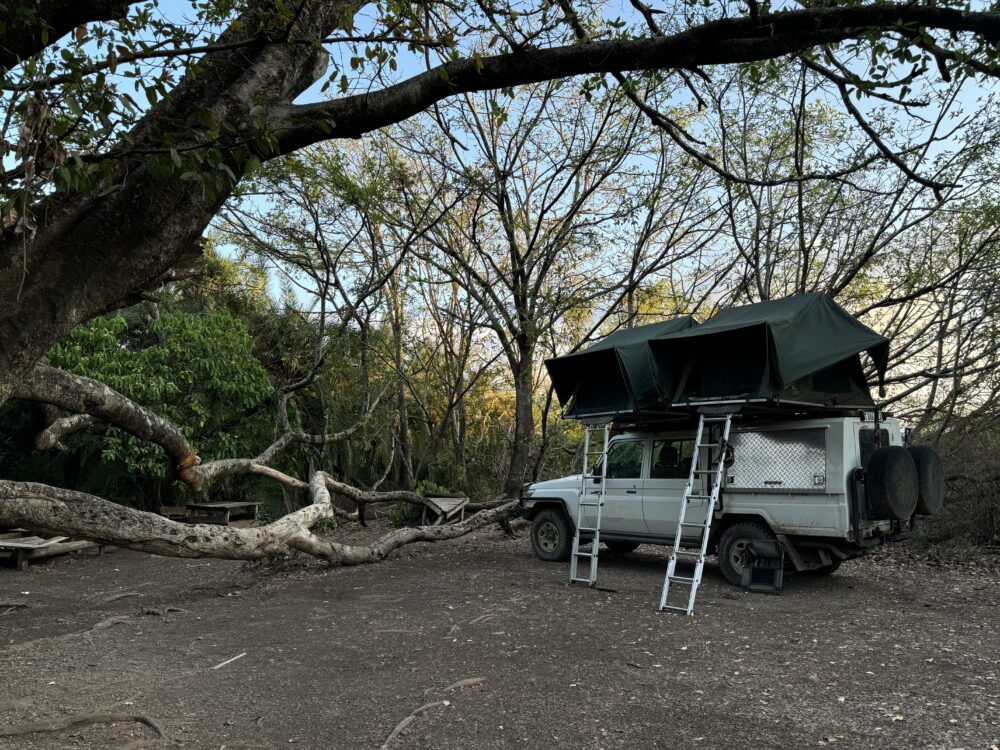
Short answer: Yes. Self-drive visitors can camp inside almost every TANAPA-managed national park — including Serengeti, Tarangire, Lake Manyara, Arusha, Ruaha, and Katavi — as long as you book and pay the correct camping fee, either on arrival at the gate (public campsites) or in advance through TANAPA (special campsites). |
The Four Types of Campsites You’ll Find Inside Tanzania’s Parks
TANAPA classifies in-park accommodation into distinct categories, and understanding the difference is the key to planning a self-drive camping trip that matches your budget and comfort level.
1. Public Campsites
Public campsites are the backbone of budget self-drive camping in Tanzania. They are shared by multiple groups at the same time, but each park maintains several of them in strategic, wildlife-rich locations. Facilities typically include long-drop or flush toilets, a water point, a designated fire area, and a parking/pitching area. You do not need to book a public campsite in advance in most parks — you simply register and pay at the gate on arrival, and a spot is guaranteed even during peak season. This makes public campsites the most self-drive-friendly option, since your itinerary can stay flexible.
2. Special Campsites
Special campsites are exclusive-use sites: once you book one, no other group can use it that night. They usually sit in more remote, scenic corners of the park — think a private spot on the Ngorongoro Crater rim or deep in the Serengeti’s northern Lobo area — and have little to no infrastructure, meaning you bring everything, including your own water and a portable toilet setup. Because only one group can occupy a special campsite per night, they must be booked in advance through the TANAPA online booking portal, and cost roughly 40–60% more than public campsites.
3. Seasonal Campsites
Seasonal campsites open for at least one three-month season, usually tied to wildlife movement such as the Great Migration. They follow the same no-permanent-structure rules as special campsites and are booked through TANAPA’s seasonal contract system, so they’re less relevant for a typical short self-drive trip unless you’re timing a visit around a specific migration window.
4. Fly Camps (Walking-Safari Camping)
Fly camping is a niche option tied to guided walking safaris rather than self-driving — an armed ranger leads you on foot to a temporary, camouflaged camp. It’s worth knowing about, but it isn’t something you arrange independently as a self-driver; it’s booked as part of a walking safari activity.
How to Book and Pay for In-Park Camping as a Self-Driver
Most TANAPA parks do not require advance booking for public campsites — you simply arrive at the entrance gate, pay your park entry, vehicle, and camping fees together, and drive in. This is one of the advantages of self-driving over a pre-planned group tour: you can decide which campsite to use once you see how your day’s game drive has gone.
- Payment method: You cannot pay cash at most TANAPA gates. Visa or Mastercard is standard; carry a card with sufficient limit and a backup card in case of network issues.
- Permit validity: A TANAPA permit is valid for 24 hours from the time you enter, which conveniently covers one full night of camping if you enter in the afternoon.
- Advance booking: Special campsites should be reserved through the TANAPA online portal (tanzaniaparks.go.tz) — ideally weeks or months ahead for popular circuits like Serengeti and Ngorongoro during peak season (June–October).
- At the gate: Gate staff will ask for the number of adults, children, and vehicles, and calculate camping, park entry, and vehicle fees as a single transaction.
| ℹ GOOD TO KNOW
Print or screenshot your booking confirmation before you leave network coverage. Some gates, particularly for special campsites, will ask to see proof of an existing TANAPA reservation before letting you proceed. |
What Does It Cost to Camp Inside the Park?
Camping fees are charged per person, per night, on top of the standard park entry and vehicle fees. Rates vary by park tier and season, and VAT (18%) is included in most published figures. The table below gives a realistic 2025–2026 planning range for self-drive travelers.
| Fee type | Public campsite | Special campsite |
| Premium parks (Serengeti, Nyerere) | ≈ $35 pp/night | ≈ $59 pp/night |
| Mid-tier parks (Tarangire, Manyara, Arusha) | ≈ $35 pp/night | ≈ $47–59 pp/night |
| Standard parks (Mikumi, Katavi, Ruaha) | ≈ $30–35 pp/night | ≈ $50–59 pp/night |
| Ngorongoro Conservation Area | ≈ $47–50 pp/night | Rim sites, booked separately |
| Children 5–15 years | ≈ $12 pp/night | ≈ $12 pp/night |
| Children under 5 | Free | Free |
On top of camping fees, budget for the daily park entry fee (roughly $30–83 per adult depending on the park) and a vehicle entry fee (around $10 for a compact 4×4 like a Suzuki, $20 for a Land Cruiser). A realistic all-in cost for one adult self-driver camping one night in a premium park like Serengeti — entry, vehicle, and public campsite fee combined — typically lands between $115 and $190, which is still dramatically cheaper than a lodge or tented-camp stay.
| ⚠ WARNING
Fees at Ngorongoro Conservation Area and Wildlife Management Areas such as Lake Natron are set separately from TANAPA parks and are often payable only through a local operator rather than directly at the gate — build a small handling-fee buffer into your budget for these areas. |
Where to Camp: Popular Self-Drive Campsites by Park
Serengeti National Park
- Seronera: Seronera Public Campsite sits in the heart of the central Serengeti with year-round wildlife viewing and regular ranger patrols.
- Ngorongoro rim: Simba A and Simba B on the crater rim (Ngorongoro side of the circuit) offer dramatic sunrise views straight from your tent flap.
- Lobo area: Northern Serengeti public and special sites near Lobo suit travelers timing a visit to the Mara River crossings.
Tarangire National Park
Tarangire’s public campsite sits among its famous baobab trees, with elephants frequently wandering through camp, and — unusually for a public site — running water and flush toilets.
Katavi and Ruaha National Parks
These remote southern-circuit parks see far fewer self-drive visitors, so campsites feel wilder and quieter. Because they’re further from major towns, arrive fully self-sufficient with extra fuel, water, and recovery gear, and confirm campsite availability with the park office before you set off.
Camping Gear for a Self-Drive Trip
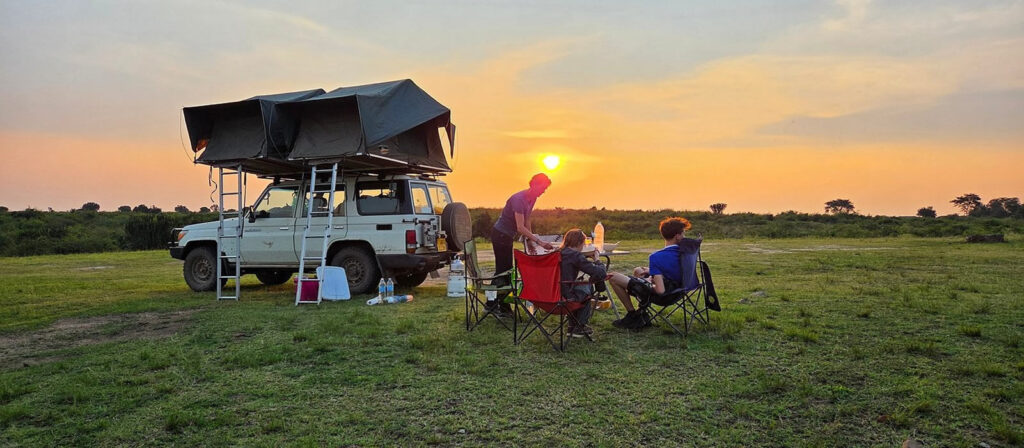
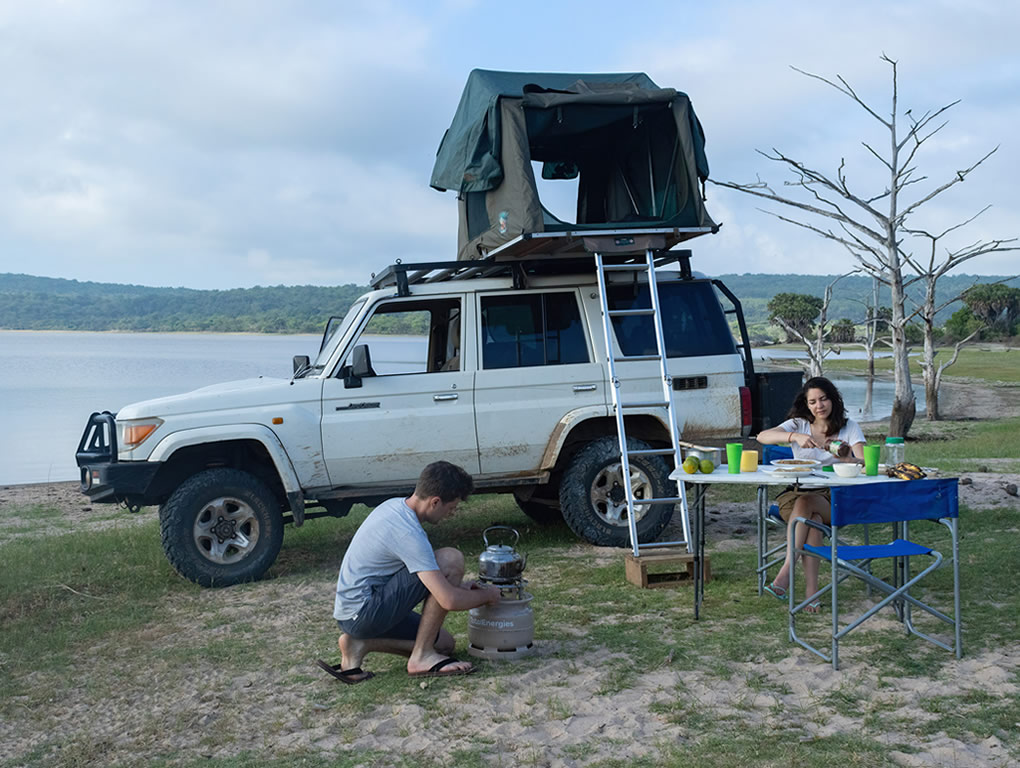
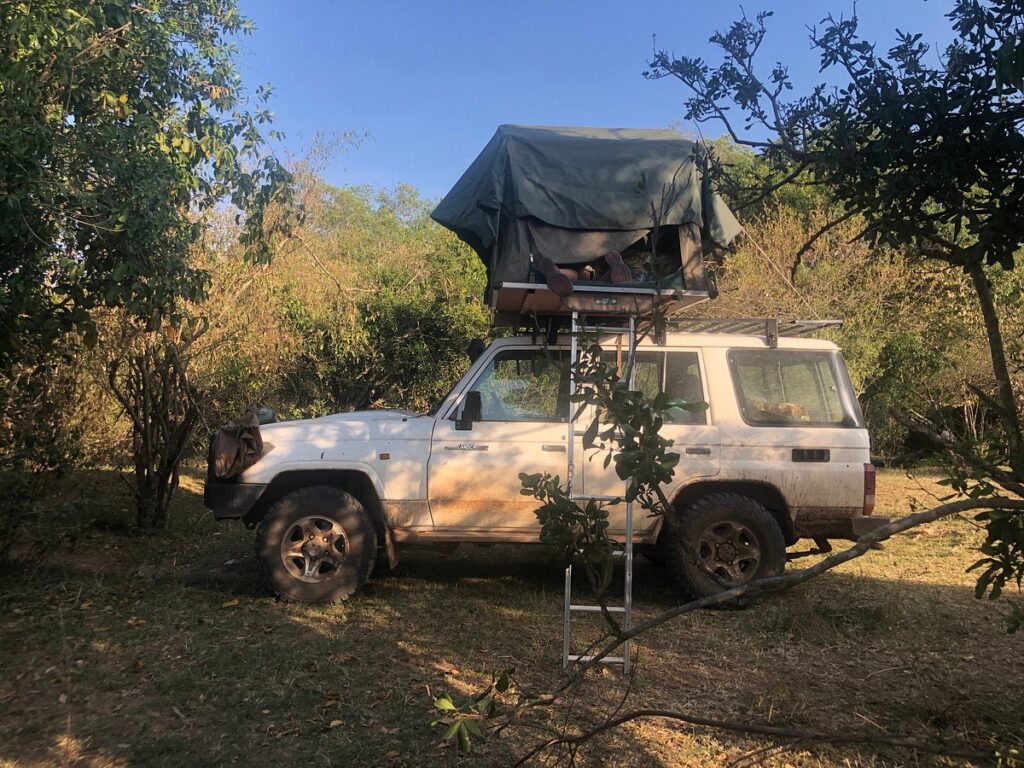
- Rooftop tent: A rooftop tent mounted on your 4×4 lifts you above ground-level wildlife, sets up in minutes, and is the most popular choice for self-drive camping trips in Tanzania.
- Ground tent: A traditional ground tent costs less and suits longer stays or larger groups, but requires more caution around camp at night.
- Basic supplies: Public campsites provide only basic toilets and, sometimes, cold showers — bring your own drinking water, a headlamp, and a portable camp table and chairs.
- Food and firewood: Firewood, food, and cooking equipment are your responsibility everywhere except a handful of upgraded sites — plan meals and pack a cooler.
- Gear rental: Rental companies in Arusha and Dar es Salaam can supply a full rooftop-tent camping kit for a self-drive vehicle, useful if you’re flying in without gear.
Safety Rules for Camping Inside a National Park
Camping inside a national park means camping in an unfenced wilderness where lions, elephants, hyenas, and buffalo move through campsites at night as a matter of routine. This is part of the appeal — and it comes with firm rules.
- After-dark rule: Do not leave your tent after dark without a light and without first checking your surroundings; use a flashlight to scan the area before stepping out.
- Food storage: Never leave food, wrappers, or scented items outside your tent or vehicle overnight — this is what draws hyenas and baboons into camp.
- Children: Keep children within sight at all times and brief them on staying inside the tent boundary after dark.
- Ranger instructions: Follow any instructions from park rangers patrolling public campsites without hesitation — they know the current movement of wildlife in that specific area.
- Special campsites: At special campsites with no facilities and no other campers, extra self-sufficiency and vigilance are essential since you won’t have neighboring groups nearby.
| ✓ TIP
A rooftop tent is widely recommended over a ground tent specifically for safety in unfenced campsites — sleeping off the ground removes the most common risk factor in wildlife encounters at night. |
Frequently Asked Questions
Do I need to pre-book a public campsite?
No. Public campsites in almost every TANAPA park operate on a pay-at-the-gate basis and are not known to fully book out, making them ideal for a flexible self-drive itinerary.
Can I camp anywhere I like inside the park?
No. Camping is restricted to designated public, special, or seasonal campsites. Pitching a tent outside these zones is not permitted and can result in fines or expulsion from the park.
Is it safe to self-drive and camp without a guide?
Yes, thousands of self-drive travelers camp independently in Tanzania’s parks each year. Sticking to designated campsites, following ranger guidance, and using a rooftop tent significantly reduces risk.
Which parks are best for first-time self-drive campers?
Tarangire and Arusha National Park are considered easier introductions thanks to good road networks, well-established public campsites, and proximity to Arusha for vehicle support if needed.