Is It Safe to Self-Drive in the Serengeti as a First-Time Visitor to Africa?
Yes, self-driving in the Serengeti is legal and generally safe from a security standpoint, but for a first-time visitor to Africa it carries meaningfully higher risk than for an experienced overland traveler. The danger in the Serengeti rarely comes from crime; it comes from difficult terrain, long distances between help, wildlife encounters that demand quick and correct judgment, and the compounding effect of doing all of this for the first time in an unfamiliar continent. Most tour operators and safety guides agree: it can absolutely be done safely, but it should not be treated casually.
| TIP: The Honest Verdict
Self-driving the Serengeti as your very first African trip is possible, but it is the harder, riskier path. If you have zero off-road driving experience, no African travel history, and limited backup budget, a guided or hybrid trip (self-drive with a park guide riding along) is the safer starting point. |
Why the Serengeti Is Different From an Ordinary Road Trip
The Serengeti spans roughly 14,750 square kilometers of open plains, wooded hills, and river valleys, and its road network is unpaved, rutted, and dust-choked for most of the year. Unlike a rental car trip in Europe or North America, there is no roadside assistance a few minutes away, no cell signal across large stretches of the park, and no paved shoulder to pull onto if something goes wrong. Distances are also longer than most first-time visitors expect: the drive from Arusha to the Seronera area in the park’s center takes roughly nine to ten hours, and internal park distances of 300 to 400 kilometers a day are common if you want to cover meaningful ground.
For someone who has never driven in Africa before, all of this arrives at once: a left-hand or right-hand drive layout that may be unfamiliar, a 4×4 vehicle that behaves very differently from a normal sedan, wildlife that can appear on the road without warning, and navigation across a landscape with few landmarks. None of these factors are individually unmanageable, but together they raise the skill floor required to do this safely and enjoyably.
The Real Safety Risks, Ranked
1. Speeding and Vehicle Accidents
Vehicle accidents, not predator attacks, are the leading safety concern for self-drivers. Park data cited by multiple safari operators attributes the large majority of Serengeti accidents to excessive speed on rutted, dusty roads. Washboard surfaces make it tempting to speed up to reduce vibration, but this is exactly when vehicles lose traction and roll. Speed limits inside the park are enforced for this reason and should be treated as a hard rule, not a suggestion.
2. Wildlife Encounters
The Serengeti has a dense and varied predator population, including lions, leopards, cheetahs, hyenas, and elephants, all of which can be encountered directly on or beside the road. The park rule is absolute and non-negotiable: stay inside the vehicle at all times, except at designated picnic sites, rest areas, or walking zones. Doors, windows, and roof hatches should be treated with caution around any animal at close range, and vehicles should never be driven toward or after an animal to get a closer look.
3. Getting Lost or Stuck
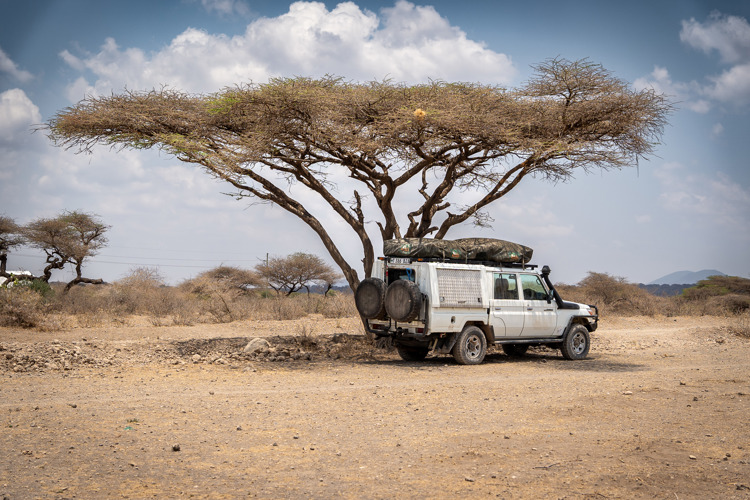
The park’s internal road network is signposted but can still be disorienting for a first-time visitor, especially off the main circuits. Getting stuck in mud during the rainy season or in soft sand off the main tracks is a common problem, and because Serengeti’s radius is so large, a breakdown or stuck vehicle can mean a long wait for help, particularly outside the busier central Seronera area.
4. Heat, Dehydration, and Isolation
Long days on dusty roads with no shade and no shops mean that basic logistics — carrying enough water, food, and fuel — become genuine safety issues rather than conveniences. A first-time visitor who underestimates these needs can find themselves in real difficulty far from any settlement.
What Makes It Manageable: The Park’s Built-In Safeguards
The Serengeti is not an unregulated wilderness. Tanzania National Parks Authority (TANAPA) enforces a structured set of rules specifically designed to keep self-drivers safe, and the park sees hundreds of thousands of visitors a year with a low rate of serious safety incidents.
- Night driving is prohibited park-wide; all visitors must be off the roads by around 6:00–6:30 PM, which removes the highest-risk driving window entirely.
- Rangers are stationed at public campsites and check visitors in each evening, so if you go missing, a search begins the same night rather than days later.
- Gate staff verify that vehicles meet basic 4×4 standards and that visitors carry the required permits before granting entry.
- Speed limits, no-off-roading rules, and mandatory in-vehicle wildlife viewing are consistently enforced with real financial penalties, which keeps behavior in check even among casual rule-breakers.
- Roads through the central Seronera area, where most first-time self-drivers stay, are the best maintained and most heavily trafficked in the park, meaning help is rarely far away.
Should a First-Time Africa Visitor Actually Do This?
This is the real question behind “is it safe,” and the honest answer depends less on the Serengeti itself and more on your own preparation. The park rewards travelers who plan meticulously and punishes those who arrive underprepared, regardless of nationality or prior experience.
Good reasons to self-drive as a first-timer
- You have prior 4×4 or off-road driving experience, even outside Africa, and are comfortable with manual gearboxes and low-range gearing.
- You are renting from a reputable company that provides a full safety briefing, GPS pre-loaded with park tracks, and 24/7 breakdown support.
- You are traveling with at least one other capable driver, so long days can be shared and a second set of eyes is always watching the road.
- You are visiting during the dry season (roughly June to October or January to February), when road conditions are at their most predictable.
- Your budget allows for a buffer if plans change, such as needing to hire a park guide for a day or switching to a lodge if a route proves too demanding.
Reasons to reconsider, or to hybridize the trip
- You have never driven a 4×4 or manual vehicle and this would be your first time doing so on rutted dirt roads.
- You are traveling completely solo with no second driver and limited experience navigating without cell signal.
- You are visiting during the rainy season (November–December or March–April), when mud and washouts significantly increase difficulty.
- You would find it stressful to manage navigation, wildlife spotting, and vehicle handling simultaneously, all while processing your first exposure to African wilderness.
| TIP: A Practical Middle Ground
Many rental companies let you hire a park guide or ranger to ride in your own vehicle for the day. This preserves the independence and privacy of self-driving while adding local knowledge of routes, wildlife behavior, and current road conditions — a popular and affordable compromise for first-timers. |
Essential Safety Rules Inside the Park
- Never exit the vehicle except at officially designated picnic spots, rest areas, or ranger-approved walking points.
- Keep to signed roads at all times; off-roading is prohibited and heavily fined, both for ecosystem protection and because unmarked terrain is where vehicles get stuck or damaged.
- Observe posted speed limits strictly; the majority of accidents in the park stem directly from speeding on rough roads.
- Never approach or chase wildlife for a better photo; keep a respectful distance, park to the side of the road, switch off the engine, and let other vehicles join the sighting.
- Complete all driving between roughly 6:00 AM and 6:30 PM; night driving is banned park-wide and after-dark travel dramatically increases risk.
- Carry more water and food than you think you need — a working guideline used by seasoned self-drivers is 5 to 10 liters of water per person per day.
- Never litter, even biodegradable items like fruit peels, as this affects animal behavior and park ecology.
- Register your planned campsite or route with rangers at the gate so that your movements are on record.
Vehicle and Equipment Requirements
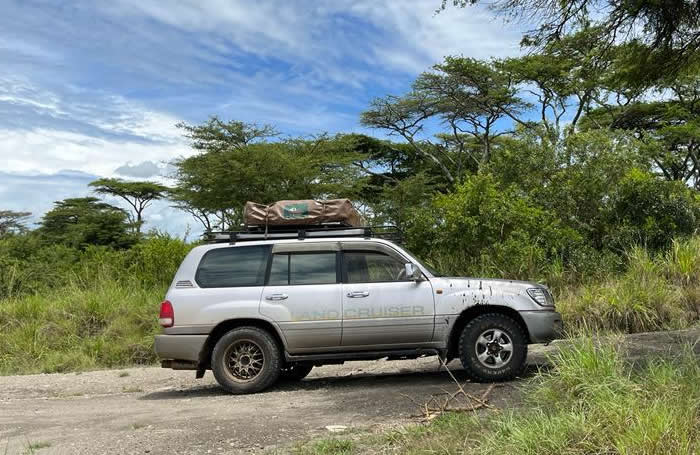
TANAPA only permits 4×4 vehicles inside the Serengeti; a standard sedan or 2WD vehicle will not be allowed past the gate, and would not survive the terrain regardless. A well-maintained Land Cruiser or similar off-road vehicle with high ground clearance is the standard choice among rental companies.
| Requirement | Why It Matters | First-Timer Priority |
| 4×4 drivetrain, high clearance | Washboard roads, ruts, and river crossings are impassable in a 2WD vehicle | Mandatory |
| Full-size spare tire + jack | Punctures are common on rough gravel; no roadside tire service inside the park | Mandatory |
| GPS with offline Serengeti tracks | Cell signal is unreliable or absent across much of the park | Highly recommended |
| Satellite phone or GPS tracker | Provides an emergency link when there is no cell coverage | Recommended |
| 24/7 rental company support line | A rescue or recovery service can be dispatched if you break down or get stuck | Highly recommended |
| First-aid kit and extra fuel | Fuel stations are sparse; medical help can be hours away | Mandatory |
Comparing Your Options
| Option | Safety Level for First-Timers | Best For |
| Fully self-drive, no guide | Moderate — requires strong preparation and confidence | Experienced off-road drivers, budget-conscious travelers with time to plan |
| Self-drive with a hired park guide | High — local expertise reduces navigation and wildlife risk | First-time visitors who still want independence and privacy |
| Fully guided safari (driver-guide) | Highest — professional driver-guides handle every risk factor | First-time Africa visitors with limited driving confidence or budget for a premium experience |
Frequently Asked Questions
Is the Serengeti dangerous for tourists?
The park itself is considered very safe from a crime and security perspective; incidents are rare, and TANAPA prioritizes tourist safety as a matter of national economic importance. The genuine risks are practical — driving conditions, wildlife proximity, heat, and isolation — rather than personal safety threats from people.
Do I need previous off-road driving experience?
It is not legally required, but it is strongly advisable. Washboard gravel, sudden ruts, and occasional mud or sand make the Serengeti a genuinely demanding driving environment, and a first-time driver in unfamiliar terrain faces a steeper learning curve than in most other self-drive destinations.
What is the single most dangerous mistake first-timers make?
Speeding to reduce the discomfort of washboard roads. It feels counterintuitive, but slowing down is safer and gentler on the vehicle. This single habit change addresses the leading cause of accidents inside the park.
Can I hire a guide even if I bring my own rental car?
Yes. Most rental companies and park gates can arrange a ranger or professional guide to ride along in your vehicle for a daily fee. This is one of the most effective ways for a first-time Africa visitor to reduce risk without giving up the independence of self-driving.
What time of year is safest for a first-time self-drive?
The dry season, roughly June through October and January through February, offers the most predictable road conditions. The rainy periods (November–December and March–April) bring mud, washouts, and a higher chance of getting stuck, which adds real difficulty for an inexperienced driver.
Final Takeaway
Self-driving the Serengeti as a first-time Africa visitor is not reckless, but it is not the easiest way to see the park either. The infrastructure of rules, ranger check-ins, and enforced curfews exists precisely because TANAPA has designed the park to be survivable and enjoyable for independent travelers of varying experience levels. What determines your actual safety is preparation: the vehicle you choose, the season you travel in, whether you bring a second driver, whether you consider hiring a guide for even part of the trip, and how disciplined you are about the park’s core rules — especially staying inside the vehicle and respecting speed limits. Travelers who take these seriously consistently report the Serengeti as one of the most rewarding self-drive experiences in Africa; those who treat it casually are the ones who run into trouble.