Self Drive Tips In Tanzania: The Complete Traveler’s Road Guide
Self Drive Tips In Tanzania, Tanzania is one of Africa’s most rewarding self-drive destinations. Stretching across 945,087 square kilometres, the country offers landscapes ranging from the snow-capped peak of Kilimanjaro to the vast plains of the Serengeti, the crater highlands of Ngorongoro, and the idyllic beaches of Zanzibar and the Swahili Coast. Self-driving gives travellers unmatched freedom — the ability to set their own pace, stop at will, and explore remote corners that organised tours rarely reach.
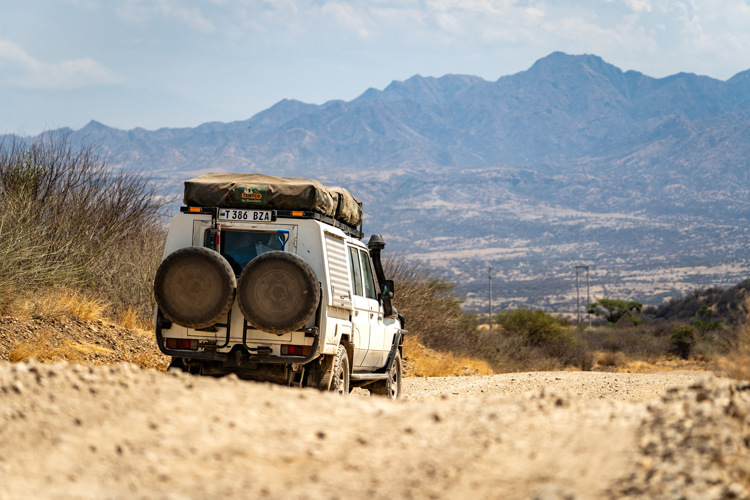
That freedom comes with responsibility. Tanzania’s road network varies enormously: smooth tarmac highways connect major cities, but many routes into national parks and rural areas are unpaved, rutted, and seasonally impassable. Police checkpoints, wildlife crossings, and long stretches without fuel or mobile signal are all part of the experience. Preparation, the right vehicle, and respect for local rules transform potential hazards into manageable adventures.
This guide covers everything a self-driver needs to know — from choosing a vehicle and understanding the legal requirements, to navigating game parks, handling emergencies, and budgeting realistically. Whether you are based in Dar es Salaam, arriving through Kilimanjaro International Airport, or travelling overland from Kenya or Uganda, this guide will help you hit the road with confidence.
| 💡 Why Self-Drive Tanzania?
Self-driving costs significantly less than organised safaris over multi-day trips, especially for groups. It also lets you spend extra time wherever wildlife is active — no rushed departures at sunrise, no waiting for other guests. |
Licensing and Legal Requirements
Driver’s Licence
Tanzania recognises International Driving Permits (IDP) alongside valid national licences from most countries. Visitors should carry both their home country licence and an IDP issued before travelling. The IDP must correspond to the same licence category as the vehicle you intend to drive (Class B for standard passenger vehicles and 4x4s). Licences must be original — photocopies are not accepted at police checkpoints.
- East African Community (EAC) licences (Kenya, Uganda, Rwanda, Burundi) are accepted directly.
- Licences from non-EAC countries require an IDP valid for the duration of your stay.
- You must be at least 23 years old to rent most vehicles. Some companies set the minimum at 25.
- Maximum age restrictions may apply with some rental companies — confirm in advance.
Vehicle Documentation
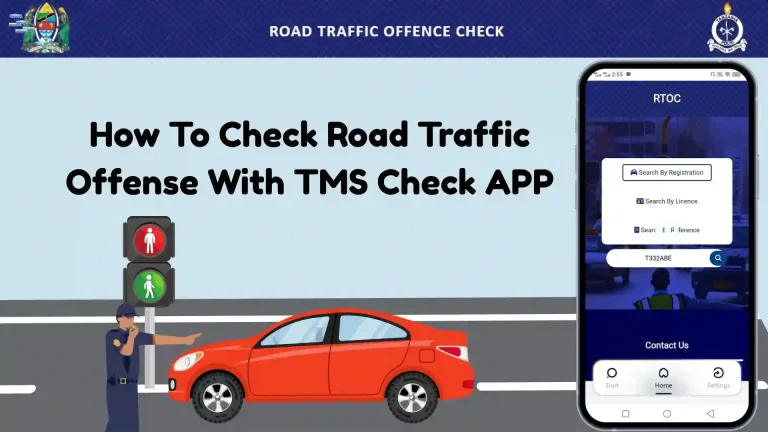
Always carry the complete set of vehicle documents whenever you are on the road. Police checkpoints are frequent, particularly at district and regional boundaries, and officers will request these documents.
- Original vehicle registration certificate (logbook)
- Valid comprehensive or third-party insurance certificate
- Road licence (annual vehicle tax sticker, visible on windscreen)
- Certificate of roadworthiness (for commercial vehicles and older cars)
- Cross-border permit if travelling to neighbouring countries
| ⚠️ Checkpoint Protocol
Always slow to a stop well before the barrier and greet officers respectfully. Keep documents in an easy-to-reach folder. Never hand over your passport — show it but keep it in your hand. If asked for a bribe, politely request an official receipt for any payment; this often ends the encounter. |
Traffic Laws and Road Rules
Tanzania drives on the left, following the British convention. Speed limits are strictly enforced, particularly in urban areas and around school zones.
| Zone | Speed Limit |
| Urban/built-up areas | 50 km/h |
| Open roads / highways | 80 km/h |
| Motorways (where applicable) | 100 km/h |
| School zones | 30 km/h |
| National park tracks | 40 km/h (or as posted) |
- Seat belts are compulsory for all occupants in front and rear seats.
- Mobile phone use while driving is illegal without a hands-free device.
- Blood alcohol limit is 0.08% — lower than many countries. Drink-driving penalties are severe.
- Traffic moves on the left; overtake on the right.
- Give way to emergency vehicles and presidential motorcades at all times.
Choosing the Right Vehicle
Vehicle selection is arguably the single most important decision in planning a Tanzania self-drive. The terrain you intend to cover should dictate your choice — not budget alone.
4×4 vs Saloon Car
A high-clearance 4×4 with four-wheel drive is essential for national parks, remote northern circuit routes, and travel during the long rains (March–May) or short rains (October–November). Saloon cars are suitable only for sealed urban roads and the main highway network.
| Vehicle Type | Best Suited For |
| Toyota Land Cruiser 70/80 Series | Remote parks, rough tracks, heavy loads |
| Toyota Land Cruiser Prado | Northern circuit, moderate off-road, comfort |
| Toyota Hilux Double Cab | Flexible — on and off road, camping |
| Suzuki Jimny / RAV4 | Light off-road, budget travellers, short distances |
| Saloon (e.g. Toyota Corolla) | Dar es Salaam city driving, highway travel only |
Rooftop Tent vs Camping vs Lodge
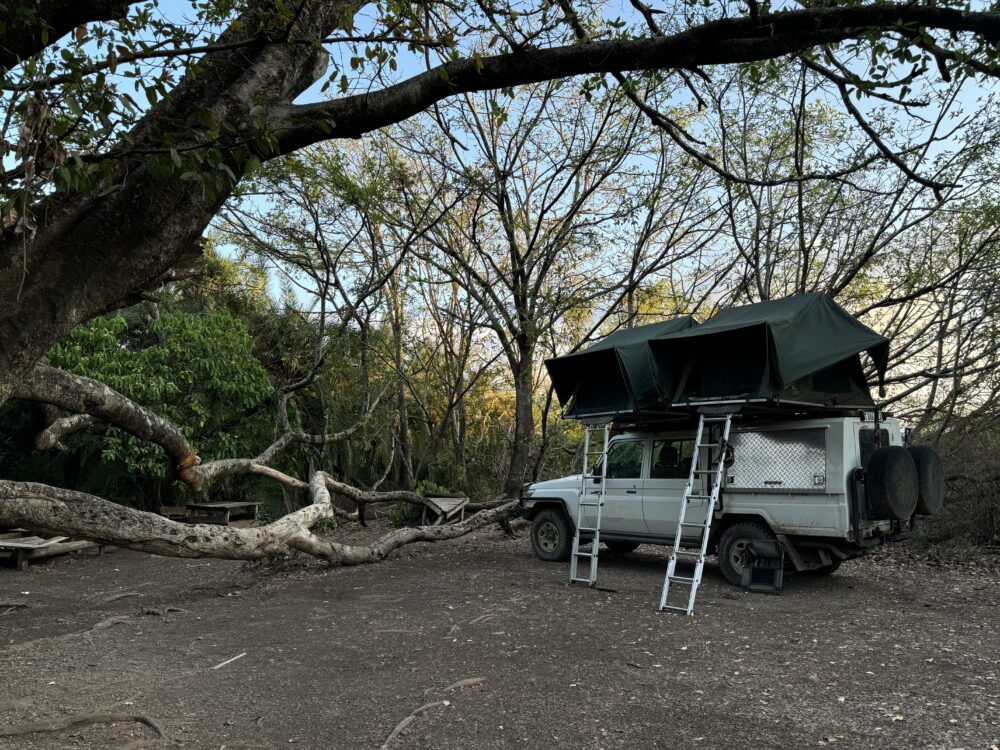
Many rental 4x4s come equipped with a rooftop tent and basic camping equipment — fridge, table, cooking kit. This is the most cost-effective way to explore parks where park fees are charged per night. Confirm what is included before signing a rental agreement.
- Rooftop tent setups suit independent campers with experience.
- Ensure the tent poles and zips are in good condition before departure.
- A 12V compressor fridge (not a cooler box) is strongly recommended for multi-day trips.
- Confirm whether cooking gas canisters are provided or must be sourced locally.
Rental Checklist — Before You Drive Away
Perform a thorough inspection with the rental agent present. Photograph all pre-existing damage from every angle and have it noted on the rental agreement. Check:
- All four tyres for tread depth and sidewall cracks
- Spare tyre: Spare tyre (preferably a full-size spare, not a space-saver)
- Tyre-changing equipment: jack, wheel brace, chocks
- Recovery equipment: tow rope, hi-lift jack, sand tracks
- Engine oil, coolant, brake fluid, and windscreen washer levels
- All lights working: headlights, taillights, indicators, hazards
- Horn, windscreen wipers, and washer jets
- First aid kit and fire extinguisher
- Fuel type confirmed (diesel vs petrol) and tank level recorded
- GPS or offline maps loaded and working
| ⚠️ Diesel vs Petrol
Most Tanzanian 4x4s run on diesel. Filling a diesel engine with petrol (or vice versa) will cause catastrophic damage and voids your rental insurance. Always confirm the fuel type with the agent and double-check at every fuel station. |
Roads, Routes, and Navigation
Road Conditions
Tanzania’s road network is a patchwork of smooth tarmac, crumbling pavement, corrugated gravel, black-cotton soil, and sand tracks. Conditions change rapidly with the seasons. The following gives a broad overview:
| Road Type | Typical Conditions |
| Dar–Dodoma Highway (A7) | Good tarmac, occasional potholes, heavy trucks |
| Arusha–Moshi Highway (A23) | Well-maintained, moderate traffic |
| Dar–Mwanza via Dodoma | Mixed tarmac and gravel, long distances |
| Serengeti internal tracks | Unpaved, corrugated, dusty or muddy by season |
| Ngorongoro Crater rim road | Steep, narrow, mixed surface — 4×4 required |
| Ruaha / Selous approach roads | Sandy or black-cotton — seasonal impassability |
| Coastal routes (Kilwa, Lindi) | Paved in sections; long unmaintained stretches |
| Zanzibar island roads | Tarmac in Zanzibar Town; rural roads pot-holed |
Navigation Tools
Mobile data coverage outside major towns is unreliable. Always download offline maps before departing on any long journey.
- Me — recommended for offline navigation in Tanzania; includes national park tracks.
- OsmAnd — open-source alternative with strong offline capability.
- Google Maps — reliable in cities; poor coverage in parks and rural areas; download offline tiles.
- Garmin GPS units — still widely used by professional guides; available for hire with some vehicles.
- Printed maps — carry a physical road atlas as backup; available in Dar es Salaam and Arusha bookshops.
| 💡 The Golden Rule of Navigation
Never rely solely on GPS in national parks. Park junctions are not always signposted, and tracks split frequently. Download the park map from the Tanzania National Parks (TANAPA) website and carry a printed copy. |
Key Routes
Northern Circuit (Arusha–Serengeti–Ngorongoro)
The most popular self-drive circuit in Tanzania covers Arusha, Lake Manyara, Tarangire, Serengeti, and Ngorongoro Crater. The circuit is approximately 800–1,000 km of driving depending on the route. Allow a minimum of seven to ten days.
- Arusha to Tarangire: 120 km on good tarmac and a short gravel section.
- Tarangire to Serengeti (via Lake Manyara): allow a full day; surfaces vary.
- Serengeti internal drives: 40 km/h maximum; tracks are slow — budget time generously.
- Ngorongoro to Arusha: the final descent is steep and sometimes slippery — use low range.
Southern Circuit (Dar es Salaam–Ruaha–Selous/Nyerere)
Less trafficked and more adventurous than the north, the southern circuit suits experienced off-road drivers. Road conditions are significantly more challenging.
- Dar to Iringa: 500 km on the TANZAM highway — good tarmac but heavy truck traffic.
- Iringa to Ruaha NP: 100 km, partly on gravel — passable in most 4x4s year-round.
- Ruaha to Selous (Nyerere NP): approximately 500 km of rough, remote tracks. Not recommended in the rains.
Western Destinations (Gombe, Mahale)
Lake Tanganyika and the chimpanzee parks of Gombe and Mahale are not accessible by road alone. Travellers typically drive to Kigoma and take a boat. The road from Dar to Kigoma via Dodoma or Tabora is 1,200+ km and takes two days minimum.
Driving in National Parks
Entry Requirements and Fees
All national parks and conservation areas in Tanzania are managed by TANAPA (Tanzania National Parks Authority) or the Ngorongoro Conservation Area Authority (NCAA). Entry fees are paid per person per day and per vehicle, in US dollars or Tanzanian Shillings.
- All fees are now processed via the TANAPA online portal or at park gates using TTCS (Tanzania Tourist Card System). Carry a printed or digital reservation.
- Resident rates apply only to Tanzanian citizens and holders of a valid resident permit — passport checks are thorough.
- Entry fees do not include camping fees, which are charged separately per person per night.
- Ngorongoro Crater descent fees are additional to the conservation area entry fee.
| 💡 Book Park Fees in Advance
During peak season (June–October and December–January), park campsites fill quickly. Pre-book all public campsites through the TANAPA website. Private campsites offer more space but cost significantly more. |
Park Driving Rules
Tanzania’s parks have strict driving rules designed to protect wildlife and the park environment. Violations can result in fines, confiscation of equipment, or expulsion from the park.
- Stay on designated tracks at all times. Driving off-road is strictly prohibited and carries heavy fines.
- Maximum speed in all parks is 40 km/h — slower near wildlife.
- Do not leave your vehicle except at designated picnic sites and viewpoints. In most parks, exiting the vehicle is illegal.
- Maintain a respectful distance from all wildlife — minimum 20 metres from predators.
- Never feed wildlife — this is illegal and dangerous.
- Quiet is expected near wildlife. Switch off the engine if stationary for more than a few minutes.
- Overtaking other vehicles at game sightings creates disturbance and is frowned upon.
- Park gates open at 06:00 and close at 18:00 in most parks. Being caught driving after hours results in significant fines.
| ⚠️ Night Driving in Parks is Illegal
Driving after dark in all Tanzanian national parks is strictly prohibited without a special permit, which is almost never granted to private visitors. Plan your drives to reach camp well before sunset. Sunset comes early — typically 18:15 year-round near the equator. |
Wildlife Encounters — What to Do
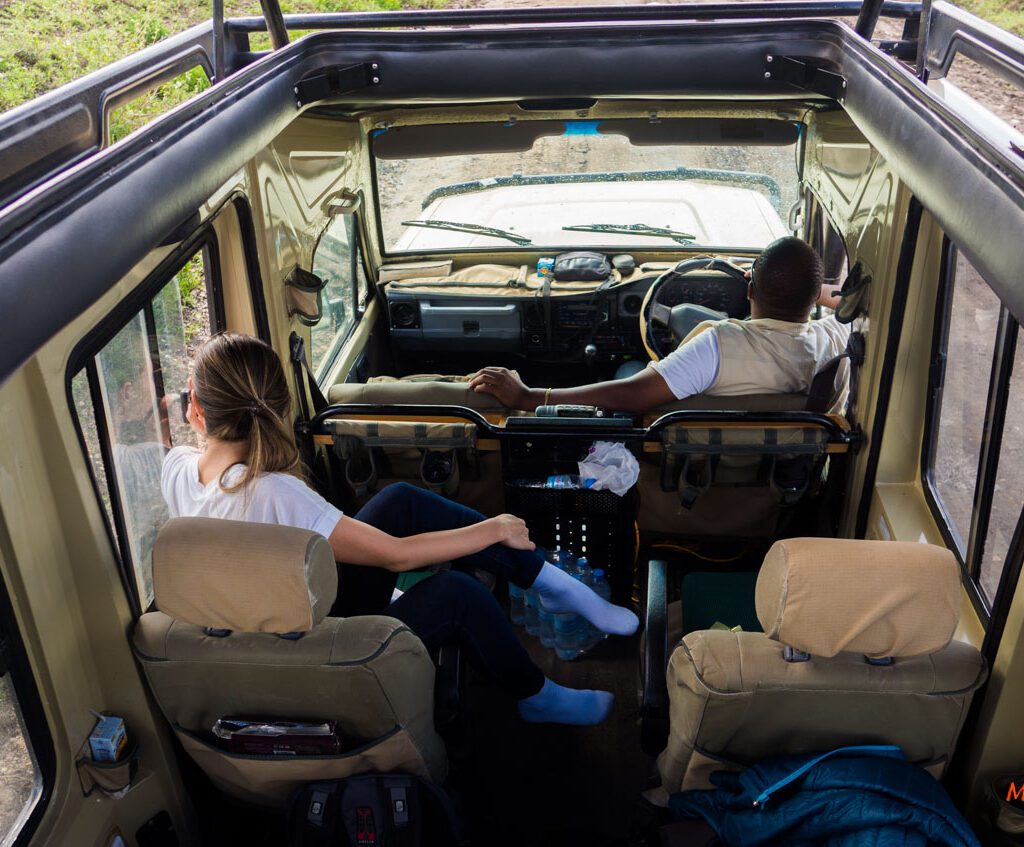
Encountering wildlife on a track — from elephant herds to lion prides — is the highlight of any safari drive. Knowing how to behave keeps both you and the animals safe.
- Elephant: switch off the engine, remain still, do not hoot or rev. Give them space and wait for them to move. Never drive between a mother and her calf.
- Lion: keep windows partially open to reduce reflection but stay inside the vehicle. Move slowly if a lion approaches.
- Buffalo: often unpredictable and aggressive. Keep your distance and have a clear reverse route.
- Hippo on land: extremely dangerous. Back away slowly — do not accelerate, as this triggers a charge.
- Cheetah / leopard: these are shy animals. Switch off the engine and wait. Noise causes them to abandon hunts.
- If an animal charges: do not run. Stay calm, switch on the engine quietly, and reverse slowly.
Fuel, Supplies, and Logistics
Fuel Availability
Fuel availability is reliable in Dar es Salaam, Arusha, Moshi, Dodoma, Mwanza, and other major towns. Once you leave the highway network, fuel stations become sparse and sometimes run out of stock entirely.
- Always start any inter-park drive with a full tank.
- Carry a minimum 20-litre jerry can of fuel when travelling between parks or on remote routes.
- Some petrol stations in rural areas accept cash (Tanzanian Shillings) only — carry sufficient local currency.
- In Dar es Salaam, major chains (Total, Oryx, Puma) are reliable. Avoid unmarked, informal pumps.
- Arusha fuel stations are well-stocked year-round; fill up before heading into the northern parks.
| Route Segment | Nearest Reliable Fuel |
| Arusha → Serengeti Central | Arusha or Karatu (last stop) |
| Serengeti Central → Ngorongoro | Seronera (limited, confirm availability) |
| Dar es Salaam → Ruaha NP | Iringa town |
| Dar → Kilwa Masoko | Kilwa Masoko town (stock can be low — carry extra) |
| Dodoma → Mwanza | Singida or Shinyanga — fill wherever possible |
Water and Food
Access to safe drinking water outside cities and park lodges is unreliable. Plan your water supply carefully.
- Carry a minimum of 5 litres of drinking water per person per day for remote routes.
- A water filtration device (e.g. LifeStraw, Sawyer Squeeze) is a useful backup.
- Supermarkets in Dar (Shoprite, Game, Naivas) and Arusha (Shoprite, Naivas) stock imported goods. Buy supplies before leaving the city.
- Local markets along the highway sell fresh fruit, vegetables, and snacks at low cost.
- Carrying a camping stove and basic provisions allows independence from expensive park lodges.
Money and Connectivity
Tanzania operates largely on cash. While payment options are expanding, do not rely on cards outside major hotels and upmarket restaurants.
- US dollars (printed 2006 or later) are widely accepted for park fees, hotels, and rental payments.
- Tanzanian Shillings (TZS) are needed for local markets, fuel in small towns, and roadside vendors.
- ATMs are available in Dar es Salaam, Arusha, and regional capitals. Withdrawals in TZS are most reliable.
- M-Pesa and Airtel Money are widely used — having a local SIM helps with mobile payments.
- Purchase a local SIM card (Vodacom or Airtel) on arrival for data and calls. Passport required.
- Signal is good along highways and in towns but absent in many parks and remote areas.
Safety and Security
Road Safety
Tanzania has one of the higher road traffic accident rates in sub-Saharan Africa. The primary causes are speeding, overloaded trucks, poorly maintained vehicles, and driving at night. Defensive driving is essential.
- Never drive after dark outside of cities. Night driving on rural roads poses severe accident risk — animals, pedestrians, unlit vehicles, and road damage are invisible until it is too late.
- Trucks on the TANZAM highway often travel at speed and are poorly maintained. Overtake only when absolutely clear.
- Dala-dalas (minibus taxis) are fast, overloaded, and unpredictable — give them maximum space in cities.
- Speed bumps (speed humps) in villages are numerous and poorly marked. Approach all villages at low speed.
- Potholes can be large and deep enough to damage wheels and suspension — scan the road ahead constantly.
- Dust from gravel roads reduces visibility. Use headlights on gravel roads and increase following distance.
| ⚠️ Do Not Drive at Night in Rural Areas
Every self-drive expert and rental company in Tanzania will advise the same thing: do not drive on rural roads after sunset. The risk of serious accident is genuinely high. Budget your journey times conservatively and stop before dusk. |
Personal Security
Tanzania is a generally safe country for tourists, and violent crime against visitors is relatively rare in rural areas and national parks. Cities, particularly Dar es Salaam, require standard urban awareness.
- Keep windows up and doors locked when driving in city traffic, particularly at night.
- Do not leave valuables visible on seats — store cameras, laptops, and bags in the boot or under seats.
- Carjackings, while uncommon, do occur. If threatened, comply calmly and do not resist.
- Park in well-lit, attended areas in cities. Your rental company can advise on safe parking.
- Inform someone of your route and expected arrival times when doing remote drives.
- Register with your country’s embassy upon arrival for emergency assistance if needed.
Health and Medical Preparedness
Medical facilities outside Dar es Salaam and Arusha are limited. Adequate preparation significantly reduces risk.
- Malaria prophylaxis is strongly recommended — consult your doctor at least four weeks before travel.
- Carry a comprehensive first aid kit including wound dressings, antiseptic, rehydration salts, antihistamines, and prescription antibiotics if advised by your doctor.
- Bilharzia is present in Lake Victoria, Lake Tanganyika, and freshwater bodies — avoid swimming in standing fresh water.
- Yellow fever vaccination certificate is required if entering Tanzania from a yellow-fever endemic country.
- Altitude sickness can affect travelers in the crater highlands and near Kilimanjaro. Ascend gradually and stay hydrated.
- Travel insurance with emergency medical evacuation cover is essential — hospital bills for emergency evacuation can exceed USD 50,000.
Breakdowns and Emergencies
Breaking down in a remote area is a genuine possibility on any extended Tanzania self-drive. Preparation limits the impact significantly.
- Know your rental company’s 24-hour emergency number before you leave. Save it in your phone and write it down.
- Carry a basic mechanical kit: spare engine oil, coolant, tyre puncture repair kit, jump-start cables.
- In a breakdown, pull well off the road, switch on hazard lights, and place warning triangles (required by law) behind the vehicle.
- If broken down in a national park, remain in the vehicle and contact the park gate or your rental company by radio or satellite messenger.
- A personal GPS satellite communicator (e.g. Garmin in Reach) is a worthwhile investment for remote travel where mobile signal is absent.
| 💡 Emergency Numbers
Tanzania Police: 112 (or 999) | Tanzania National Parks emergency: contact local park headquarters | AMREF Flying Doctors evacuation: +254 20 6992000 (Nairobi) |
Seasonal Considerations
Tanzania has two main rainy seasons that significantly affect road conditions and accessibility. Understanding the seasons is crucial for route planning.
| Season | Conditions & Tips |
| Long Rains: March–May | Many park tracks and remote roads flood or become impassable. Reduce ambition — stick to main circuits. Wildlife viewing is excellent but roads are tough. |
| Short Rains: Oct–Nov | Shorter, less intense rains. Most routes still passable with 4×4. Landscapes are green and beautiful. Book accommodation early — popular with experienced travelers. |
| Dry Season: June–October | Best road conditions. Peak safari season. Park tracks are dry, dusty, and firm. Crowded at major parks. Book far in advance. |
| Hot dry season: Jan–Feb | Hot temperatures. Good roads. Calving season in Serengeti — excellent predator action. Less crowded than June–October. |
The black-cotton soil found in parts of the southern and western circuit becomes almost impassable when wet, even in a capable 4×4. If your plans include Ruaha, Katavi, or Selous in the green season, seek local advice from your rental company or a local guide before proceeding.
Practical Tips for First-Time Self-Drivers
Pre-Departure Checklist
Before setting off on any drive of more than 100 km, run through the following:
- Full tank of correct fuel
- Tyre pressures checked (reduce slightly on soft sand — typically to 1.5–1.8 bar)
- Water supply confirmed
- Offline maps downloaded and tested
- Park bookings confirmed and printed
- Emergency contact saved and shared with a trusted person
- Vehicle documents and driving licence in accessible folder
- Cash (USD and TZS) sufficient for the journey
Cultural Tips for the Road
Tanzania is a warm and welcoming country with a rich culture. A few simple courtesies go a long way on the road.
- Greet locals at checkpoints, fuel stations, and roadside stops with ‘Habari’ (hello) or ‘Mambo’ (informal greeting). A simple greeting opens doors.
- Dress modestly, especially in Zanzibar and coastal Muslim areas. Covering shoulders and knees when outside the vehicle is respectful.
- Ask permission before photographing people — it is both polite and legally required.
- Bargain respectfully at markets but do not drive prices down aggressively — the difference in price is often significant to the seller, not the buyer.
- Slow down and acknowledge pedestrians and cyclists on rural roads — they are your road-sharing partners.
Environmental Responsibility
Tanzania’s wild spaces are a national treasure. Every visitor has a responsibility to protect them.
- Never dispose of rubbish outside designated areas. Carry a rubbish bag in the vehicle at all times.
- Do not drive off designated tracks — the damage to fragile soils and vegetation is lasting.
- Avoid single-use plastics where possible. Tanzania has partial bans on plastic bags — bring reusable alternatives.
- Report poaching, illegal logging, or environmental violations to park authorities.
- Leave campsites exactly as you found them, or better.
Budgeting for a Self-Drive
Self-driving is cost-effective compared to organised tours, but Tanzania is not a cheap destination — particularly when park fees are factored in. The table below gives approximate costs as of 2024/2025 for planning purposes. Prices in USD.
| Cost Item | Approximate Cost (USD) |
| Basic 4×4 rental (per day, excl. insurance) | $80–$120 |
| Land Cruiser with rooftop tent (per day) | $130–$200 |
| Comprehensive insurance (per day) | $15–$30 |
| Serengeti entrance fee (non-resident per day) | $70 per person + $40 per vehicle |
| Ngorongoro Conservation Area entry | $70 per person per day |
| Ngorongoro Crater descent fee | $200 per vehicle (additional) |
| Public campsite (per person per night, in park) | $30–$50 |
| Fuel (per litre, diesel) | TZS 3,000–3,500 (~$1.10–$1.30) |
| Budget meal (local restaurant) | $3–$6 |
| Mid-range restaurant meal | $15–$30 |
| 💡 Budget Reality Check
A couple self-driving the northern circuit for 7 nights should budget a minimum of USD 2,000–2,800 in park fees and camping alone, before vehicle rental, fuel, and food. The southern circuit is cheaper in fees but longer in distance and fuel cost. |
Conclusion
Self-driving in Tanzania is an exceptional experience — raw, challenging, deeply rewarding, and entirely on your own terms. The country’s extraordinary natural wealth, the warmth of its people, and the sheer scale of its wild landscapes make it one of the world’s great road-trip destinations.
The key to a successful trip lies in preparation: choosing the right vehicle, understanding the roads, respecting park rules, and building in time for the unexpected. Tanzania rarely goes perfectly to plan — and that is precisely what makes it unforgettable. Drive safely, drive respectfully, and enjoy every kilometre.