Kampala City
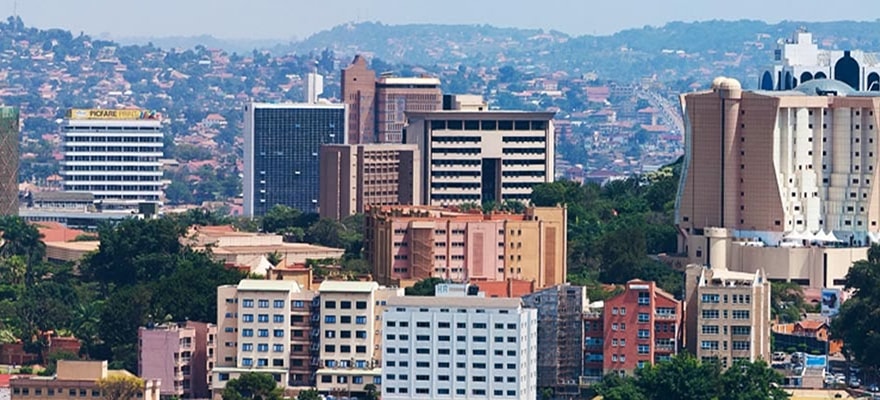
Kampala City , the capital city of Uganda, is recognized as the premier city for living in East Africa and is regarded as the 13th fastest expanding metropolis on the continent. The living standards are excellent and life is economical in Kampala, the capital city. This capital city serves as the central hub for many facets of life, including commerce, entertainment, and healthcare education, among others. It is the most profitable city in Uganda, succeeded by Mbarara and others. The Uganda Safari Tours Park is located in Kampala, offering guests the opportunity to discover the city and its heritage.
Kampala, the capital, is experiencing rapid population growth above 4%. Wakiso surrounds the city and exhibits a population growth that about doubles every decade; this may contribute to Kampala’s population increase as well. The city is segmented into smaller areas or boroughs known as divisions, which are utilized for project implementation and the formulation of development strategies. The capital of Kampala comprises five divisions: Nakawa, Kampala, Makindye, Kawempe, and Rubaga.
History of Kampala
Prior to the establishment of the bustling metropolis characterized by skyscrapers and urban clamor, this locale served as a hunting ground amidst a breathtaking panorama of undulating hills. The hills were adorned with grasslands, transitioning to wetlands in the valley. The hunting ground was predominantly inhabited by antelopes known as impalas. Upon the arrival of the British in Uganda, they designated it as the hill of impala, which is the etymological source of the name Kampala, meaning “for impala.”
Kampala thereafter emerged as the capital of the Buganda empire, where the British established their headquarters at Old Kampala. The city was created by the Buganda Kingdom; the Kasubi Tombs were established in 1881, along with Lubiri Palace, the Buganda Parliament, and Buganda Justice at Bulange Mengo. At Mengo, Frederick Lugard established a British fort on Mengo Hill, which became a primary draw for the British who subsequently moved in the city to govern their protectorate, Uganda.
Climate of Kampala capital city
Kampala, the capital, possesses a tropical environment, resulting in nearly uniform weather conditions. Nonetheless, the elements influencing weather significantly contribute to the variability of meteorological conditions throughout different regions within Kampala capital city. Kampala city, akin to other regions in Uganda, experiences two rainfall peaks and lacks a distinct dry season; little rain is anticipated during the dry season, occasionally accompanied by afternoon showers.
Despite Kampala’s climate, the heaviest precipitation occurs in August and November, as well as from March to June. The dry season occurs from January to February and in July. Excessive rainfall devastates numerous residences in the slum regions of Katanga and Bwaise, while also disrupting commercial activities in the city center. Nevertheless, the dry season also results in water scarcity in the city and excessive heat during both day and night.
Points of interest
Makerere Hill is a notable destination frequently visited by tourists in Uganda, home to the renowned Makerere University. Makerere Hill is an exceptional location for birdwatching, hosting several avian species, including the usual marabou storks and ravens, with other prevalent birds of East Africa. Additionally, the panoramic view of the city from Makerere Hill is a remarkable experience.
Old Kampala Hill is a historically significant site in Uganda, where Frederick Lugard established a fort for the British colonialists during Uganda’s tenure as a British protectorate. Old Kampala is home to the prominent Muslim mosque, which was gifted by the late Libyan President Muammar Gaddafi. Old Kampala serves as the central hub of Kampala, featuring numerous schools, hospitals, and other amenities.
The Uganda Museum is a repository of the captivating history of Uganda and East Africa at large. The Uganda Museum features numerous intriguing sculptures that elucidate the history and diverse cultures of the nation. A lunch picnic in the grounds is also an option; the museum is located just a few kilometers from the city center.
A guided tour of Kampala will provide an immersive experience of the city’s culture and history, highlighting various historical sites such as the Buganda Royal Tombs at Kasubi, religious landmarks including Rubaga Cathedral, Old Kampala Mosque, and Namirembe Cathedral, among others.
The Uganda Martyrs’ trip to Namugongo Shrine is a compelling experience, particularly for Catholics in Uganda. The Kampala walking tour is a remarkable experience, allowing you to explore the city on foot while appreciating the lifestyle of roadside merchants and the crafts village, among other attractions.
Getting there
Kampala is a mere 45-minute drive from Entebbe International Airport; one may opt for an airport taxi or utilize public transportation to reach the city. This city offers an exceptional experience, and the nightlife provides a genuine metropolitan atmosphere. One can visit Uganda and this city year-round for various activities, which is particularly advantageous when planning additional excursions in Uganda, including gorilla trekking in Bwindi Forest National Park, chimpanzee trekking in Kibale National Park, and wildlife encounters in Murchison Falls National Park, Kidepo Valley, Queen Elizabeth National Park, and Lake Mburo National Park.