4wd Rental Arusha
4wd Rental Arusha, Arusha is Tanzania’s adventure capital — a vibrant city nestled at the foot of Mount Meru, perfectly positioned as the launch point for some of Africa’s most iconic wildlife destinations. Whether your journey takes you across the endless plains of the Serengeti, down into the crater of Ngorongoro, through the dusty tracks of Tarangire, or along the slopes of Kilimanjaro, a four-wheel-drive (4WD) vehicle is not just a convenience: it is an absolute necessity.
Self-drive safaris are gaining popularity among independent travellers who want to explore Northern Tanzania on their own schedule, free from the constraints of group tours. Renting a 4WD in Arusha gives you that freedom — the ability to linger at a lion sighting, detour to a remote viewpoint, or simply set off at dawn before the tour convoys wake up.
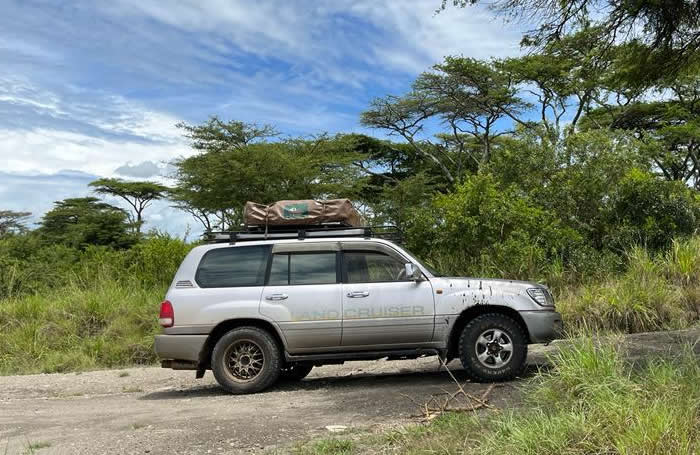
This comprehensive guide covers everything you need to know about 4WD rentals in Arusha: vehicle types, reputable rental companies, costs, legal requirements, road conditions, safety tips, and practical advice to make your self-drive safari a success.
Why You Need a 4WD in Northern Tanzania
4wd Rental Arusha, Tanzania’s national parks and conservation areas are defined by terrain that standard saloon cars simply cannot handle. The road networks inside most parks are unpaved, rutted, rocky, and during the rainy season, deeply muddy. Even the main arteries connecting Arusha to Serengeti or Ngorongoro can become impassable without four-wheel drive.
Road Conditions You Will Encounter
Murram and Laterite Tracks
Red murram (compacted clay and gravel) roads form the backbone of Tanzania’s rural road network. Perfectly fine in dry weather, they become treacherous when wet — slippery, with deep ruts that swallow tyres.
River Crossings
During the long rains (March–May) and short rains (November), several park roads require river crossings of varying depth. High ground clearance and 4WD engagement are essential.
Corrugated Washboard Roads
Long stretches of washboard gravel roads are infamous in Tanzania. They cause severe vibration and mechanical stress on 2WD vehicles but are manageable in a well-maintained 4WD.
Rocky Terrain
Routes around Lake Natron, Ol Doinyo Lengai, and parts of the Ngorongoro Highlands involve loose rocks and steep gradients that demand low-range 4WD.
Sandy Tracks
The Central Serengeti and Amboseli border areas feature deep sand that requires deflated tyres and 4WD to navigate without getting stuck.
Types of 4WD Vehicles Available in Arusha
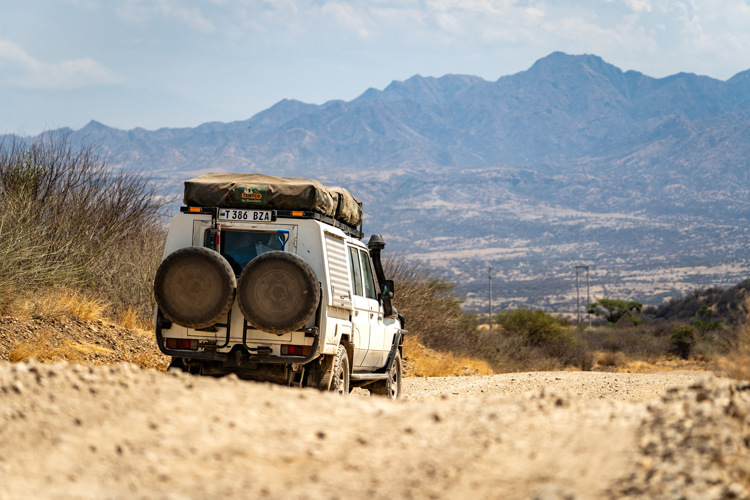
Arusha’s rental companies offer a broad spectrum of 4WD vehicles suited to different budgets, group sizes, and terrain requirements. Below are the main categories you will encounter.
| Vehicle Type | Seats | Ground Clearance | Best For | Avg. Daily Rate (USD) |
| Toyota Land Cruiser 70 Series | 5–7 | High | Heavy off-road, rocky terrain | $120–$180 |
| Toyota Land Cruiser 100/200 | 7–8 | High | Long-distance comfort + off-road | $150–$220 |
| Toyota Land Cruiser Prado | 5–7 | Medium-High | Mid-range comfort & capability | $100–$160 |
| Toyota Hilux Double Cab | 5 | High | 2–3 person self-drive | $80–$130 |
| Nissan Patrol | 7–8 | High | Sandy terrain, long safaris | $110–$170 |
| Land Rover Defender | 5–7 | High | Technical terrain, iconic style | $130–$200 |
| Toyota RAV4 / Fortuner 4WD | 5–7 | Medium | Budget, tarmac + light off-road | $60–$90 |
Note: Rates are indicative for 2024–2025. Prices vary by season, rental duration, included mileage, and company. Always confirm current rates directly with the rental agency.
The Toyota Land Cruiser: Tanzania’s Workhorse
If there is one vehicle synonymous with African safari, it is the Toyota Land Cruiser. Decades of proven reliability on African soil, an unmatched availability of spare parts throughout Tanzania, and a formidable ability to handle extreme terrain have made it the gold standard for both tour operators and self-drive travellers. When in doubt, choose a Land Cruiser.
Where to Rent a 4WD in Arusha
Arusha has a well-developed vehicle rental industry catering to both budget travellers and luxury expeditions. Rental companies are concentrated in the city centre, along the Old Moshi Road, and near the Arusha International Conference Centre (AICC). Below is an overview of what to look for and the major types of operators.
Local 4WD Safari Rental Specialists
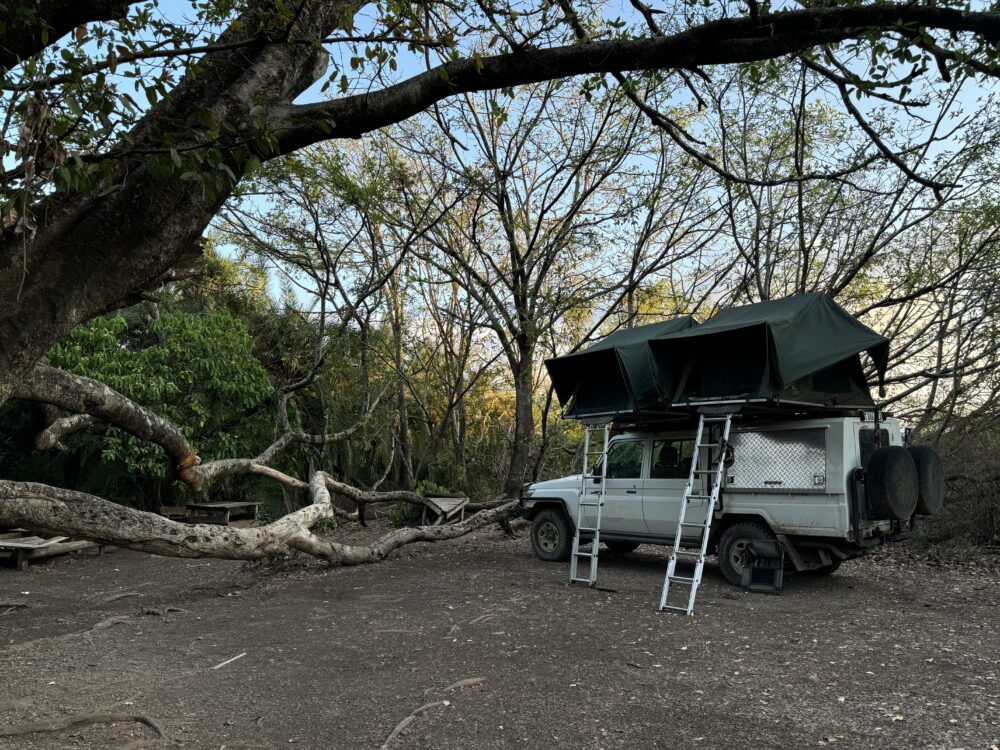
The majority of reputable 4WD rentals in Arusha come from locally-owned specialists who focus exclusively on safari vehicles. These companies offer deep knowledge of local roads, in-house mechanics, and flexible arrangements. Look for companies that have been operating for at least 5–7 years and can provide verifiable references.
Tour Operator Hybrids
Many Arusha-based tour operators also rent out vehicles from their fleet when those vehicles are not in use for organised safaris. This can be advantageous as their vehicles are typically well-maintained and equipped with roof hatches, camp gear, and communication tools.
Peer-to-Peer Platforms
Online platforms now list private 4WD owners in Arusha willing to rent their vehicles. While potentially cheaper, these arrangements carry higher risk: insurance coverage is often unclear, vehicle maintenance may be inconsistent, and recourse in case of breakdown or dispute is limited.
Key Rental Hubs & Locations
- Arusha City Centre — High concentration of agencies, easy to walk between offices to compare
- Old Moshi Road — Several well-established 4WD specialists based here
- Kilimanjaro International Airport (JRO) — Convenient for fly-in travellers; slightly higher airport surcharges may apply
- Arusha Airport (ARK) — Domestic terminal; fewer agencies but possible for quick pick-up
- Hotels & Lodges — Some upmarket hotels arrange vehicle rentals through concierge partnerships
Understanding the Cost of 4WD Rental in Arusha
4WD rental costs in Arusha are more complex than renting a city car in Europe or North America. Several components make up the total cost, and understanding each one helps you budget accurately and avoid unpleasant surprises.
Cost Components Breakdown
| Cost Component | Typical Range | Notes |
| Base Vehicle Rental | $60–$220/day | Depends on vehicle class and season |
| Comprehensive Insurance (CDW) | $15–$35/day | Essential; check excess/deductible amount |
| Park Entry Fees (vehicle) | $40–$60/vehicle/night | Serengeti, Ngorongoro, Tarangire, etc. |
| Driver Allowance (if hired) | $25–$45/day | If you hire a driver-guide alongside rental |
| Unlimited Mileage Upgrade | $10–$25/day | Standard packages often cap at 150–250km/day |
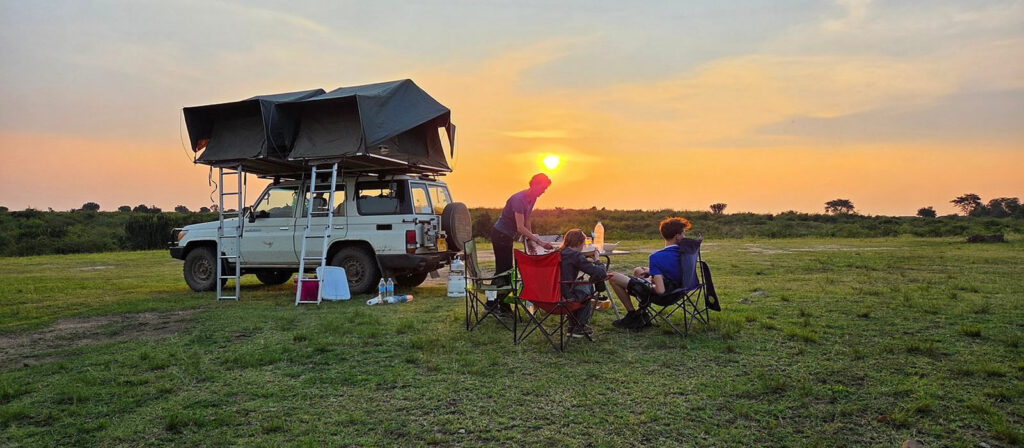
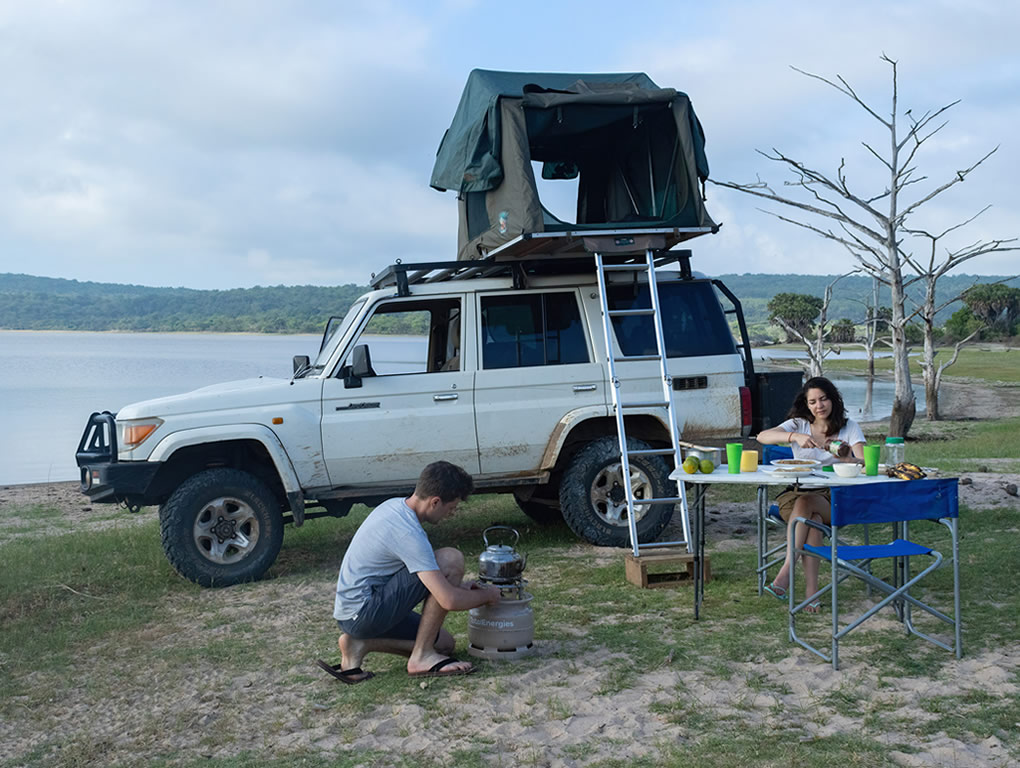
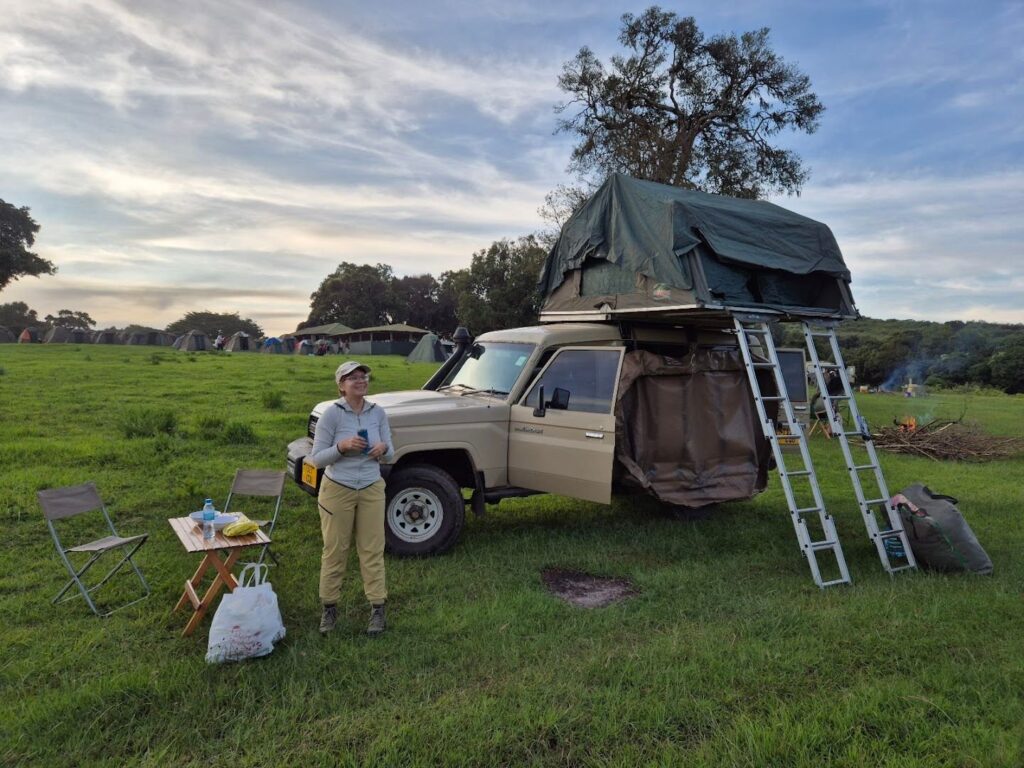
| Roof Tent / Camp Equipment | $15–$40/day | Optional; widely available |
| Satellite Communicator | $10–$20/day | Strongly recommended for remote areas |
| Airport / Hotel Pick-Up Fee | $20–$50 | One-off charge |
| Cross-Border Fee (Kenya) | $50–$150 | If driving into Masai Mara or Amboseli |
| Fuel | Variable | Diesel ~$1.30–$1.60/litre; you pay for fuel used |
Budget Planning: Sample Itineraries
To put costs in perspective, here are indicative total rental costs (vehicle only, excluding park fees and fuel) for two common itinerary lengths:
7-Day Northern Circuit (Tarangire → Serengeti → Ngorongoro)
Toyota Land Cruiser Prado + insurance + camp equipment: approximately USD $1,100–$1,600 total rental cost.
14-Day Extended Safari (Northern + Lake Natron + Ruaha)
Toyota Land Cruiser 76 Series + insurance + satellite communicator + roof tent: approximately USD $2,400–$3,400 total rental cost.
Legal Requirements for Renting a 4WD in Arusha
Driver’s Licence
- A valid driving licence from your home country is required.
- An International Driving Permit (IDP) is strongly recommended and required by most reputable agencies — obtain one before departure.
- Minimum age is typically 23–25 years, with some agencies applying a young driver surcharge for those under 25.
- You must have held your licence for a minimum of 2–3 years (varies by agency).
Documents Required at Rental Pick-Up
- Original passport (plus colour copy)
- Valid driver’s licence (original) from your home country
- International Driving Permit (IDP)
- Visa or entry stamp for Tanzania
- Credit card (for security deposit — typically USD $500–$2,000 held as a block)
- Proof of travel insurance (recommended; some agencies require it)
Insurance Essentials
Never rent a 4WD in Tanzania without comprehensive insurance. The terrain and wildlife create genuine risk of vehicle damage that would be financially catastrophic without coverage.
Third Party Liability (TPL)
Legally mandatory in Tanzania. Covers damage or injury caused to other people and their property.
Collision Damage Waiver (CDW)
Reduces your liability for damage to the rental vehicle. Always ask for the excess (deductible) amount — this is what you pay in case of a claim.
Theft Protection (TP)
Covers vehicle theft. Confirm whether it applies if the vehicle is stolen with the keys inside.
Personal Accident Insurance (PAI)
Covers medical costs for you and your passengers in case of an accident.
How to Choose the Right Rental Company
With dozens of operators in Arusha ranging from international agencies to small local outfits, due diligence before booking is critical. A vehicle breakdown in the middle of Serengeti is not just inconvenient — it can be dangerous and expensive.
Checklist: What to Verify Before Booking
- Fleet age and maintenance records — ask for the model year and last service date
- In-house mechanic availability 24/7 and breakdown rescue policy
- Whether spare parts are carried in the vehicle (second spare tyre is non-negotiable in Tanzania)
- GPS navigation system included or available to hire
- Roof hatch or pop-up roof for game viewing (if not using a closed vehicle)
- Recovery kit included: high-lift jack, tow rope, sand tracks, shovel
- Communication devices: radio or satellite communicator for remote areas
- Verified online reviews on Google, TripAdvisor, or Safari-specific forums
- TATO membership (Tanzania Association of Tour Operators) as a quality indicator
- Clear written rental agreement with all fees, excess amounts, and policies spelled out
Red Flags to Avoid
- Agencies that cannot provide a physical office address or on-the-ground contact
- Unusually low prices that seem too good to be true (often indicate an old, poorly maintained fleet)
- Pressure to forego CDW insurance or to sign liability waivers
- No clear breakdown rescue policy or assistance hotline
- Vehicles presented with existing damage that is not documented in the pre-rental inspection sheet
Top Self-Drive Routes from Arusha
Arusha is the ideal starting point for Tanzania’s Northern Circuit — the most popular safari route on the continent. Below are the main destinations accessible by self-drive 4WD from Arusha, with road condition notes.
Arusha to Tarangire National Park
Mostly tarmac to the gate. Excellent first-day destination with high elephant density and baobab landscapes. Park tracks are manageable in all 4WDs.
Arusha to Lake Manyara National Park
Good tarmac road via Mto wa Mbu village. The park’s cliff-face forests and flamingo-edged lakeshore make it a beautiful side trip.
Arusha to Ngorongoro Crater
Tarmac to Karatu, then graded murram road to the crater rim. High-clearance 4WD required inside the crater. Spectacular and highly recommended.
Arusha to Serengeti National Park
Mixed tarmac and rough murram roads. The Naabi Hill Gate entrance features corrugated tracks. Central Serengeti is accessible to most 4WDs; Northern Mara region requires serious off-road capability.
Arusha to Lake Natron
The most demanding drive on this list. Rocky tracks, deep sand, and river crossings in wet season. Rewards with surreal soda lake landscapes and Ol Doinyo Lengai volcano.
Arusha to Amboseli (Kenya)
Crosses the Tanzania–Kenya border at Namanga. Requires cross-border vehicle documentation and Kenya park permits. Views of Kilimanjaro from Amboseli are breathtaking.
Essential Tips for a Successful Self-Drive Safari
Vehicle Preparation Before Departure
- Conduct a thorough pre-departure inspection with a rental agent present; photograph and document all existing damage
- Verify you have two spare tyres (not just one), a working jack, and a tyre iron
- Check engine oil, coolant, brake fluid, and tyre pressure before every long day
- Confirm the fuel tank is full and carry extra jerry cans (20–40 litres) for remote areas
- Test all 4WD modes (2H, 4H, 4L) in a safe area before reaching challenging terrain
- Ensure the recovery kit is complete: sand tracks, tow rope, high-lift jack, shovel
Driving in Tanzania: What You Need to Know
- Tanzania drives on the LEFT side of the road
- Speed limits: 50 km/h in towns, 80 km/h on open roads, 30 km/h in national parks
- Wildlife has right of way at all times inside national parks — do not hoot or speed
- Police checkpoints are common on main roads; carry your documents and stay calm and polite
- Night driving is strongly discouraged due to unmarked speed bumps, livestock, and poor road lighting
- Fuel stations are widely available in Arusha and Karatu but scarce inside parks — always fill up before entry
- Mobile signal is available on most main roads but absent in remote areas — download offline maps before departure
Safety & Emergency Preparedness
- Save the rental company’s 24-hour emergency number in your phone before departing Arusha
- Register your safari route with your accommodation or a trusted local contact
- Carry a first aid kit, sufficient water (minimum 4 litres per person per day in the bush), and high-energy food
- A satellite communicator (Garmin inReach or SPOT) is strongly advised for routes to Natron, Northern Serengeti, or any off-the-beaten-path area
- Do not exit the vehicle in national parks unless at a designated picnic site or viewpoint
- If stuck in mud or sand, stop immediately and call for assistance rather than further damaging the vehicle
- In case of breakdown: stay with the vehicle, activate hazard lights, and contact your rental company immediately
Best Time to Self-Drive in Northern Tanzania
| Season | Months | Road Conditions | Driving Difficulty |
| Dry Season | June – October | Excellent: firm, dusty murram roads | Easy to Moderate |
| Short Dry | January – February | Good: brief rains may affect some tracks | Moderate |
| Short Rains | November – December | Variable: some roads become slippery | Moderate to Difficult |
| Long Rains | March – May | Challenging: deep mud, flooded crossings | Difficult to Very Difficult |
Conclusion
Renting a 4WD in Arusha and embarking on a self-drive safari through Northern Tanzania is one of the most rewarding travel experiences on the African continent. The freedom to chart your own course, linger at a memorable sighting, and explore off-the-beaten-track areas that group tours never reach is genuinely liberating.
The key to a successful experience lies in preparation: choosing the right vehicle for your itinerary, selecting a reputable rental company, understanding the full cost picture, having the correct documentation, and driving with appropriate caution and respect for the terrain and wildlife.
Arusha’s rental industry has matured considerably, and with diligent research, you will find an operator who can equip you with a reliable, well-prepared 4WD and the knowledge to use it confidently. The open savannah, the volcanic highlands, and the teeming wildlife of Tanzania await — all accessible at your own pace, on your own terms.