
13 Disadvantages of Rooftop Tents Every Overlander Should Know
A practical, honest look at the drawbacks of rooftop tents for self-drive safaris, overlanding, and off-road camping in East Africa and beyond.
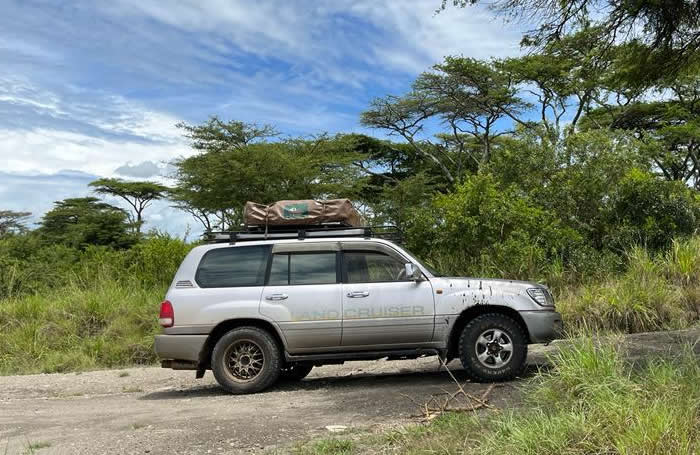
Rooftop tents (RTTs) have become a signature feature of self-drive safaris across Tanzania, Uganda, and the wider East African overlanding scene. They photograph beautifully, keep you off the ground in game-rich areas, and set up faster than most ground tents. But rooftop tents are not the right choice for every traveler or every vehicle, and the marketing rarely mentions the trade-offs.
Before you rent or buy a rooftop tent for your next Land Cruiser or 4×4 self-drive trip, it’s worth understanding the real disadvantages — from cost and weight to accessibility and vehicle handling. This guide breaks down every major downside so you can decide whether a rooftop tent actually fits your travel style, budget, and route.
| Quick Summary
Rooftop tents cost more upfront, add significant weight to your vehicle, and lock your vehicle in place once the tent is set up. They also raise your vehicle’s center of gravity, complicate access for children and elderly travelers, and require compatible roof racks and load ratings. For many self-drive travelers in Tanzania and Uganda, a well-chosen ground tent or a fully-equipped rental vehicle remains a lighter, cheaper, and more flexible option. |
1. High Upfront and Rental Cost
Rooftop tents are significantly more expensive than traditional ground tents. A quality hard-shell or soft-shell RTT typically costs between USD 900 and 4,000, and that figure doesn’t include the roof rack, mounting hardware, or professional installation many models require. For travelers renting a self-drive vehicle in Tanzania or Uganda, RTT-equipped 4x4s command a noticeably higher daily rate than the same vehicle without one.
- Roof racks rated for tent loads can add USD 200–600 on their own.
- Annealer ladders, mattress upgrades, and rainflies are often sold separately.
- Rental companies pass on the depreciation and maintenance cost of RTTs through higher daily fees.
2. Added Vehicle Weight and Reduced Fuel Economy
A mounted rooftop tent typically adds 40 to 90 kilograms of static weight to the roof of a vehicle, plus the weight of the rack itself. That extra load, combined with the wind resistance of a boxy tent shell, measurably increases fuel consumption — a real cost over a multi-day 15- or 21-day self-drive itinerary through Tanzania’s national parks or Uganda’s western circuit.
On long fuel stretches between towns like Iringa, Morogoro, or Arusha, that fuel penalty adds up, and it’s rarely factored into trip budgets until travelers see the pump receipts.
3. Raises the Vehicle’s Center of Gravity
| Safety Note
A loaded rooftop tent sits at the highest point of the vehicle, shifting the center of gravity upward. This increases body roll in corners and raises rollover risk on the uneven, rutted, and off-camber tracks common in Tanzanian and Ugandan national parks. This matters most on routes through Ngorongoro Crater’s rim roads, Murchison Falls’ escarpment sections, and any muddy wet-season detour. |
Drivers unfamiliar with how a top-heavy vehicle handles should slow down significantly on corrugated roads, river crossings, and steep descents — situations that are common on self-drive safari routes.
4. Vehicle Becomes Immobile Once Camp Is Set Up
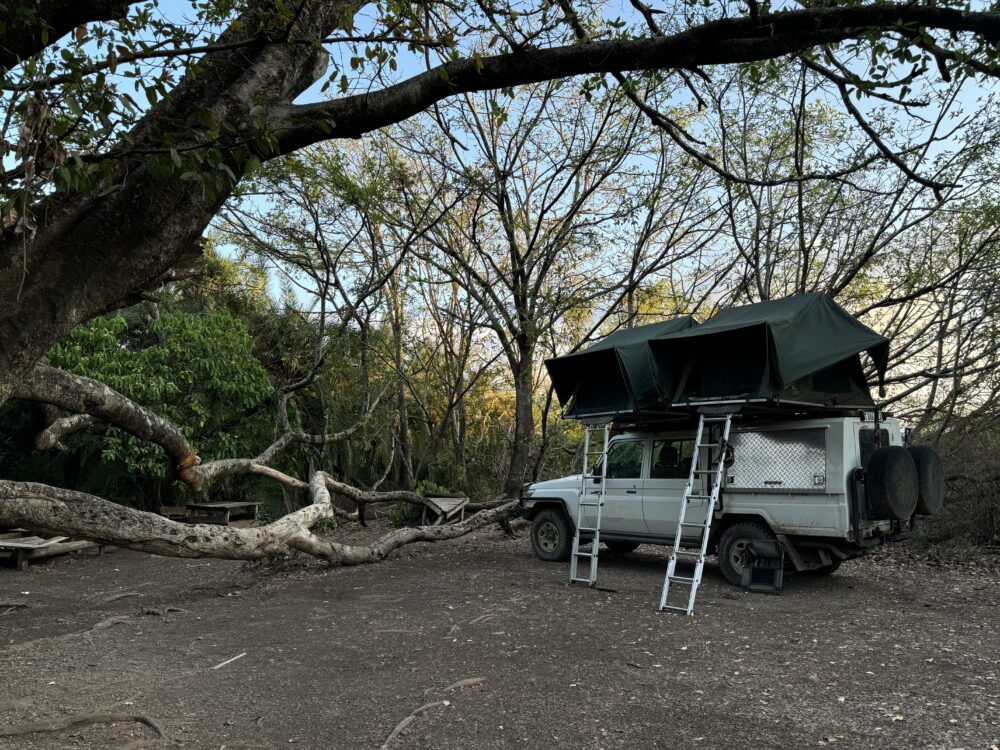
This is one of the most overlooked disadvantages. With a ground tent, you can pitch camp and then drive off for an evening game drive or a supply run into town. With a rooftop tent, the tent is attached to the vehicle roof — so the moment it’s set up, the vehicle is essentially locked in place until the tent is folded down and stowed again.
- No quick evening game drives from a set-up camp without repacking the tent.
- Forgot supplies in town? The whole camp has to come down first.
- Group travelers sharing one vehicle lose flexibility if one person wants to stay at camp.
5. Requires a Compatible Roof Rack and Sufficient Load Rating
Not every vehicle can safely carry a rooftop tent. The roof and rack must be rated for both the static weight of the tent and the dynamic load while driving on rough terrain, which is typically much lower than the static rating. Older Land Cruisers, budget rental SUVs, and vehicles with factory roof rails not designed for heavy loads often need aftermarket reinforcement before an RTT can be fitted safely.
Skipping this step risks roof damage, rack failure, or a tent shifting loose on a corrugated dirt road — a serious hazard on remote stretches with no roadside assistance.
6. Harder Access for Children, Elderly, or Mobility-Limited Travelers
Getting in and out of a rooftop tent means climbing a ladder, often 1.5 to 2.5 meters, every single time — including nighttime bathroom trips. For families traveling with young children, older travelers, or anyone with joint or mobility issues, this can be genuinely difficult and, in the dark, mildly risky.
- Nighttime ladder trips increase fall risk, especially in rain or on uneven, muddy camp ground.
- Toddlers and young children generally can’t use the ladder unassisted.
- Loading gear up and down the ladder each day is an added chore ground tents don’t require.
7. Exposed to Wind and Weather
Because a rooftop tent sits high above the ground with no windbreak, it catches more wind than a low-profile ground tent nestled behind vehicles, bushes, or terrain. In exposed campsites across the Serengeti plains, Tarangire, or Kidepo Valley, strong overnight wind can rock a rooftop tent noticeably and make sleep uncomfortable, even when the tent itself is structurally secure.
8. Limited Interior Space for Groups and Families
Most rooftop tents comfortably sleep two to three people. Families or groups traveling together usually need a second RTT, a ground tent as backup, or roof-box storage solutions to compensate — adding cost and complexity rather than simplifying the trip.
9. Bulky and Inconvenient When Not in Use
Unlike a ground tent that packs into a small bag and disappears into the boot, a rooftop tent is either permanently mounted — adding drag and reducing fuel economy on every drive, tent-related trip or not — or it requires a garage, storage rack, or professional removal and reinstallation between uses. For travelers who only camp occasionally, that permanence is a real inconvenience.
10. Not Always Suited to the Campsite
Low tree canopies, tight bush campsites, and narrow forest tracks common in parts of Uganda and southern Tanzania can make it physically difficult to open a rooftop tent fully. Ground tents can be pitched almost anywhere flat; rooftop tents need enough overhead and side clearance for the shell to unfold.
11. Height Doesn’t Guarantee Wildlife Safety
A common assumption is that sleeping on the roof keeps you safer from wildlife than a ground tent. In practice, elephants, hippos, and other large animals can and do approach vehicles closely, and a rooftop tent offers only modest separation. Campsite safety still depends far more on choosing a properly fenced or supervised site than on tent height alone.
12. Longer-Term Wear on the Vehicle
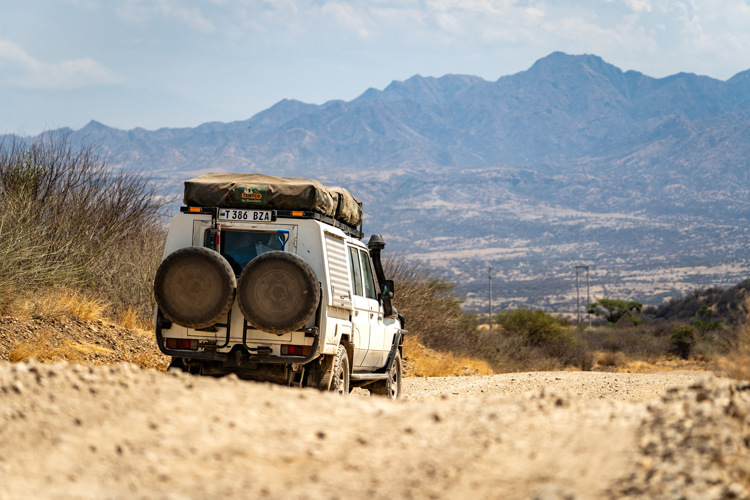
Constant vibration from rough roads, UV exposure, and the sheer weight of a permanently mounted rooftop tent can accelerate wear on roof seals, rack mounting points, and suspension components over a long self-drive itinerary. This is a particular concern on rental vehicles doing back-to-back multi-week trips through Tanzania and Uganda’s roughest park roads.
13. Steeper Learning Curve for First-Time Campers
While most rooftop tents open faster than a ground tent, first-time users often underestimate the process: releasing straps, positioning the ladder correctly, extending the rainfly, and repacking everything securely before driving off. Doing this wrong — especially repacking — can damage the tent or leave gear flying loose on rough roads.
Rooftop Tent vs. Ground Tent: Quick Comparison
The table below summarizes how rooftop tents compare to traditional ground tents across the factors that matter most for self-drive safari travelers.
| Factor | Rooftop Tent | Ground Tent |
| Upfront cost | High (USD 900–4,000+, plus rack/mount) | Low (USD 50–400) |
| Vehicle impact | Adds 40–90 kg, raises center of gravity | None |
| Fuel economy | Reduced due to roof drag and weight | Unaffected |
| Setup time | 3–8 minutes, but requires ladder access | 10–20 minutes, ground-level |
| Mobility once camped | Vehicle unusable until tent is packed down | Vehicle free to use anytime |
| Accessibility | Harder for children, elderly, or mobility-limited travelers | Easier, step-in access |
| Wind stability | More exposed and top-heavy in strong wind | Lower profile, more stable |
| Storage when not in use | Bulky; permanently mounted or needs garage space | Compact; folds into a bag |
Should You Still Choose a Rooftop Tent?
None of this means rooftop tents are a bad choice outright — they remain popular for good reasons, including faster setup on hard or wet ground, a comfortable built-in mattress, and a sense of elevation in game areas. The point is that the disadvantages are real and should be weighed against your specific trip: group size, budget, vehicle, route terrain, and how often you’ll want to move camp during a single stop.
| Who Rooftop Tents Suit Best
Couples or solo travelers on shorter routes who value fast setup and a fixed base camp. Trips with minimal in-camp vehicle movement, where the ‘vehicle is locked in place’ downside matters less. Travelers renting a 4×4 that’s already RTT-equipped and roof-rated, removing the cost and installation concerns. |
| Who Might Prefer a Ground Tent Instead
Families with young children or elderly travelers who need easy, ladder-free access. Budget-conscious travelers who want to avoid the added rental cost of RTT-equipped vehicles. Groups planning frequent day trips from a fixed base camp, where vehicle mobility matters. |
Frequently Asked Questions
Are rooftop tents worth it for a Tanzania or Uganda self-drive safari?
They can be, particularly for couples or solo travelers who value speed and comfort over flexibility. Families, budget travelers, and groups needing daytime vehicle mobility often do better with a ground tent or a fully-outfitted camping vehicle.
Do rooftop tents affect fuel consumption significantly?
Yes. The added weight and wind resistance typically reduce fuel economy, which becomes noticeable over multi-day itineraries covering long distances between parks.
Is it safe to drive off-road with a rooftop tent mounted?
Generally yes, provided the roof rack and vehicle are properly rated for the load, and the driver adjusts speed and cornering for the higher center of gravity on rough or uneven terrain.
Planning a self-drive safari in Tanzania or Uganda? Compare rooftop tent and ground tent rental options before you book to match the right setup to your group and route.