Camping ground in Serengeti: Camping in the Heart of the Serengeti
Camping Ground in Serengeti: The Serengeti National Park — a UNESCO World Heritage Site sprawling across approximately 14,750 square kilometers of northern Tanzania — is widely regarded as one of the greatest wildlife destinations on Earth. Home to the legendary Great Migration, where over 1.5 million wildebeest, zebra, and gazelle thunder across open plains in an eternal cycle of life, the Serengeti offers an immersive safari experience that few places on the planet can rival.
Camping within the Serengeti is not merely a budget alternative to lodge accommodation — it is, for many travelers, the pinnacle of the African safari experience. To wake before dawn, hear lions roaring in the distance, step outside your tent to the smell of acacia wood smoke, and watch the savannah turn gold as the sun rises over endless grasslands is to understand why this wilderness has captivated adventurers, naturalists, and dreamers for generations.
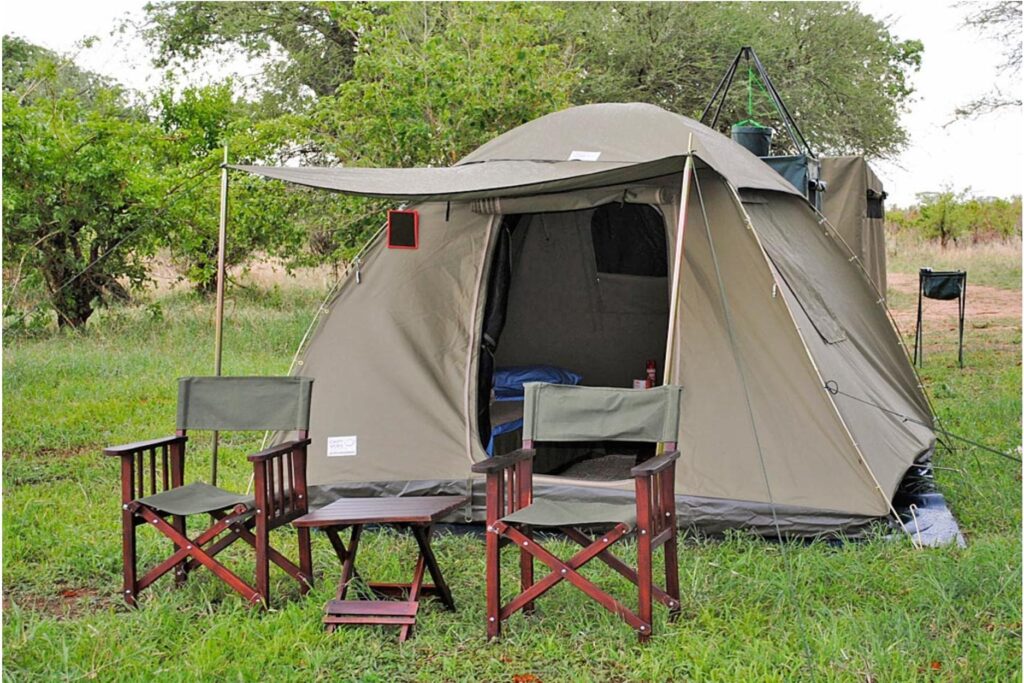
This guide covers every type of camping ground available within the Serengeti National Park ecosystem — from basic public campsites where you pitch your tent under an open sky with nothing between you and the wild, to exclusive private camps nestled in prime wildlife corridors. Whether you are a budget backpacker, a family on a once-in-a-lifetime trip, or a discerning luxury traveler who simply refuses to sacrifice proximity to nature, the Serengeti has a camping experience tailored for you.
Quick Reference: Serengeti Camping at a Glance
| Category | Details | Notes |
| Total Park Area | 14,750 sq km | One of Africa’s largest parks |
| Camping Types | Public, Special, Private | 3 distinct categories |
| Public Campsites | Over 50 designated sites | Scattered across the park |
| Special Campsites | Exclusive, remote areas | Walk-in, fly-in access |
| Private Camps | Luxury tented camps | All-inclusive packages |
| Best Season | June to October | Dry season; peak migration |
| Park Entry Fee | USD 70/person/night | Foreign non-residents |
| Camping Fee (Public) | USD 30–40/person/night | Plus park entry |
| Special Campsite Fee | USD 50–60/person/night | Exclusive use often req. |
| Currency Accepted | USD, TZS, major cards | USD preferred |
| Nearest Airport | Seronera Airstrip | Internal flights from Arusha |
Types of Camping Grounds in the Serengeti
The Tanzania National Parks Authority (TANAPA) manages three principal categories of camping in the Serengeti. Understanding the distinctions between them is essential for planning your trip.
1. Public Campsites (Ordinary Campsites)
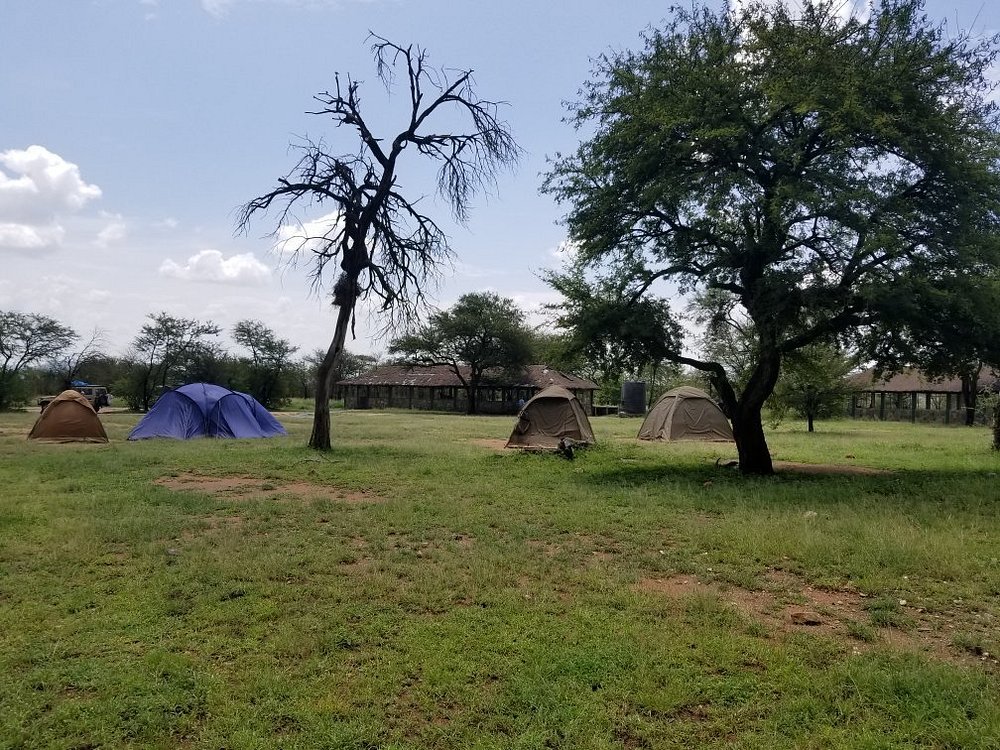
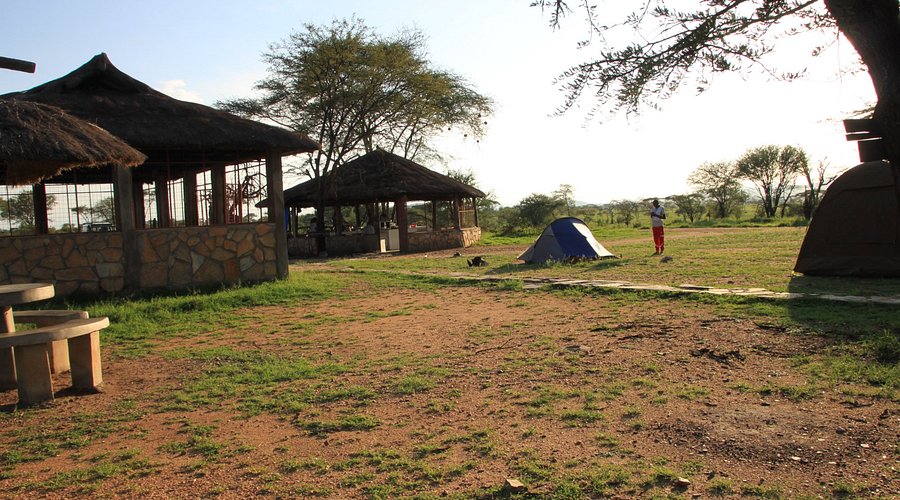
Public campsites are the most affordable and widely available camping option in the Serengeti. They are designated, managed areas open to any visitor who pays the standard fees. Facilities are intentionally minimal to preserve the wilderness feel, but most sites include:
- Long-drop or flush pit latrines
- Communal washing areas with basic plumbing
- Firewood collection zones (in designated areas only)
- Cooking areas with stone fire rings
- Nearby ranger posts for safety
Public campsites do NOT include: electricity, hot water, restaurants, shops, or any form of luxury amenities. You must be entirely self-sufficient — bringing your own tent, sleeping gear, food, cooking equipment, and water purification supplies.
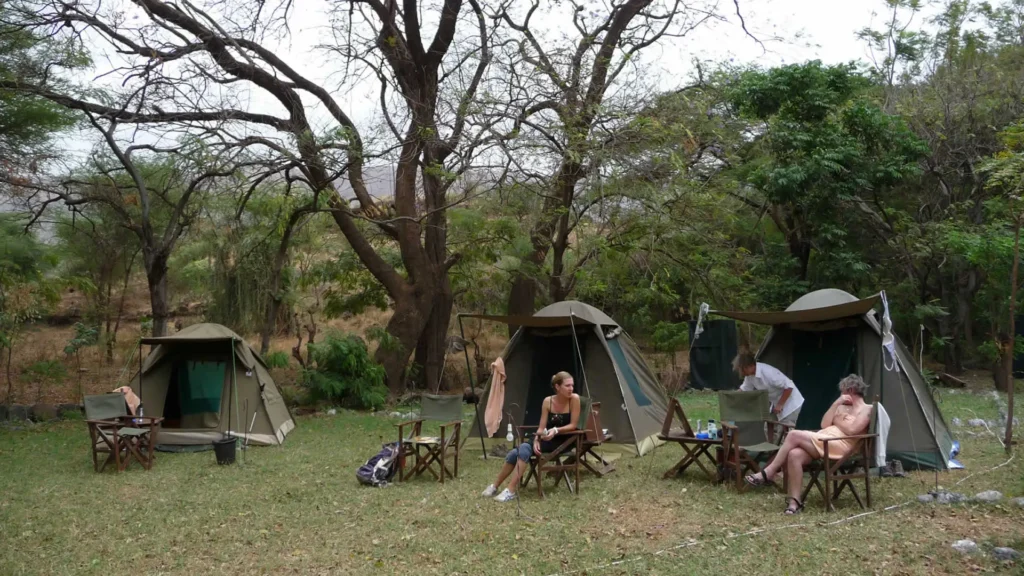
2. Special Campsites
Special campsites are remote, often unmarked wilderness sites that offer a vastly more exclusive experience. They are typically booked by single groups at a time (exclusive use), meaning you will have the surrounding bush entirely to yourself. These sites are usually accessed by 4WD safari vehicle or light aircraft.
Special campsites have no permanent facilities whatsoever — no toilets, no running water, no structures of any kind. You camp directly in the wild. This is the most authentic possible Serengeti experience, often placing campers right within prime wildlife movement corridors. A professional guide and cook are strongly recommended.
3. Private Luxury Tented Camps
Occupying the other end of the spectrum, private luxury tented camps combine the romance of sleeping in canvas tents with world-class amenities. These are permanent or semi-permanent structures erected by private operators under concession agreements with TANAPA. They typically offer:
- En-suite bathrooms with hot showers
- Proper beds with quality linen and mosquito nets
- Full-board dining and open bar
- Guided game drives included
- Private decks overlooking wildlife areas
- Conservation and community programs
Key Camping Areas & Regions
The Serengeti is divided into several distinct ecological zones, each offering a different landscape and wildlife viewing experience. Choosing the right region for your campsite depends on when you visit and what wildlife you most want to see.
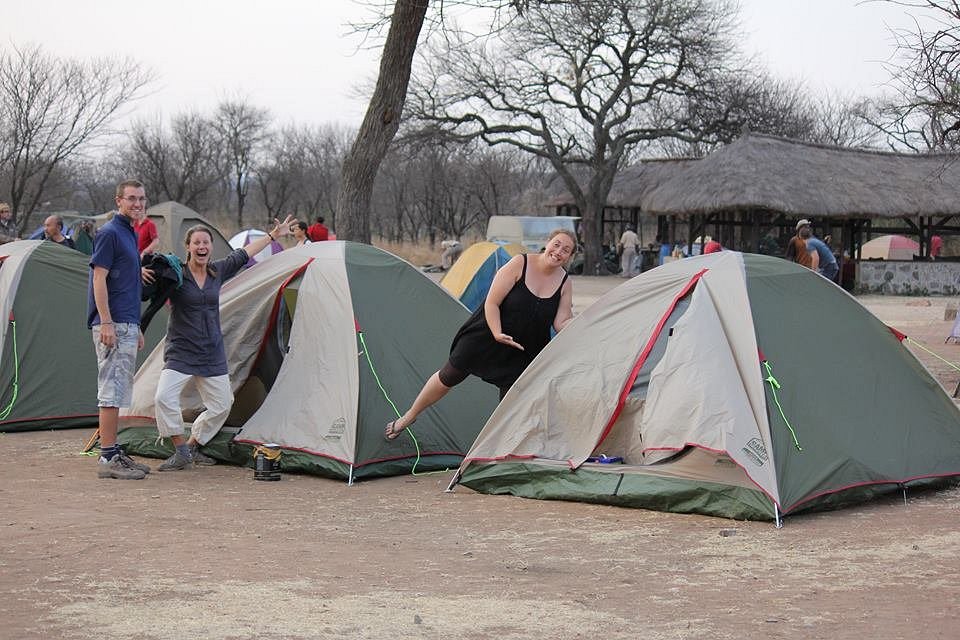
Seronera Valley — The Central Hub
Seronera, located in the geographic heart of the Serengeti, is the most accessible and most popular area for camping. The Seronera River Valley provides year-round water, making it a magnet for predators and prey alike throughout all seasons.
Seronera Public Campsite
| Seronera Public Campsite |
| Type: Public Campsite
Location: Central Serengeti, near Seronera Airstrip (approx. 350 km from Arusha) Key Facilities: Pit latrines, communal washing areas, fire rings, ranger post proximity Best For: Budget travelers, self-sufficient campers, first-time Serengeti visitors Price Range: USD 30–40/person/night (plus park entry fees) |
Seronera is surrounded by kopjes (rocky granite outcroppings) that serve as leopard territory, making leopard sightings particularly high here. Lions, cheetahs, elephants, giraffes, and a staggering variety of birds are regularly spotted in the river valley. The central location also makes it an excellent base for day trips to any part of the park.
Northern Serengeti (Lobo Area) — Migration Crossings
The northern Serengeti, centered around the Lobo area and stretching toward the Kenyan Masai Mara border, is where the dramatic Mara River crossings occur from July to October. Massive columns of wildebeest and zebra plunge into the crocodile-filled Mara River in one of nature’s most spectacular events.
Lobo Public Campsite
| Lobo Public Campsite |
| Type: Public Campsite
Location: Northern Serengeti, near Lobo Wildlife Lodge Key Facilities: Basic latrines, water available seasonally, scenic rocky setting Best For: Wildlife photographers, migration seekers (July–October), adventure campers Price Range: USD 30–40/person/night (plus park entry fees) |
The Lobo area is characterized by massive granite kopjes and riverine forest, creating a dramatic backdrop quite different from the open southern plains. Black-maned lions are particularly associated with this region, and the elevated terrain provides sweeping views over the migration-season grasslands.
Southern Serengeti & Ndutu — Calving Season
The short-grass plains of the southern Serengeti, extending into the Ndutu area of the Ngorongoro Conservation Area, are the calving grounds of the wildebeest. From January through March, hundreds of thousands of wildebeest calves are born here, attracting the highest concentration of predators in Africa.
Ndutu Area Campsites
| Ndutu Area Public & Special Campsites |
| Type: Public & Special Campsites
Location: Southern Serengeti / Ngorongoro Conservation Area border Key Facilities: Basic facilities (public sites); no facilities (special sites); Ndutu Lake access Best For: Wildlife photographers, calving season visitors (Jan–Mar), predator watchers Price Range: USD 30–60/person/night depending on site type |
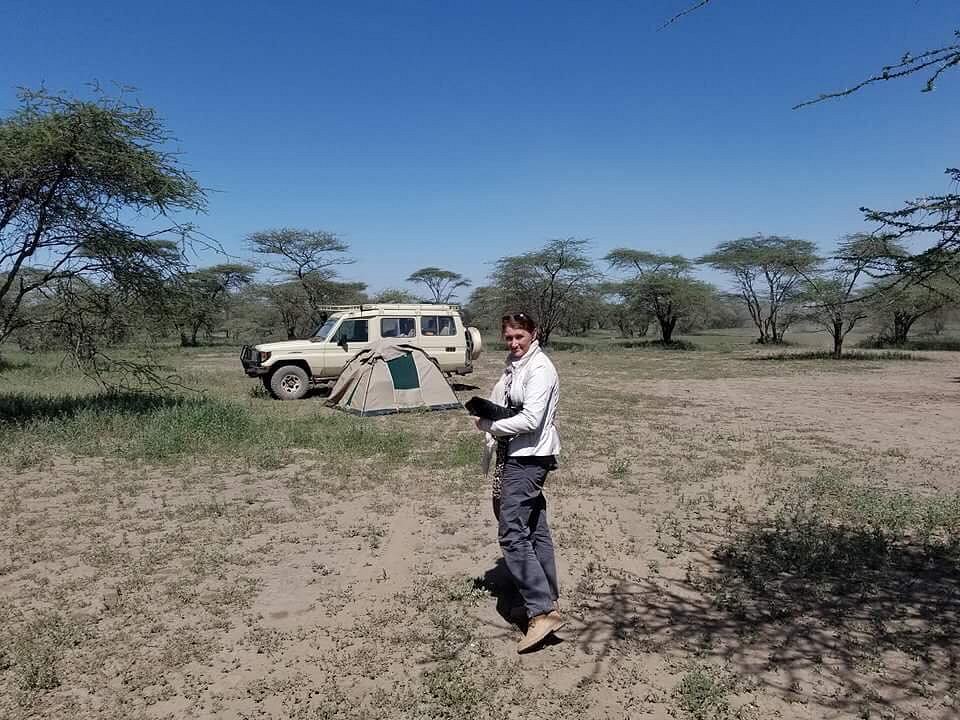
The Ndutu region is particularly beloved by wildlife photographers for its extraordinary predator-prey interactions during calving season. Cheetahs, wild dogs, hyenas, and lions are all highly visible here, and the short grass allows for unobstructed, low-angle photography. Lake Ndutu and Lake Masek attract flamingos and waterfowl, adding a diverse birding dimension.
Western Corridor — Grumeti River
The Western Corridor is the long, finger-like extension of the Serengeti stretching westward toward Lake Victoria. The Grumeti River, lined with ancient fig trees and home to enormous Nile crocodiles, bisects this region. The migration passes through from May to July as the herds move north.
Kirawira Special Campsite Area
| Kirawira & Western Corridor Special Campsites |
| Type: Special Campsite
Location: Western Serengeti, along the Grumeti River corridor Key Facilities: No permanent facilities; remote bush camping with river proximity Best For: Exclusive travelers, Grumeti River crossing viewers, fly-in safari guests Price Range: USD 50–60/person/night (exclusive site use) |
The Western Corridor is less visited than the central or northern zones, making it a premium choice for travelers seeking solitude. Topi antelope, patas monkeys, and colobus monkeys inhabit the riverine forest fringes. The landscape transitions between savannah and woodland, offering beautiful diversity in a single day’s game drive.
Featured Private Tented Camps
For travelers who want proximity to the wilderness without sacrificing comfort, the Serengeti’s private tented camps represent some of the finest safari accommodation in Africa. The following are among the most highly regarded:
Four Seasons Safari Lodge Serengeti — Central
Operating adjacent to public land near Seronera, this iconic property offers a private watering hole that attracts elephants, lions, and hippos right to the lodge. The tented suites feature plunge pools, air conditioning (rare in the Serengeti), and interiors inspired by traditional Maasai design. A heated swimming pool overlooks the savannah, and the spa uses locally sourced botanical ingredients.
| Category | Ultra-Luxury Lodge |
| Location | Central Serengeti, near Seronera |
| Accommodation | 77 suites and villas, all en-suite |
| Price Range | USD 1,200–2,500/person/night (full board) |
| Highlights | Infinity pool, spa, wildlife waterhole, children’s program |
&Beyond Serengeti Under Canvas — Mobile Camp
&Beyond operates one of the most respected mobile tented camp experiences in East Africa. Rather than a fixed location, the Serengeti Under Canvas camp moves seasonally to follow the Great Migration, ensuring guests are always positioned near the action — whether that is the calving season plains in January, the Grumeti crossings in June, or the Mara River drama in August.
| Category | Luxury Mobile Tented Camp |
| Location | Moves seasonally to follow the migration |
| Accommodation | 12 tents; private en-suite bathrooms with solar hot water |
| Price Range | USD 800–1,800/person/night (full board, game drives included) |
| Highlights | Migration positioning, star beds option, fly camping excursions |
Wildlife You Can Expect at Serengeti Campsites
One of the most unique and thrilling aspects of camping in the Serengeti — particularly at public and special campsites — is the very real possibility of wildlife entering or passing through your campsite at night. This is not a danger to be feared but an experience to be respected and prepared for.
The Big Five
All five of Africa’s most iconic safari animals — lion, leopard, elephant, Cape buffalo, and rhinoceros — are found within the Serengeti ecosystem, though black rhinos are restricted to the nearby Ngorongoro Crater. Campers should be aware that:
- Lions regularly patrol campsites, particularly at night. Sleeping with your tent fully zipped is non-negotiable.
- Elephants may move through camp silently — their footsteps are nearly inaudible. Always check the perimeter before leaving your tent after dark.
- Leopards are nocturnal and solitary; encounters are rare but possible near kopjes.
- Buffalo are most dangerous when encountered at close range; do not approach.
Common Campsite Visitors
- Spotted hyenas: Highly curious and bold; they will investigate unattended food or equipment. Hang all food from trees or lock inside vehicles.
- Vervet monkeys and olive baboons: Daytime thieves of unguarded food; never leave pack or food accessible.
- Jackals: Common around campsites at dusk and dawn; usually harmless.
- Mongoose: Often seen in groups near rocky outcroppings.
- Maasai giraffes: May feed on acacia trees within or near the campsite perimeter.
- Zebra and wildebeest: During migration season, large herds may move directly through camping areas.
Bird Life
The Serengeti hosts over 500 bird species. Campers are treated to an extraordinary dawn chorus. Watch for Lilac-breasted rollers (the unofficial bird of East Africa), Fischer’s lovebirds, grey-crowned cranes, Kori bustards (the world’s heaviest flying bird), martial eagles, and an extraordinary variety of vultures — including white-backed, lappet-faced, and Ruppell’s griffon.
Best Time to Camp in the Serengeti
| Period | Migration Activity | Weather | Best Area |
| Jan–Mar | Calving season on southern plains | Short rains possible | Southern / Ndutu |
| Apr–May | Herds moving north | Long rains; fewer tourists | Central Seronera |
| Jun–Jul | Western Corridor crossings | Dry, cool evenings | Western / Grumeti |
| Aug–Oct | Mara River crossings — PEAK | Dry season; best roads | Northern / Lobo |
| Nov–Dec | Herds return south | Short rains beginning | Central / Southern |
Essential Gear & Packing List for Serengeti Camping
Camping in the Serengeti demands thoughtful preparation. Unlike camping in temperate wilderness, you will face extreme heat midday, potentially cold nights, dusty conditions, wildlife hazards, and the absence of any nearby amenities or shops. The following packing list covers all essentials:
Shelter & Sleeping
- Four-season tent with full rain fly and insect-proof mesh inner (essential even in dry season)
- Sleeping bag rated to at least 5°C (41°F) — Serengeti nights can be surprisingly cold
- Sleeping mat or self-inflating pad for insulation and comfort
- Tent repair kit and extra tent pegs
Clothing
- Lightweight, breathable, neutral-colored safari clothing (khaki, olive, tan — never bright colors or white)
- Warm fleece or down jacket for early morning game drives and cold nights
- Wide-brimmed hat and UV-protective sunglasses
- Sturdy, ankle-supporting boots for walking near camp
- Rain jacket or poncho (even in dry season, brief showers occur)
Food & Water
- Water purification system: filter (e.g., LifeStraw), iodine tablets, or UV SteriPen
- Minimum 4 liters of water storage capacity per person per day
- Portable camp stove (gas cartridge type) with spare canisters
- Lightweight cookware set with lids
- High-calorie, non-perishable food supplies for the full duration of your stay plus one emergency day
- Insulated cooler box for perishables (ice available at Seronera Visitor Centre)
- Bear canister or hanging rope system for food storage away from wildlife
Safety & First Aid
- Comprehensive first aid kit including wound care, blister treatment, and oral rehydration salts
- Malaria prophylaxis medication (consult your doctor before travel)
- DEET-based insect repellent (50% or higher concentration)
- Headlamp with extra batteries — torch is insufficient for camp navigation at night
- Emergency whistle and signal mirror
- Copy of all travel documents, permits, and emergency contact numbers
Navigation & Communication
- Offline GPS maps downloaded for the Serengeti (Maps.me or Gaia GPS)
- Compass and paper topographic map as backup
- Satellite communicator or personal locator beacon (PLB) for remote special campsites
- Solar charger or power bank for devices
Rules, Regulations & Safety Guidelines
The Tanzania National Parks Authority (TANAPA) enforces strict regulations designed to protect both wildlife and visitors. Violations can result in immediate ejection from the park, fines, or legal prosecution. All campers must adhere to the following:
Wildlife Interaction Rules
- Never leave your tent unattended with food inside or nearby
- Do not feed any wildlife under any circumstances — this is illegal and dangerous
- Maintain a minimum distance of 25 meters from predators, 50 meters from elephants and buffalo
- Never use flash photography on nocturnal animals — it disorients and stresses them
- Do not get out of your vehicle except at designated sites or when your guide confirms it is safe
Environmental Regulations
- All waste must be packed out — no littering of any kind is permitted anywhere in the park
- Campfires are only permitted in designated fire rings where they exist; check current rules as regulations change seasonally
- Collection of rocks, soil, plants, feathers, or any natural material is strictly prohibited
- Drone flying requires advance written permission from TANAPA and is generally not permitted
- Off-road driving is prohibited; all vehicles must remain on designated tracks
Night Safety Protocol
- Always use a torch and make noise when moving around camp after dark
- Never approach wildlife that enters your campsite — make noise, shine lights, and alert your guide or ranger
- Keep your tent fully zipped at all times when you are inside it
- Inform a ranger or fellow camper if you need to leave camp at night
- Do not walk between campsites after dark under any circumstances
How to Book & Obtain Permits
Booking campsite permits in the Serengeti has become significantly more streamlined with TANAPA’s online system, though it still requires advance planning — especially for peak season (June through October) when campsites can fill up months in advance.
Online Booking via TANAPA
TANAPA’s official online booking portal (tanzaniaparks.go.tz) allows visitors to reserve and pay for public campsites, special campsites, and park entry fees before arrival. Payment is accepted by major credit cards and bank transfer in USD. The system issues a confirmation that you present at the park gate.
Booking Through a Tour Operator
Most first-time visitors to the Serengeti find it far more convenient to book through a registered Tanzania tour operator. Operators handle all permits, campsite reservations, equipment hire, and logistics. They also provide mandatory professional guides and camp staff, which dramatically enhances both safety and the quality of the overall experience. Look for TATO (Tanzania Association of Tour Operators) or ATTA (Africa Travel & Tourism Association) membership.
Fees Summary
| Fee Type | Adult (Foreign) | Child (5–15 yrs) |
| Park Entrance Fee | USD 70/night | USD 35/night |
| Public Campsite Fee | USD 30–40/night | USD 20–25/night |
| Special Campsite Fee | USD 50–60/night | USD 30/night |
| Vehicle Fee (foreign) | USD 40/vehicle/night | N/A |
| Guide Fee (recommended) | USD 25–50/day | N/A |
Note: Fees are subject to change. Always verify current rates directly with TANAPA or your tour operator before booking. East African Community (EAC) residents and Tanzanian nationals receive significantly reduced rates.
Getting to the Serengeti Campsites
By Air
The fastest and most scenic way to reach the Serengeti is by light aircraft from Arusha (Kilimanjaro International Airport or Arusha Airport). Several airstrips serve different parts of the park:
- Seronera Airstrip — Central Serengeti (main hub)
- Grumeti Airstrip — Western Corridor
- Kogatende Airstrip — Northern Serengeti
- Lobo Airstrip — Northern Serengeti
Charter and scheduled flights operate daily with operators including Coastal Aviation, Air Excel, Auric Air, and Regional Air Services. Flight time from Arusha is approximately 45–90 minutes depending on destination.
By Road
Overland safari is also popular and allows for game viewing en route. The main road access points are:
- Naabi Hill Gate (southeast): Main entry from Ngorongoro Conservation Area; approximately 7–8 hours drive from Arusha via the Ngorongoro Crater rim.
- Ndabaka Gate (west): Entry from Musoma/Lake Victoria side; approximately 8–10 hours from Arusha via the western route.
- Bolongoya Gate (north): Entry from the Masai Mara border region; accessible from the Kenyan side.
A 4WD vehicle with high clearance is essential. Standard cars are not suitable and are not permitted within the park. Roads become challenging during the long rains (April–May) and short rains (November).
Pro Tips for an Unforgettable Serengeti Camping Experience
Gathered from experienced safari guides and veteran Serengeti campers, the following tips will significantly enhance your experience:
- Book your campsites at least 6 months in advance for peak season (July–September). Popular public sites near the Mara River crossings fill up extremely fast.
- Hire a professional guide even for public campsites. Their knowledge of animal behavior can mean the difference between an encounter that is thrilling and one that is dangerous.
- Arrive at your campsite before 4:30 PM. Setting up a tent in the dark in lion country is not recommended.
- Pack earplugs — not to block out wildlife sounds (you want to hear those), but because fellow campers can be surprisingly noisy.
- Bring red-light headlamps rather than white-light ones. Red light preserves your night vision and is less disorienting for wildlife.
- Learn basic Swahili phrases — park rangers and local staff are far more forthcoming with helpful information when approached in their own language.
- Keep a wildlife journal and binoculars on your sleeping bag at all times, even at night. Dawn game viewing from the tent entrance can be extraordinary.
- Budget for tipping. Camp staff, guides, and rangers work exceptionally hard and rely on gratuities as a significant part of their income.
- Download offline maps and have a physical backup. Mobile signal is essentially non-existent throughout the park.
- Travel insurance with emergency medical evacuation cover is not optional — it is essential. The nearest major hospitals are in Arusha (minimum 8 hours away by road from the central park).
Conclusion: Why Camp in the Serengeti?
No other accommodation brings you closer to the soul of the Serengeti than camping. When the distant roar of a lion reverberates through your tent walls at 2 AM, when hyenas cackle at the edge of firelight, when you unzip your tent at dawn to find a family of elephants silhouetted against a rose-pink horizon — you understand, in the most visceral way possible, why this landscape is called one of the natural wonders of the world.
The Serengeti does not offer the convenience of a luxury hotel, the reliability of city infrastructure, or the comfort of predictability. It offers something far more valuable: unfiltered, unmediated contact with the most magnificent wildlife ecosystem remaining on Earth. For those who choose to sleep under its vast skies, the Serengeti gives back something that no amount of money can buy — the memory of a night when the wild world felt close enough to touch, and you, for a few precious days, were a part of it.