45 Days Around Lake Victoria Drive- Uganda, Tanzania, Kenya
45 Days Around Lake Victoria Drive , Lake Victoria is the world’s second-largest freshwater lake by surface area and Africa’s largest, stretching across three East African nations — Uganda, Tanzania, and Kenya. With a shoreline of approximately 3,440 kilometres, it is fed by the Kagera River and drains northward through the Nile. To circumnavigate this inland sea by road is not merely a road trip — it is a journey through some of the most varied, spectacular, and culturally rich landscapes on the African continent.
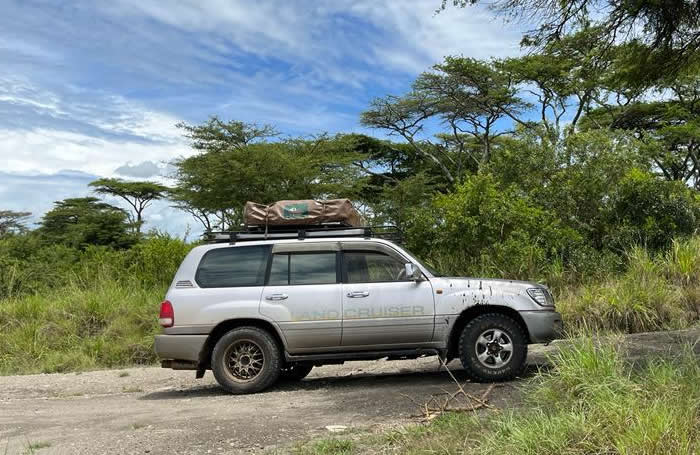
This 45-day itinerary covers roughly 6,000 kilometres of driving through equatorial highlands, lakeside fishing villages, volcanic islands, colonial-era towns, wildlife-rich national parks, and bustling regional capitals. You will cross the equator multiple times, taste cuisine from Kampala to Kisumu, watch hippos at sunset, and wake to the sound of fish eagles over glassy water. Whether you are a seasoned overlander, a family on a sabbatical adventure, or a couple celebrating a milestone, the Lake Victoria circuit is a journey that will redefine your understanding of East Africa.
This guide is structured week by week, with day-by-day detail for each leg of the route, along with practical information on roads, border crossings, accommodation, food, health, and safety. The starting point is Kampala, Uganda — the most logical hub for international arrivals — but the route can be joined at any point.
| THE ROUTE AT A GLANCE |
| Start / Finish: Kampala, Uganda |
| Total Distance: ~6,000 km (road) |
| Countries: Uganda -> Tanzania -> Kenya -> Uganda |
| Duration: 45 days (with flexibility for rest days) |
| Best Season: June-September or December-February (dry seasons) |
| Difficulty: Moderate — mixed tarmac and murram roads |
| Recommended Vehicle: 4WD High-Clearance (Toyota Land Cruiser, Hilux, or similar) |
Part One: Planning Your Lake Victoria Circuit
The Best Time to Go
East Africa has two main dry seasons that make road travel significantly more comfortable. The long dry season from June to September is the most popular time to travel: roads are firm, wildlife gathers at water sources, and visibility is excellent. The short dry season from December to February is also reliable and tends to be less crowded.
Avoid the long rains (March to May) and the short rains (October to November) if possible. During these periods, unpaved sections — particularly in western Tanzania and parts of rural Uganda — can become deeply rutted and occasionally impassable without a winch. If you must travel in the green season, add several buffer days and carry extra recovery equipment.
Vehicle Requirements
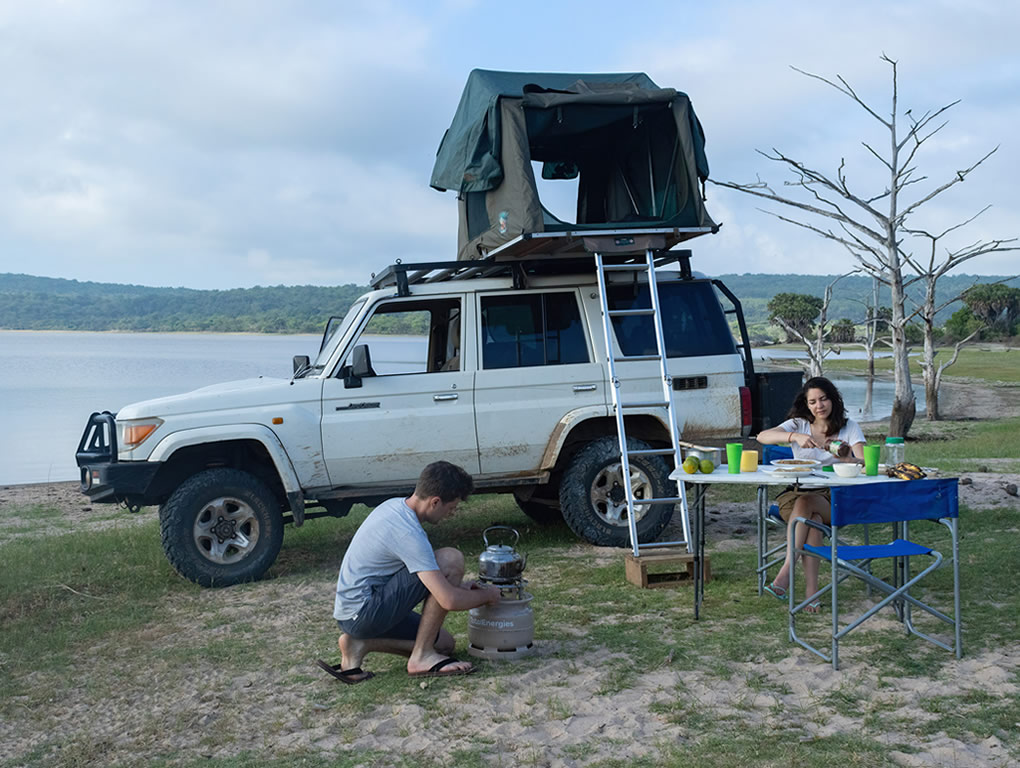
A four-wheel-drive vehicle with high clearance is strongly recommended for this route. While a significant portion of the circuit follows tarmac highways, several sections — particularly around the western Tanzanian shore, the Ssese Islands causeway, and the back roads of Kisumu County — involve rough murram tracks, corrugated gravel, and the occasional water crossing.
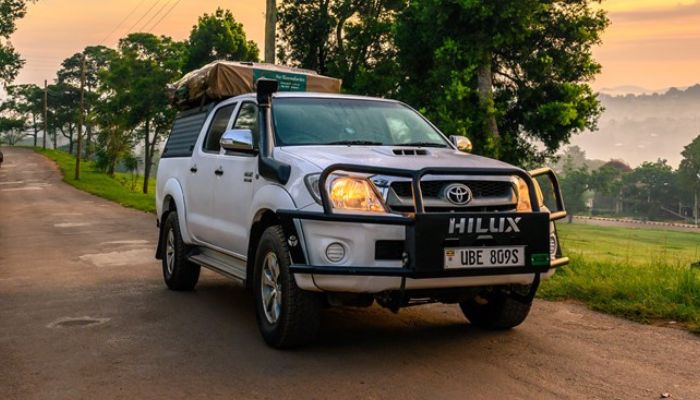
The most reliable and widely serviced vehicles in the region are the Toyota Land Cruiser (70 or 200 series), Toyota Hilux, and Land Rover Defender. Ensure your vehicle is equipped with:
- Two full-size spare tyres (not just a space-saver)
- High-lift jack and base plate
- Tow rope and snatch strap
- Comprehensive tool kit and basic spare parts (fan belt, fuses, hoses)
- Jerry cans for an extra 50-80 litres of fuel
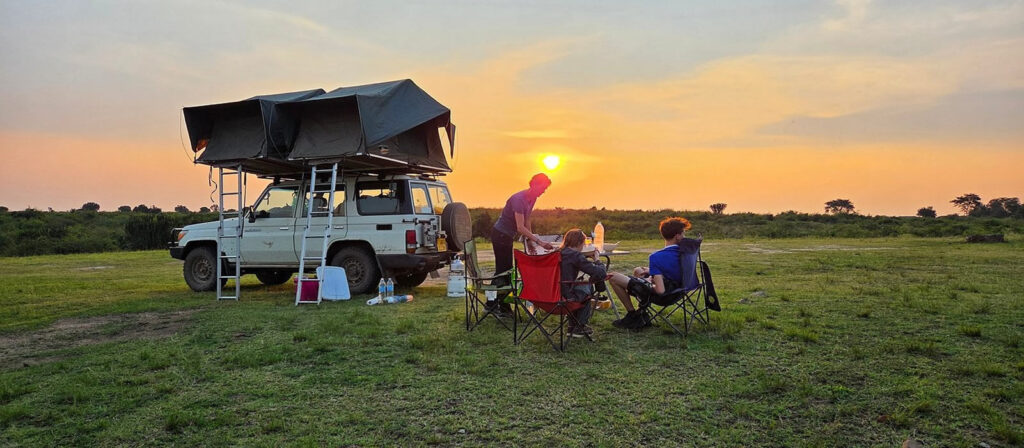
- Roof tent or camping equipment if budgeting for bush camps
- First aid kit and snake bite kit
- Satellite communicator (e.g. Garmin inReach) for remote sections
Documents and Border Crossings
You will cross three international borders: Uganda-Tanzania (Mutukula), Tanzania-Kenya (Isebania/Sirare), and Kenya-Uganda (Busia). All crossings are open to self-drive tourists with the correct paperwork.
Passport: Valid for at least 6 months beyond your travel dates. Carry several photocopies.
Visas: The East Africa Tourist Visa ($100) covers Uganda, Kenya, and Rwanda (not Tanzania). For Tanzania, you need a separate visa ($50, available on arrival or online via e-Visa portal).
Vehicle Papers: Original vehicle registration, insurance (COMESA Yellow Card covers all three countries), and a carnet de passage or temporary importation permit if the vehicle is not registered locally.
Driving Licence: International Driving Permit recommended alongside your national licence.
Yellow Fever Card: Mandatory for entry into Uganda and Kenya if arriving from certain countries.
Budget Considerations
The Lake Victoria circuit can be done on a wide range of budgets depending on accommodation choices. A rough guide per day per person (excluding vehicle costs):
- Budget (camping or basic guesthouses): $40-70 per day
- Mid-range (lodges and mid-tier hotels): $100-180 per day
- Luxury (boutique lodges and premium camps): $250-500+ per day
The most significant variable cost is fuel. Budget approximately $600-900 for fuel over the full circuit.
Week One: Kampala to Masaka — The Ugandan Heartland
Day 1-2: Kampala — City of Seven Hills
Your adventure begins in Kampala, Uganda’s vibrant, chaotic, and endlessly fascinating capital. Before departing into the rural landscape, spend two days exploring the city. Kampala sits on seven hills overlooking the northern shore of Lake Victoria, and several of those hills offer panoramic views across the blue expanse of the lake toward the horizon.
Start at Kasubi Tombs, the UNESCO World Heritage Site containing the burial grounds of the Buganda Kingdom’s kabakas (kings). The thatched royal enclosure is one of the finest examples of traditional Ugandan architecture still in use. From there, head to the Ugandan Museum on Kira Road — small but well-curated, covering natural history, ethnography, and colonial history.
In the afternoon, the Nakasero and Kololo hills offer the city’s best dining and cafe culture. Eat nyama choma (roasted meat) and matooke (steamed green banana) at a local restaurant, and try Nile Special lager, Uganda’s most beloved beer. In the evening, the Kabalagala neighbourhood buzzes with street food stalls and live music.
Stay: Protea Hotel by Marriott Kampala (mid-range) or Mish Mash Guesthouse Kololo (budget)
Eat: Cafe Javas for breakfast; The Big Mama’s for Ugandan cuisine; Endiro Coffee for excellent Ugandan specialty coffee
Fuel: Fill up completely in Kampala — it is reliably the cheapest fuel for the first week
Day 3: Kampala to Entebbe — Gateway to the Lake
The short 40-kilometre drive south to Entebbe follows the Entebbe Peninsula, one of the most scenic drives in Uganda. The road descends toward the lake through lush green hills dotted with banana plantations and bougainvillea-draped houses.
Entebbe is the site of Uganda’s international airport but also a gracious colonial-era lakeside town. The Uganda Wildlife Education Centre houses rescued animals including chimpanzees, crocodiles, and the rare shoebill stork — one of the world’s most extraordinary birds. The Entebbe Botanical Gardens, established in 1898, spread over 40 hectares on the lakeshore and featured in the original Tarzan films. Spend the afternoon walking through the gardens to the water’s edge as fishing boats return with their catch.
Stay: Imperial Resort Beach Hotel (mid-range, lakeshore) or Entebbe Backpackers (budget)
Highlight: Request a shoebill sighting at the Wildlife Education Centre — staff know where to find them
Day 4-5: Lake Victoria Island Detour — Ngamba Island Chimpanzee Sanctuary
From Entebbe, a short boat ride across the lake reaches Ngamba Island Chimpanzee Sanctuary, home to over 50 rescued chimpanzees. This is one of Uganda’s most intimate wildlife experiences: you watch chimps feed at dawn, interact socially, and move through the forest in what feels like genuine wildness — though the island itself is a managed sanctuary.
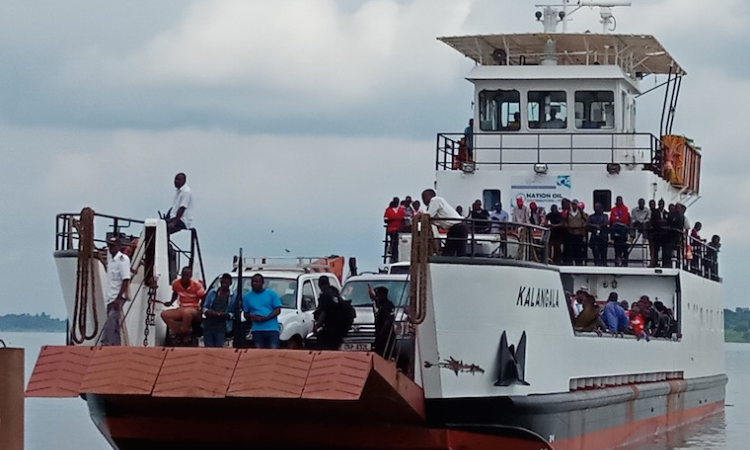
If time permits, extend the island experience with a stay at one of the Ssese Islands, an 84-island archipelago roughly 60 kilometres offshore. Ferries run from Entebbe and the crossing takes two to three hours. The main islands of Bugala and Bufumira offer chilled lakeside lodges, hiking trails through equatorial forest, and fishing with local communities.
Day 6-7: Entebbe to Masaka via Equator Crossing
The drive from Entebbe southwest toward Masaka on the A109 is one of Uganda’s classic journeys. The road climbs away from the lake through intensely farmed hills before crossing the equator at a marked roadside monument near Kayabwe. This is a favourite photo stop — you can stand with one foot in each hemisphere — and local vendors sell hand-carved wooden crafts.
Masaka is a prosperous regional town and the gateway to the lakeside district of Kalangala. The town itself has good fuel stations, supermarkets, and restaurants serving fresh lake fish. The surrounding countryside is among Uganda’s most fertile: tea estates, sugar plantations, and banana groves stretch to every horizon.
Drive Time: Entebbe to Masaka: approximately 3 hours (135 km), allowing for the equator stop
Road Condition: Good tarmac throughout on the A109
Stay: Hotel Brovad (comfortable mid-range, Masaka)
Week Two: Masaka to Mwanza — Into Tanzania
Day 8-9: Masaka to Bukoba via Mutukula Border
Leaving Masaka, the route heads south toward the Tanzanian border at Mutukula. The landscape opens into rolling savannah as you descend from the highlands, and the road passes through small trading towns with colourful markets. At Kyotera, a short detour leads to the shore of the Kagera swamps, the wetland complex that marks the effective source of the Nile.
The Mutukula border post is typically efficient and calm. Ugandan exit formalities, Tanzanian entry procedures, COMESA insurance transfer or purchase, and vehicle documentation can usually be completed in one to two hours. Cross early in the morning to avoid any afternoon queues.
Once across into Tanzania’s Kagera Region, the character of the landscape shifts perceptibly. The pace slows, the road narrows slightly, and the villages have a distinctly different architectural vernacular. The drive to Bukoba takes you along the western shore of the lake through gentle green hills.
Day 9-11: Bukoba — Tanzania’s Forgotten Gem
Bukoba is one of Tanzania’s most overlooked cities — and one of its most charming. Perched on the western shore of Lake Victoria, it is the capital of the Kagera Region and has a relaxed, unhurried atmosphere that feels nothing like Dar es Salaam or Arusha. The town was a significant German colonial administrative centre, and several colonial-era buildings survive near the waterfront.
The Bukoba Museum, housed in an old German fort, traces the history of the Haya people — one of Tanzania’s most historically significant kingdoms — as well as the colonial period and the coffee industry that still defines the regional economy. Arabica coffee grown in the Kagera highlands is among the best in East Africa, and a visit to a small cooperative farm is a highlight.
The lake beach at Bukoba is a peaceful place to swim and watch the evening light. Fresh tilapia and Nile perch are served at open-air restaurants near the port.
Stay: Walkgard Hotel (mid-range, good lake views) or Kiroyera Tours Guesthouse (budget)
Food: Try mchuzi wa samaki (fish curry) at any of the port-side restaurants
Day 12-13: Bukoba to Biharamulo — Deep Bush Country
The route south from Bukoba toward Biharamulo leaves the lake shore and climbs into the Kagera highlands — some of the most beautiful and least-visited scenery in Tanzania. The road passes through miombo woodland and along ridge lines with sweeping views. This section is remote: fuel stations are scarce, and you should carry at least an extra 60 litres.
Biharamulo itself is a small, functional town used mainly as a staging post. The surrounding area includes Biharamulo Game Reserve, a rarely visited but wildlife-rich conservation area with buffalo, topi, roan antelope, and occasionally lion and leopard. A morning game drive or guided walk through the reserve can be arranged informally.
Day 14-16: Biharamulo to Mwanza
The long drive from Biharamulo to Mwanza re-approaches the lake from the south. The road quality improves as you approach Tanzania’s second-largest city, and the landscape changes again — drier, more granite-bouldered terrain, with the characteristic rounded kopjes (rock outcrops) that define this part of the rift valley.
Mwanza, built among rocky hills tumbling into the lake, is the primary city on the Tanzanian shore of Lake Victoria and the commercial hub of the entire region. The city has a cosmopolitan energy — Indian Ocean Swahili culture meets inland Sukuma traditions — and the lakefront is busy with ferries, fishing trawlers, and cargo vessels. Bismarck Rock, a famous balanced boulder rising from the water near the ferry terminal, is the city’s most photographed landmark.
Stay: Tilapia Hotel (mid-range, excellent lake views) or Ryan’s Bay Hotel (mid-range)
Eat: Mandela Beach Restaurant for fresh fish; the central market for street food
Week Three: Mwanza to Musoma — The Eastern Tanzanian Shore
Day 15-16: Mwanza — City Exploration and Island Day Trip
Give Mwanza two full days. The city rewards exploration on foot: the busy fish market at Kamanga, the cluttered and colourful Kariakoo central market, the hilltop Bujora Sukuma Cultural Centre 18 kilometres out of town (with excellent displays on Sukuma music, dance, and traditional medicine), and the historic German Boma (fort) overlooking the harbour.
A boat trip to Rubondo Island National Park, set in the southwestern corner of the lake, is one of Tanzania’s greatest off-the-beaten-path experiences. The island is a forest sanctuary with chimpanzees (introduced from European zoos in the 1960s and now thriving), sitatunga antelope, hippos, Nile crocodiles, and exceptional birding.
Day 17-18: Speke Bay and Serengeti Western Corridor
From Mwanza, a magnificent detour loops south before heading east toward Serengeti. The B6 road from Mwanza south to Bunda hugs the lake shore, passing through fishing communities, papyrus wetlands, and acacia-dotted hillsides with constant water views.
Speke Bay Lodge, on the southeastern arm of the lake near the Serengeti’s western boundary, is a remote and magical place — wooden chalets perched above the water with hippos grazing at the shore and fish eagles calling from the fever trees. From here, a drive through the Western Corridor of Serengeti National Park (park fees apply) is possible. The Western Corridor is famous for the wildebeest river crossing during the Great Migration (June-July), but offers remarkable wildlife year-round.
Stay: Speke Bay Lodge (mid-range/luxury, one of the circuit’s highlights)
Detour Note: The Serengeti detour adds 2-3 days but is worth every extra day
Day 19-21: Musoma — The Gateway to Kenya
Musoma, the capital of Tanzania’s Mara Region, sits on a small peninsula jutting into Lake Victoria’s northeastern arm. It is a quiet, pleasant town with a strong fishing economy and a relaxed lakeside atmosphere. The weekly market is excellent for fresh produce and local crafts, and the fish market at the lake’s edge is active from before dawn.
The area around Musoma is archaeologically significant: several sites in the Mara Region have yielded Stone Age tools and evidence of some of the earliest human habitation in this part of Africa. Musoma is also the birthplace of Julius Nyerere, Tanzania’s founding president.
Stay: Hotel Tilapia (basic but clean, good lakeside location)
Fuel: Fuel up in Musoma before heading into the Kenya border zone
Week Four: Crossing into Kenya — Kisii, Kisumu, and the Kenyan Shore
Day 22-23: Musoma to Kisii via Isebania Border
The Tanzania-Kenya border crossing at Isebania/Sirare is one of East Africa’s busiest commercial crossings and can be slow during peak hours. Cross early — aim to arrive before 8 AM. Kenyan entry formalities, insurance, and vehicle paperwork can take two to three hours in a queue.
Once across into Kenya’s Nyanza Province, the landscape instantly becomes denser, greener, and more populated. The road climbs into the highlands of Kisii County — one of the most densely settled rural areas in all of Africa. Tea estates roll across every hill, banana groves crowd the roadsides, and matatus hurtle around corners with characteristic abandon.
Kisii is a vibrant market town and the centre of the famous Gusii soapstone carving tradition. Artisans in workshops throughout the town carve the soft, pink-and-green stone into animals, abstract sculptures, and decorative pieces that are sold worldwide. A visit to a working workshop is fascinating, and prices direct from the craftspeople are far more reasonable than at coastal tourist shops.
Day 24-27: Kisumu — Kenya’s Lakeside Capital
Kisumu is the jewel of the Kenyan shoreline — a cosmopolitan, historically layered city sitting directly on Winam Gulf, the elongated arm of Lake Victoria that thrusts 100 kilometres into western Kenya. Once an important terminus of the Uganda Railway (completed in 1901), Kisumu was a colonial commercial hub and remains the third-largest city in Kenya.
The Kisumu Museum is one of Kenya’s finest regional museums, with impressive displays on Luo culture and traditions, an aquarium of lake fish species including the giant Nile perch, a traditional homestead, and beautiful botanical gardens descending to the lakeshore.
Dunga Beach, two kilometres from the city centre, is the best place to experience authentic Kisumu lake life: fishermen hauling nets before dawn, women selling omena (dried silver cyprinid fish) in the sun, children swimming in the shallows. A boat trip at sunset across the Winam Gulf to watch the light fade over Tanzania is one of the circuit’s most memorable moments.
Stay: Kiboko Bay Resort (mid-range, stunning lakeshore); Boma Inn Kisumu (mid-range city centre)
Highlight: Sunset boat trip from Dunga Beach — book through the beach cooperative
Market: Kisumu’s Jubilee Market on a weekday morning is one of Kenya’s most photogenic
Day 28-30: Kisumu to Homa Bay — South of the Gulf
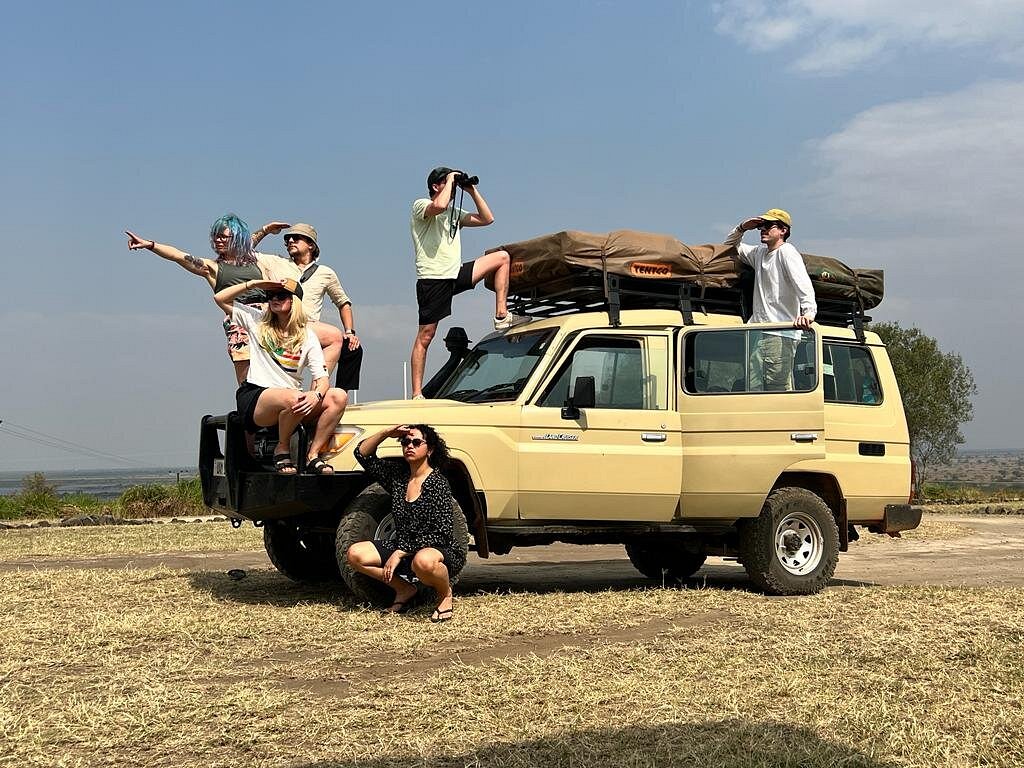
The drive from Kisumu south along the eastern shore of Winam Gulf to Homa Bay is consistently beautiful: the road runs close to the water through fishing villages and papyrus marshes, with views across the gulf to the Nandi Hills escarpment on the far side. The 125-kilometre journey takes about two and a half hours.
Homa Bay is a relaxed regional town that serves as the jumping-off point for Ruma National Park — Kenya’s only savannah national park in western Kenya, protecting rare roan antelope, topi, oribi, and a reintroduced population of black rhinoceros. A boat trip to Mfangano Island, with its extraordinary prehistoric rock paintings, is one of the circuit’s great hidden experiences.
Week Five: The North Shore of Kenya and Return to Uganda
Day 31-33: Migori and South Nyanza Highlands
The route east and north from Homa Bay swings away from the lake into the tea-covered highlands before descending again toward the Migori River valley. Near Migori, the Thimlich Ohinga archaeological site is a UNESCO World Heritage Site of extraordinary importance: a stone-walled settlement complex built by Iron Age pastoralists between the 1400s and 1800s CE, representing one of the best-preserved examples of traditional stone enclosure architecture in sub-Saharan Africa. The site is rarely visited by tourists.
Day 34-36: Kakamega Forest — East Africa’s Last Rainforest
Before completing the circuit back into Uganda, a detour north to Kakamega Forest is one of the great natural highlights of western Kenya. Kakamega is the easternmost extension of the Congo Basin equatorial rainforest — a botanical relic of the forest that once stretched unbroken from the Atlantic Coast. It is the only tropical rainforest in Kenya and contains species found nowhere else in the country.
The forest is alive with primates (black-and-white colobus, De Brazza’s monkey, blue monkey), over 380 bird species, giant forest squirrels, and an astonishing diversity of butterflies and insects. The Kakamega Forest Guides Association organises walks ranging from two hours to full-day expeditions, and night walks to spot bush babies and genets are particularly magical.
Stay: Rondo Retreat Centre (mid-range, historic charm); Udo’s Bandas (budget, great community feel)
Guide: Always use a registered guide in the forest — they know the wildlife locations and provide essential context
Day 37-38: Busia Border and Return to Uganda
From Kakamega, the road north toward the Uganda border at Busia passes through densely populated agricultural country. Webuye Falls — a powerful waterfall on the Nzoia River — is a picturesque stop an hour north of Kakamega. The Busia border crossing handles heavy commercial truck traffic; allow two to three hours for formalities and avoid Friday afternoons and Monday mornings. Back in Uganda, the road north from Busia through Iganga toward Jinja is in excellent condition.
Week Six: Jinja, the Nile, and Home to Kampala
Day 39-40: Jinja — Source of the Nile
Jinja is Uganda’s second city and arguably its most adventurous. Situated at the point where Lake Victoria’s waters narrow and accelerate into the Victoria Nile — the source of the world’s longest river — it has become East Africa’s undisputed adventure sports capital.
White-water rafting on the Nile is the headline act: Grade 4 and 5 rapids on the stretch below the Owen Falls Dam provide some of the most accessible big-water rafting in the world. For the less adrenaline-inclined, kayaking on the calmer upper stretch, boat trips to the source monument, bungee jumping from a 44-metre platform above the river, and guided cycling tours through the Jinja tea estates are all available.
The town itself — quiet, handsome, and slightly faded — retains its colonial-era grid of streets, Indian trading houses, and shady gardens. The Nile Breweries offer factory tours.
Stay: Nile River Camp (mid-range, riverside setting, organises all activities); Jinja Backpackers (budget)
Activity: Book rafting at least a day in advance; Nalubale Rafting and Adrift are the most established operators
Day 41-42: Mabamba Wetlands — The Shoebill Capital of the World
Mabamba Bay Wetland, about 35 kilometres southwest of Kampala near Entebbe, is the single best place in the world to see the shoebill stork in the wild. This prehistoric-looking bird — standing 1.2 metres tall with a dinosaur-like bill — haunts the dense papyrus swamps here. A dawn canoe trip through the channels, guided by local fishermen who know every bird’s territory, is one of the great wildlife experiences of East Africa and a fitting full-circle return to the lake.
Day 43: The Buganda Heartland
Kampala’s immediate hinterland is rich with cultural heritage. The Mpambire Drum Village, 26 kilometres south of Kampala on the Masaka Road, is where Buganda’s ceremonial drums have been crafted for centuries. Workshops here make drums of every size using cowhide and hollowed tree trunks, and visitors can watch the entire process and sometimes participate.
Namugongo Martyrs’ Shrine, on the eastern outskirts of Kampala, marks the site where 22 young Catholic and Anglican converts were executed in 1886 on the orders of Kabaka Mwanga II. Canonised in 1964, the Uganda Martyrs are commemorated each year on 3 June by up to three million pilgrims — one of Africa’s largest religious gatherings.
Day 44: Lake Mburo — Uganda’s Hidden Gem
Lake Mburo National Park, midway between Masaka and Mbarara, is Uganda’s smallest savannah park and one of its most underrated. Compact enough to see well in a day, the park contains zebra (the only national park in Uganda with them), impala, topi, eland, buffalo, crocodile, and over 350 bird species. The park’s lakes and wetlands are extraordinarily beautiful at dawn and dusk.
Unlike the larger parks, Lake Mburo allows night game drives — a rare opportunity in East Africa — and walking safaris with armed rangers that bring you genuinely close to wildlife. Mihingo Lodge, perched on a rocky outcrop above a waterhole, is one of Uganda’s finest lodges.
Day 45: Return to Kampala — Journey Complete
The final drive returns you to Kampala through familiar Ugandan countryside, but you see it with entirely different eyes. In 45 days, you have driven approximately 6,000 kilometres, crossed three international borders, passed through dozens of distinct cultural communities, and experienced one of the world’s most varied and spectacular road journeys.
Lake Victoria’s scale only becomes truly comprehensible when you have driven its perimeter: the fact that a single body of freshwater can anchor the lives of more than 40 million people across three nations, fuel their economies through fishing, power their cities through hydroelectricity, and define their spiritual and cultural identities is made viscerally real by the road. This is not the Africa of a single story. It is a continent of staggering multiplicity, and Lake Victoria is its heart.
Practical Information
Health and Medical Preparation
Malaria is present throughout the Lake Victoria basin and you should start an appropriate prophylaxis (consult your doctor) at least two weeks before departure. The most common regimens are doxycycline (daily, cheap), Malarone (daily, expensive, few side effects), and mefloquine (weekly, requires advance prescription). Use DEET-based repellent, long sleeves at dawn and dusk, and sleep under a treated mosquito net.
Bilharzia (schistosomiasis) is present in the lake. Avoid swimming in the lake water, even where it looks clean. The parasite is invisible and the risk is real. If you accidentally enter the water, seek a blood test and preventive treatment (praziquantel) within six weeks.
- Yellow fever vaccination: required for Uganda and Kenya entry
- Typhoid and Hepatitis A and B: recommended
- Rabies: recommended for extended stays
- Carry a full medical kit including antibiotics (seek doctor’s advice)
- Medical evacuation insurance is strongly recommended
Safety and Security
The Lake Victoria circuit passes through areas of very different security profiles. Uganda and Kenya’s western region are generally safe for tourists exercising normal precautions. Tanzania’s Kagera Region is calm and hospitable. The following general principles apply throughout:
- Drive during daylight hours only — animals on roads, potholes, and unmarked speed bumps make night driving dangerous
- Lock valuables out of sight in your vehicle at all times
- Avoid displaying expensive equipment in crowded urban areas
- Carry emergency cash (US dollars widely accepted) for border fees and vehicle emergencies
- Register with your national embassy or consulate upon arrival in each country
- Purchase a local SIM card in each country for data and emergency calls
Connectivity and Communications
Mobile data coverage is surprisingly good along most of the circuit. Uganda’s MTN and Airtel networks, Tanzania’s Vodacom and Tigo, and Kenya’s Safaricom (with its excellent M-Pesa mobile payment system) all provide 3G or 4G coverage in all towns and most major roads. Coverage drops in remote sections, particularly the Biharamulo highlands.
Offline maps are essential. Download Google Maps offline tiles or use iOverlander, Maps.me, or Tracks4Africa before departing. A Garmin GPS unit with East Africa mapping is the gold standard for overlanders.
Food and Water
Safe drinking water from a tap or stream is not reliable anywhere on this circuit. Carry a quality water filter (Sawyer Squeeze, MSR Guardian, or LifeStraw) and refill from any source, or budget for bottled water throughout. In towns and cities, bottled water is universally available and inexpensive.
The freshwater fish of Lake Victoria — particularly Nile perch and tilapia — are excellent when fresh-cooked. Hotel restaurants in regional capitals are generally safe. Street food is delicious and usually fine when it is freshly cooked and hot. Avoid pre-prepared salads and raw vegetables washed in tap water.
Environmental Responsibility
Lake Victoria faces significant environmental pressures: overfishing, water hyacinth invasion, agricultural pollution, and rapid population growth around the shore. As a traveller, you can contribute positively by hiring local guides, buying directly from local fishermen and craftspeople, avoiding single-use plastics wherever possible, and respecting park regulations strictly. Choose accommodation and tour operators that actively support conservation.
| ACCOMMODATION QUICK REFERENCE |
| Kampala/Entebbe (Uganda): Wide range from backpackers to 5-star international hotels |
| Masaka/Ssese Islands (Uganda): Budget guesthouses and mid-range lakeside lodges |
| Bukoba (Tanzania): Basic to mid-range hotels; improving options |
| Biharamulo (Tanzania): Basic guesthouses — carry camping equipment as backup |
| Mwanza (Tanzania): Good mid-range options; the Tilapia Hotel is excellent value |
| Musoma/Mara Region (Tanzania): Basic guesthouses; book in advance |
| Kisumu (Kenya): Good range from backpackers to business hotels with lake views |
| Homa Bay/Ruma (Kenya): Very basic; advance booking essential at Mfangano Island camp |
| Kakamega (Kenya): Rondo Retreat is a highlight; basic banda camps available |
| Jinja (Uganda): Excellent range of river-based camps and lodges |
45-Day Route Summary
| Days | Location | Country | Key Highlights |
| 1-2 | Kampala | Uganda | Kasubi Tombs, Markets, City culture |
| 3 | Entebbe | Uganda | Botanical Gardens, Wildlife Centre, Shoebill |
| 4-5 | Ssese Islands | Uganda | Ngamba Chimps, Island beaches, Forest walks |
| 6-7 | Masaka | Uganda | Equator crossing, Buganda countryside |
| 8-9 | Bukoba | Tanzania | German fort, Haya Museum, Coffee farms |
| 10-11 | Biharamulo | Tanzania | Game reserve, Remote bush country |
| 12-14 | Mwanza | Tanzania | Bismarck Rock, Fish market, Rubondo Island |
| 15-16 | Speke Bay / Serengeti | Tanzania | Western Corridor, Wildebeest, Hippos |
| 17-18 | Musoma | Tanzania | Nyerere birthplace, Fishing communities |
| 19-20 | Kisii | Kenya | Soapstone carving, Tea estates |
| 21-25 | Kisumu | Kenya | Dunga Beach, Museum, Sunset lake cruise |
| 26-27 | Homa Bay / Ruma NP | Kenya | Roan antelope, Mfangano rock art |
| 28-30 | Migori / South Nyanza | Kenya | Thimlich Ohinga UNESCO site |
| 31-33 | Kakamega Forest | Kenya | Last rainforest, Birding, Primates |
| 34-36 | Busia / Return Uganda | Kenya/Uganda | Border crossing, Webuye Falls |
| 37-38 | Jinja | Uganda | Source of the Nile, White-water rafting |
| 39-40 | Mabamba Bay | Uganda | Shoebill canoe, Lakeside wetlands |
| 41-42 | Buganda Heartland | Uganda | Drum Village, Namugongo Shrine |
| 43-44 | Lake Mburo NP | Uganda | Zebra, Night drives, Walking safaris |
| 45 | Kampala | Uganda | Journey complete — celebrations! |