Self Drive In Ngorongoro Conservation Area
Can one visit the Ngorongoro Crater independently without engaging a travel operator or guide? Is it feasible to undertake a self-drive safari vacation in the Ngorongoro Crater? A frequently posed inquiry regarding the safari tour to the Ngorongoro Conservation Area is this; hence, today at Arusha Car Rental, we will elucidate it and ensure you are informed of all the crucial data concerning the Ngorongoro self-drive safari. Is a self-guided safari feasible in the Ngorongoro Conservation Area? Indeed, undertaking a self-drive safari in the Ngorongoro Conservation Area is conceivable, and the experience would be remarkable. Nevertheless, there are essential elements or recommendations you must comprehend for this excursion to be genuinely remarkable.
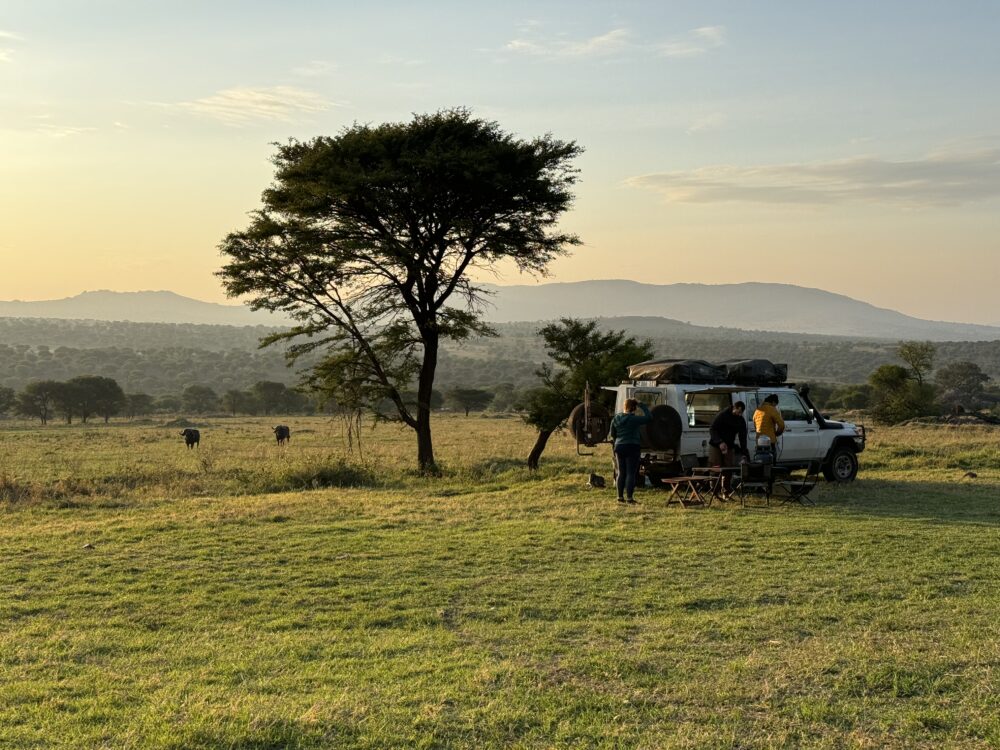
The Ngorongoro self-drive safari is a favored experience among travelers, particularly those on a limited budget who prefer not to engage a tour organization. Nonetheless, we do not highly endorse it, as the safari requires considerable concentration and can be quite distressing. Envision a nonfunctional safari vehicle situated in the heart of Ngorongoro, devoid of any close assistance.
Arusha Car Rental provides optimal guidance on arranging NCA park passes, circumventing multiple entrance costs, and selecting accommodations for an enhanced Ngorongoro experience. If you possess sufficient funds for your Ngorongoro Conservation Area safari, we recommend booking with a safari tour company instead of opting for a self-drive safari. Nonetheless, if you lack financial resources and prefer a self-drive safari, or if you identify as an independent traveler, the following are essential recommendations to consider while planning a self-drive safari in Ngorongoro
- This guide addresses self-driving in the Ngorongoro Conservation Area.
- What is the estimated expenditure required for a visit to the Ngorongoro Crater?
What is the procedure for obtaining Ngorongoro entrance permits for my self-drive safari in Tanzania? - Is it possible to traverse the Ngorongoro Crater without employing a driver?
- I am formulating my agenda for Tanzania. How many days should I plan for the Ngorongoro Crater?
- Camping and ideal accommodations in Ngorongoro
- What is the budget required for a visit to Ngorongoro?
The extraordinary diversity of species observable in a single day at Ngorongoro is consistently an extraordinary experience, as is the substantial cost associated with it. The subsequent entrance fees must be taken into account while planning your safari:
- Prices are provided for a single entrance for up to 24 hours per individual, inclusive of VAT.
- The entrance cost for the Ngorongoro Conservation Area is $70.80 per individual.
- Each time a vehicle enters the crater, an additional $295 Crater Service Fee is mandated for entry.
- The fee for a night at a complimentary campsite is $35 per individual. The fee for a designated campground is $50 per individual each night.
You are required to pay the NCA fee twice: once during your journey to the Serengeti and once on your return, even if your intention is merely to transit through the NCA. Exiting or entering the Serengeti via Klein’s gate in the northeast while traveling to or from Lake Natron allows you to circumvent the NCA fee twice. The journey from Klein’s Gate to Lake Natron is remarkably picturesque; nonetheless, some individuals find it unappealing due to challenging segments and its secluded position.
Is it possible to traverse the Ngorongoro Crater on a self-drive safari?
Undoubtedly, the Ngorongoro Crater provides opportunities for self-drive safaris, allowing for that experience. Ranger guides are suggested by the park wardens at the NCA entry, while they are not mandatory and, in our view, are unnecessary. The safari routes on the carter floor are meticulously kept and distinctly signposted, rendering it challenging to become disoriented.
What is the procedure for obtaining Ngorongoro entrance permits for my self-drive safari in Tanzania?
Access permits for the Ngorongoro Conservation Area and Crater cannot be arranged or purchased at the park gate. The tour operator must produce your NCA reservation quote, and payment for the actual permit must be made in cash at the bank. Your quotation can be organized through Arusha Car Rental.
I AM FORMULATING MY TANZANIA ITINERARY. What is the recommended number of days to allocate for the crater visit?
The Ngorongoro Crater permit is valid from 6 a.m. to 6 p.m. The primary crater routes can be traversed in one to one and a half days. The Highlands of the protection area provide excellent opportunities for diversifying a vehicle-based safari with physical activity, alongside the globally acclaimed Ngorongoro Crater. Remain in there for several additional days to circumvent the throngs and facilitate exploring outside the conventional route.
The subsequent enumeration of obscure attractions to explore inside the Ngorongoro Conservation Area comprises:
Empakai Crater: Approximately 40 kilometers northeast of the renowned Ngorongoro Crater is the remarkable yet obscure Empakai Crater. Upon your arrival in Empakai, you will be presented with breathtaking views of the Empakai Crater and the sight of Oldoinyo Lengai, Tanzania’s most active volcano. A 45-minute descent through a deep, alpine forest culminates at the crater. The area surrounding the lake on the crater floor offers exceptional birdwatching opportunities, including the chance to observe flamingos and significant animals like as buffalo, hyenas, and elephants.
Visit Olduvai Gorge, a paramount paleoanthropological location globally, if you possess an interest in ancient history. The site is renowned for its early hominid fossils, stone tools, and fossils of plants and mammals discovered there. Hominid footprints of our genetic ancestors have been found in 3.7 million-year-old sedimentary rock at Laetoli. A shifting sand dune is located 30 minutes from Olduvai, representing a notable phenomena. The elevated iron concentration in the minute volcanic ash comprising this dune results in a robust magnetic field. This signifies that when the dune gradually progresses through the environment, it coalesces and operates as a unified organism.
The Gol Mountains, referred to as the Mountains of God, serve as a bottleneck for the annual Great Migration of hundreds of thousands of wildebeest and zebra, presenting a surreal wilderness characterized by rugged, pink cliffs encircling the Angata Kiti pass. This area of Tanzania is one of the most traditional in the nation. The region is inhabited by the Maasai people, who persist in hunting lions as a rite of passage to warrior status and remain wholly reliant on cash. Do not presume that experiencing the Maasai through a “cultural tour” will offer an authentic understanding of their way of life. However, you will certainly acquire extensive knowledge about this hallowed site if you participate in a distinguished tour led by a qualified guide during one of the several walking safaris.