Types of Rooftop Tents in Tanzania: A Complete Safari & Camping Guide
Introduction
Rooftop tents are increasingly popular for self-drive safaris and overland travel in Tanzania, offering comfort, safety, and convenience while exploring national parks and remote landscapes. Understanding the types of rooftop tents available in Tanzania helps travelers choose the best option for their safari style, budget, and travel season.
This guide covers all major rooftop tent types used in Tanzania, their pros and cons, and which is best for your adventure.
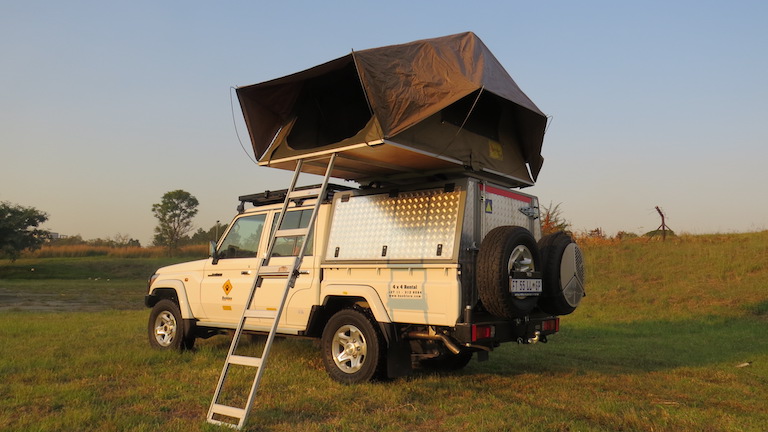
1. Soft-Shell Rooftop Tents (Fold-Out Tents)
Description
Soft-shell rooftop tents are the most common type in Tanzania, especially on Toyota Land Cruisers and Hilux vehicles. They fold out from the side or rear of the vehicle and use a fabric canvas structure.
Key Features
- Fold-out design (side or rear)
- Canvas or poly-cotton material
- Foam mattress included
- Ladder support system
Pros
- Affordable and widely available
- Spacious sleeping area
- Good ventilation for warm climates
- Easy to repair in remote areas
Cons
- Slower setup than hard-shell tents
- Less wind resistant
- Canvas needs drying after rain
Best For
- Budget travelers
- Long safaris
- Couples or small families
2. Hard-Shell Rooftop Tents
Description
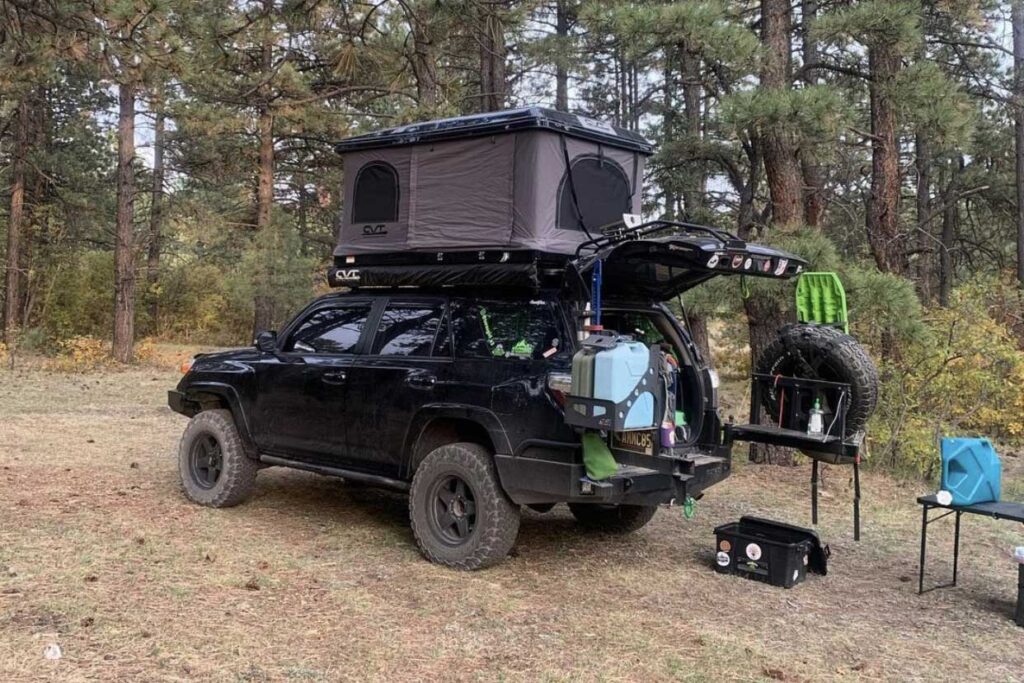
Hard-shell rooftop tents are premium options increasingly available in Tanzania for luxury camping and high-end self-drive safaris. They open vertically using gas struts.
Key Features
- Fiberglass or aluminum shell
- Quick open/close system
- Built-in mattress
- Aerodynamic design
Pros
- Fast setup (1–2 minutes)
- Excellent wind and rain protection
- Better insulation for cold nights
- More durable in harsh weather
Cons
-
More expensive
-
Less interior space
-
Heavier than soft-shell tents
Best For
- Luxury travelers
- Short stays
- Windy or rainy seasons
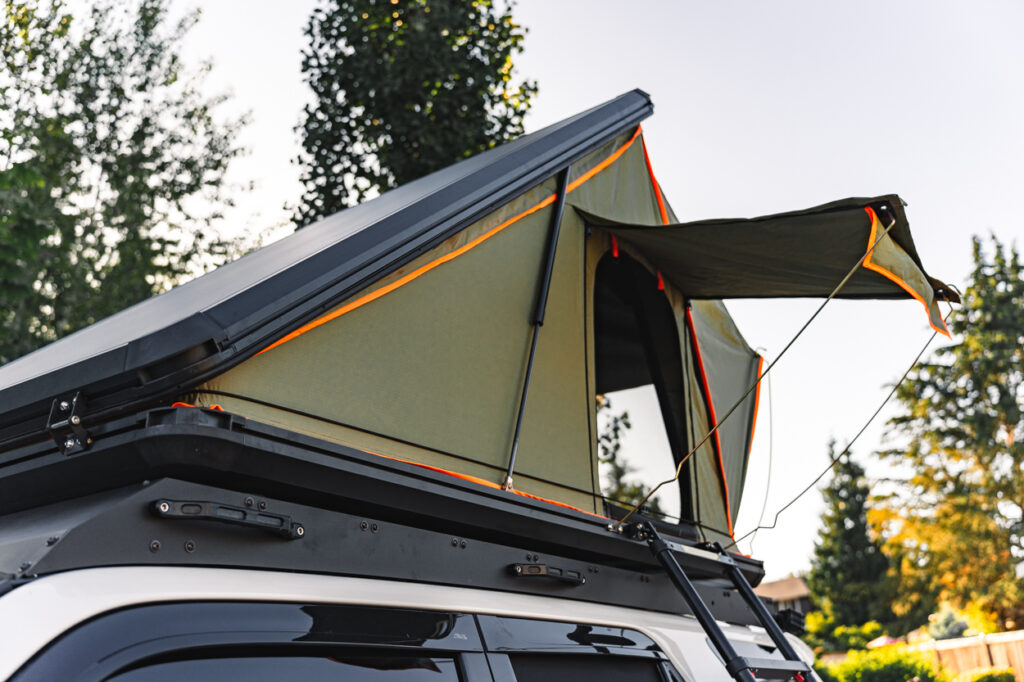
3. Hybrid Rooftop Tents
Description
Hybrid rooftop tents combine features of both soft-shell and hard-shell tents. They use a hard top with fold-out canvas sides.
Key Features
- Partial hard shell
- Fold-out extension
- Better weather resistance than soft-shell
Pros
- Balance of comfort and durability
- Faster setup than soft-shell tents
- More space than hard-shell tents
Cons
- Limited availability in Tanzania
- Higher cost than soft-shell
Best For
- Long overland trips
- Couples needing extra space
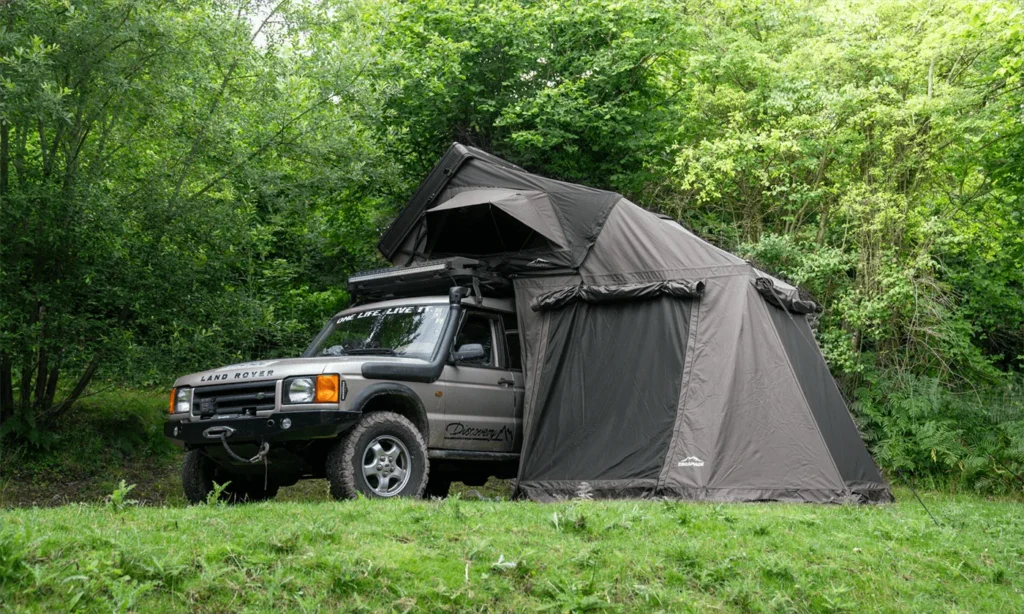
4. Rooftop Tents with Annex Rooms
Description
Some soft-shell rooftop tents come with an annex room, a ground-level enclosure that attaches beneath the tent.
Key Features
- Enclosed ground tent
- Can be used as a changing room or storage
- Fully insect-proof
Pros
- Extra privacy
- Storage space
- Useful during long stays
Cons
- Longer setup time
- Not suitable in wildlife-dense areas
- Less common in national parks
Best For
- Campsites outside parks
- Family trips
- Extended stays
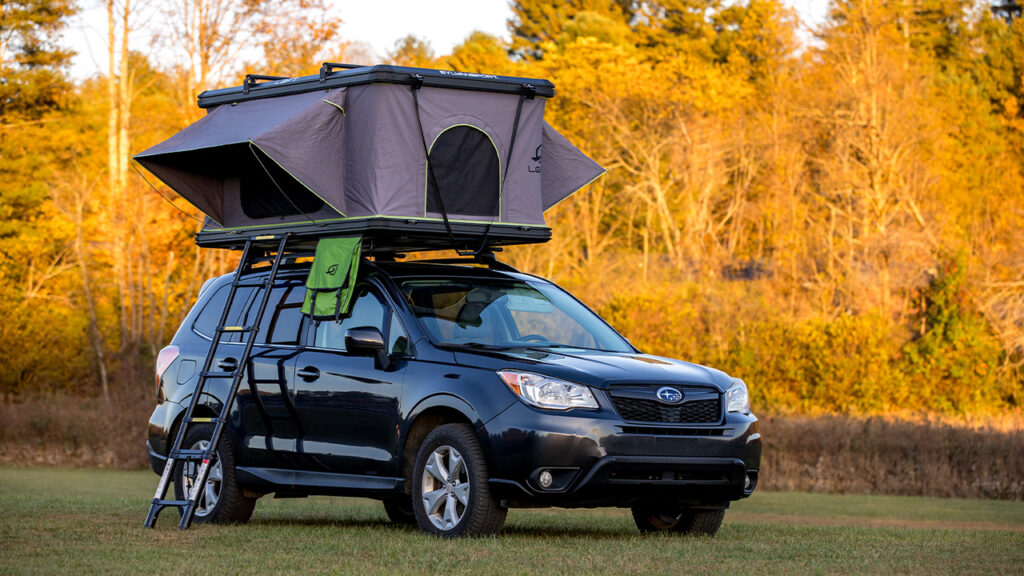
5. Pop-Up Rooftop Tents
Description
Pop-up rooftop tents open straight upward, creating a compact sleeping area.
Pros
- Extremely fast setup
- Compact and lightweight
- Good for short trips
Cons
- Limited headroom
- Less ventilation
- Rare in Tanzania
Best For
-
Solo travelers
-
Quick overnight stops
Best Rooftop Tent for Tanzania Safaris (Comparison)
| Tent Type | Setup Speed | Comfort | Weather Protection | Availability |
|---|---|---|---|---|
| Soft-Shell | Moderate | High | Medium | Very High |
| Hard-Shell | Very Fast | Medium | High | Medium |
| Hybrid | Fast | High | High | Low |
| Annex Tent | Slow | Very High | Medium | Low |
| Pop-Up | Very Fast | Low | Medium | Very Low |
Best Rooftop Tent by Travel Style
-
Self-drive safari → Soft-shell rooftop tent
- Luxury camping safari → Hard-shell rooftop tent
- Long overland trip → Hybrid or soft-shell
- Rainy season travel → Hard-shell rooftop tent
- Budget travel → Soft-shell rooftop tent
Rooftop Tent Safety in Tanzania
- Always camp at designated campsites
- Never sleep outside the tent in parks
- Do not leave food exposed
- Follow ranger instructions
- Rooftop tents are safer than ground tents in wildlife areas
Best Time to Use Rooftop Tents in Tanzania
- June – October (dry season, best conditions)
- January – February (short dry season)
Rainy seasons require tents with good waterproofing.
Final Thoughts
Choosing the right type of rooftop tent in Tanzania can greatly enhance your safari experience. Soft-shell tents remain the most popular and practical choice, while hard-shell tents offer added comfort and protection for travelers seeking premium camping experiences.