Self Drive Guide to Mkomazi National Park
Self Drive Guide to Mkomazi National Park, Mkomazi National Park is situated in northeastern Tanzania, specifically within the Kilenimanjaro region of Lushoto District and the Tanga portions of Mkinga District. The national park is situated roughly 50 kilometers northeast of Moshi, the access point for Mount Kilimanjaro expeditions. Mkomazi National Park is situated at the Tanzania-Kenya border, adjacent to Tsavo National Park. This site is crucial for transboundary wildlife conservation initiatives and enables animal migration between two essential ecosystems. Mkomazi was established as a game reserve in 1951, largely functioning as a hunting area until conservation goals evolved, leading to its official designation as a national park in 2006. This alteration was integral to a broader project aimed at augmenting conservation efforts and safeguarding species and habitats within its confines. The park encompasses more than 3,234 square kilometers and is characterized by acacia comephorid flora. The region referred to as ‘Mkomazi’ is, in fact, the amalgamation of two former game reserves: the Umba Game Reserve to the east and the Mkomazi Game Reserve to the west.
Attractions in Mkomazi National Park
Wildlife
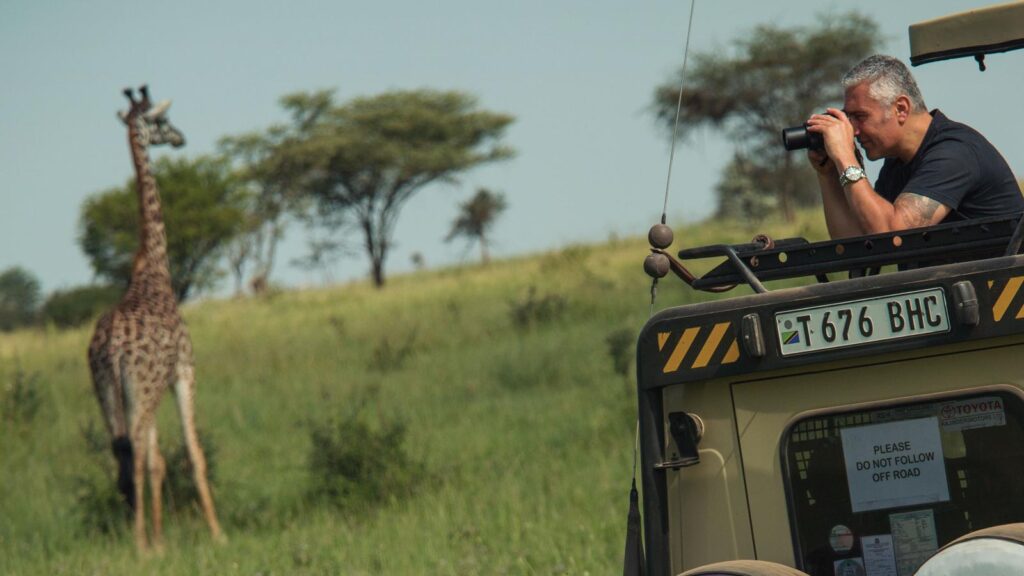
Mkomazi hosts a diverse array of fauna and boasts a wide range of wildlife, rendering it a distinctive destination for nature aficionados and wildlife enthusiasts. The park hosts large mammals, including African elephants that traverse the savannahs and woodlands. Leopards are seldom observed, while lions and buffaloes are prevalent. Critically endangered black rhinoceroses and giraffes can also be sighted. Additional fauna comprises topi, zebras, wildebeests, impalas, African wild dogs, cheetahs, fringe-eared oryx, beisa oryx, and spotted hyenas, which frequently scavenge or hunt in packs.
Birds
Mkomazi hosts five indigenous avian species: the Somali, yellow-vented Eremomela, long-billed crombec, violet wood-hoopoe, and Friedmann’s lark. These species are exclusively found in Mkomazi National Park. It is also a habitat for arid region avian species such as the Cobalt-crested vulture and guinea fowl. Mkomazi is inhabited by more than 450 bird species. They inhabit various environments, including riverine beaches, woods, arboreal regions, and grasslands. Additional species encompass terrestrial avians such as ostriches, ground hornbills, Kori bustards, and secretary birds. Migratory avifauna, such as the Eurasian roller, typically congregate at Mkomazi National Park from November to April, the optimal period for ornithological observation.
Flora
Mkomazi National Park exhibits a varied range of flora types that reflect its distinctive ecological characteristics. The park’s topography is determined by its geographical position and climate factors, which affect the species of flora that flourish there. The park is characterized by acacia woodlands that constitute a significant portion, consisting of a blend of low-lying and taller woodlands. The canopy offers habitat for diverse species and functions as grazing grounds for herbivores like acacia tortillas. The park consists of savannah grasslands, which are common across Mkomazi, characterized by a combination of grassland and dispersed trees. These grasslands provide an optimal environment for grazing animals and are essential for the park’s herbivore population, including elephants, zebras, and numerous antelopes.
The riverine forest and riparian vegetation are crucial for the park’s biodiversity, as they supply needed moisture and habitat. This forest generally has plants such as Ficus, Syzygium, and other palms, and is abundant in avian and other fauna. Baobab trees are also present in Mkomazi, contributing a unique characteristic to the terrain, along with shrublands and scrubs.
Activities in Mkomazi National Park
Safari excursions
Game drives in Mkomazi National Park are an exceptional method to discover and explore the park’s concealed treasures. The national park hosts a diverse array of wildlife, rendering it a distinctive destination for nature aficionados and wildlife enthusiasts. While on a game drive in Mkomazi National Park, you will have the opportunity to observe various species, including lions, buffaloes, leopards, dik-dik, rhinoceroses, Topi, zebras, wildebeests, impalas, African Wild Dogs, cheetahs, fringe-eared oryx, beisa oryx, and lesser kudu, among others. All of this may be observed when driving along the park’s pathways, appreciating the verdant landscape.
Bird Watching
Mkomazi National Park is a premier birdwatching location in Tanzania, hosting over 450 bird species, hence serving as a sanctuary for avian aficionados. On your bird-watching excursion in Mkomazi National Park, you will get the chance to observe vibrant avian species including the Wooly-necked Stork, Saddle-billed Stork, Marabou Stork, African Open-billed Stork, Yellow-billed Stork, and Secretary Bird. Black-shouldered Kite, Black Kite, Fish Eagle, Palm-nut Vulture, Lesser Spotted Eagle, Tawny Eagle, Steppe Eagle, Ostrich, Great White Pelican, Pink-backed Pelican, Black-crowned Night Heron, Cattle Egret, Squacco Heron, Green-backed Heron, Yellow-billed Egret, Great Egret Ardea cinerea, Scopus umbretta, Phalacrocorax carbo, Ciconia ciconia Black Stork, Ab dims Stork, and others.
Nature excursions
Nature walks at Mkomazi National Park provide an excellent opportunity to engage with the park’s abundant wildlife and breathtaking vistas. In contrast to conventional vehicle-based safari experiences, these guided walking safaris provide an intimate and personal relationship with nature, enabling visitors to observe the park’s flora and fauna up close. During a guided nature walk safari in the park, you will have the opportunity to encounter various wildlife species, including lions, buffaloes, leopards, dik-dik, rhinoceroses, Topi, zebras, and an array of vibrant birds such as the ostrich, Great White Pelican, Pink-backed Pelican, and Black-crowned Night Heron, alongside remarkable flowering plants.
Accessing Mkomazi National Park
The park is readily accessible via the surfaced Arusha-Dar es Salaam route. You divert to one of its gates, specifically Njiro, Kivingo, or Umba gates. The distance is approximately 120 kilometers from Moshi, around 200 kilometers from Arusha, and roughly 440 kilometers from Dar es Salaam. It is located 142 km from Kilimanjaro International Airport (JRO), 12 km from Kilimanjaro National Park, and 6 km from the town of Same. Chartered flights from Arusha Airport (ARK) to Kisima Airstrip are available. You may reserve a train and disembark at Same Railway Station.
Best time to vistit Mkomazi National Park
The optimal period to visit Mkomazi National Park in Tanzania is during the dry season, generally occurring from June to October. This period features milder weather and sparser vegetation, facilitating wildlife observation. Furthermore, this period is characterized by animals gathering around water sources, hence enhancing the likelihood of observing a diverse array of species. This season is especially optimal for avian observation, as migratory birds are frequently present. It is essential to acknowledge that the park can become exceedingly hot during the dry season; therefore, ensure you bring ample water and sun protection.
Accommodation options in Mkomazi National Park
Mambo Viewpoint Eco-Lodge
Mambo Viewpoint Eco-Lodge is a mid-tier lodging situated in a picturesque location adjacent to Mkomazi National Park. This eco-lodge provides guests with a distinctive combination of adventure, comfort, and stunning vistas, rendering it an optimal base for exploring the park’s various ecosystems. Mambo Viewpoint Eco-Lodge is located on a hill that overlooks the vast Mkomazi National Park, offering sweeping vistas of the surrounding terrain, including the striking Usambara highlands and the varied wildlife habitats beneath. The lodge is enveloped by verdant foliage, providing a tranquil setting for tourists desiring to engage with nature. The eco-lodge offers many accommodations, including cottages and tents, tailored for solo travelers, couples, and families. Each room is meticulously appointed, integrating local artistry with contemporary conveniences. The apartments frequently feature individual balconies or terraces for guests to unwind while enjoying the breathtaking vistas. Guests at Mambo Viewpoint Eco-Lodge can generally engage in many activities, including hiking, nature walks, wildlife safaris, and cultural experiences, among others.
Babu’s Camp
Babu’s Camp is situated in Mkomazi National Park and provides excellent mid-range lodging for those seeking to discover Tanzania’s concealed treasures. Located within a picturesque terrain defined by grasslands and baobab trees in the western region of the park. Babu’s Camp comprises a collection of meticulously designed tents that prioritize both comfort and experiential quality. Each tent is often furnished with comfortable amenities, en-suite bathrooms featuring hot showers, and a private patio or veranda for guests to enjoy the tranquil surroundings. The camp offers an authentic safari experience while maintaining comfort.
As a moderately priced lodging option. Babu’s Camp provides needed amenities, including exquisite meals crafted from local ingredients, frequently highlighting Tanzanian cuisine to offer guests a regional culinary experience. The communal dining space promotes interaction among tourists, cultivating a sense of community and shared adventure among guests. Babu’s Camp functions as an optimal base for several activities within Mkomazi National Park. Guided game drives provide the chance to observe animals such as elephants, giraffes, zebras, and the elusive black rhino. The camp provides walking safaris, enabling guests to closely examine the park’s vegetation under the guidance of an expert local ranger.
Pangani River Camp
Pangani River Camp is an enchanting safari camp situated on the banks of the Pangani River, within the stunning Mkomazi National Park. The camps’ lodging is meticulously crafted to harmonize with the natural surroundings. There are 12 luxurious safari tents dispersed among the verdant surroundings along the riverbanks, offering guests tranquility and seclusion. Each tent is tastefully furnished and includes hot showers. Guests can relax on their individual balcony, listening to the tranquil sounds of the river and gazing at the scenic savannah.