How Do Rooftop Tents Attach to Vehicles? (Complete Guide)
Overview
Many travelers planning a self-drive safari or camping trip often ask: how do rooftop tents attach to a vehicle? Rooftop tents are securely mounted to a car using specially designed roof-rack systems that ensure safety, stability, and comfort—even on rough African roads.
Understanding the attachment system is essential before renting or buying a rooftop tent, especially for use in Tanzania and East Africa.
The Basic Rooftop Tent Attachment System
A rooftop tent attaches to a vehicle through three main components:
- Roof rack or roof rails
- Mounting rails on the tent base
- Clamps, bolts, or brackets
These components work together to keep the tent firmly fixed to the vehicle roof.
1. Roof Rack or Roof Rails (Foundation)
What Is a Roof Rack?
A roof rack is a metal frame mounted on top of the vehicle, designed to carry heavy loads.
Common Roof Rack Types
- Full-length roof racks (most common for safaris)
- Cross bars
- Factory-installed roof rails
In Tanzania, safari vehicles typically use heavy-duty steel roof racks.
Why a Roof Rack Is Important
- Distributes weight evenly
- Supports both static (sleeping) and dynamic (driving) loads
- Prevents damage to the vehicle roof
2. Mounting Rails on the Rooftop Tent
Every rooftop tent has aluminum or steel mounting rails fixed to its base.
These rails:
- Run parallel underneath the tent
- Sit directly on the roof rack crossbars
- Align with mounting points for clamps or bolts
They form the connection point between the tent and the vehicle.
3. Clamps, Bolts & Brackets (Securing the Tent)
Standard Attachment Method
Most rooftop tents use:
- U-bolts
- C-clamps
- Sliding plate brackets
These are tightened around the roof rack bars using locking nuts.
Step-by-Step Attachment Process
- Place the rooftop tent on the roof rack
- Align tent mounting rails with rack bars
- Insert clamps or bolts
- Tighten evenly using spanners or torque tools
- Double-check for movement or looseness
Once secured, the tent should not shift or wobble.
Hard-Shell vs Soft-Shell Tent Attachment
Soft-Shell Rooftop Tents
- Use multiple clamps or U-bolts
- Slightly heavier
- Require more mounting points
Hard-Shell Rooftop Tents
- Use fewer but stronger mounting brackets
- Faster installation
- Often include quick-release systems
Both types attach using the same core principles.
Weight Limits & Safety Considerations
Important Weight Types
- Dynamic weight (while driving)
- Static weight (while sleeping)
Most vehicles can handle:
- Dynamic load: 70–100 kg
- Static load: 250–400+ kg
Always confirm:
- Vehicle roof load rating
- Roof rack weight capacity
- Tent weight
Are Rooftop Tents Permanently Fixed?
No. Rooftop tents are:
- Removable
- Mounted using bolt systems
- Can be detached in 30–60 minutes
Rental companies usually pre-install tents before pickup.
Do Rooftop Tents Damage the Car?
When installed correctly:
- No drilling required
- No permanent modifications
- Weight is evenly distributed
Damage occurs only if:
- Weight limits are exceeded
- Bolts are overtightened
- Incorrect racks are used
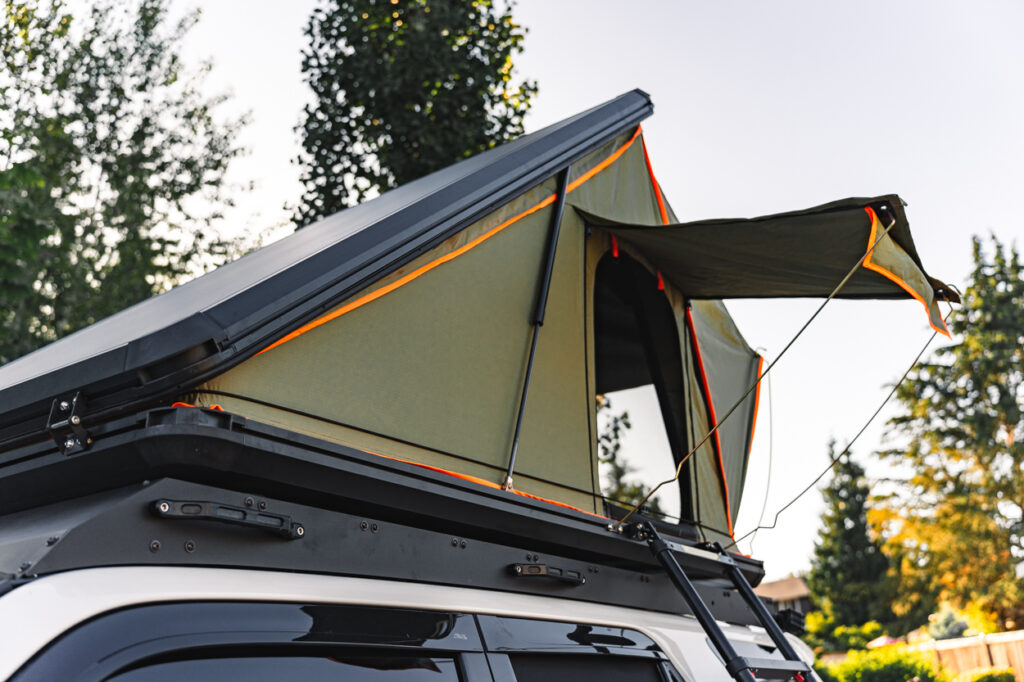
Rooftop Tent Attachment for Safari Vehicles
In Tanzania, rooftop tents are commonly installed on:
- Toyota Land Cruiser
- Toyota Prado
- Toyota Hilux
These vehicles are ideal due to strong roof structures.
Final Thoughts
Rooftop tents attach securely to vehicles using roof racks, mounting rails, and heavy-duty clamps. When properly installed, they are safe, stable, and perfectly suited for self-drive safaris, overlanding, and camping adventures across Africa.
Understanding how rooftop tents attach helps travelers feel confident and prepared—whether renting or owning.