Exploring Northern Safari Circuit on Self Drive Safaris
Exploring Northern Safari Circuit on Self Drive Safaris : this circuit is renowned among several safari enthusiasts for its captivating, globally recognized features. In this region, you will encounter emblematic species, traverse magnificent mountains, and investigate distinctive civilizations. Recent data indicates that the northern safari circuit comprises 75% of safari bookings in Tanzania. What is the reason for this? It is not only home to remarkable sights such as Serengeti, Kilimanjaro, and Ngorongoro, but also readily accessible.
Key features of the Northern Circuit.
Serengeti National Park.
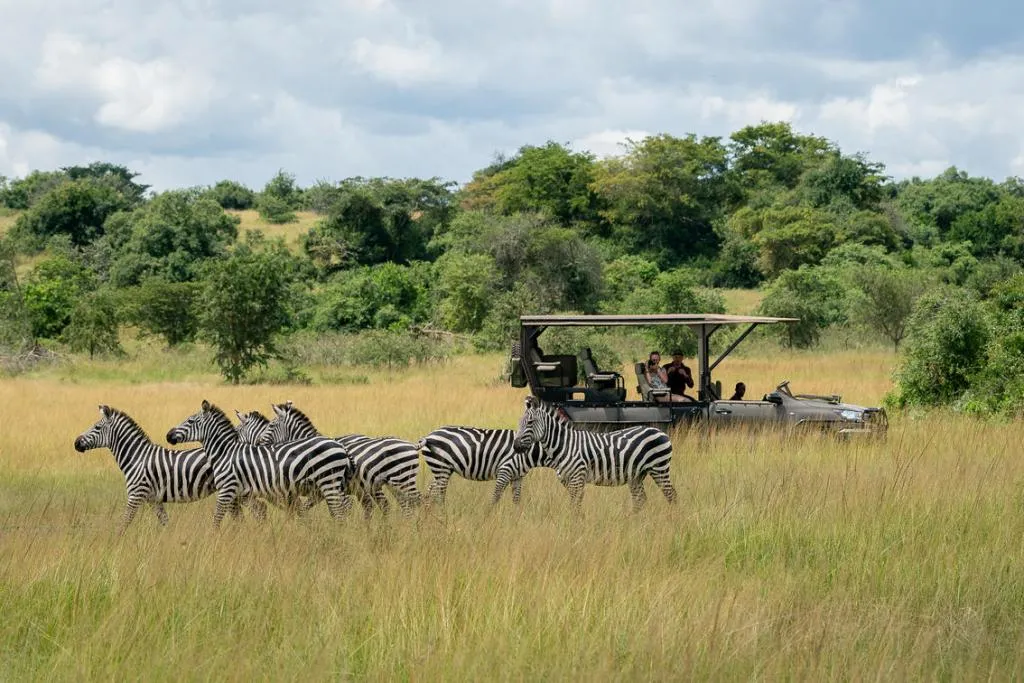
The Serengeti, renowned for its appearance in The Lion King and several documentaries, is a globally recognized animal refuge. It attracts over 300,000 people annually, primarily due to its remarkable animal trek: the Great Migration. In this park, wildebeest and zebras perpetually traverse annually in pursuit of optimal green grazing areas.
The Serengeti hosts the largest population of predators globally. Visitors observe enormous prides of lions dominating the savannah grasslands. To observe leopards in trees, cheetahs resting on kopjes, and hyenas traversing the expansive countryside. Small predators such as jackals, genets, wildcats, bat-eared foxes, and mongooses are also present.
In the Serengeti, each safari is distinctive as you will experience a multitude of wildlife during a game drive. This renders your Big Five safari distinctive and extraordinary. While you yearn to glimpse a leopard on an acacia tree beside the Seronera River, a giraffe appears, grazing on the uppermost leaves of the trees.
Ngorongoro Conservation Area.
Adjacent to the Serengeti is the Ngorongoro Conservation Area, a multipurpose land. This protected area features diverse species, intriguing civilizations, and distinctive scenery. This region features many volcanic formations, although the Ngorongoro Crater is favored by the populace above all others.
The Ngorongoro Crater spans merely 264 square kilometers yet is teeming with animals. Nature enthusiasts venture into the crater floor in pursuit of the Big Five: lion, leopard, elephant, buffalo, and rhinoceros, and typically achieve success in their endeavors. Alongside the Big Five, one can observe wildebeest, cheetah, impala, hartebeest, eland, hyena, fox, jackal, and hippopotamus.
A visit to Ngorongoro is incomplete without a tour of a Maasai settlement. This tribe cohabits with wildlife in Ngorongoro, located within a 30-minute drive from the crater. In these areas, one can acquire dancing skills through high jumps, don Maasai attire, and engage in cattle herding.
Mount Kilimanjaro.
Kilimanjaro, the tallest freestanding mountain in the world, surpasses every peak in Africa. Kilimanjaro, at an elevation of 5,895 meters (19,341 feet) above sea level, presents a formidable hiking challenge that merits consideration. Individuals of all ages, from the youngest to the oldest climbers, might endeavor to ascend this peak, as it is only a walk-up excursion rather than a technical climb. Mountaineering abilities are not required to conquer it.
A Kilimanjaro ascent generally requires 5 days to accomplish the round-trip. We advise incorporating a day of acclimatization to enhance your likelihood of success. Altitude sickness poses significant risks for non-expert climbers; an additional day on the mountain, particularly prior to the summit attempt, facilitates acclimatization to elevated altitudes.
Tarangire National Park.
Tarangire is located 140 miles from Arusha, the starting point for northern circuit safaris. It has an area of 2,850 km², teeming with animals yet eclipsed by neighboring parks such as the Serengeti and Ngorongoro Crater. Consequently, it attracts only a small number of people, mostly those hastening to the Serengeti or Ngorongoro Crater.
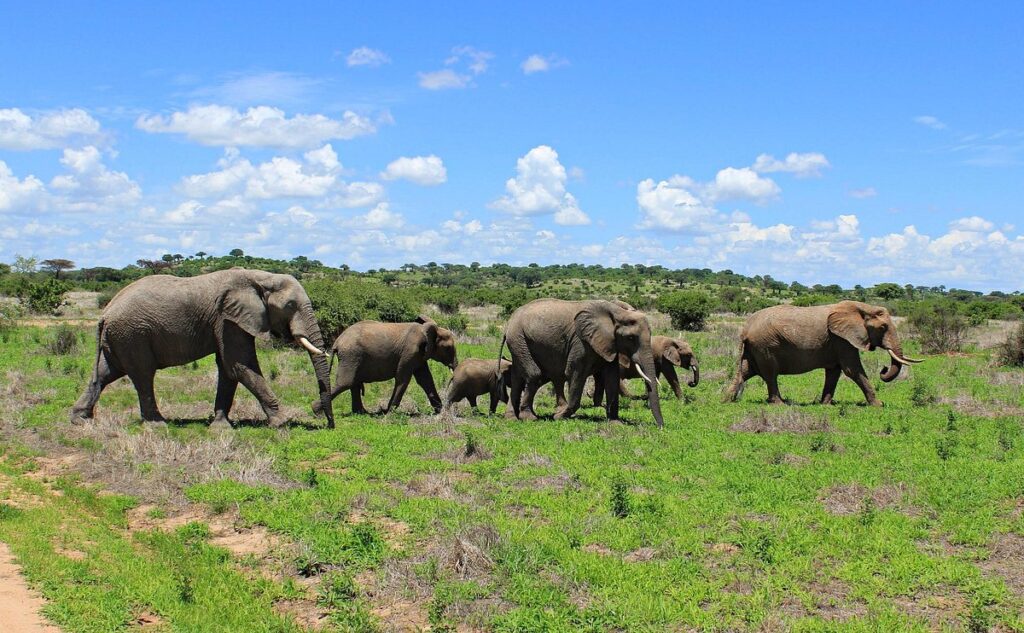
Tarangire boasts the highest concentration of elephants globally. Individuals visit this location to observe herds of 300, traverse acacia-studded plains, and admire the colossal baobabs rising within the trees. In the dry season, fauna from adjacent parks migrate to Tarangire, where they assemble near the vital Tarangire River, which traverses the center of the park and the Silale Swamp in the southern region.
Lake Manyara National Park.
Adjacent to Tarangire, Lake Manyara is a compact, wildlife-abundant park located in northern Tanzania. The habitat features numerous species, prominently included tree-climbing lions and pink flamingos. Leopards and cheetahs are proficient climbers, while lions around Lake Manyara also exhibit adept tree-climbing abilities.
The soda lake, Manyara, draws numerous water birds, with the primary attraction being the pink flamingos. From a distance, they impart a pink hue to the lake. During game drives, one can observe elephants, giraffes, buffalo, wildebeest, zebras, and primates. Activities like as canoeing, nocturnal drives, treetop canopy walks, and boat excursions can also be reserved, in addition to standard game drives.
Arusha National Park.
Arusha is an exceptional locale adjacent to the town of Arusha. Hikers visit to ascend Mount Meru, the lesser sibling of Mount Kilimanjaro. This inactive volcano ascends to approximately 4,566 meters (14,980 ft) above sea level, rendering it the fifth-highest summit in Africa. Some regard it as a preparatory journey before to ascending Mount Kilimanjaro; yet, it is a formidable hike in its own right.
Arusha National Park is abundant in animals. Large game such as elephants, buffalo, wildebeest, giraffes, and zebras are observable. The Ngurdoto Forest encircling the Ngurdoto Crater is home to a remarkable number of primates, including colobus monkeys, olive baboons, and vervet monkeys.
Additional Locations in the Northern Circuit.
Lake Natron.
Frequently referred to as ‘the lethal lake that petrifies animals,’ Lake Natron is a remarkable location in northern Tanzania. Its severe alkalinity, a consequence of volcanic eruptions and the absence of inflowing rivers or streams, renders it inhospitable to numerous life forms. One can visit that location to observe flamingos.
Lake Eyasi.
Lake Eyasi is a remote destination in the North that merits a visit. It houses several species, including giraffes, hippopotamuses, zebras, and monkeys. Nonetheless, numerous people visit to interact with the Hadzabe, the sole surviving hunter-gatherer community in Tanzania.
Mkomazi National Park.
Mkomazi is largely unfamiliar to many, likely due to its geographical positioning. Due of its northeastern location, visitors encounter challenges in integrating it with neighboring parks such as the Serengeti and Ngorongoro Crater. Individuals that enter Mkomazi are invariably inspired by its abundant animals. It continues to be a clandestine location to see all the Big Five.
Conclusion.
The northern circuit of Tanzania is a tranquil safari region deserving of a visit. The amusing aspect is that this circuit is readily accessible, as Kilimanjaro International Airport accommodates the majority of international flights. Allow us to assist you in uncovering remarkable locations within this flourishing safari circuit.