Rooftop Tent Safaris in Tanzania: A New Way to Experience the Serengeti
Tanzania is, without question, one of the greatest wildlife destinations on Earth. Home to the legendary Serengeti National Park, the Ngorongoro Crater, Tarangire National Park, Lake Manyara, and the wild landscapes of Ruaha, it offers a safari experience that is second to none. But as the world of adventure travel evolves, so too does the way in which travelers choose to immerse themselves in these extraordinary environments.
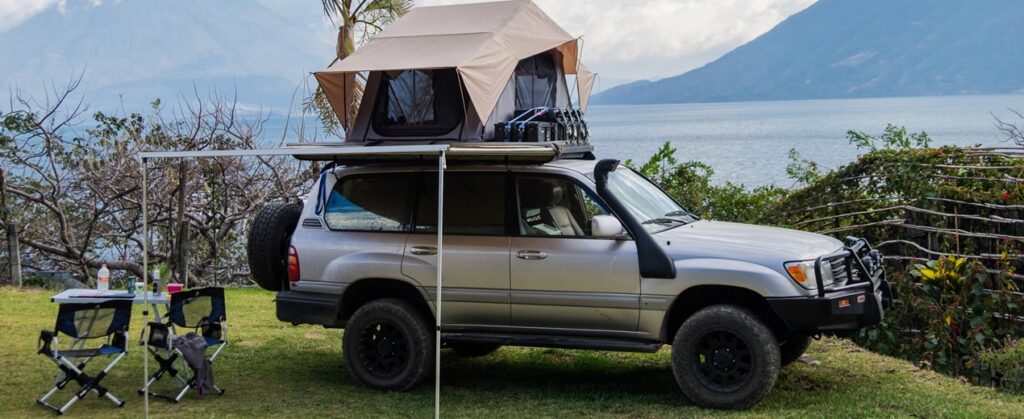
Enter the rooftop tent safari — a transformative style of travel that combines the freedom of self-drive exploration with the intimacy of sleeping directly within the African wilderness. Mounted atop a 4×4 vehicle, a rooftop tent (RTT) elevates you — literally and figuratively — above the savanna floor, offering panoramic views, a measure of safety from ground-level wildlife, and an unmatched connection to the sounds, smells, and rhythms of the bush.
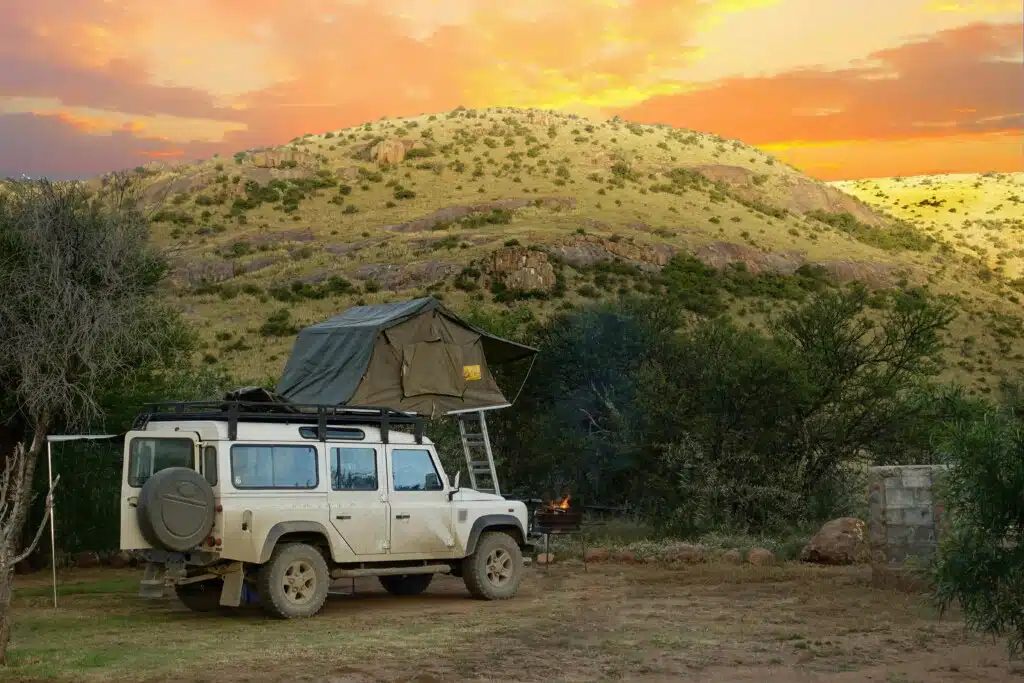
This comprehensive guide covers everything you need to know about planning and enjoying a rooftop tent safari in Tanzania: from choosing the right vehicle and gear, to navigating park regulations, selecting the best routes, and understanding what to expect when the sun goes down and lions begin to roar in the darkness just meters away.
| Why Choose a Rooftop Tent Safari?
Rooftop tent safaris offer unparalleled flexibility, cost savings of 40-70% compared to lodge-based safaris, and an authentic bush experience. Travelers report deeper wildlife encounters, more spontaneous game viewing opportunities, and a profound sense of adventure that lodge safaris simply cannot replicate. |
What Is a Rooftop Tent Safari?
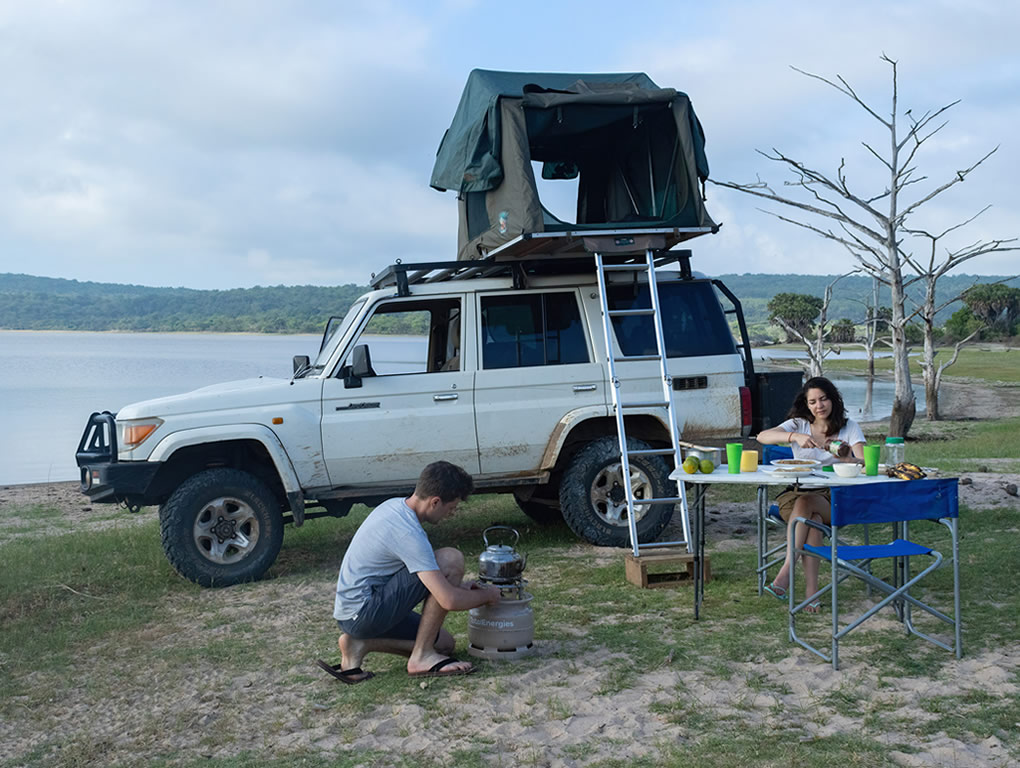
A rooftop tent safari is a style of overland travel in which participants sleep inside a tent mounted on the roof of a 4×4 vehicle — typically a Land Cruiser, Land Rover Defender, or similar expedition-grade truck. Unlike traditional camping on the ground or staying in lodges and tented camps, a rooftop tent safari provides:
- Elevation above ground — typically 1.5 to 2.5 metres — reducing direct contact with ground-level hazards
- A quick-deploy shelter that can be set up in under 5 minutes in most cases
- Integrated sleeping mattress, bedding, and sometimes kitchen equipment
- Complete mobility and self-sufficiency across Tanzania’s diverse national parks and game reserves
- A cost-effective alternative to high-end lodge safari packages
Types of Rooftop Tents
Not all rooftop tents are the same. Understanding the main types will help you choose the right setup for your Tanzania safari:
Soft Shell Rooftop Tents
The most popular and widely rented option. Soft shell RTTs fold flat when not in use and open in a clamshell or fold-out design, revealing a sleeping platform with a sewn-on tent body. They are lightweight, affordable, and easy to set up. Most rental companies in Arusha and Dar es Salaam offer soft shell tents.
Hard Shell Rooftop Tents
Hard shell tents feature a rigid outer casing (typically fibreglass or aluminum) that protects the tent from weather, dust, and UV damage. They pop open at the press of a button or with gas struts. Although heavier and more expensive, hard shell RTTs offer superior insulation, faster setup, and a cleaner aerodynamic profile — reducing fuel consumption on long drives.
Expedition Camper Conversions
Some operators in Tanzania offer purpose-built expedition vehicles with integrated sleeping platforms, kitchen units, water tanks, solar power systems, and storage compartments. These provide the most comfortable and self-sufficient experience for extended multi-week safaris.
Top Destinations for Rooftop Tent Safaris in Tanzania
Tanzania’s northern and southern safari circuits offer a wealth of landscapes and wildlife encounters. Here are the premier destinations for rooftop tent safari travelers:
1. Serengeti National Park
The crown jewel of Tanzania’s safari landscape, the Serengeti spans approximately 14,750 square kilometres of rolling grassland, acacia woodland, and kopje outcroppings. It is home to the world’s largest overland mammal migration — the Great Wildebeest Migration — which sees more than 1.5 million wildebeest, accompanied by hundreds of thousands of zebra and gazelle, traverse the ecosystem in search of fresh grazing.
For rooftop tent campers, the Serengeti offers designated public campsites (managed by TANAPA — Tanzania National Parks Authority) as well as special campsites that can be reserved exclusively for single groups. Sleeping in a rooftop tent within the Serengeti boundary places you directly within one of Earth’s greatest wildlife spectacles, with lions, leopards, cheetahs, elephants, buffaloes, and hyenas all potentially nearby.
- Best season: July to October for the river crossings in the northern Serengeti (Kogatende area)
- Key campsite areas: Seronera, Lobo, Ndutu (dry season), Kogatende
- Wildlife highlights: The Big Five, cheetah, wild dog (rare), crocodile, hippo
2. Ngorongoro Conservation Area
The Ngorongoro Crater is the world’s largest intact volcanic caldera still supporting a wildlife population. Covering 260 square kilometres of crater floor, it is home to approximately 25,000 large mammals, including one of Africa’s densest lion populations and a critically endangered black rhinoceros population. The conservation area surrounding the crater offers spectacular highland scenery, Maasai villages, and the archaeological wonder of Olduvai Gorge.
- Key campsite: Simba Campsite (rim of the crater — cold nights, bring insulation)
- Wildlife highlights: Black rhino, lions, flamingo, hyena, golden jackal
- Note: Entry to the crater floor is time-limited; only certain vehicle types permitted
3. Tarangire National Park
Often underrated, Tarangire is one of Tanzania’s finest game-viewing parks, particularly during the dry season (June to October) when it hosts the highest concentration of elephants in East Africa. The Tarangire River acts as a magnet for wildlife, drawing vast herds during the drought months. Ancient baobab trees dot the landscape, providing dramatic photographic backdrops.
- Best campsites: Oliver’s Camp, Tarangire Treetops (high-end), public sites near entrance
- Wildlife highlights: Elephant, lion, leopard, lesser kudu, oryx, fringe-eared oryx
- Distance from Arusha: Approximately 120 km (2-hour drive)
4. Lake Manyara National Park
Compact but extraordinarily diverse, Lake Manyara National Park encompasses alkaline lake shoreline, groundwater forest, open grassland, and acacia woodland. It is famous for its tree-climbing lions — an unusual behavior not documented at this scale elsewhere in Africa — and enormous flocks of flamingo.
- Ideal as a day visit or first-night stop on a longer circuit
- Wildlife highlights: Tree-climbing lions, elephants, hippos, flamingo
5. Ruaha National Park
Tanzania’s largest national park, Ruaha is the country’s best-kept safari secret. Located in the south-central highlands, it sees a fraction of the visitors of the northern circuit parks, offering genuinely remote wilderness experiences. The Great Ruaha River sustains extraordinary concentrations of elephants, and the park is one of East Africa’s most important lion strongholds.
- Best for: Experienced safari travellers seeking off-the-beaten-path adventure
- Wildlife highlights: Elephant, lion, leopard, cheetah, African wild dog, sable antelope
- Access: Fly to Msembe airstrip or drive from Iringa
Best Time to Visit: Seasonal Guide
Timing your rooftop tent safari correctly is critical to both comfort and wildlife viewing quality. Tanzania has two distinct rainy seasons and two dry seasons, each offering a different character of experience.
| Season | Details & Recommendations |
| June – October (Dry Season) | Peak safari season. Best wildlife viewing as animals concentrate around water. Cooler temperatures at night (5-15°C on Ngorongoro Rim). Perfect for rooftop tent camping. Great Migration river crossings: July-October in northern Serengeti. |
| November – December (Short Rains) | Short, often afternoon rains. Landscape turns green. Good birding season with migratory species. Fewer tourists, lower prices. Roads can become challenging. Calving season begins in Ndutu area. |
| January – March (Dry Spell / Calving) | Hot and dry. Ndutu area excellent for big cat activity during wildebeest calving. Ngorongoro Crater floor accessible. Some parks very hot midday — ideal for early morning game drives. |
| April – May (Long Rains) | Heavy rainfall. Some roads impassable. Parks quietest and cheapest. Lush scenery. Not recommended for self-drive rooftop tent safaris unless experienced in off-road driving. Rivers and low-lying areas may flood. |
Choosing the Right Vehicle for Your Rooftop Tent Safari
Your vehicle is the foundation of your entire safari experience. In Tanzania, road conditions range from reasonable tarmac between major towns to deeply rutted, rocky, or sand-choked tracks within the parks. Choosing an appropriate, well-maintained vehicle is non-negotiable.
Recommended Vehicle Types
- Toyota Land Cruiser 76 Series (Station Wagon) — The gold standard for Tanzania safaris. Bulletproof reliability, high ground clearance, excellent payload capacity for roof tents and gear.
- Toyota Land Cruiser 79 Series (Pick-up / Double Cab) — Excellent for load-carrying; rear bed can accommodate additional gear and water storage.
- Toyota Land Cruiser 200 Series — More comfortable and fuel-efficient; suitable for maintained park roads and intermediate-level tracks.
- Land Rover Defender 110 — Strong performer in challenging terrain; spare parts availability has improved with newer models.
- Mitsubishi Pajero / Montero — Competent second-tier option for less demanding routes; lower ground clearance limits extreme terrain access.
Essential Vehicle Equipment
A properly equipped rooftop tent safari vehicle should include the following:
- High-lift jack and base plate
- Two spare tyres (full-size)
- Compressor or CO2 tyre inflation system
- Recovery boards (MaxTrax or equivalent)
- Tow rope or recovery strap
- Shovel and axe
- Rooftop tent (soft or hard shell) with integrated mattress and bedding
- Roof rack with rated capacity sufficient for tent + passengers + gear weight
- Jerry cans for fuel (minimum 40 extra litres for remote parks)
- Water storage (minimum 40 litres for two people over 3 days)
- Fridge/freezer (12V compressor type — essential for food safety in heat)
- Solar panel or dual battery system
- Full first aid kit (wilderness-grade)
- GPS device loaded with offline Tanzania park maps
- UHF radio (for communication in parks without mobile coverage)
Campsites, Permits, and Park Regulations
TANAPA Campsite System
All national parks in Tanzania are managed by TANAPA, and camping within park boundaries requires advance booking through the TANAPA online reservation system (tanzaniaparks.go.tz). There are two categories of campsite relevant to rooftop tent safaris:
Public Campsites
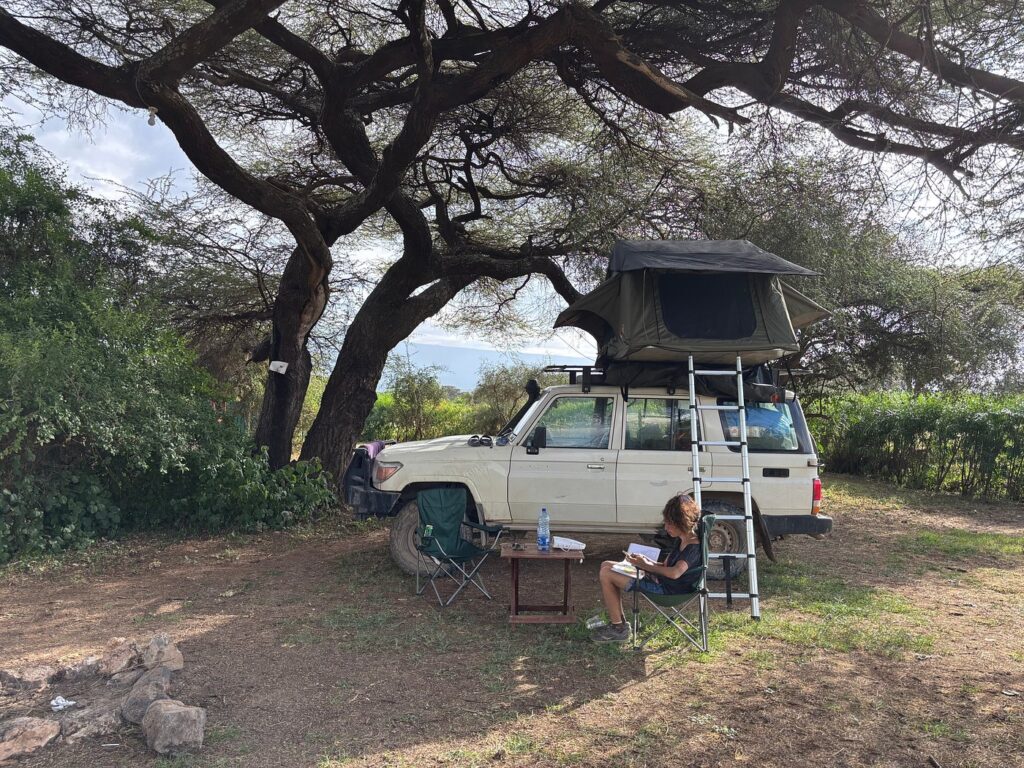
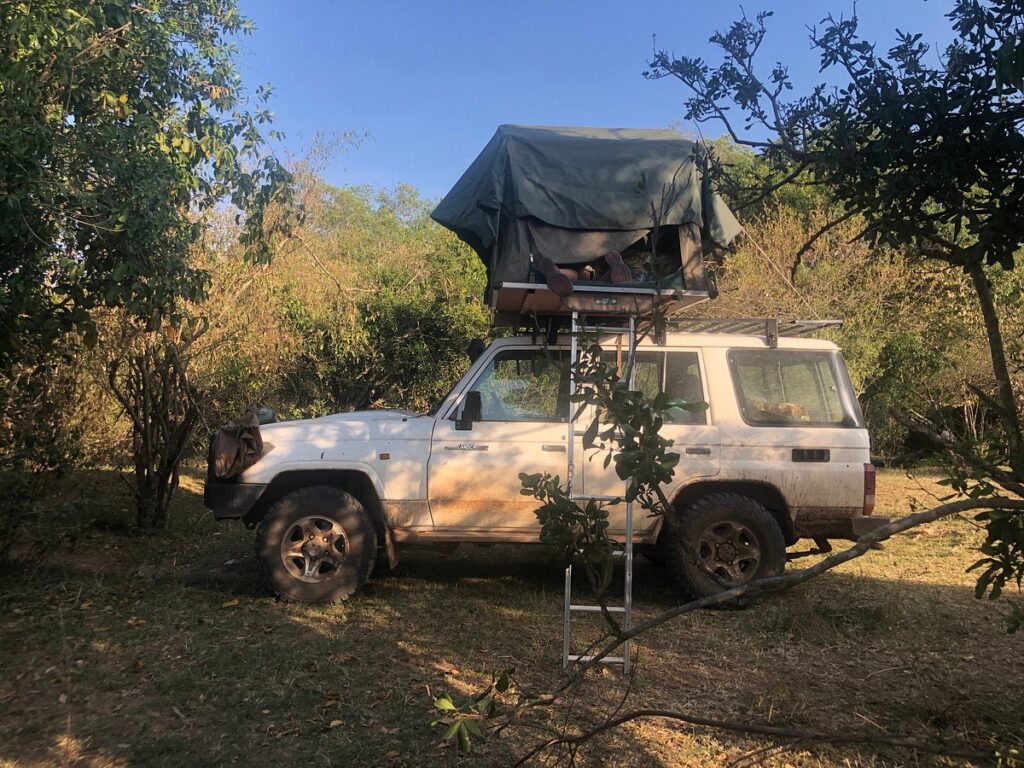
Public campsites are shared facilities that typically include basic pit latrines, sometimes a water point, and occasionally bucket showers. They are the most affordable option and are frequented by self-drive travellers and budget camping groups. Wildlife can and does enter these campsites — particularly hyenas, elephants, and occasionally lions. Staying in a rooftop tent provides a meaningful safety advantage over ground tents.
Special Campsites
Special campsites are exclusive-use sites located in remote or particularly scenic areas of the parks. They are booked for a single group at a time, ensuring complete privacy and a more intimate wilderness experience. They have no facilities whatsoever — truly wild camping. Special campsites are significantly more expensive but offer the most authentic African bush experience available to independent travellers.
Key Regulations for Rooftop Tent Safari Campers
- Never drive or walk outside your vehicle without a licensed guide in certain high-risk zones
- No campfire on the ground in most parks — gas stoves mandatory
- Do not feed wildlife under any circumstances — heavy fines apply
- Quiet hours enforced at most campsites from 22:00 to 06:00
- Generators typically prohibited at special campsites
- All rubbish must be removed from the park — pack-in, pack-out principle
- Night game drives are not permitted in most Tanzania national parks without special dispensation
- Maximum speed limit within parks: 50 km/h on main tracks; 25 km/h on secondary tracks
Essential Gear and Packing Guide
Packing intelligently for a rooftop tent safari requires balancing comprehensive preparation with the weight and space limitations of vehicle-based travel. Every kilogram added to the roof increases fuel consumption and affects handling.
Sleeping & Shelter
- Rooftop tent (pre-fitted to vehicle if renting)
- Sleeping bag rated to 5°C minimum (0°C for Ngorongoro highland nights)
- Lightweight pillow or inflatable travel pillow
- Silk sleeping bag liner for added warmth and hygiene
- Insect mesh — most RTTs have integrated mesh windows; check before travel
Clothing Essentials
- Neutral-coloured clothing (khaki, olive, brown) — avoid blue and black which attract tsetse flies
- Lightweight moisture-wicking long-sleeve shirts for sun and insect protection
- Warm fleece or down jacket (cold mornings and Ngorongoro nights can reach 5°C)
- Rain jacket (pack for all seasons; afternoon storms are possible even in dry season)
- Wide-brim sun hat and UV-rated sunglasses
- Comfortable closed-toe shoes and lightweight hiking sandals
- Gaiters (useful in long-grass areas)
Food, Water & Cooking
- 12V compressor fridge (essential for meat, dairy, and medications requiring refrigeration)
- Portable gas cooker with spare canisters (or integrated vehicle kitchen unit)
- Waterproof dry bags for food storage
- Water purification tablets or SteriPen UV purifier as backup
- Minimum 20 litres fresh water per person for a 5-day trip (drinking and washing)
- Collapsible washing basin and biodegradable soap
- Cutting board, pots, pans, and lightweight cutlery set
- Reusable plates and cups — avoid single-use plastics
Health & Safety
- Malaria prophylaxis (consult your physician — malarone or doxycycline most commonly recommended)
- DEET-based insect repellent (50%+ concentration)
- High-SPF sunscreen (50+)
- Comprehensive first aid kit including wound closure strips, antiseptic, blister treatment
- Prescription medications with extra supply
- Oral rehydration salts
- Medical evacuation insurance (Flying Doctors / AMREF highly recommended in East Africa)
Sample Rooftop Tent Safari Itineraries
Itinerary 1: Classic Northern Circuit (7 Days)
This is the most popular route for first-time Tanzania safari travellers, covering the three signature parks of the northern circuit from Arusha.
| Day | Route & Activities |
| Day 1 | Arusha → Tarangire NP. Afternoon game drive. Overnight: campsite near park entrance. Wildlife: elephants, baobabs. |
| Day 2 | Full day in Tarangire. Morning and afternoon drives. Overnight: Tarangire campsite. |
| Day 3 | Tarangire → Lake Manyara → Ngorongoro rim. Afternoon Manyara drive. Overnight: Simba Campsite, Ngorongoro Rim. |
| Day 4 | Ngorongoro Crater descent. Full day on crater floor. Overnight: Simba Campsite. |
| Day 5 | Ngorongoro → Central Serengeti (Seronera). Afternoon game drive. Overnight: Seronera campsite. |
| Day 6 | Full day Serengeti. Early morning drive for big cat activity. Overnight: Seronera campsite. |
| Day 7 | Serengeti → Arusha. Return drive with stops at viewpoints. |
Itinerary 2: Migration Special — Northern Serengeti (10 Days)
Ideal for July to October. This itinerary focuses on the Great Migration river crossings in the Kogatende/Lamai area of the northern Serengeti.
| Day | Route & Activities |
| Day 1-2 | Arusha → Tarangire NP. Two-night stay. Elephant herds, birding, sunset drives. |
| Day 3 | Tarangire → Ngorongoro Conservation Area. Afternoon walk near the rim. Night: Simba Campsite. |
| Day 4 | Crater descent. Full day exploring the caldera. Night: Simba Campsite. |
| Day 5 | Ngorongoro → Central Serengeti (Seronera). Game drive en route. Night: Seronera. |
| Day 6 | Full day Seronera: lions, leopards, cheetah. Night: Seronera. |
| Day 7-9 | Drive north to Kogatende/Lamai. Three nights at special campsite near Mara River. Daily game drives and river crossing vigils. Night: Special campsite, northern Serengeti. |
| Day 10 | Kogatende → Arusha via Lobo. Long drive; en route game spotting. |
Safety in the Bush: Rooftop Tent Safari Protocols
Sleeping within an active wildlife area is one of the most exhilarating experiences available to any traveller — but it demands respect, awareness, and preparation. The rooftop tent offers genuine advantages in terms of safety, but it is not a substitute for good judgement.
Wildlife Safety Fundamentals
- Always remain in your vehicle when wildlife is nearby unless explicitly permitted by a ranger
- Close and zip your tent fully at night — leave no openings that could allow insects or small animals to enter
- Never leave food outside the vehicle or tent — secure all provisions in sealed containers or the vehicle interior
- Do not use torches/flashlights to shine into the bush at night — this may disturb or attract wildlife
- Listen before exiting the vehicle at camp — if you hear unfamiliar sounds, wait and listen before descending from your rooftop tent
- Carry a hand-held spotlight and a loud whistle for emergency signalling
- Inform your nearest ranger station of your campsite location each evening where possible
- Keep your vehicle keys accessible at all times in case you need to start the engine quickly
| Night Safety Protocol
When nature calls at night, use a wide-mouthed bottle or designated portable toilet within the tent vestibule if possible. If you must descend, scan with a torch in all directions, make noise before stepping down, and never move far from the vehicle. Hyenas and lions are active at night and are far more dangerous when encountered on foot. Most experienced overlanders never leave the vehicle once dark. |
Health & Medical Preparedness
- Register with AMREF Flying Doctors (East Africa’s premier air evacuation service) before travel
- Carry a satellite communicator (Garmin inReach or SPOT) for emergencies in areas without mobile coverage
- Know the location of the nearest town with medical facilities for each area you camp in
- Complete a Wilderness First Aid or First Responder course before self-drive safaris
- Stay hydrated — heat exhaustion is a real risk; aim for 3+ litres of water per person per day
Budget Planning: Cost of a Rooftop Tent Safari in Tanzania
One of the most compelling aspects of rooftop tent safaris is the potential for significant cost savings compared to lodge-based travel — while often delivering a richer, more immersive experience. Below is a realistic budget framework for independent travellers.
| Expense Category | Estimated Cost (USD) |
| Vehicle rental (4×4 with RTT, fully equipped) | $150–$280 per day |
| Park entry fees (Serengeti, non-resident) | $82 per person per day |
| Vehicle entry fee (per park) | $30 per vehicle per day |
| Public campsite fee | $30–$50 per person per night |
| Special campsite fee | $50–$100 per person per night |
| Fuel (diesel, approx. 400km/week) | $80–$120 per week |
| Food and supplies (self-catered) | $20–$40 per person per day |
| Guide (optional but recommended) | $80–$150 per day |
| AMREF Flying Doctors membership | $25 per person (annual) |
| Travel insurance with medical evacuation | $80–$150 per person (10-day trip) |
| 7-Day Northern Circuit total (2 people) | $3,000–$5,500 total (self-drive) |
| Equivalent lodge safari cost | $7,000–$15,000+ total |
Choosing a Rooftop Tent Safari Operator or Rental Company
Tanzania has a growing number of vehicle rental companies offering 4x4s with rooftop tents, as well as fully guided rooftop tent safari packages. When selecting an operator, consider the following criteria:
Key Selection Criteria
- Vehicle age and condition — request maintenance records; avoid vehicles older than 7 years for extended self-drive
- Inclusive equipment checklist — ensure the rental includes all safety and recovery equipment listed in this guide
- 24/7 mechanical support — what happens if you break down in the Serengeti? Confirm the operator’s support protocol
- Insurance coverage — confirm comprehensive insurance includes off-road use within Tanzania national parks
- GPS and offline maps — ensure the vehicle is fitted with a working GPS loaded with current park track data
- Customer reviews — check TripAdvisor, iOverlander, and SafariBookings for verified traveller feedback
- TALA licence — ensure the operator holds a valid Tanzania Association of Tour Operators licence
Arusha-Based Rental Hubs
The majority of Tanzania’s rooftop tent safari rental operations are based in Arusha, which serves as the gateway city to the northern circuit parks. Arusha’s proximity to Kilimanjaro International Airport (JRO) makes it the logical starting and ending point for most northern circuit itineraries. Dar es Salaam is the preferred base for southern circuit and coastal exploration.
Environmental Responsibility and Ethical Safari Practices
Tanzania’s wild spaces are among the most precious and irreplaceable natural treasures on Earth. As a rooftop tent safari traveller, you have both the privilege of accessing these landscapes and the responsibility of protecting them for future generations.
Leave No Trace Principles in Tanzania’s Parks
- Pack out ALL waste — plastic, food scraps, hygiene products, and grey water
- Use biodegradable soap and shampoo and dispose of grey water 50+ metres from water sources
- Stay strictly on designated tracks — off-road driving destroys fragile soil crusts and vegetation
- Never pick plants, disturb rocks or archaeological sites, or take natural materials
- Minimise generator use and noise pollution — rely on solar power where possible
- Respect wildlife distance guidelines — minimum 20 metres from most animals; never surround or harass wildlife
- Support local communities by buying supplies from local markets in Arusha and nearby towns
Carbon and Environmental Offset
Long-haul international flights to Tanzania carry a significant carbon footprint. Consider offsetting your travel emissions through reputable organizations working in Tanzanian reforestation and conservation such as the Wildlife Conservation Society Tanzania programmed or the African Wildlife Foundation. Many rooftop tent safari operators also partner with community conservation projects — ask your operator about their conservation commitments.
Photography Tips for Rooftop Tent Safari Travellers
The rooftop tent creates an exceptional photography platform. You are elevated above the vehicle’s roofline, providing unobstructed 360-degree views across the savanna — far superior to shooting through a standard pop-top or open window. Here are key tips to maximise your photographic output:
- Golden hours — the 45 minutes after sunrise and before sunset produce the most dramatic light; plan your drives accordingly
- Bean bag support — a filled bean bag draped over the roof rack rail provides excellent camera stabilisation in moving vehicles
- Teleconverter — a 1.4x or 2x teleconverter on a 500mm lens gives effective reach for distant subjects
- Dual camera body system — keep one body with a long telephoto (400-600mm) and one with a wide-angle for landscapes
- Weather sealing — dust and brief rain are constants; use weather-sealed bodies and lens bags
- Shoot in RAW format for maximum post-processing latitude in high-contrast African light conditions
- Patience above all — park the vehicle at a sighting and wait; the best behaviour often occurs when the vehicle is stationary and quiet
- Respect for subjects — never push the vehicle closer than comfortable for the animals; ethical photography yields better results
Conclusion: Why a Rooftop Tent Safari Belongs on Your Tanzania Bucket List
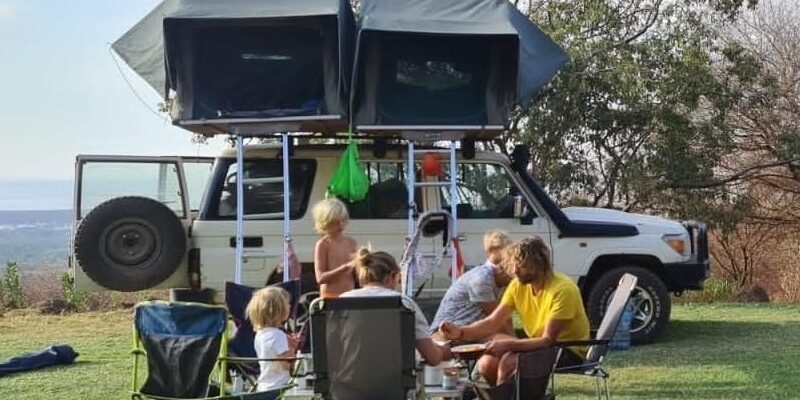
A rooftop tent safari in Tanzania is not merely a budget-conscious alternative to lodge travel — it is, for many who have experienced it, the superior way to engage with this country’s extraordinary wildlife and landscapes. To wake before dawn as the Serengeti sky transitions from ink-black to rose gold, to hear the distant whoop of hyenas and the low rumble of a lion, to brew coffee on a gas burner while giraffes ghost silently past in the morning mist — this is an experience that no lodge wall can contain.
It demands preparation, flexibility, and a willingness to embrace the occasional discomfort of dust-caked skin, camp meals cooked in the dark, or the heart-thumping moment when something large brushes past the vehicle at 3 a.m. But these are precisely the textures that make a rooftop tent safari in Tanzania not just a holiday, but a genuinely life-changing adventure.
Tanzania’s parks are among the best-protected and most biodiverse wildlife habitats remaining on Earth. A responsible, well-planned rooftop tent safari allows you to experience this treasure at its most intimate and authentic — while keeping your footprint light and your appreciation deep.