
Camping Gear Checklist Rooftop Tent Safaris in Tanzania
Why Packing Right Matters
Camping Gear Checklist Rooftop Tent Safaris in Tanzania, A rooftop tent (RTT) safari in Tanzania is one of the most exhilarating and immersive wildlife experiences on Earth. Unlike traditional lodge safaris, rooftop tent camping places you directly in the heart of the African wilderness — sleeping under star-filled skies, waking to lion roars, and having the flexibility to camp in remote locations unreachable by lodge vehicles.
However, this freedom demands meticulous preparation. Tanzania’s ecosystems span dusty savannah, highland forests, volcanic craters, and lakeside wetlands — each presenting unique environmental conditions. Temperatures can swing from scorching midday heat above 35°C (95°F) to cold nights below 10°C (50°F) in highland areas like Ngorongoro Crater. Dust, insects, unpredictable rainfall, and the need for self-sufficiency make your gear selection critically important.
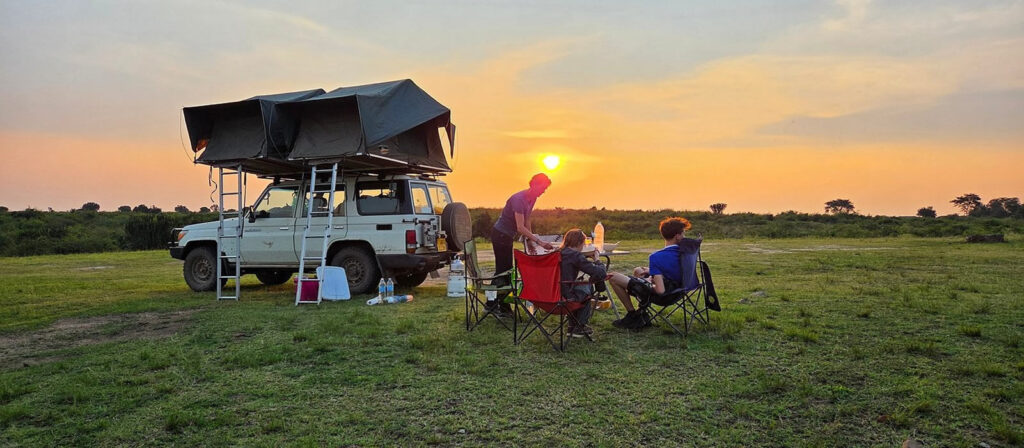
This comprehensive checklist is organized by category and designed specifically for rooftop tent overlanders. Each item includes context, recommendations, and tips refined from experienced Tanzania safari guides and overlanders. Use the tick boxes to check off items as you pack.
💡 Pro Tip: Always build your gear list 4–6 weeks before departure. This gives you time to test equipment at home, replace broken items, and avoid last-minute panic buying.
Rooftop Tent & Sleep System
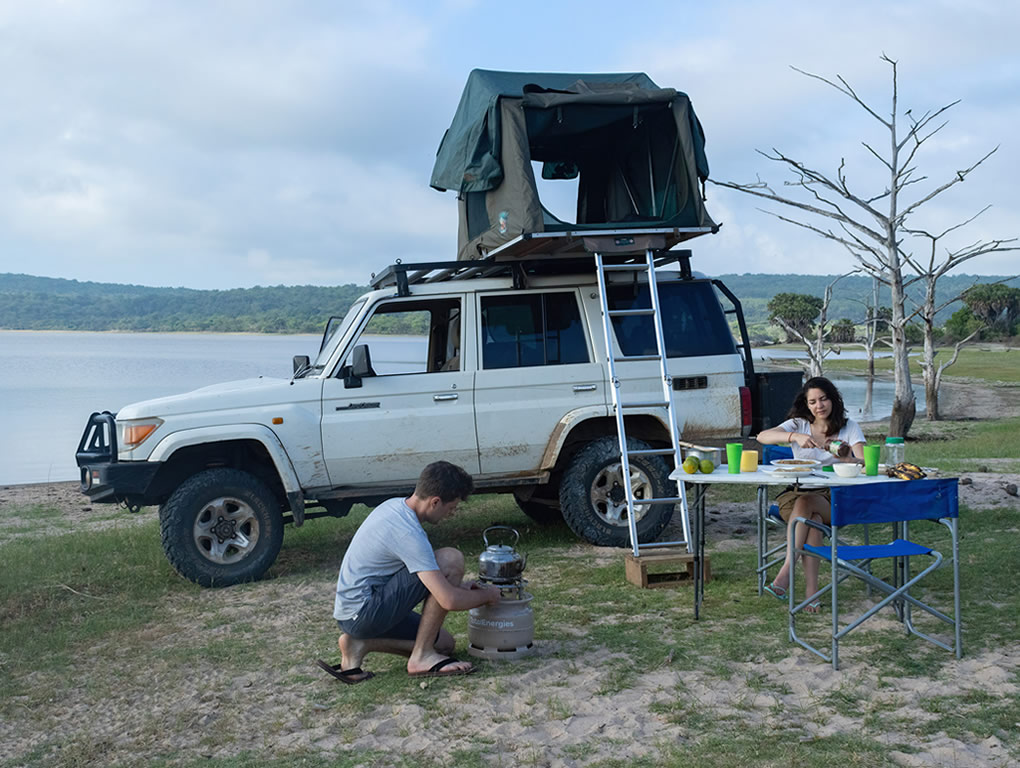
Your rooftop tent is the centerpiece of your safari — it’s your bedroom, your sanctuary, and your protection against the African bush. Choosing the right tent and sleep system can mean the difference between waking refreshed and spending the night uncomfortable and cold.
The Rooftop Tent
| ✓ | Item | Notes / Details |
| ☐ | Rooftop Tent (hardshell or softshell) | Hardshell tents (e.g., ARB, iKamper) open quickly; softshell (e.g., CVT) are lighter & cheaper |
| ☐ | Rooftop Tent Annex / Ground Room | Provides changing room, extra sleeping space, or bathroom privacy |
| ☐ | Waterproof Rainfly | Separate rainfly for unexpected downpours, especially April–May season |
| ☐ | Tent Repair Kit | Seam sealer, mesh repair patches, zipper lubricant, spare buckles |
| ☐ | Anti-condensation Mat | Prevents moisture buildup on the tent floor; foam or specific RTT mat |
💡 Pro Tip: Test your RTT opening and closing mechanism at home at least 10 times before departure. In the dark or in rain, fumbling with an unfamiliar tent is frustrating and potentially dangerous.
Sleeping Gear
| ✓ | Item | Notes / Details |
| ☐ | Sleeping Bag (3-season rated) | Rated to 5°C (41°F); Ngorongoro nights can drop near freezing |
| ☐ | Sleeping Bag Liner (silk or fleece) | Adds warmth and keeps the bag clean; silk liners are lightweight |
| ☐ | Self-Inflating Sleeping Pad / RTT Mattress | Most RTTs include a mattress; bring a topper for extra comfort |
| ☐ | Foam Sleeping Pad (backup) | Lightweight backup if main mattress deflates; doubles as insulation |
| ☐ | Pillow (compressible) | Packable camping pillow or inflatable travel pillow |
| ☐ | Blanket / Fleece Throw | For cold mornings and evenings around camp |
| ☐ | Eye Mask & Earplugs | Hyenas, birds, and generators can disturb sleep; essentials for light sleepers |
⚠ Note: Tanzania has three distinct climate zones during safari season. Pack a sleeping bag that handles the coldest expected temperature — Ngorongoro Crater at 2,200m elevation is significantly colder than the lowland Selous.
Vehicle & Overlanding Equipment
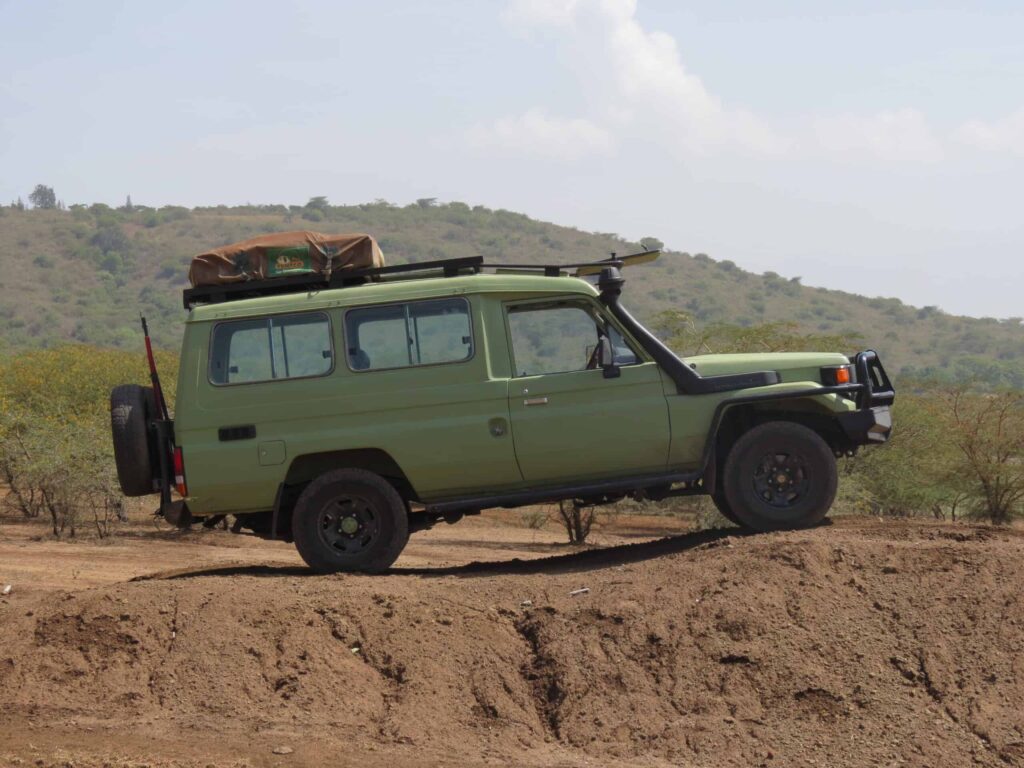
Your vehicle is more than transport — it’s your base camp, kitchen counter, storage unit, and emergency shelter. Tanzania’s roads range from sealed tarmac to deeply rutted murram tracks and river crossings. Proper vehicle preparation can save your safari.
Vehicle Recovery & Safety
| ✓ | Item | Notes / Details |
| ☐ | High-Lift Jack (Farm Jack) | Essential for off-road recovery; minimum 48-inch lift capacity |
| ☐ | Jack Base / Footplate | Prevents jack from sinking into soft sand or mud |
| ☐ | Kinetic Recovery Rope (snatch strap) | 9m x 75mm minimum; for vehicle-to-vehicle extraction |
| ☐ | D-Shackles (x4 minimum) | Grade-8 rated for recovery operations; bowpin style |
| ☐ | Shovel (folding or full-size) | For digging out stuck tires; folding military shovel saves space |
| ☐ | Traction Boards (MAXTRAX or equivalent) | Sand ladders for mud, sand, and soft ground recovery |
| ☐ | Tree Saver Strap | Protects trees during winch operations; 5m minimum |
| ☐ | Hand Winch (Come-Along) | Mechanical winch alternative if no electric winch fitted |
| ☐ | Gloves (leather recovery gloves) | Protect hands from ropes, shackles, and sharp edges |
| ☐ | Tire Pressure Gauge (digital) | Monitor and adjust PSI for different terrain types |
| ☐ | Portable Air Compressor | Re-inflate tires after airing down for soft terrain |
| ☐ | Tire Plug & Patch Kit | Repair punctures without removing the wheel |
| ☐ | Full-Size Spare Tire (x2 recommended) | Carry two spares on extended remote trips |
| ☐ | Spare Fan Belt & Radiator Hoses | Basic mechanical spares; critically important in remote areas |
| ☐ | Fire Extinguisher (2kg ABC) | Mounted within reach of driver; mandatory for overlanding |
💡 Pro Tip: Air down your tires to 18–22 PSI on sandy terrain like Selous or coastal areas. This dramatically improves traction and reduces the risk of getting stuck.
Navigation & Communication
| ✓ | Item | Notes / Details |
| ☐ | GPS Device (Garmin or similar) | Preloaded with Tanzania maps; do not rely solely on phone GPS |
| ☐ | Offline Maps (Maps.me / OsmAnd) | Download Tanzania maps offline; mobile data is unreliable in parks |
| ☐ | Compass (baseplate style) | Analog backup navigation tool |
| ☐ | Satellite Communicator (Garmin inReach / SPOT) | Two-way messaging in areas with no cell signal |
| ☐ | VHF Radio / CB Radio | Communication with other overlanders and camp staff |
| ☐ | Local SIM Card (Vodacom Tanzania) | Best network coverage for Tanzania; buy at Kilimanjaro Airport |
| ☐ | Park Maps & Road Atlas | Physical map of Tanzania national parks; essential backup |
| ☐ | Walkie-Talkies (x2 pairs) | Useful when traveling in convoy or communicating between vehicles |
Fuel, Water & Storage
| ✓ | Item | Notes / Details |
| ☐ | Jerry Cans (20L fuel, x2–4) | Carry 40–80L extra fuel; fuel stations are scarce in remote areas |
| ☐ | Jerry Can Holder / Rack | Secure mounting for fuel cans on vehicle exterior |
| ☐ | Water Jerry Cans (20L, x2–4) | Carry minimum 40L drinking water; more for remote areas |
| ☐ | Water Bladder (Aquatank or similar) | Flexible 100L+ storage for extended off-grid camping |
| ☐ | Roof Rack with Load Bars | For mounting RTT, jerrycans, gear boxes, and recovery equipment |
| ☐ | Rooftop Cargo Box / Pelican Case | Waterproof hard storage for cameras, electronics, valuables |
| ☐ | Cargo Net / Tie-Down Straps | Secure loose gear on roof and in cargo area |
| ☐ | Fridge / Cooler (12V compressor) | Engel, ARB, or Dometic fridge; keeps food and medicine cold |
| ☐ | Dual Battery System / Power Bank | Run fridge, lights, and devices without draining starter battery |
| ☐ | Solar Panel (100W+) | Recharge batteries while parked; foldable panels work well |
⚠ Note: Tanzania requires a valid international driver’s license and vehicle registration papers. If renting a 4WD, confirm the rental includes a valid park entry permit sticker and comprehensive insurance.
Camp Kitchen & Cooking Equipment
Cooking in the African bush is one of the great pleasures of overlanding. Whether you’re making coffee at dawn while listening to birdsong or cooking a camp stew after a game drive, having a well-equipped kitchen transforms your safari experience.
Cooking System
| ✓ | Item | Notes / Details |
| ☐ | Camp Stove (2-burner propane) | Coleman, Primus, or similar; propane is available in Arusha & Dar |
| ☐ | Propane Gas Canisters (x6 small or 2 large) | Carry ample fuel; refills unavailable in national parks |
| ☐ | Gas Regulator & Hose | Connect larger cylinder to stove; check compatibility |
| ☐ | Firestarter & Lighter (x3) | Waterproof matches, piezo lighter, and ferro rod as backup |
| ☐ | Firewood (limited supply) | Collect only dead wood; never cut live trees in national parks |
| ☐ | BBQ Grill Grate | Portable folding grill for cooking over fire or camp stove |
| ☐ | Potjie Pot / Dutch Oven (cast iron) | Traditional South African camp pot; excellent for stews |
| ☐ | Cooking Pot Set (3-piece nesting) | Lightweight aluminum or stainless steel nesting pots |
| ☐ | Frying Pan (non-stick) | 10–12 inch; with foldable handle for compact storage |
| ☐ | Kettle or Billycan | For boiling water for coffee, tea, and camp drinks |
| ☐ | Cutting Board (plastic, x2) | Keep separate boards for meat and vegetables |
| ☐ | Kitchen Knife Set (chef’s, paring, bread) | Sharp knives in a roll-up travel case |
| ☐ | Can Opener / Bottle Opener | Manual, military-style for durability |
| ☐ | Tongs & Spatula (long-handle) | Essential for fire cooking and braai (BBQ) |
| ☐ | Ladle & Serving Spoon | For serving stews, soups, and curries |
Tableware & Storage
| ✓ | Item | Notes / Details |
| ☐ | Enamel Plates & Bowls (x4) | Durable, lightweight, and traditional bush style |
| ☐ | Camping Mugs (enamel or insulated) | Keeps coffee/tea hot during cold mornings |
| ☐ | Cutlery Set (per person) | Stainless steel fork, knife, spoon in a rollup case |
| ☐ | Folding Camping Table | Aluminum roll-top or foldable leg table; lightweight essential |
| ☐ | Camping Chairs (x2–4) | Folding chairs with cup holders; comfort matters after long drives |
| ☐ | Food Storage Containers (airtight) | Keep out ants, insects, and moisture; various sizes |
| ☐ | Dry Food Bags / Zip-Lock Bags | For bulk grains, pasta, snacks, and spices |
| ☐ | Spice Kit (salt, pepper, garlic, cumin etc.) | Pre-fill small screw-top jars with your favorite spices |
| ☐ | Condiment Set (oil, vinegar, hot sauce) | Small camping bottles; adds variety to camp meals |
| ☐ | Collapsible Sink / Wash Basin | For washing dishes; saves water vs running tap |
| ☐ | Dish Soap & Scrubber (biodegradable) | Biodegradable soap only; protects waterways |
| ☐ | Drying Rack / Towel | Compact folding rack or hang line for dishes and clothes |
| ☐ | Trash Bags (heavy-duty, x20) | Pack out all waste; leave no trace in national parks |
| ☐ |
Cooler Bag / Insulated Bag |
Backup soft cooler for day trips and game drives |
💡 Pro Tip: Pre-cook and freeze meals like stews and curries before departure. They thaw gradually in the fridge and serve as ready-made meals during your first 2–3 days when you’re busy setting up camp.
Clothing & Personal Gear
Packing the right clothing for a Tanzania safari requires balancing comfort in heat, warmth for cold nights, sun protection, and the practicality of easy washing and quick drying. Stick to neutral, earth-toned colors — bright colors can disturb wildlife and attract insects.
Safari Clothing Essentials
| ✓ | Item | Notes / Details |
| ☐ | Long-Sleeve Safari Shirts (x4–5) | Lightweight, UPF 50+; khaki, olive, tan, or grey tones |
| ☐ | Short-Sleeve T-Shirts (x3–4) | Breathable cotton or moisture-wicking polyester |
| ☐ | Safari Pants / Zip-Off Trousers (x3) | Convert to shorts; avoid jeans — too hot and slow-drying |
| ☐ | Shorts (x2–3) | Lightweight, quick-dry for hot midday temperatures |
| ☐ | Fleece Jacket / Midlayer | For cold mornings, evenings, and Ngorongoro nights |
| ☐ | Waterproof Rain Jacket | Packable lightweight; unpredictable afternoon rains |
| ☐ | Down Jacket / Insulated Coat | For Ngorongoro and highland areas; packs small |
| ☐ | Underwear (x7, moisture-wicking) | Merino wool or synthetic; avoid cotton in humid areas |
| ☐ | Hiking Socks (x5–6 pairs) | Wool-blend for breathability and blister prevention |
| ☐ | Thin Liner Socks (x3) | Wear under hiking socks to prevent blisters |
| ☐ | Wide-Brim Safari Hat | Full brim minimum 3 inches; UPF rated; protects neck and ears |
| ☐ | Buff / Neck Gaiter | Multi-use: sun protection, dust mask, hat liner |
| ☐ | Lightweight Gloves | For cold mornings; fleece or thin wool |
| ☐ | Swimwear (x2) | For lodge pool stops, hot springs at Lake Natron, or beach days |
Footwear
| ✓ | Item | Notes / Details |
| ☐ | Waterproof Hiking Boots (ankle support) | Leather or synthetic; essential for walking safaris |
| ☐ | Trail Running Shoes | Lighter alternative for camp use and easy terrain |
| ☐ | Sandals / Flip-Flops (closed-toe option) | Keen or Teva for camp; flip-flops for shower area |
| ☐ | Gaiters (low or high) | Keep dust, sand, and ticks out of boots on bush walks |
| ☐ | Wool Camp Socks (thick) | Warm socks for cold nights inside the tent |
⚠ Note: Avoid blue, black, and bright colors — tsetse flies are strongly attracted to these shades. Stick to khaki, tan, olive, and grey throughout your safari.
Health, Hygiene & First Aid
Tanzania presents real health risks including malaria, traveler’s diarrhea, sun exposure, and dehydration. A well-stocked first aid kit and proactive health practices are non-negotiable when you’re hours from the nearest clinic.
First Aid Kit
| ✓ | Item | Notes / Details |
| ☐ | Waterproof First Aid Kit (comprehensive) | Adventure Medical Kits or equivalent; pre-assembled wilderness kit |
| ☐ | Malaria Prophylactics | Doxycycline, Malarone, or Lariam; start before arrival as directed |
| ☐ | Antimalarial Emergency Treatment | Artemether-lumefantrine (Coartem); in case prophylactics fail |
| ☐ | Oral Rehydration Salts (ORS x20 sachets) | For dehydration from heat, diarrhea, or vomiting |
| ☐ | Antidiarrheal Medication (Imodium) | For managing traveler’s diarrhea during transit |
| ☐ | Broad-Spectrum Antibiotics | Ciprofloxacin or Azithromycin; prescribed by your travel doctor |
| ☐ | Pain Relievers (Ibuprofen & Paracetamol) | Both NSAIDs and analgesics; different mechanisms of action |
| ☐ | Antihistamines (Cetirizine / Benadryl) | For allergic reactions, insect stings, and itching |
| ☐ | EpiPen (if allergic to stings) | Essential for those with known severe allergies |
| ☐ | Wound Closure Strips & Butterfly Stitches | Close lacerations without sutures in the field |
| ☐ | Sterile Gauze Pads & Bandages | Various sizes; for wound dressing |
| ☐ | Medical Tape (waterproof) | Secure dressings; also useful for blisters |
| ☐ | Antiseptic Cream (Savlon/Betadine) | Prevent wound infection; critical in tropical environments |
| ☐ | Antiseptic Wipes | Quick wound cleaning when water is unavailable |
| ☐ | SAM Splint & Elastic Bandage | Immobilize sprains and fractures; lightweight and reusable |
| ☐ | Triangular Bandage & Safety Pins | Sling for arm injuries; multi-purpose |
| ☐ | Thermometer (digital) | Monitor for fever; malaria symptoms include high fever |
| ☐ | Blood Pressure Cuff (optional) | For those with cardiovascular conditions |
| ☐ | Tweezers (fine-point) | Thorn and tick removal; keep in first aid kit |
| ☐ | Irrigation Syringe (20ml) | For cleaning wounds with pressure irrigation |
| ☐ | Blister Treatment (Compeed or Moleskin) | Prevent blisters from becoming infected open wounds |
| ☐ | Eye Wash Solution | Flush dust, sand, and insects from eyes |
| ☐ | Dental Emergency Kit | Temporary filling material; lost fillings are common during travel |
💡 Pro Tip: Visit a travel medicine clinic 6–8 weeks before departure. Receive Yellow Fever vaccination (required for Tanzania entry), Typhoid, Hepatitis A & B boosters, and get your malaria prescription.
Hygiene & Sanitation
| ✓ | Item | Notes / Details |
| ☐ | Biodegradable Body Soap | Castile soap or campsuds; safe for use near water sources |
| ☐ | Biodegradable Shampoo & Conditioner | 2-in-1 formulas save space |
| ☐ | Toothbrush & Toothpaste (x2) | Bring a spare; travel tube sizes save space |
| ☐ | Dental Floss (x3 packs) | Also useful as emergency cordage |
| ☐ | Deodorant (travel size x3) | Unscented preferred; strong scents can attract wildlife |
| ☐ | Feminine Hygiene Products | Menstrual cup strongly recommended (less waste, more reliable) |
| ☐ | Quick-Dry Camping Towel (x2) | Microfiber; large (60x120cm) for shower, small for hands |
| ☐ | Toilet Paper (x20 rolls) | Take far more than you think; sealed in zip-lock bags |
| ☐ | Trowel / WagBag System | For burying human waste 200m from water; Leave No Trace |
| ☐ | Hand Sanitizer (70%+ alcohol, x4) | Use before every meal; waterless hygiene in the field |
| ☐ | Portable Camping Shower (solar or pressure) | Nemo Helio or solar shower bag; refresh after dusty drives |
| ☐ | Shower Tent / Privacy Screen | Collapsible tent for outdoor showering and changing |
| ☐ | Wet Wipes (unscented, x10 packs) | Baby wipes; for refreshing after drives when water is scarce |
| ☐ | Laundry Detergent (travel pods x20) | Wash clothes in camp sink or basin |
| ☐ | Collapsible Laundry Basin | For hand-washing clothes at camp |
| ☐ | Clothesline & Pegs | Quick-dry cord between trees for laundry |
Wildlife & Insect Protection
Tanzania is home to some of Africa’s most dangerous wildlife — lions, buffalo, elephants, hippos, and crocodiles all pose genuine risks. Respecting wildlife boundaries and having proper deterrents ensures your safety without harming animals.
| ✓ | Item | Notes / Details |
| ☐ | DEET Insect Repellent (50%+, x6 bottles) | Apply every 4 hours; strongest defense against malaria mosquitoes |
| ☐ | Permethrin Clothing Spray | Treat clothes and tent mesh; remains effective through 6 washes |
| ☐ | Permethrin-Treated Bed Net (optional) | For annex use; extra protection in high malaria areas |
| ☐ | Mosquito Coils (x30) | Burn around camp at dusk; effective perimeter repellent |
| ☐ | Citronella Candles (x6) | Supplemental insect deterrent for table area |
| ☐ | Electric Mosquito Swatter (USB rechargeable) | Highly satisfying; effective for mosquitoes inside tent annex |
| ☐ | Headlamp with Red Light Mode | Red light does not disrupt night vision or attract insects |
| ☐ | Wildlife Deterrent Spray (bear spray / pepper spray) | Last-resort deterrent; legal in Tanzania for self-defense |
| ☐ | Air Horn / Whistle | Scare deterrent for unexpected close animal encounters in camp |
| ☐ | Snake Gaiters (optional) | Protection in tall grass areas; especially during rainy season |
| ☐ | Tick Repellent & Tick Removal Tool | Check daily; ticks carry tick bite fever (common in Tanzania) |
| ☐ | Anti-Itch Cream (Hydrocortisone 1%) | Soothes insect bites, rashes, and contact dermatitis |
| ☐ | Calamine Lotion | For extensive insect bite areas; cooling and anti-itch |
| ☐ | Camp Perimeter Rope (bright colored) | Mark tent perimeter as psychological barrier at water sources |
⚠ Note: Never leave food, cosmetics, or scented items in your tent. Smells attract wildlife — including baboons who are skilled at opening zippers and hyenas who can chew through fabric.
Camera, Electronics & Power
Tanzania’s wildlife and landscapes are among the most photogenic on Earth. The Serengeti at golden hour, the Great Migration river crossings, and Ngorongoro Crater’s density of predators demand capable camera gear. Power management is equally critical when camping off-grid.
Photography & Optics
| ✓ | Item | Notes / Details |
| ☐ | DSLR or Mirrorless Camera Body (x2) | Bring a backup body; dust and vibration can cause failures |
| ☐ | Telephoto Lens (400–600mm) | Critical for wildlife photography; big cats rarely come close |
| ☐ | Wide-Angle Lens (16–35mm) | For landscape, Milky Way, and camp photography |
| ☐ | Mid-Range Zoom (24–105mm) | Versatile everyday safari lens; walking safaris and camp |
| ☐ | Camera Beanbag | Stable camera support on vehicle window ledge; quieter than tripod |
| ☐ | Tripod (lightweight carbon fiber) | For Milky Way photography and long exposures |
| ☐ | Extra Camera Batteries (x6) | Cold temperatures drain batteries faster |
| ☐ | Battery Charger (dual USB or mains) | Charge from vehicle USB or power bank in the field |
| ☐ | High-Capacity Memory Cards (x6, 128GB+) | More than you think you need; RAW files are large |
| ☐ | Memory Card Case (waterproof) | Protect irreplaceable memory cards from dust and moisture |
| ☐ | Lens Cleaning Kit | Rocket blower, lens pen, microfiber cloths; dust is constant |
| ☐ | Camera Rain Cover | Protect gear during unexpected showers on game drives |
| ☐ | Dust-Proof Camera Bag | Think Tank, Lowepro, or similar; dust-sealed zipper design |
| ☐ | Binoculars (8×42 or 10×42) | Essential for spotting wildlife before setting up camera |
| ☐ | Spotting Scope (optional) | For extreme-distance observation; cheetah on termite mounds |
| ☐ | GoPro / Action Camera | For vehicle-mounted shots, drone footage alternatives |
| ☐ | Drone (DJI Mini 3 or similar) | Check Tanzania CAA regulations; filming permits may be required |
Power & Devices
| ✓ | Item | Notes / Details |
| ☐ | Power Bank (26,800mAh minimum) | Anker or equivalent; charge phones, cameras, GPS offline |
| ☐ | Solar Charging Panel (Foldable, 100W) | Charge battery bank from sun while driving or camping |
| ☐ | 12V Vehicle Outlet Adapters (x3) | For charging from vehicle; get multi-port USB adapters |
| ☐ | Universal Plug Adapter (Type G) | Tanzania uses British 3-pin plugs; bring universal adapter |
| ☐ | Surge Protector / Power Strip | With USB ports; use at lodges and camps with electricity |
| ☐ | Laptop / Tablet | For photo backup, navigation planning, travel documents |
| ☐ | External Hard Drive (2TB) | Back up photos daily; use two drives for redundancy |
| ☐ | Kindle / E-Reader | Lightweight reading; download books and field guides |
| ☐ | Satellite Phone (Iridium) or Rental | For medical evacuations and emergencies in remote areas |
| ☐ | Short-Wave Radio | Receive BBC Africa and weather broadcasts off-grid |
| ☐ | LED String Lights (USB powered) | Transforms camp atmosphere; creates beautiful evening ambiance |
| ☐ | Headlamp (x2) with spare batteries | Petzl or Black Diamond; minimum 300 lumens |
| ☐ | Lantern (USB rechargeable or propane) | For cooking area and camp table at night |
| ☐ | Waterproof Phone Case / Dry Bag | Protect devices during river crossings and rain |
💡 Pro Tip: Use a dust-proof pelican case or dry bag for all electronics during game drives. Tanzania’s park tracks generate extraordinary amounts of fine talcum-like dust that penetrates everything.
Water Purification & Hydration
Access to clean water is one of the most critical planning aspects of a Tanzania overlanding safari. Water sources in national parks are often seasonal, contaminated with wildlife waste, or simply unavailable. Always have multiple purification methods.
| ✓ | Item | Notes / Details |
| ☐ | Water Filter (Sawyer Squeeze or Katadyn) | Filters bacteria, protozoa, and microplastics; primary method |
| ☐ | UV Purifier (SteriPen) | Kills viruses; use after filter; excellent backup method |
| ☐ | Water Purification Tablets (Aquatabs x100) | Chemical backup; last-resort when filters and UV fail |
| ☐ | Collapsible Water Bottles (x4 per person) | Platypus or Nalgene; 1L and 2L sizes |
| ☐ | Insulated Water Bottle (1L) | Keeps cold water cold during 8-hour game drives |
| ☐ | Hydration Bladder (3L) | CamelBak for walking safaris; hands-free drinking |
| ☐ | Large Storage Jerry Cans (20L, x4) | Carry from known safe sources; label clearly |
| ☐ | Gravity Filter System (Platypus GravityWorks) | Filters 4L at once without pumping; great for groups |
| ☐ | Drinking Water Pump (manual or electric) | Transfer water between jerry cans and containers |
| ☐ | Electrolyte Tablets / Powder (x60) | Nuun, Hydralyte, or Liquid IV; replace salts lost to sweat |
| ☐ | Collapsible Funnel | Transfer fuel and water without spillage |
⚠ Note: Water from boreholes and wells in villages is generally safer than surface water but should still be filtered and purified. Lodge camps usually provide drinking water, but always carry your own supply.
Maps, Navigation & Trip Planning
| ✓ | Item | Notes / Details |
| ☐ | Tanzania Road Atlas (Tracks4Africa) | Best overlanding map for East Africa; downloadable GPX files |
| ☐ | National Park Guide Books (x3) | Serengeti, Ngorongoro, Tarangire field guides |
| ☐ | Wildlife Field Guide (Birds of East Africa) | Ber van Perlo’s guide; 1,400+ species illustrated |
| ☐ | Mammal Field Guide (Kingdon) | Kingdon Pocket Guide to African Mammals |
| ☐ | Tree & Plant Field Guide | Identify toxic and useful plants in your environment |
| ☐ | Park Entry Permits (pre-booked) | Book online via Tanzania National Parks Authority (TANAPA) |
| ☐ | Camping Permits (TANAPA / Ngorongoro) | Required for every night inside park boundaries |
| ☐ | Conservation Area Fees (Ngorongoro) | Ngorongoro Conservation Area Authority; paid separately |
| ☐ | TAZARA Border Crossing Documents | Carnet de Passage for vehicle importation if applicable |
| ☐ | Travel Insurance Documents (printed) | Include medical evacuation coverage; print multiple copies |
| ☐ | Yellow Fever Certificate (printed x3) | Required at border crossings and some parks |
| ☐ | Emergency Contact Card (laminated) | Embassy contacts, nearest hospitals, insurance hotlines |
| ☐ | Campsite Reservation Confirmations | Print and carry; remote areas have no phone to call ahead |
Camp Comfort, Lighting & Miscellaneous
| ✓ | Item | Notes / Details |
| ☐ | Camp Shower Mat (folding) | Non-slip mat for shower area; keeps feet clean |
| ☐ | Portable Toilet / Luggable Loo | For areas without toilet facilities; essential for families |
| ☐ | Toilet Tent (privacy shelter) | Quick-pitch tent for toilet privacy in open savannah |
| ☐ | Biodegradable Toilet Paper (x30 rolls) | Never leave behind; pack out in sealed bags |
| ☐ | Tarp / Shade Awning (4x4m+) | Vehicle awning or free-standing tarp for daytime shade |
| ☐ | Awning Poles & Pegs (x8) | Support awning in areas without trees |
| ☐ | Hammock | Hang between trees at beautiful campsites for relaxation |
| ☐ | Camp Rug / Mat | Defines living area; keeps dust and dirt outside tent |
| ☐ | Portable Safe / Lockbox | Bolt to vehicle floor; store valuables, passports, cash |
| ☐ | Combination Lock & Cable (x3) | Secure tent zippers, vehicle doors, equipment |
| ☐ | Sewing Kit | Repair torn clothing, tent fabric, and gear straps |
| ☐ | Duct Tape (x3 rolls) | The universal fixer; carry generous quantities |
| ☐ | Zip Ties (x100 assorted) | Gear repairs, cable management, improvised fixes |
| ☐ | Paracord (50m) | Clothesline, shelter guy lines, and emergency lashing |
| ☐ | Multi-Tool (Leatherman or Gerber) | Knife, pliers, screwdriver, saw; daily utility tool |
| ☐ | Carabiners (x10 locking) | Hang gear, clip items to pack, emergency rappel use |
| ☐ | Headnet (bug net) | For high-mosquito areas at dusk; tuck under hat brim |
| ☐ | Sunscreen (SPF 50+, x6 bottles) | Tanzania equatorial sun is intense; reapply every 2 hours |
| ☐ | Lip Balm with SPF (x4) | Prevents cracked, sunburned lips in dry savannah wind |
| ☐ | Hand Lotion / Moisturizer | Dry air and dust dehydrate skin rapidly |
| ☐ | Reading Material / Kindle | Evenings in camp are long and peaceful |
| ☐ | Board Games / Cards | Entertainment for evenings without signal |
| ☐ | Safari Journal / Notebook | Document sightings, GPS waypoints, and memories |
| ☐ | Language Phrasebook (Swahili) | Basic Swahili is warmly appreciated by Tanzanians |
Budget Planning Summary
Below is a rough cost guide for gear categories if purchasing new. Many items can be rented in Arusha if you prefer to travel light.
| Category | Budget (USD) | Mid-Range (USD) | Premium (USD) |
| RTT + Bedding System | $400–600 | $800–1,500 | $2,000–5,000+ |
| Vehicle Recovery Gear | $300–500 | $600–1,000 | $1,500+ |
| Camp Kitchen Setup | $150–250 | $300–600 | $800+ |
| Clothing & Footwear | $200–400 | $500–900 | $1,200+ |
| First Aid & Medical | $100–150 | $200–400 | $500+ |
| Camera & Electronics | $500–800 | $1,500–3,000 | $5,000+ |
| Lighting & Power | $100–200 | $300–600 | $1,000+ |
| Water Purification | $50–100 | $150–300 | $400+ |
| Miscellaneous Gear | $100–200 | $250–500 | $700+ |
| Park Fees (14-day trip) | $400–800 | $800–1,500 | $1,500+ |
Tanzania Safari Regulations & Etiquette
Understanding and respecting Tanzania’s national park regulations is not only legally required — it is fundamental to the conservation of these extraordinary ecosystems. Violations can result in heavy fines, vehicle confiscation, or deportation.
Key Regulations
- Stay on designated tracks at all times inside national parks — off-road driving is illegal and causes severe habitat damage.
- Maintain a minimum distance of 25 metres from predators; 50 metres during feeding or kill events.
- Never exit your vehicle inside national parks except at designated picnic sites, campsites, or with a licensed walking guide.
- Night driving is prohibited in most Tanzanian national parks; ensure you reach camp before gate closing times (typically 6:00–7:00 PM).
- No open fires in many national parks and conservation areas; use your camp stove exclusively.
- Collecting rocks, plants, animal bones, feathers, or any natural materials is strictly illegal.
- Drones require a special filming permit from the Tanzania Film Board and CAA; flying without permits is illegal.
- All rubbish must be carried out of the park; leaving any litter is a serious offense.
- Feed no wildlife under any circumstances — including baboons, which become dangerous and have to be destroyed.
- Park fees must be paid before entry; carry TANAPA receipts for inspection at checkpoints.
Cultural Etiquette
- Always ask permission before photographing Maasai people or community members; offer a small gratuity.
- Dress modestly when visiting local villages and towns; Tanzania is predominantly Muslim in coastal areas.
- Greet locals in Swahili: ‘Jambo’ (hello), ‘Asante’ (thank you), ‘Karibu’ (welcome) — deeply appreciated.
- Bargaining is expected in markets; be respectful and fair — extreme bargaining devalues local crafts.
- Tip your guides, camp staff, and park rangers generously — $10–20 USD per day per person is standard.
Final Checklist: 72-Hour Pre-Departure Check
Run through this rapid checklist 72 hours before departure to catch any last-minute gaps:
| ✓ | Item | Notes / Details |
| ☐ | All park entry permits printed or downloaded | TANAPA ePermit system; carry PDF offline |
| ☐ | Vehicle mechanical check complete | Fluids, tire pressure, spare tires, brakes |
| ☐ | RTT opens/closes smoothly | Test mechanism; check all zippers and buckles |
| ☐ | Fridge pre-cooled and loaded with food | Pre-cool 12 hours before loading food |
| ☐ | All medications packed and accessible | Including malaria prophylactics started on schedule |
| ☐ | Camera batteries charged (all of them) | Including drone, action cam, and headlamps |
| ☐ | Power banks and solar panels tested | Full charge on all power banks before departure |
| ☐ | Water containers filled and treated | Minimum 40L drinking water for first leg |
| ☐ | Emergency contacts given to family | Share GPS tracking link (Garmin MapShare) |
| ☐ | Insurance and medical evacuation confirmed active | Have policy number accessible offline |
| ☐ | Passport valid 6+ months; Yellow Fever cert packed | Multiple certified copies of all documents |
| ☐ | Local currency (TZS) and USD small bills | USD required for park fees; TZS for local purchases |