4×4 Rooftop Tent Tanzania
Why Choose a Rooftop Tent for Tanzania?
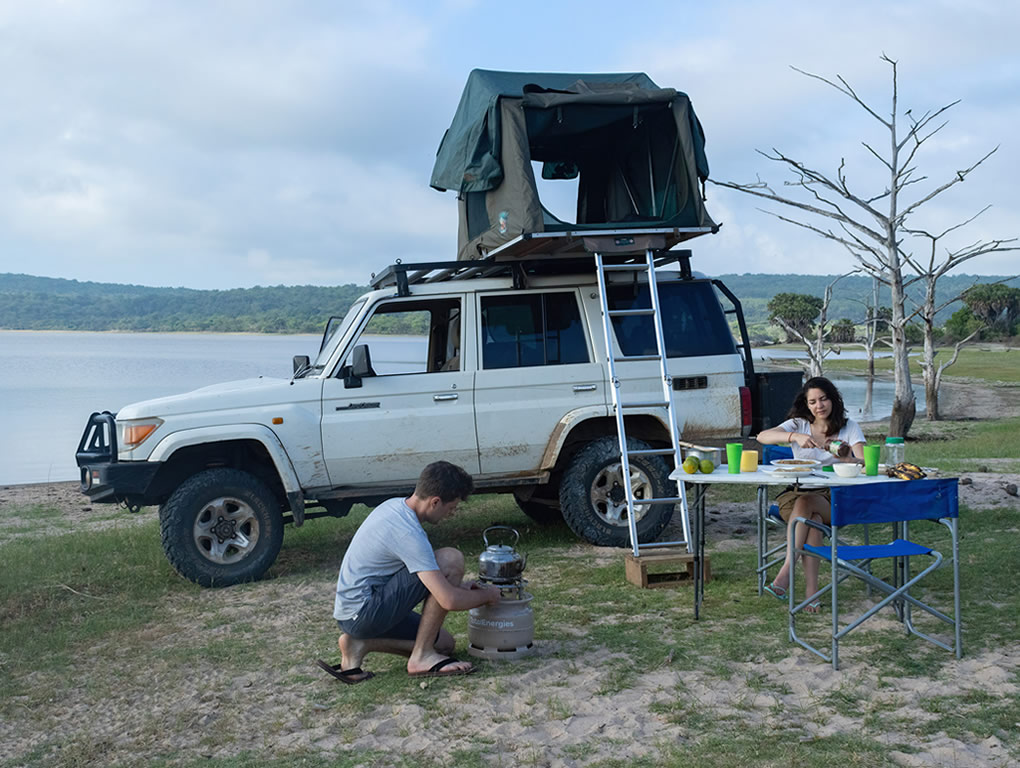
4×4 Rooftop Tent Tanzania , Tanzania is one of Africa’s premier safari destinations, home to the Serengeti, Ngorongoro Crater, Kilimanjaro, Selous Game Reserve, and dozens of other world-class wildlife areas. For 4×4 overlanders and self-drive safari enthusiasts, a rooftop tent (RTT) is more than just a place to sleep — it is a gateway to authentic, immersive bush experiences that traditional lodges simply cannot replicate.
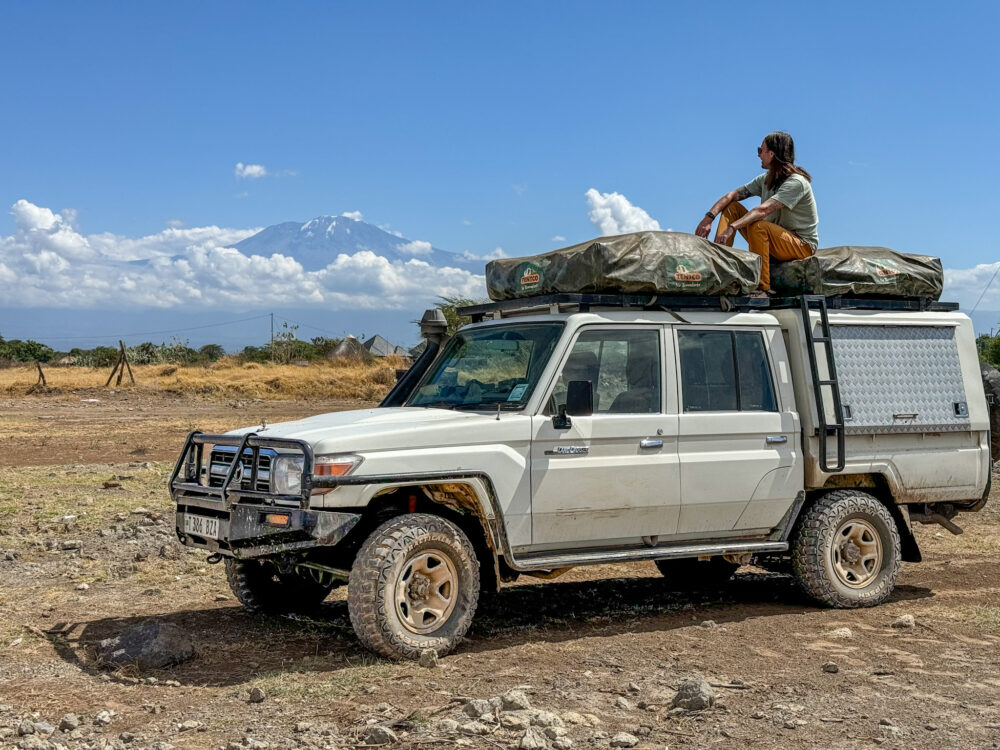
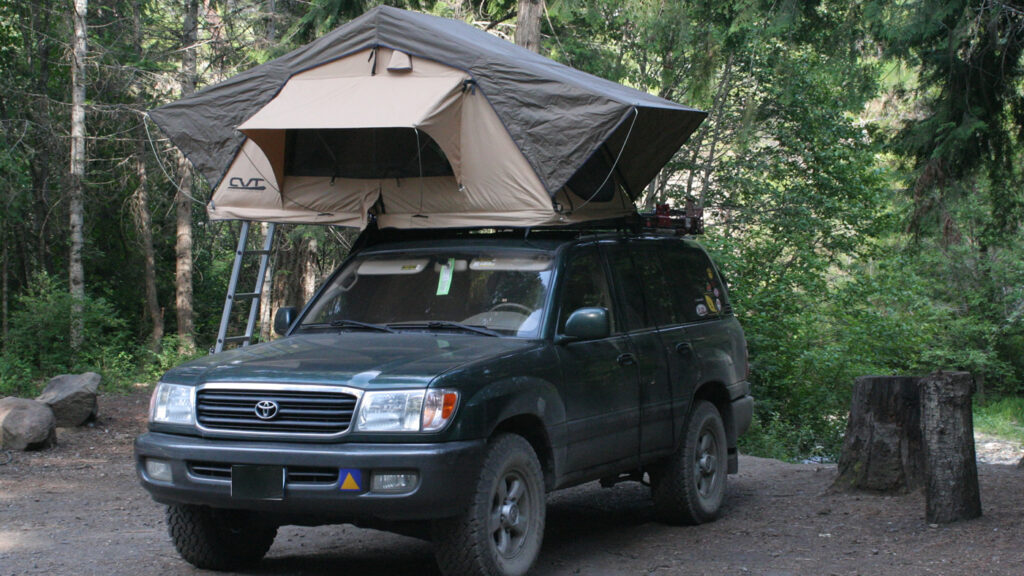
Mounting your tent above the vehicle on a sturdy roof rack transforms your Land Cruiser, Land Rover, Hilux, or any capable 4×4 into a mobile base camp. You wake up to the sounds of lions calling across the plains, watch elephants cross the riverbed from the safety and comfort of an elevated platform, and fall asleep under skies bursting with stars, hundreds of kilometers from city lights.
This comprehensive guide covers everything you need to know about selecting, equipping, and using a rooftop tent in Tanzania — from navigating national park regulations to choosing the right tent type for the long rains. Whether you are planning your first self-drive safari or are a seasoned overlander preparing a multi-month East Africa expedition, this guide will help you maximize every night under the African sky.
| Key Statistic
Tanzania receives over 1.5 million tourists annually, with self-drive safaris growing by approximately 12% per year. Rooftop tent rentals in Arusha and Dar es Salaam have increased by over 40% in the past five years, reflecting surging demand for overlanding experiences. |
Understanding Rooftop Tents: Types and Configurations
Hardshell (Clamshell) Rooftop Tents
Hardshell rooftop tents are the premium choice for Tanzania’s demanding conditions. Constructed from ABS plastic, fiberglass, or aluminum composite shells, these tents fold flat on the roof rack and pop open in seconds with a simple latch release. The aerodynamic profile reduces wind drag and fuel consumption during long drives between parks — a significant consideration when covering the 400+ km routes between Arusha and the Southern Circuit.
The rigid shell provides excellent protection against Tanzania’s notorious afternoon thunderstorms and keeps interior temperatures regulated during the scorching dry season heat. Leading brand is Arusha Car rental, 4×4 Car rental Tanzania, 4×4 car rental, Car rental Dar es Salaam
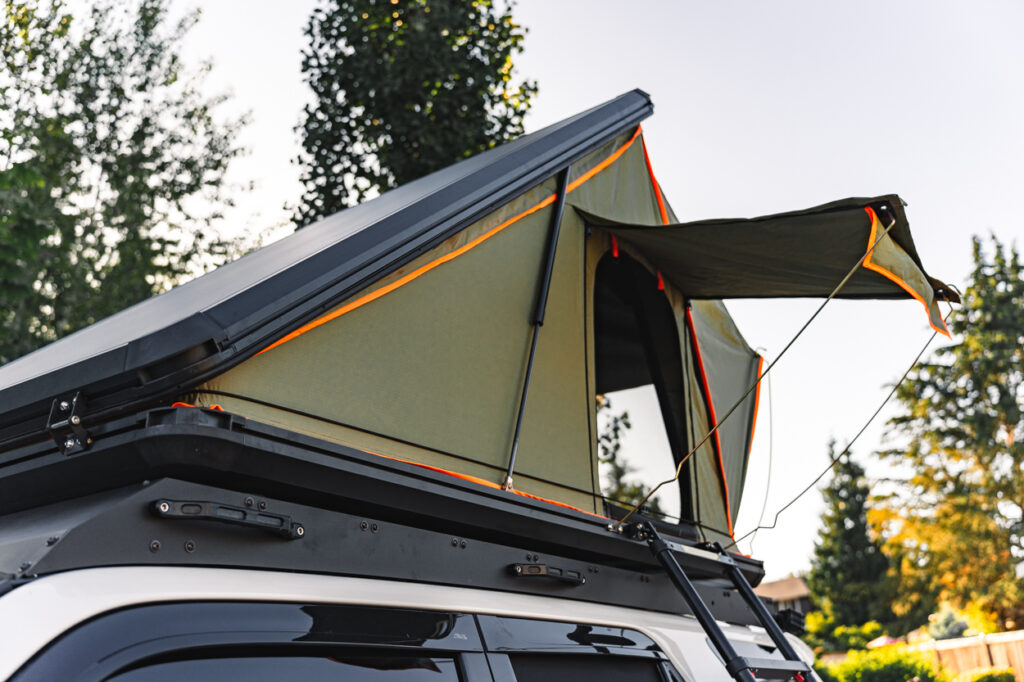
Advantages of Hardshell RTTs in Tanzania:
- Extremely fast setup and teardown — critical when chasing game during the Great Migration
- Superior rain and dust protection for long rainy season travel
- Better aerodynamics reduce fuel costs on long inter-park transfers
- Durable against UV degradation in equatorial sun
- Integrated mattress stays inside — no bedding packing required
- Lower profile reduces risk of low-branch damage on forest tracks
Softshell (Canvas) Rooftop Tents
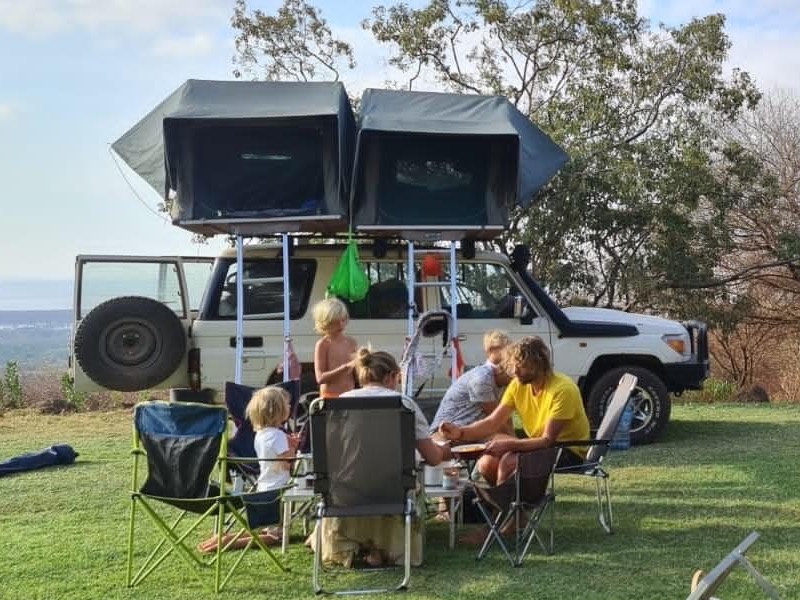
Softshell rooftop tents remain the most popular choice globally due to their lower price point and excellent ventilation. Built around a folding aluminum or steel frame covered with heavy-duty canvas or ripstop nylon, they offer generous interior space and can accommodate families with extension annexes.
In Tanzania, canvas tents excel during the cooler highland months when insulation matters more than aerodynamics. The Ngorongoro highlands regularly drop to 5–10°C at night, and a quality polycotton canvas tent provides significantly better insulation than thin synthetic shells. Brands like Eezi-Awn, Hannibal, Howling Moon, and Roof Top Tent Africa are trusted throughout East Africa.
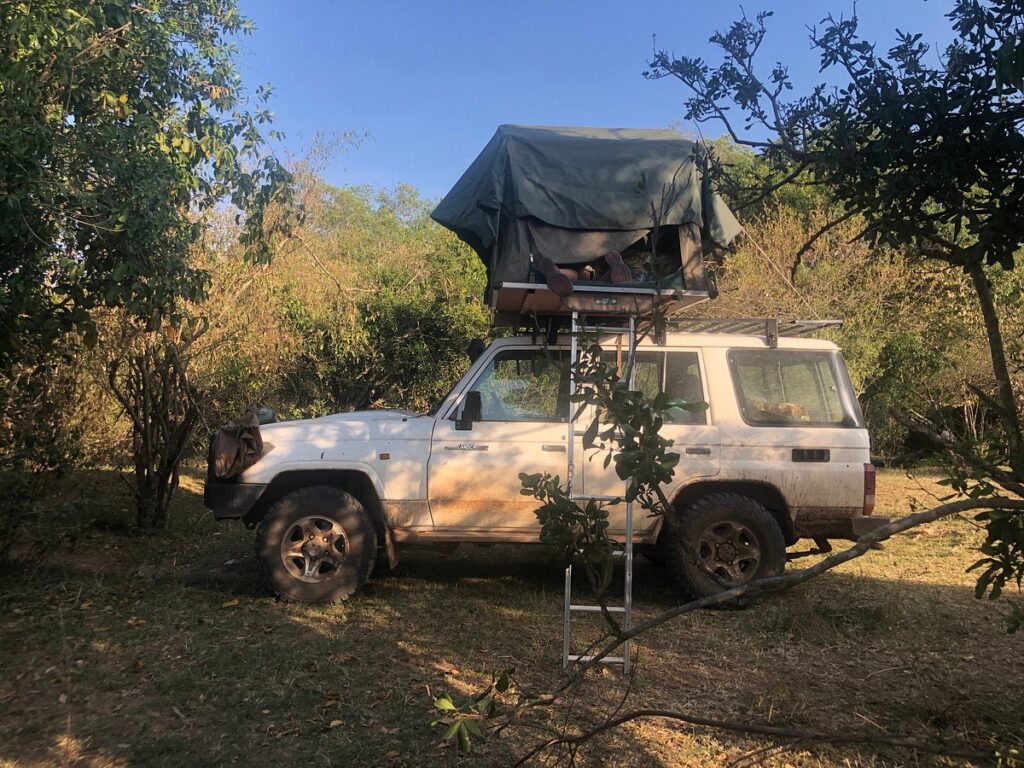
Advantages of Softshell RTTs in Tanzania:
- Lower cost — ideal for budget travelers and rental fleets
- Better thermal insulation for highland camping at Ngorongoro and Kilimanjaro
- Larger interior space and extension tent options for families
- Easier to repair in the field — canvas patches are available in Arusha
- Natural condensation management with breathable polycotton canvas
- More headroom for comfortable dressing and sitting upright
Rooftop Tent Comparison Table
| Feature | Hardshell RTT | Softshell RTT | Ground Tent |
| Setup Time | 30–60 seconds | 5–10 minutes | 15–30 minutes |
| Packed Size | Compact | Larger profile | Compact |
| Durability | Excellent (ABS/fiberglass) | Good (canvas) | Moderate |
| Insulation | Good | Excellent | Fair |
| Price Range | $$$ – $$$$ | $$ – $$$ | $ – $$ |
| Best For Tanzania | Serengeti, Ngorongoro | Selous, Ruaha | Budget safaris |
| Wildlife Safety | Superior (enclosed) | Good (zip-closed) | Limited |
Vehicle Compatibility and Roof Rack Requirements
Recommended 4×4 Vehicles for Tanzania
Tanzania’s park roads range from smooth tarmac near major gates to deeply corrugated dirt tracks, river crossings, and black cotton soil that becomes treacherous mud during the rains. The vehicle supporting your rooftop tent must be capable of handling these extremes while carrying the additional weight load.
The Toyota Land Cruiser 76, 78, and 79 series remain the gold standard for East African overland travel. Their robust live axle suspension, high ground clearance, and abundant aftermarket support make them the dominant choice. The Toyota Hilux (double cab) is the most popular rental platform in Tanzania, combining load capacity with fuel efficiency. Land Rover Defenders, Mitsubishi Pajeros, Nissan Patrols, and Isuzu D-Max trucks also perform reliably on Tanzanian roads.
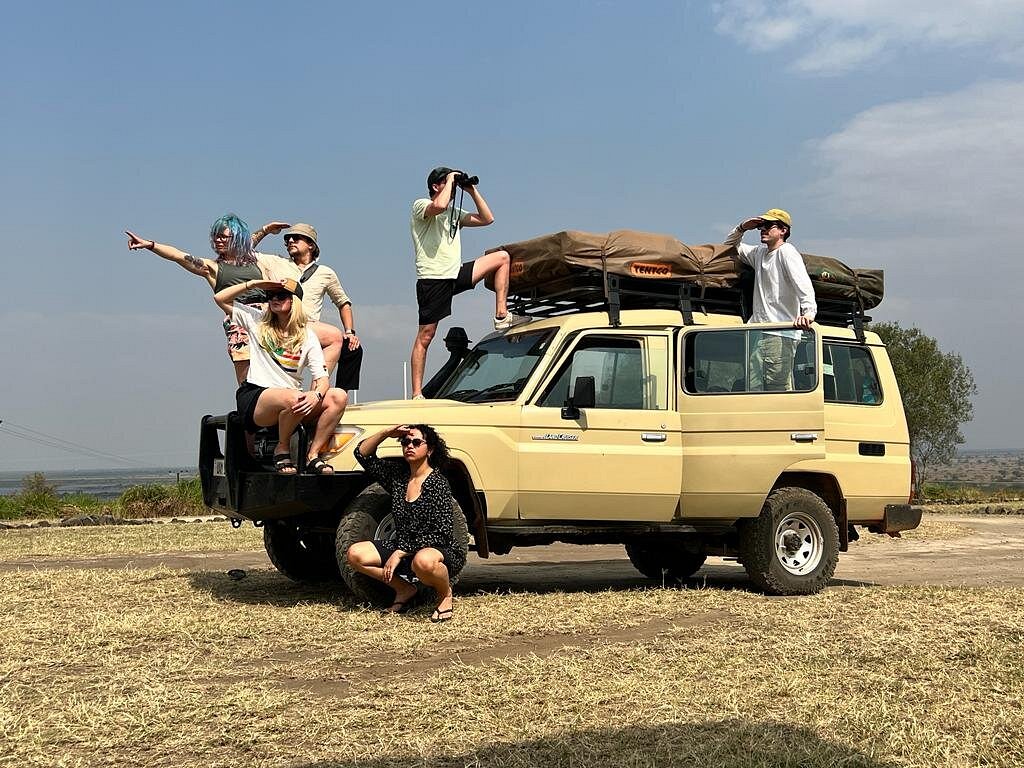
Minimum Vehicle Requirements:
- Roof load rating of at least 100 kg static, 75 kg dynamic (confirm with manufacturer)
- High-clearance roof rack or load bars rated to tent weight plus passenger load
- Wheelbase sufficient to distribute weight — extended wheelbases preferred
- Suspension upgraded or standard load rating adequate for tent, passengers, and gear
- Roof rack bolted through to structural reinforcement points, not just rain gutters
Roof Rack Selection for Tanzania
The roof rack is arguably the most critical component of your rooftop tent system in Tanzania. Corrugated dirt roads generate constant vibration and lateral stress that will expose weaknesses in any mounting system. Choose racks with welded (not bolted) cross members, aircraft-grade aluminum or high-tensile steel construction, and positive-locking mounting feet that prevent fore-aft movement.
Popular rack brands trusted in East Africa include Front Runner Slimline II, ARB Base Rack, Rhino-Rack Pioneer, Aluminess, and locally fabricated Tanzanian steel racks from workshops in Arusha and Dar es Salaam. If renting a vehicle locally, always inspect rack bolts and welds before departure — rental fleet maintenance varies considerably.
| Pro Tip — Rack Inspection
Before any Tanzania safari, physically push and pull the rack in all directions while stationary. Check every mounting bolt for tightness. Corrugated roads between Karatu and Ngorongoro Crater rim can loosen even well-torqued hardware in a single day of driving. Carry spare M10 and M12 bolts and a socket set. |
Weight Management and Payload
Rooftop tent manufacturers specify two weight ratings: static (sleeping load) and dynamic (driving load). In Tanzania, the dynamic rating matters most because the tent is mounted during multi-day park transits. A standard hardshell tent weighs 60–80 kg; a softshell 35–55 kg. Add the mattress (5–10 kg), bedding (4–8 kg), and two sleeping adults (140–180 kg) and your roof is carrying 240–270 kg in the static scenario.
This elevated center of gravity affects vehicle stability — particularly critical on Ngorongoro’s steep crater rim road, the Manyara escarpment descent, and river crossings in Selous and Katavi. Load the roof conservatively: tent and sleeping gear only. Store food, water, fuel, and tools in the load floor and cargo drawers.
Tanzania’s Top Rooftop Tent Safari Destinations
Serengeti National Park
The Serengeti is Tanzania’s crown jewel and the spiritual home of East African overlanding. Covering 14,763 square kilometers of open savanna, woodland, and kopje (rocky outcrop) landscapes, the Serengeti hosts the world’s largest terrestrial animal migration — over two million wildebeest, zebra, and gazelle circling the ecosystem in an annual cycle determined by rainfall and grass growth.
For rooftop tent campers, the Serengeti offers a network of public campsites throughout the park. Seronera in the center, Lobo in the north, and Ndabaka in the west provide basic facilities — water, drop toilets, and fire pits — while keeping you embedded in the game-rich environment. Wake before dawn to hear lions marking territory, or fall asleep to hyena whoops echoing across the golden grass.
Serengeti RTT Camping Tips:
- Book public campsites through TANAPA’s online portal months in advance for peak migration season (July–September)
- Keep all food sealed in hard-sided containers — baboons and hyenas routinely raid camps
- Never descend from your tent between sunset and full daylight — lions are active around campsites
- Carry 40+ liters of water per person for Seronera stays — clean water availability varies
- Fuel up completely in Arusha or Karatu — the Seronera petrol station is unreliable
Ngorongoro Conservation Area
The Ngorongoro Crater is the world’s largest intact volcanic caldera and hosts one of Africa’s densest concentrations of wildlife — including approximately 25,000 large animals in just 260 square kilometers of crater floor. The crater rim sits at 2,300 meters elevation, and nights here are genuinely cold (5–12°C year-round), making a well-insulated rooftop tent essential.
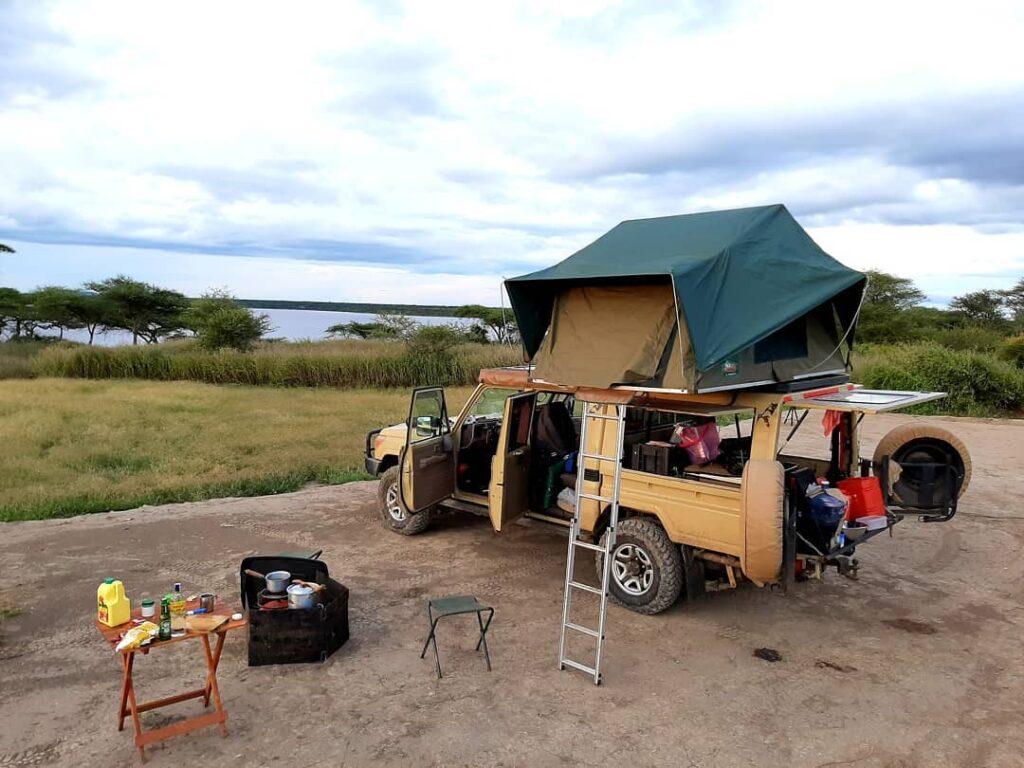
Camping within the crater itself is not permitted. However, the rim campsites at Simba A, Simba B, and Ngorongoro Wildlife Lodge area offer spectacular elevated positions with crater views and are popular RTT destinations. The nearby Olmoti and Empakaai crater areas provide equally dramatic but far less-visited wilderness camping.
Ngorongoro RTT Considerations:
- Use a 4-season or well-insulated tent — temperatures regularly approach freezing
- Morning fog on the crater rim can be dense — allow extra time for descending
- Rim roads are steep and often muddy in rainy season — use low-range 4WD
- Maasai cattle herding occurs near all rim campsites — store food securely
- Rangers at crater descent gate inspect vehicles for compliance — rooftop tents must be fully collapsed
Selous Game Reserve (Nyerere National Park)
Recently regazetted as Nyerere National Park, the former Selous Game Reserve remains one of Africa’s largest protected ecosystems at over 50,000 square kilometers. Unlike the northern circuit parks, Selous sees far fewer visitors, and much of its terrain remains genuinely wild and remote. Self-drive visitors are limited and must be accompanied by an armed ranger for walking activities, but vehicle-based game drives are excellent.
The Rufiji River and its oxbow lakes create extraordinary wildlife concentrations — hippo pods, enormous crocodiles, fishing eagles, and elephant herds crossing at traditional fords. RTT camping at Mtemere, Beho Beho, and Selous Mbega Camp offers true wilderness immersion with minimal infrastructure. This is not a park for unprepared overlanders — carry extensive recovery gear, medical kits, and communication devices.
Ruaha National Park
Tanzania’s largest national park at 20,226 km², Ruaha is dramatically undervisited relative to its wildlife quality. The Great Ruaha River and its tributaries support the country’s largest elephant population, exceptional lion prides, and one of Africa’s best populations of wild dogs. The remote Msembe area and Jongomero sector offer extraordinary dry-season game viewing when wildlife congregates along permanent water sources.
Ruaha’s distances are formidable — the drive from Iringa is 130 km on deteriorating dirt roads, and internal park distances require full-day drives. Self-sufficiency is paramount: carry at minimum 80 liters of water per vehicle, comprehensive tool kits, two spare tyres, high-lift jack, sand ladders, and a satellite communicator.
Other Notable RTT Destinations
- Katavi National Park — Most remote national park; exceptional wildlife; 4×4 essential year-round
- Mahale Mountains — Vehicle access limited; rooftop tents used at lakeshore camps on Lake Tanganyika
- Mikumi National Park — Easy access from Dar es Salaam; good starter destination for new overlanders
- Tarangire National Park — Famous for elephant concentrations and ancient baobab trees; October–November peak
- Lake Natron — Flamingo breeding grounds; otherworldly alkaline landscape; basic campsites near Engare Sero
- Kitulo Plateau — The “Serengeti of Flowers”; high-altitude grassland beauty; standard 4×4 adequate in dry season
Tanzania Safari Regulations for Rooftop Tent Campers
Tanzania National Parks Authority (TANAPA) Rules
All national parks in Tanzania are managed by TANAPA, and camping regulations are strictly enforced. Violations can result in expulsion from the park, fines, and in serious cases, criminal charges. Understanding and complying with these regulations protects both wildlife and visitors.
Key TANAPA Camping Regulations:
- Camping is only permitted in designated campsites — bush camping outside these areas is illegal in all national parks
- All campsite bookings must be made through TANAPA’s official booking portal or authorized operators
- Campfires are only permitted where fire rings are provided — no open fires on bare ground
- No departure from vehicles between official sunrise and sunset times except at designated rest areas
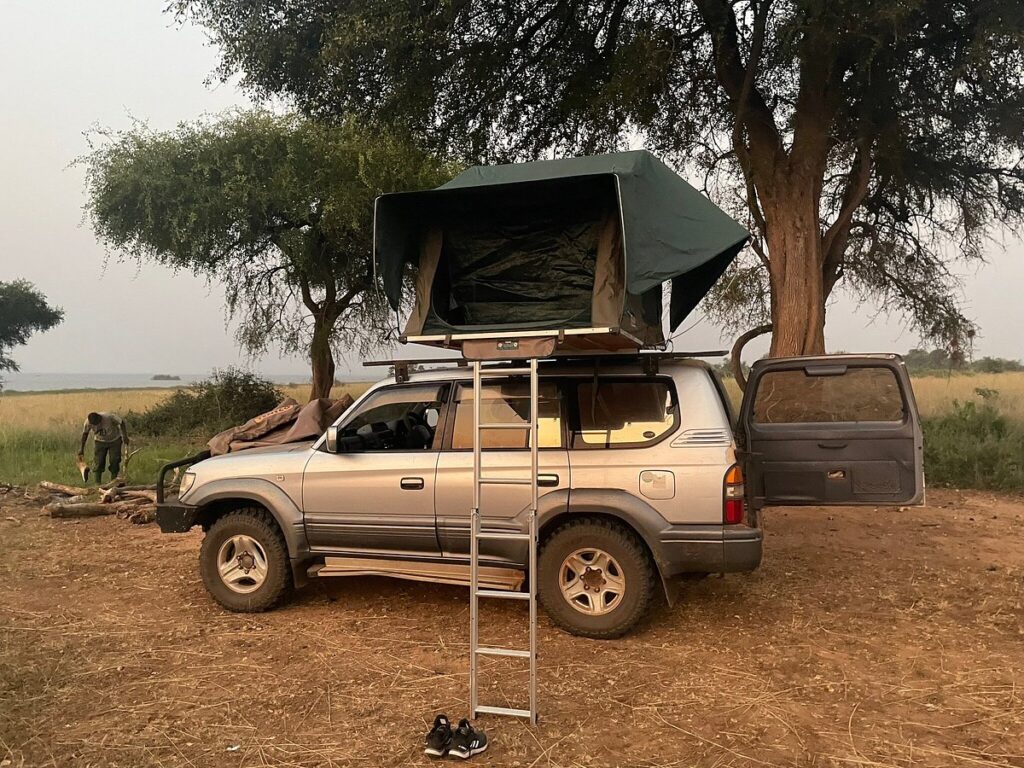
- Rooftop tents must be completely collapsed and stowed before vehicle movement within parks
- Generators are prohibited in most public campsites — use solar or battery power systems
- All waste must be carried out — zero-waste camping is mandatory in remote areas
- Pets are not permitted in any Tanzanian national park
- Drones require special authorization and are generally prohibited without permits from TANAPA headquarters
- Maximum vehicle occupancy limits apply — typically 6 persons per vehicle on safari
Conservation Area and Game Reserve Regulations
Outside national parks, regulations differ by zone. The Ngorongoro Conservation Area Authority (NCAA) manages its own permit system. In Game Reserves (including Selous/Nyerere), self-drive camping requires additional permits and often a mandatory armed ranger escort for specific activities. Verify current requirements with the relevant authority before departure, as regulations change periodically.
| Important Note on Fees
Tanzania’s park fee structure includes: Conservation fees (per person per 24 hours), vehicle fees (per vehicle), campsite fees (per site per night), and ranger fees where applicable. All fees have increased significantly since 2020 and must be paid by credit card or prepaid voucher — US dollar cash payments are no longer accepted at most gates. Budget approximately $70–100 USD per person per 24 hours in major national parks, plus vehicle and campsite fees. |
Vehicle Requirements for Park Entry
All self-drive vehicles entering Tanzanian national parks must meet minimum requirements. The vehicle must be in roadworthy condition, with functioning brakes, lights, and tyres with adequate tread. A rooftop tent does not require special permits for park entry, but the vehicle height with tent mounted (typically 2.8–3.5 meters) must clear all gate barriers and overhead obstacles.
Some campsites have low-hanging acacia branches that can damage softshell tent mechanisms or tear canvas when driving to your pitch — scout on foot before driving in where possible. The golden rule: if a track looks too narrow or a branch too low, it almost certainly is.
Essential Equipment and Gear for Tanzania RTT Camping
5.1 Water, Food, and Fuel Self-Sufficiency
Tanzania’s remote parks demand absolute self-sufficiency. Water sources are unreliable or non-existent in many areas, fuel stations are sparse and frequently out of stock, and the nearest mechanic may be 200 km away. Preparation prevents disasters.
Water Requirements:
- Minimum 15 liters per person per day (drinking, cooking, hygiene)
- Carry a Lifestraw or Sawyer filter as backup purification
- River water in Selous and Ruaha is reliable but must be treated — boil or filter before use
- ARB Water Tank or Expanda Tank systems integrate cleanly under roof rack overhangs
Fuel Planning:
- Ruaha: Fill up in Iringa (131 km before Msembe gate); Msembe has irregular supply
- Katavi: Fill in Mpanda — nearest reliable fuel before the park
- Selous/Nyerere: Fuel available at Mtemere but carry a 40-liter jerry can as insurance
- Serengeti: Fill completely in Arusha or Karatu before entering at Naabi Hill or Ikoma gates
- Carry minimum one 20-liter jerry can; for remote circuits, two 20-liter cans is prudent
Safety and Medical Equipment
Wildlife encounters are the defining feature of Tanzania overlanding — and also its principal risk. Incidents involving elephants, buffalo, hippopotamus, and lions at campsites occur annually, most preventable through awareness and basic precautions. Medical emergencies in remote parks can take 6–12+ hours to evacuate, making first-aid capability critical.
Safety Essentials:
- Wilderness First Aid kit with trauma supplies, broad-spectrum antibiotics, and antimalarials
- SPOT Gen4, Garmin inReach, or equivalent satellite communicator — mobile networks are absent in most parks
- Flares or air horn for wildlife deterrence and emergency signaling
- Fire extinguisher mounted accessibly inside cab — not in locked rear storage
- Full vehicle recovery kit: snatch strap (11,000 kg rating), D-shackles, tree saver strap, high-lift jack, base plate
- Two full-size spare tyres — punctures from acacia thorns and sharp laterite rocks are common
- Jumper cables or jump starter pack — cold highland mornings can flatten batteries
- Comprehensive tool kit with torque wrench — corrugated roads loosen critical fasteners
Solar Power and Lighting Systems
A reliable 12-volt power system is essential for extended RTT safaris in Tanzania. Camp lighting, charging cameras and communication devices, running a fridge, and powering a CPAP machine (if required medically) all demand a stable power budget. Tanzania’s equatorial location delivers 5–6 peak solar hours daily in the dry season, making solar charging practical and efficient.
A dual-battery system with a 100Ah lithium or AGM secondary battery, charged by a 200W flexible solar blanket or hardmounted panel, can sustain a 40-liter Engel or ARB compressor fridge indefinitely. National park regulations prohibit generators in most campsites, making solar the only practical power solution for extended stays.
Tanzania Seasons and RTT Camping Conditions
Seasonal Overview
Tanzania straddles the equator and experiences distinct wet and dry seasons that profoundly affect road conditions, wildlife distribution, and camping comfort. Understanding these seasons allows you to match your tent type, gear, and destination to the conditions you will actually encounter.
| Season | Months | Conditions | RTT Considerations |
| Dry Season | June – October | Clear, warm days, cool nights | Ideal — all tent types work well |
| Short Rains | November – December | Afternoon showers | Waterproof hardshell recommended |
| Long Rains | March – May | Heavy daily rain | Hardshell essential; canvas must be well-sealed |
| Hot & Dry | January – February | Very hot, dusty | Ventilation critical; mesh windows essential |
Dry Season Camping (June–October)
The dry season represents Tanzania’s peak safari season and the optimal period for most RTT campers. Wildlife concentrates at permanent water sources — rivers, springs, and water holes — making sightings predictable and spectacular. The Great Migration’s dramatic river crossings at the Mara and Grumeti rivers typically occur from July through September, drawing visitor numbers that require advance campsite booking months ahead.
Hardshell tents excel in dry season conditions. Dust accumulation is the primary maintenance concern — compressed air or a dry brush keeps tent mechanisms clear. Night temperatures in the northern highlands can still drop to 8–12°C even in August, so a warm sleeping bag rated to at least -5°C is recommended for Ngorongoro and Kilimanjaro area camps.
Rainy Season Camping (November–May)
The rainy seasons transform Tanzania’s landscape from golden-brown to lush emerald green. Wildflowers carpet the Kitulo Plateau, migratory birds arrive from Europe and Asia, and newly born wildebeest calves (February–March) attract predator activity across the Serengeti’s southern plains. The rainy season is also dramatically less crowded and significantly cheaper, with park fees and campsite costs reduced in the green season.
The primary challenge is road conditions. Black cotton soil (mbuga) becomes impossibly slippery when wet — vehicles sink axle-deep even at low speed. The B129 road through Ruaha’s northern sector, much of Katavi, and Selous’s internal tracks become impassable without a skilled driver and aggressive mud tyres. Always check road conditions with TANAPA rangers at gates before committing to a route.
| Rainy Season RTT Tip
For the long rains (March–May), prioritize a hardshell rooftop tent with a sealed fiberglass or ABS shell. If using canvas, apply a thorough re-proofing treatment (Nikwax Canvas Proof or Grangers Tent Repel) before departure. Ensure all zip pulls are lubricated with Zipper Lubricant spray. Keep tent entry fabric clean — mud on canvas cuffs degrades waterproofing rapidly. Always set up camp before afternoon thunderstorms build, typically between 14:00 and 17:00. |
Wildlife Safety at Tanzania RTT Campsites
Understanding Wildlife Behavior Near Camps
One of the defining advantages of rooftop tent camping in Tanzania is elevation — you sleep above the reach of most terrestrial wildlife. However, elevation is not immunity. Elephants have been documented reaching tent annexes with their trunks; leopards have been reported in trees above occupied RTTs in Ruaha; and hippos graze campsite grass mere meters from sleeping campers in Selous and Katavi throughout the night.
The golden rule is behavioral: never treat wildlife encounters with complacency regardless of how habituated the animals appear. A lion resting 50 meters from your campfire is not a tame lion — it is a wild predator assessing a potential meal. The rooftop tent provides a psychological and physical safety margin, but only if you observe sensible protocols at all times.
Essential Wildlife Safety Rules at RTT Campsites:
- Never leave the vehicle or descend from the tent platform after dark without a powerful torch and confirmation of the immediate area’s wildlife status
- Cook all food on the vehicle side of camp, downwind from where you will sleep — food odors attract scavengers
- Store all food, rubbish, and heavily scented items (toothpaste, soap, sunscreen) inside the locked vehicle cab or a hard-sided box, never in the tent
- Never hang food items from trees — baboons, vervet monkeys, and bushbuck are skilled at raiding hanging bags
- Maintain 360-degree awareness when approaching and leaving your vehicle — check under and around the vehicle before stepping out, especially at dawn in lion and leopard habitat
- Never leave camp chairs, tables, shoes, or other gear outside overnight — hyenas and jackals will remove and chew almost anything
- If you need to urinate at night, use a wide-mouth bottle in the tent rather than descending — the risk is not worth it in lion country
- Report all wildlife incidents (charges, entries to camp, unusual behavior) to TANAPA rangers at the nearest office
Specific Wildlife Threats by Park
Wildlife risk profiles vary significantly by park and season. Understanding which species are most relevant to your destination allows targeted preparation rather than generalized anxiety.
Serengeti:
- Lions are the primary risk — they are abundant, active at night, and occasionally approach campsites, especially during cub-rearing periods
- Spotted hyenas are bold and persistent camp raiders — never leave food or food-contaminated items outside
- Cape buffalo near Seronera water sources in dry season — give wide berth during dusk/dawn movements
Selous / Nyerere:
- Hippopotamus graze camp areas every night — their nocturnal movements are unpredictable and extremely dangerous
- Crocodile presence near riverside camps requires strict protocols — never approach water’s edge after dark
- Wild dogs may investigate campsites with curiosity rather than aggression — observe quietly and do not approach
Ngorongoro Crater Rim:
- Buffalo are common on crater rim campsites and can be aggressive — always check perimeter before walking
- Hyenas raid campsites boldly and frequently — secure every item of food and scented gear
Renting vs. Buying a Rooftop Tent in Tanzania
Rental Options in Tanzania
For first-time Tanzania overlanders or those visiting once, renting a fully equipped 4×4 with a rooftop tent from Arusha or Dar es Salaam is the most practical option. A rental package typically includes the vehicle, roof rack, rooftop tent, basic camp furniture (table and chairs), cooking equipment, and bedding — allowing you to fly in and drive out without shipping or storing equipment.
Established rental operators include Tanzania car hire companies based in Arusha’s Corridor Road area, many affiliated with international overland networks like Africa Overlanders, Kibo Slopes Safaris, and Nomad Tanzania’s vehicle division. Costs range from USD 150–250 per day for a fully equipped Land Cruiser 76 with RTT, depending on specification and season.
Key Questions to Ask RTT Rental Operators:
- What is the static and dynamic weight rating of the roof rack and tent combination?
- When was the tent last serviced and zips/fabric inspected?
- What is the process if the vehicle or tent requires repair in the field?
- Is a second spare tyre included? (insist on this for remote circuits)
- Does the rental include a satellite communicator or is one available for hire?
- What is the company’s 24-hour emergency contact and response protocol?
Buying a Rooftop Tent for Tanzania
Purchasing a quality RTT is worthwhile if you plan multiple Tanzania or East Africa trips, or if you are establishing a long-term overland vehicle setup. The investment in a premium hardshell (USD 3,000–8,000 for top-tier brands) is offset quickly against rental costs over 3–4 trips.
Tanzania’s import duty and VAT structure makes importing a new RTT expensive if clearing through Tanzanian customs. Many overlanders bring tents overland from South Africa, Nairobi, or via air freight on the first trip and re-export on departure. Locally fabricated tents are available from workshops in Arusha — quality is variable but costs are significantly lower.
| Buying Tip for Tanzania
If purchasing from South Africa (the largest RTT market in Africa), popular overlanding shops include Safari Centre in Johannesburg, Cape Union Mart’s adventure division, and BushWakka’s direct online store. Budget approximately 15–30% additional for freight and import handling to Tanzania, or self-drive north through Zambia and Malawi if combining a longer expedition. |
Environmental Responsibility and Leave No Trace
Low-Impact RTT Camping Principles
Tanzania’s national parks and game reserves are globally irreplaceable ecosystems under constant pressure from climate change, habitat encroachment, and tourism infrastructure development. Every visitor has an obligation to minimize their impact, and rooftop tent campers — who travel through multiple sensitive habitats — bear a particular responsibility.
The Leave No Trace principles apply in their strictest form to Tanzanian wilderness camping: pack out all waste without exception, use existing campsite fire rings only, avoid driving off established tracks even for photographs, and never feed or artificially habituate wildlife. The cumulative impact of thousands of annual visitors can degrade wildlife behavior and camp environments rapidly when individuals abandon these principles.
Practical Low-Impact RTT Practices:
- Use a portable composting toilet system (OGO, Nature’s Head, or similar) rather than cat-hole latrines where facilities are not provided — decomposition is slow in dry conditions
- Carry all grey water out of parks in a sealed grey water tank rather than dispersing on the ground — soaps and detergents affect soil chemistry and attract wildlife
- Use solar lighting exclusively — generators violate park regulations and disturb wildlife
- Choose biodegradable soaps, shampoos, and cleaners from brands such as Dr. Bronner’s or Sea to Summit
- Never collect firewood from within national parks — buy or carry it from outside park boundaries
- Stick to established vehicle tracks even when muddy — off-track driving creates new erosion scars visible for decades
- Report poaching, illegal firewood collection, or environmental damage to TANAPA rangers immediately
9.2 Supporting Conservation Through Responsible Tourism
Beyond minimizing individual impact, rooftop tent travelers can actively support Tanzania’s conservation economy. Staying at community campsites in wildlife management areas (WMAs) such as Burunge, Randilen, and Enduimet directly channels tourism revenue to local Maasai and farming communities, incentivizing wildlife conservation over land conversion.
Engaging registered Tanzanian guides — even for self-drive trips — supports the professional guiding sector and provides local ecological knowledge that significantly enhances the quality of any safari. Many experienced guides will join vehicle-based safaris as navigator-interpreters without requiring a guide vehicle if requested in advance through Arusha tour operators.
Practical Trip Planning: Tanzania RTT Safari Itineraries
10.1 Classic Northern Circuit RTT Itinerary (10–14 Days)
The Northern Circuit links Arusha, Tarangire, Lake Manyara, Ngorongoro, and the Serengeti in a logical loop accessible to self-drive overlanders. This is Tanzania’s most developed safari corridor with the best road infrastructure, most campsite options, and highest wildlife density. It represents the ideal starting point for first-time RTT safari travelers.
Suggested Route:
- Day 1–2: Arusha (gear prep, vehicle check, shopping) → Tarangire NP (Silale or Boundary Hill campsite)
- Day 3–4: Lake Manyara NP (Mto wa Mbu campsite) — tree-climbing lions and flamingoes
- Day 5–6: Karatu (fuel, water, resupply) → Ngorongoro Crater rim (Simba campsite)
- Day 7–9: Serengeti — enter via Naabi Hill Gate to Seronera (central Serengeti)
- Day 10–11: Northern Serengeti — Kogatende/Mara River for wildebeest crossings (Jul–Sep) or Lobo area
- Day 12–13: Western Corridor — Grumeti River and Kirawira area
- Day 14: Exit via Ndabaka/Fort Ikoma Gate → drive to Mwanza or return to Arusha via Ngorongoro
Remote Southern Circuit RTT Itinerary (14–21 Days)
The Southern Circuit — Ruaha, Selous/Nyerere, and Mikumi — offers Tanzania’s most authentic wilderness experience. Visitor numbers are a fraction of the north, wildlife is prolific, and the landscape transitions between miombo woodland, river floodplain, and acacia grassland with each drive. This circuit demands a well-prepared, experienced overlander.
Suggested Route:
- Day 1–2: Dar es Salaam (gear prep) → Mikumi NP via TANZAM Highway (Mikumi Wildlife Camp)
- Day 3–4: Selous/Nyerere NP via Mikumi Gate — boat safari on Rufiji River
- Day 5–7: Selous deep south — Siwandu area or Jimbizi campsite in Rufiji Game Reserve
- Day 8–9: Udzungwa Mountains NP — waterfall hiking, primate tracking
- Day 10–12: Iringa (resupply, fuel) → Ruaha NP via Tungamalenga Gate
- Day 13–15: Ruaha deep circuit — Jongomero sector, Mwagusi Sand River, Msembe River floodplains
- Day 16–18: Optional extension: Katavi NP via Mbeya and Sumbawanga (exceptionally remote — full self-sufficiency required)
- Day 19–21: Return to Dar es Salaam via TANZAM highway
| Critical Planning Note
Always carry printed copies of all park permits and campsite bookings. Mobile internet connectivity is absent in most Tanzanian parks, and TANAPA gate rangers will turn back unbooked vehicles during peak season. Confirm bookings by telephone with each park gate 48 hours before arrival. |
Conclusion: The Rooftop Tent Experience in Tanzania
Tanzania offers rooftop tent travelers something fundamentally different from any other safari format: complete immersion in the natural world, at your own pace, on your own schedule, waking up inside the ecosystem rather than arriving at it by minibus after breakfast. The 4×4 rooftop tent is not merely a camping method — it is a philosophy of travel that honors the depth and wildness of Africa’s greatest wilderness areas.
From the crimson sunsets over Ruaha’s Great River to the volcanic cold of a Ngorongoro dawn, from the thundering hooves of the Serengeti migration to the silence of a Selous night broken only by hippos surfacing and owls hunting — these experiences belong to those willing to invest in preparation, respect the environment, follow the regulations, and commit to the extraordinary inconveniences that make the rewards so profound.
Plan carefully, pack completely, drive responsibly, camp lightly, and you will join a growing community of overlanders who return to Tanzania season after season, drawn back by landscapes and wildlife encounters that no lodge, no day trip, no organized group tour can replicate. The tent is on the roof. The road is open. Tanzania is waiting.