Bwindi Impenetrable Forest National Park
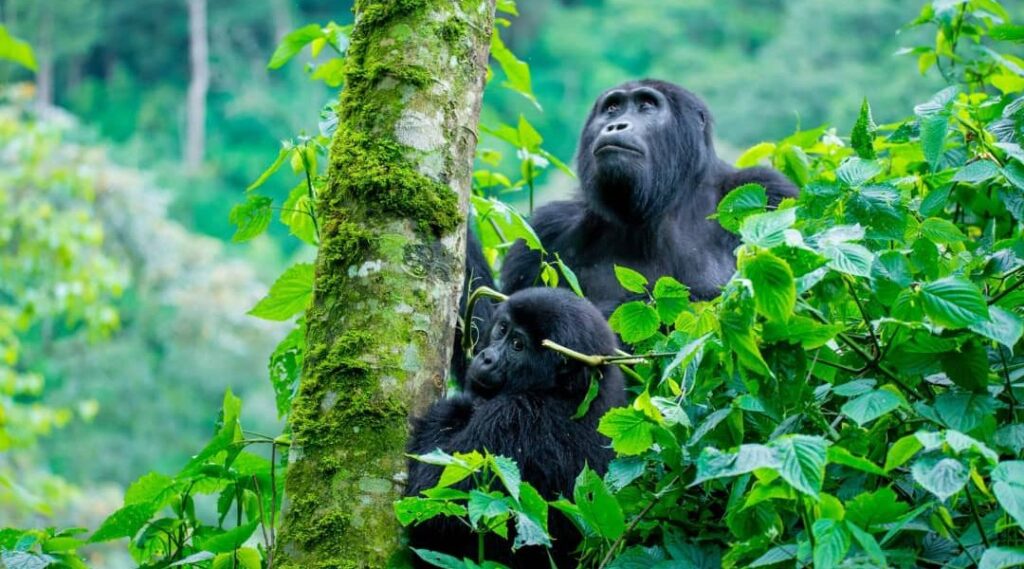
Bwindi Impenetrable Forest is Uganda’s premier tourist attraction, and justifiably so. The 331 km² national park hosts a variety of species, encompassing about fifty percent of the global mountain gorilla population. The park’s uneven landscape consists of high hills and valleys, enveloped in deep forest. The Albertine Rift Escarpment traverses the park, offering a natural habitat for the gorillas.
Gorilla trekking constitutes the primary tourist activity in Bwindi Impenetrable Forest National Park. Gorilla treks are conducted by knowledgeable guides who assist guests in locating the gorillas and understanding their habits. The park provides a diverse array of activities, including birdwatching, hiking, and nature walks. Numerous safari lodges exist within the park, offering comfortable lodging and exquisite cuisine.
Bwindi Impenetrable Forest is an exceptional and indelible locale. It is a location where tourists can appreciate the splendor of nature and acquire knowledge about one of the globe’s most endangered species.
Flora and Fauna
Bwindi Impenetrable National Park harbors diverse flora and fauna. The park’s elevation varies from 1,160 meters to 2,607 meters, and its primordial forests harbor more than 160 kinds of trees and over 100 species of ferns.
The park hosts numerous mammals, comprising more than 120 species. The park’s most renowned inhabitants are the mountain gorillas, totaling approximately 500 individuals. The park is home to several primates, including chimpanzees, olive baboons, black and white colobus monkeys, L’Hoest’s monkeys, red-tailed monkeys, and blue monkeys.
The park serves as a sanctuary for avian species. More than 350 species have been documented in the park, comprising at least 14 species endemic to Uganda. The list include the African green broadbill, brown-necked parrot, white-bellied robin chat, Frazer’s eagle owl, and white-tailed blue flycatcher.
Bwindi Impenetrable National Park is a very distinctive and remarkable location. The abundant biodiversity underscores the necessity of safeguarding our natural heritage.
Orientation
Tourism in Bwindi Impenetrable Forest centers on four distinct areas. Buhoma, Ruhija, Nkuringo, and Rushaga. Each of these four locations operates as an independent gorilla tracking destination.
Activities In Bwindi Impenetrable Forest
Gorilla Trekking Trips
Gorilla trekking in Bwindi Impenetrable National Park offers a unique opportunity for guests to accompany park rangers on early morning expeditions to observe Africa’s mountain gorillas in their native environment.
Gorilla trekking is physically strenuous; nonetheless, the opportunity to observe these remarkable animals justifies the exertion. Gorilla hikes often last between 4 and 6 hours, and participants must be in excellent physical shape.
Upon reaching the gorillas, you may view them for a duration of up to one hour as they engage in their regular activities. You will get the opportunity to observe them consuming food, engaging in play, and interacting with one another. It is an indelible event that will endure for a lifetime.
Here are three recommendations for gorilla trekking in Bwindi Impenetrable National Park:
Prepare your journey ahead of time. Gorilla hiking permits are restricted in number and may rapidly become unavailable. It is advisable to secure your gorilla permit a minimum of six months prior to your intended visit.
Prepare for a physically strenuous endeavor. Gorilla trekking presents challenges, necessitating physical fitness for participation. Utilize suitable hiking footwear and ensure an ample supply of water and snacks.
Honor the gorillas. Gorillas are feral creatures, and it is imperative to honor their territory. Avoid approaching them closely and refrain from making abrupt movements.
Nature Walks
Bwindi offers numerous exciting activities in addition to gorilla trekking programs. The park features several hiking routes; however, tourists must schedule a guide one day in advance. Three trails originate in Buhoma, including the Muyanga River Trail, which is an excellent brief excursion for travelers with limited time.
Alternatively, consider the Waterfall Trail, which traces the Muyanga River upstream as it cascades down the steep inclines southeast of Buhoma, passing through a succession of waterfalls before reaching the camp area.
The Rushuura Trail offers magnificent views of the western Rift Valley floor, with the Democratic Republic of Congo’s Park National des Virungas serving as a stunning backdrop.
Birding
Bwindi Impenetrable National Park, a UNESCO World Heritage Site, is among Africa’s premier birdwatching locales. The park hosts more than 350 avian species, encompassing some of the rarest and most endangered birds globally.
The park is situated in the Albertine Rift Valley, characterized by its rocky topography that encompasses diverse habitats such as woods, grasslands, and wetlands. This array of habitats accommodates a multitude of avian species, encompassing woodland, grassland, and aquatic birds.
The most renowned birding locations in Bwindi encompass the Mubwindi Swamp, the Ishasha River, and the Buhoma Waterfall. These regions host a variety of avian species, including the African green broadbill, the brown-necked parrot, and the white-tailed blue flycatcher.
Birdwatching in Bwindi offers an excellent opportunity to appreciate the park’s natural splendor and gain insight into the remarkable avian diversity present. The park welcomes visitors throughout the year; however, the optimal period for birdwatching is the dry season, spanning from June to September.
Village walks
This walk through Buhoma and its surroundings immerses visitors in the traditions and practices of the Bakiga and Batwa peoples. The tour encompasses diverse activities such as local beer production, farming, and administering traditional medicine, culminating in dance performances by members of the Batwa community.
Batwa visits
A full-day experience occurring in a private forest adjacent to the national park, offering an intriguing perspective on the traditional forest life and mythology of hunter-gatherer society.
Dance performances
Committed to assisting orphaned and underprivileged Bakiga youngsters residing near Buhoma, the resort organizes traditional dances complemented by rather artificial nevertheless entertaining gorilla dances.
Getting There
By air
Travelers can journey from Kajjansi airfield in Kampala or Entebbe airport to the tarmac runway at Kihiihi airport, located 40 km from Buhoma along the Ishasha Road, which requires approximately 90 minutes.
By road
Bwindi Impenetrable National Park is accessible to travelers via road; it is situated in the southwestern area of Uganda, approximately 465 km (8 hours and 50 minutes) from Kampala through Mbarara.
From Kampala
Buhoma is situated roughly 465 kilometers west of Kampala and 190 kilometers west of Mbarara by road. The optimal path involves traversing the paved Kabale Road for 65 kilometers beyond Mbarara to Ntugamo, then making a right turn onto the newly paved 45-kilometer road to Rukungiri. Several unpaved routes traverse the mountains of northeast Kigezi, linking Rukungiri. The journey typically requires up to 8 hours.
From Kasese
Two primary highways link Kasese, Fort Portal, and Queen Elizabeth National Park to Buhoma. The most direct and intriguing path proceeds along Mbarara Road at Katunguru, thereafter traversing the Ishasha area of Queen Elizabeth National Park and continuing northward through Kihihi. The 170km trek requires four hours, during which travelers transfer to Ishasha in search of tree-climbing lions. An additional route through Ishaka, Kagamba, and Rukungiri is extensive from Katunguru.
From Kabale
The journey from Kabale to Buhoma, approximately 108 kilometers, predominantly traverses unpaved roads and requires three hours to complete. Travel along the Kisoro Road from Kabale for 18 kilometers to Hamura, then turn right at the Buhoma signpost and continue for 60 kilometers through Kanungu to Kanyantorogo, where you will turn left towards Bugota. A picturesque albeit somewhat slower option is to traverse Ruhija, taking the indicated shortcut left turn 5 kilometers prior reaching Bugota. The distance from Buhoma to Ruhija is 50 km, requiring around 2 hours of driving. The route traverses the park and offers scenic views for much of the journey. Ideally, one should utilize the shortcut that bypasses Bugota, reducing the distance by about 6 kilometers, as Ruhija serves as a base for gorilla tracking.