Akagera National Park
Akagera National Park was designated as a national park in 1934 to save the habitat and wildlife in the eastern region of Rwanda, near the Rwanda-Tanzania border, encompassing around 2,500 square kilometers. In the 1990s, following the restoration of peace in Rwanda after the 1994 Genocide, many individuals resided near the park and deforested the area for timber and the consumption of savannah fauna. Most animals, including lions and rhinos, were hunted, and the park’s wildlife was displaced by long-horned cattle. Consequently, the park’s biodiversity was obliterated to the extent of complete nonexistence; this renders the history of Akagera National Park even more extraordinary.
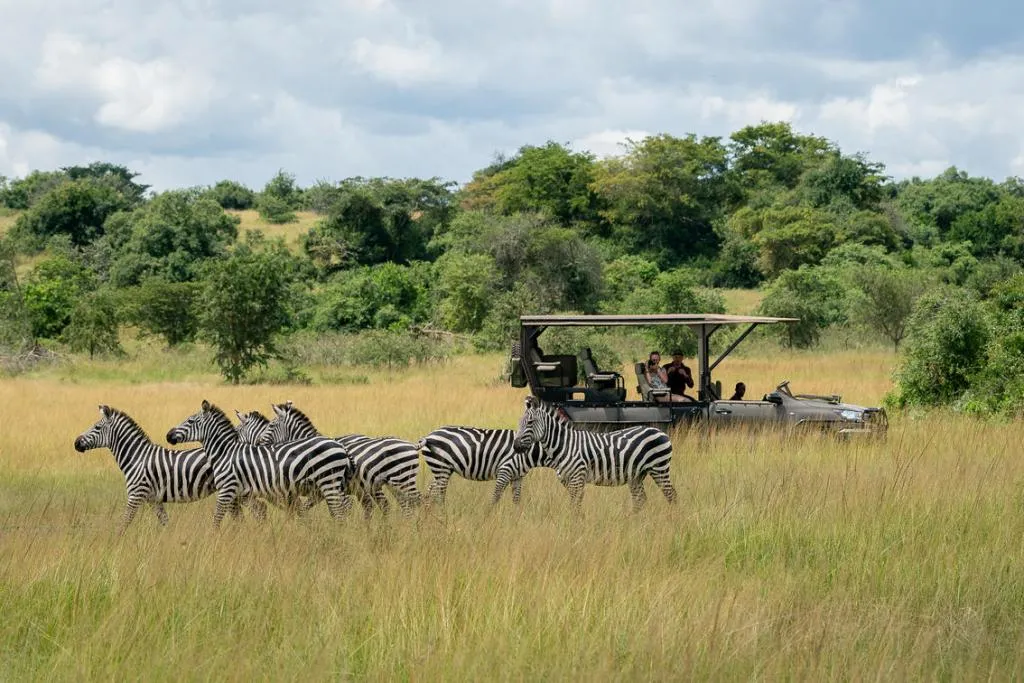
The significant success of the African parks has been demonstrated after years of preparation, including the restoration and reintroduction of lost species such as rhinos in 2017 and lions in 2015, alongside the implementation of effective law enforcement and management to safeguard wildlife populations and vegetation. Akagera National Park is managed by African Parks Organization, whilst Volcanoes National Park and Nyungwe National Park are overseen by the Rwanda Development Board. African Parks assumed the management of Akagera National Park in collaboration with the Rwanda Development Board (RDB) to redirect the park’s trajectory towards development, prosperity, and future tourism potential. The wildlife population of Akagera National Park has consistently increased, attracting hundreds of tourists each.
Akagera National Park derives its name from the Kagera River, commonly referred to as the Alexandra Nile, as it constitutes a segment of the Nile’s upper headwaters, transporting water from remote origins. It traverses the Rwanda-Tanzania border, contributing to Ihema and additional lakes. Akagere National Park features a diverse amalgamation of landscapes, flora, and fauna, with savannahs dominated by acacia, expansive grasslands, woodlands, shrubs, lakes, and wetlands.
Attractions and activities in Akagera National Park
Game viewing
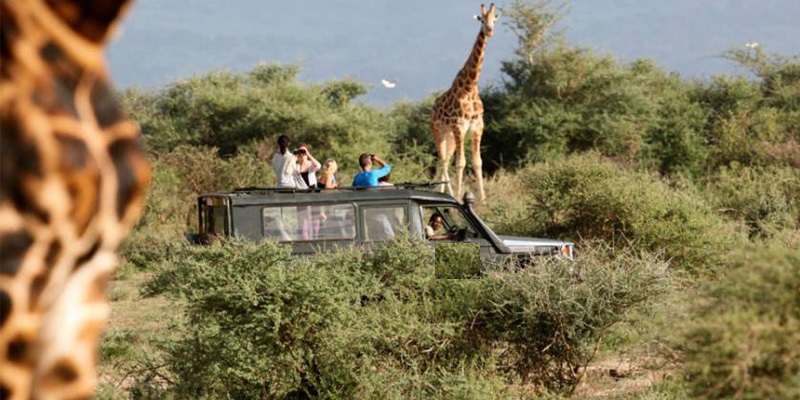
Game viewing in Akagera National Park presents thrilling sights amidst the steeply cultivated hills and temperate environment, epitomizing Rwanda’s geographical features, hence the designation “country of a thousand hills.” Akagera National Park features a predominantly flat terrain that sustains savannah species, serving as a habitat for diverse fauna, including the Big Five: elephants, buffaloes, lions, rhinos, and leopards. Additional creatures comprise giraffes, hyenas, zebras, and many antelope species, including waterbucks, duikers, impalas, topis, klipspringers, and elands, among others. The diverse array of fauna in Akagera National Park has facilitated wildlife activities such as game viewing. Game drives entail traversing designated routes throughout the park to observe the wildlife present. Game viewing in Akagera National Park is not assured; therefore, it is optimal to conduct it during the morning and evening hours, as predators typically hunt during these times and seek refuge when temperatures increase, although game viewing can occur at any time of day. Game viewing often lasts 2 to 3 hours, contingent upon the presence of animals in a certain area. The savannah foliage and shrubs also support carnivorous creatures, as well as many species such as antelopes, buffaloes, elephants, zebras, giraffes, and hippos, among others.
Night game drives
Night game drives at Akagera National area offer an exceptional opportunity to observe nocturnal and carnivorous wildlife, including lions, hyenas, and leopards, among others present in the area. A nocturnal game drive typically endures for approximately 2 hours, contingent upon the presence of wildlife. Visitors are required to be accompanied by armed ranger guides and must bring illumination equipment.
Akagera National Park is home to several prevalent primate species, including Vervet monkeys, Olive baboons, blue monkeys, and bush babies, which are frequently observed on nocturnal game drives.
Boat cruise safaris in Akagera National Park
Lake Ihema serves as the primary water source in Akagera National Park and facilitates many aquatic activities, including boat tours and sport fishing. Embarking on a boat tour on Lake Ihema is an additional engaging activity to partake in within the park, aside from game viewing. An afternoon boat excursion is the optimal method to see, as numerous animals approach the lake’s shoreline to drink and bathe. The midday temperature is typically scorching, prompting some animals to seek refuge in the shade of trees, while others approach water sources to hydrate and cool off. The lake is inhabited by various aquatic creatures and avian species that tourists can appreciate on a boat cruise. During a boat trip, one may observe a pod of hippos, crocodiles, elephants, and various other species that come to drink and bathe in the lake. In addition to the afternoon boat trip, visitors may also partake in sailing on the lake during the morning and evening hours; hence, the boat cruise occurs three times daily. These are scheduled boat rides organized by park management; however, private boats can also be booked at a somewhat higher fee for your convenience. The boat excursion on Lake Ihema lasts 2 hours, offering excellent vistas of the park’s landscape.
Bird Watching
Akagera National Park is a premier destination for avian observation in East Africa, boasting a diverse array of approximately 500 bird species, including the Papyrus Gonolek, Giant Kingfisher, Grey Crowned Crane, Long-toed Stint, the rare Shoebill Stork, African Darter, Squacco Heron, Water Thick-knee, Senegal Lapwing, African Openbill Stork, and Wattled Plover, among others. Frequently observed avian species including Cattle Egrets, Fish Eagles, Augur Buzzards, Pied Crows, Sacred Ibis, Hadada Ibis, Hamerkop, Grey-backed Fiscal, Black-headed Weaver, Viellot’s Weaver, Fan-tailed Widowbird, Long-crested Eagles, and Caruther’s Cisticola. Akagera National Park provides birdwatchers the chance to observe endangered species, such as the shoebill stork. Birdwatching occurs during game drives and boat excursions on Lake Ihema. Birdwatching at Lake Ihema provides exceptional vistas of avian species that are not observable during wildlife drives in the savannah plains. Nature walks in the park offer an expansive perspective on many avian species. During birdwatching activities, it is essential to engage armed ranger guides for protection within the park.
Additional activities available at Akagera National Park include sports fishing on Lake Shakani and cultural trips in the vicinity, offering an immersion into the Banyarwanda cultural lifestyle centered on cattle husbandry. During a community visit, you will get the opportunity to witness and engage in cattle husbandry practices, including grazing, milking, and traditional techniques of milk preservation. Additional cultural experiences encompass the production of traditional yogurt and ghee, as well as the preparation of customary meals utilizing dairy products. This cultural experience is dependable since people benefit financially from the things purchased by tourists visiting the park, so aiding in the preservation of both culture and wildlife in Rwanda.
How to access Akagera national park
Akagera National Park, situated in the eastern region of Rwanda, is mostly accessible from Kigali, the capital city, which is around a 2 to 3-hour drive away, traversing the picturesque landscapes of the country and passing through cities such as Rwamagana. The park features two entry points: the northern and southern gates for both ingress and egress. While driving from other regions of the country is an option, the most efficient route to the park is via Kigali city, as it is the closest urban center for accessing the park. Public transportation to Akagera National Park is unavailable.
Visitors who find a 2 to 3-hour drive arduous have the option to approach the area via Akegera Aviation. These flights are accessible at Kigali International Airport.
All visitors must pay park fees to access park activities. Foreign tourists are charged $50 per person per day, while a day game drive incurs a fee of $20. The cost for a boat cruise on Lake Ihema is $35 per individual.
Accommodation options in Akagera National Park
Accommodations at Akagera National Park are limited in comparison to those in other national parks of Rwanda, such as Volcanoes National Park Nyungwe Forest National Park. Certain accommodations in Akagera, such as the Ruzizi Tented Camp, are seasonal; nonetheless, the park is contemplating an expansion of its lodge offerings.
Ruzizi Tented Camp is the sole luxury resort established by the park management in 2013. The lodge is constructed adjacent to the park offices, with exquisite luxury tents designed in accordance with Rwandan traditions. The tents are exceptionally comfortable, accommodating a maximum of 20 individuals per day. The lodge is strategically situated near Lake Ihema, offering excellent views of the park and the chance to observe aquatic wildlife, such as hippos. The lodge offered exquisite cuisine in a comfortable restaurant and a bar for leisure. Despite the lodge offering exceptional services and good value, the fees are quite elevated.
Akagera Game Lodge.
In contrast to the seasonal Ruzizi Tented Camp, Akagera Game Lodge is a mid-range establishment including permanent structures situated within the park, adjacent to Lake Ihema. The lodge offered amenities such as a swimming pool, quality cuisine from its inviting restaurant, a conference center, and a tennis court. The resort comprises approximately 60 accommodations, encompassing economical, mid-range, and luxurious options. The rates at this resort are comparatively economical.
Dereva Hotel.
This is an economical lodging establishment situated outside the park in the Rwamagana district, approximately a 40-minute drive from the park entrance. The hotel offers self-contained accommodations featuring guestrooms, Wi-Fi, and flat-screen televisions.
Additional housing options are Karenge Bush Camp, a premium facility operational exclusively during the peak seasons of June, July, August, December, and January. The other facility is Magashi Lodge, the most recently constructed lodge within the park, situated in a secluded area primarily designed to ensure tourist solitude.