
4x4 Rental with Family Rooftop Tent in Tanzania
4×4 Rental with Family Rooftop Tent in Tanzania, Everything families need to know about hiring a Land Cruiser with a rooftop tent for a safe, comfortable, and unforgettable self-drive camping safari across Tanzania’s national parks.
Travelling with children through the Serengeti, Ngorongoro Crater, or Tarangire doesn’t have to mean choosing between adventure and comfort. A 4×4 rental fitted with a family rooftop tent gives parents the freedom of a self-drive safari while keeping the whole family off the ground, safely elevated above roaming wildlife, and close together under canvas each night. This guide walks through everything a family needs to plan a rooftop-tent self-drive safari in Tanzania: which vehicles work best, what a family tent actually offers, realistic costs, the safest parks for kids, a sample itinerary, and a full packing checklist.
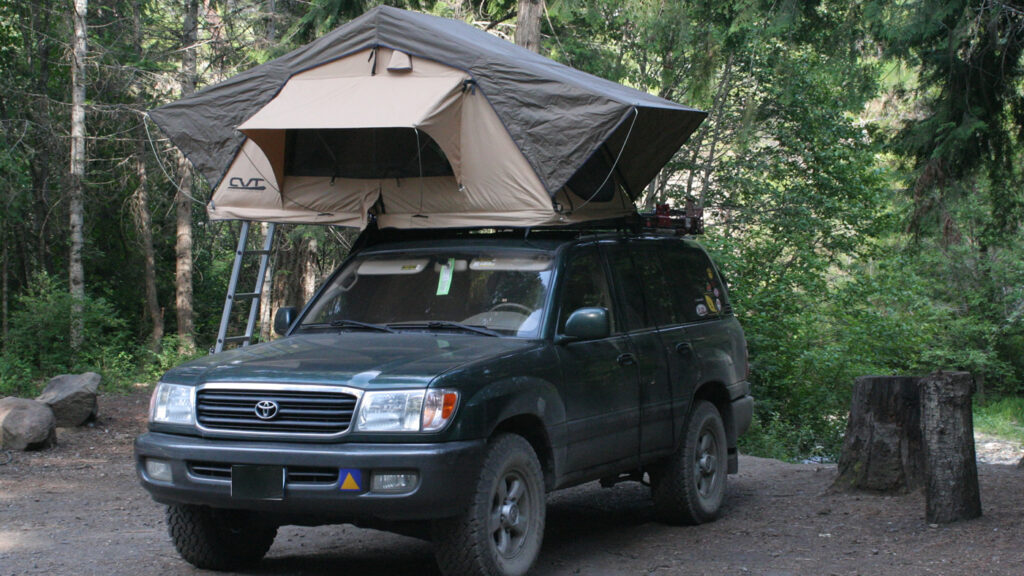
QUICK ANSWER A 4×4 Land Cruiser (LX, GX, VX, or V8) fitted with a family rooftop tent for up to 4-5 people typically costs between USD 150 and USD 280 per day in Tanzania, including camping gear, unlimited mileage, and comprehensive insurance. Most operators are based in Arusha, the standard gateway for northern circuit self-drive safaris. |
What Is a Family Rooftop Tent, Exactly?
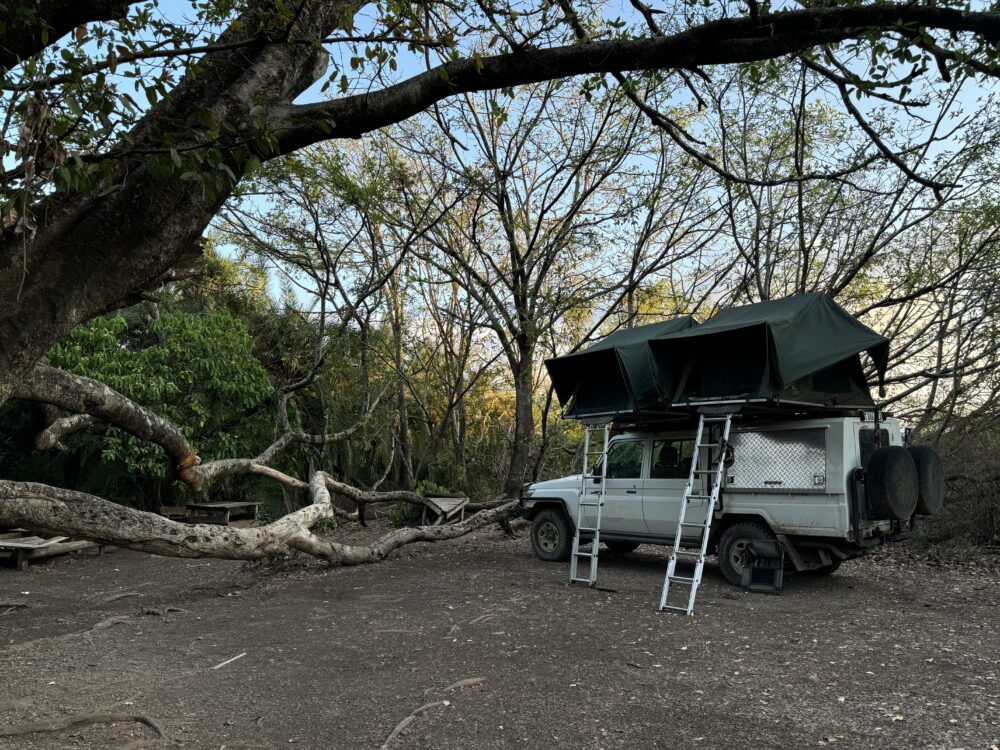
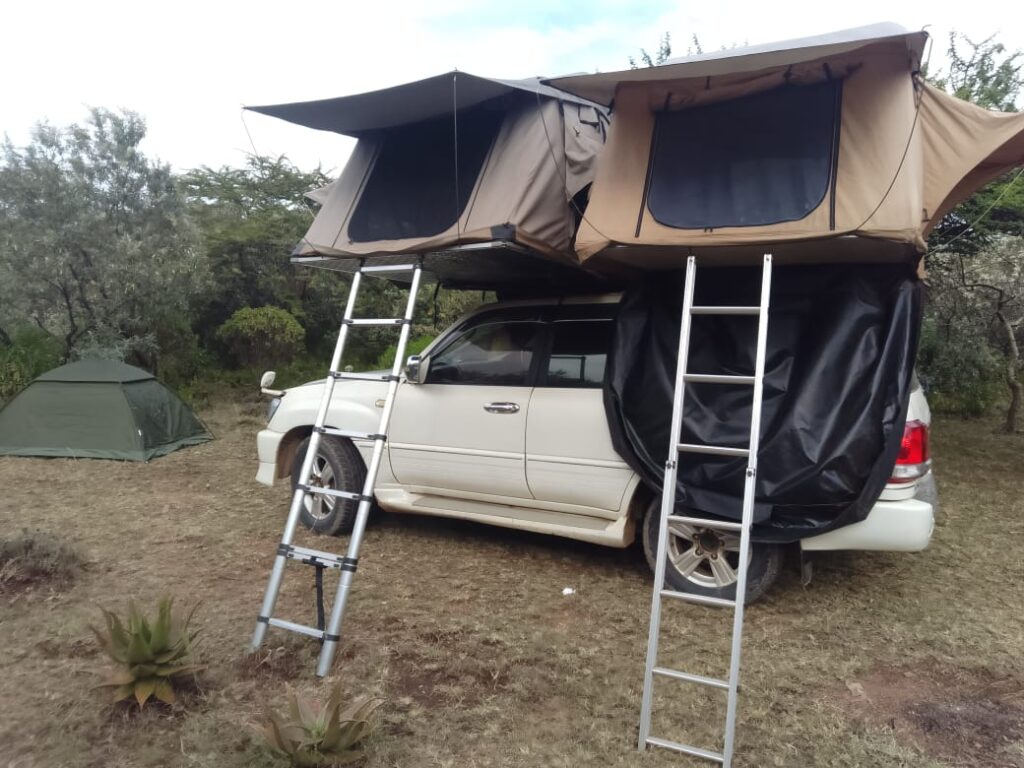
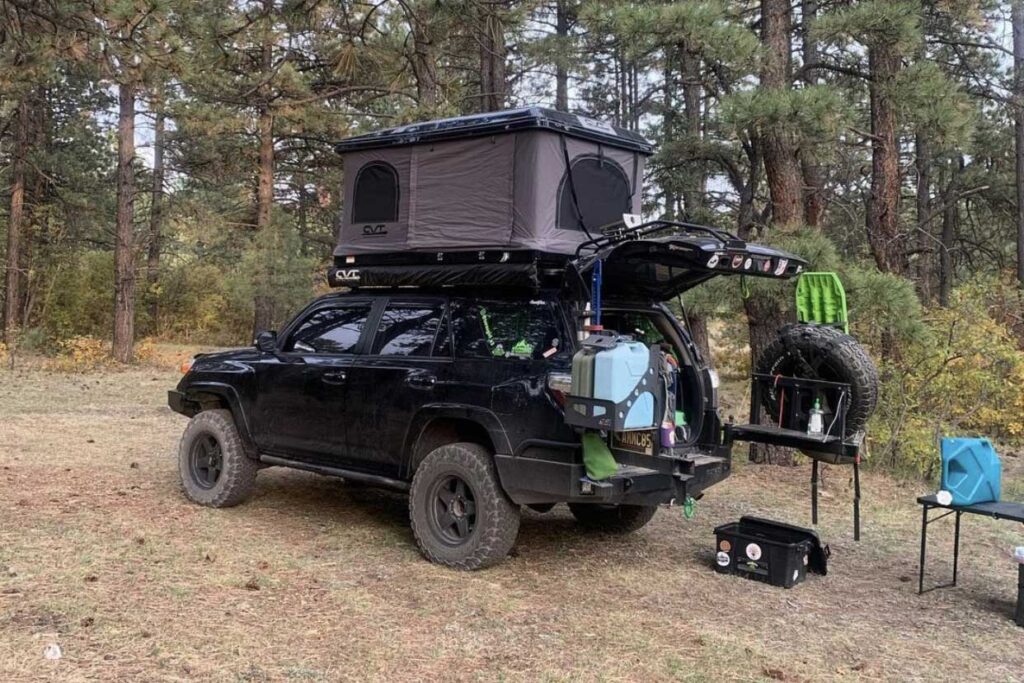
A rooftop tent is a fold-out canvas tent mounted permanently on the roof rack of a 4×4 vehicle. It opens in under a minute using a ladder and gas struts, sitting on a hard base with a built-in foam mattress. A single rooftop tent comfortably sleeps two adults. A family rooftop tent is a larger version, or a pair of tents mounted together, designed to sleep up to four or five people, making it the practical choice for parents travelling with one or two children.
Because the tent sits roughly 1.5 to 2 metres above the ground on top of the vehicle, it keeps the family well clear of snakes, insects, and curious wildlife that might wander through an unfenced campsite overnight, one of the main reasons rooftop camping has become the preferred style of family self-drive safari in East Africa.
Family Tent Features to Look For
- Mattress quality: A built-in high-density foam mattress rated for the number of sleepers, not just floor space.
- Ventilation and weatherproofing: Full mesh panels on all sides for cross-ventilation in Tanzania’s warm climate, plus a zip-up rain fly for the wet season.
- Safe ladder access: A telescopic ladder that is stable enough for children to climb safely, ideally with non-slip rungs.
- Single vs. double tent setup: Confirm whether the vehicle carries one large family tent or two linked tents; the second option often works better for older children who want their own space.
- Weight and capacity limits: Ask the operator for the tent’s rated capacity in kilograms as well as sleeper count, since young children add less weight than adults but still need floor space.
Best 4×4 Vehicles for Family Rooftop Tent Rentals
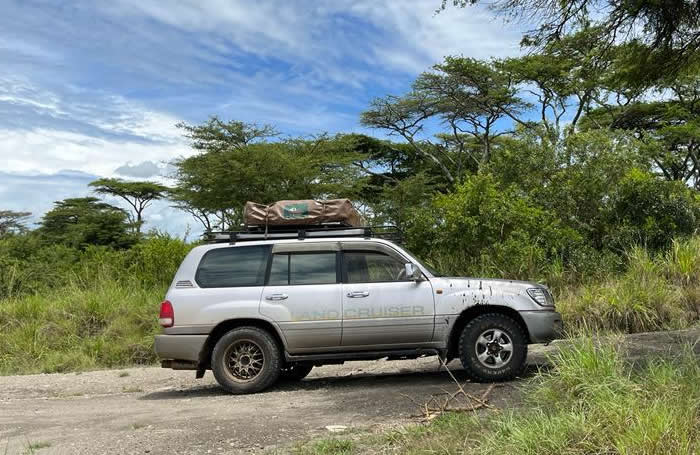
Not every 4×4 is suited to carrying a family rooftop tent, extra passengers, and camping gear on rough park tracks. Operators across Arusha, Moshi, and Dar es Salaam typically offer the following models fitted with family-sized tents:
| Vehicle | Seats | Tent Capacity | Best For |
| Toyota Land Cruiser LX | 5 | 4 (family tent) | Long-distance northern circuit safaris |
| Toyota Land Cruiser GX / VX | 5 | 4–5 (family tent) | Families wanting extra ground clearance and power |
| Toyota Land Cruiser V8 | 5 | 2–4 (single or double tent) | Comfort-focused families, smoother ride |
| Land Cruiser 78-Series Hardtop | 5 | 4–5 (family tent) | Rugged remote parks, cross-border trips |
| Nissan Patrol | 5 | 4–5 (family tent) | Budget-conscious families needing full kit |
For families with two or more children, many operators can fit two rooftop tents on the same Land Cruiser, one for the parents and a smaller one for the kids, which is often more comfortable than squeezing everyone into a single tent rated for four.
What’s Typically Included in the Rental
A reputable family rooftop tent rental in Tanzania is rarely just the vehicle and tent. Camping-ready packages are built around everything a family needs to cook, sleep, and stay safe at a campsite without carrying separate luggage for gear.
- Rooftop tent: Ladder, mattress, mosquito mesh, and rain fly, pre-fitted and tested before handover.
- Camping gear: Sleeping bags, camp table, folding chairs, gas stove, cooking pots, cutlery, and a cool box or fridge.
- Bedding: Most operators exclude pillows and bed-sheets, so pack these or ask if they can be added for a small fee.
- Vehicle cover: Unlimited mileage, comprehensive insurance, and 24-hour roadside assistance are standard across established operators.
- Navigation support: A printed or digital route map, and increasingly a GPS unit or offline navigation app pre-loaded with park routes.
- Spare tyres: Family rentals should always include two spare tyres given the distances and rough tracks between parks, particularly for remote reserves like Katavi or Ruaha.
PRACTICAL TIP Confirm in writing exactly which camping gear is included before paying a deposit. Ask specifically about a fridge or cool box, since keeping food and children’s snacks cold on multi-day self-drive routes matters more with young travellers. |
How Much Does a Family Rooftop Tent Rental Cost?
Daily rates depend on the vehicle class, tent configuration, season, and rental duration. As a general guide for 2026, families should budget within the following ranges:
| Package | Daily Rate (USD) | What’s Included |
| 4×4 only, no tent | 150 – 190 | Vehicle, insurance, unlimited mileage |
| 4×4 + single rooftop tent | 180 – 230 | Vehicle, one tent (2 people), basic camping gear |
| 4×4 + family rooftop tent | 210 – 280 | Vehicle, family tent (4-5 people), full camping kit |
| 4×4 + double rooftop tent | 230 – 300 | Vehicle, two tents (4 people total), full camping kit |
Rates typically fall as rental length increases, and most operators offer discounts for bookings over 10 to 14 days. Park entrance fees, fuel, a professional driver-guide if requested, and a COMESA cross-border permit (only needed if driving into Kenya, Uganda, or Rwanda) are usually charged separately.
Best Tanzania National Parks for a Family Rooftop Camping Safari
Tarangire National Park
A short 2-hour drive from Arusha, Tarangire is one of the easiest parks for a first-time family self-drive, known for enormous elephant herds and baobab-studded landscapes. Its public campsites are well maintained, with basic ablution blocks close enough for a rooftop-tent stopover.
Lake Manyara National Park
Compact and well signposted, Lake Manyara suits families with younger children who don’t want long driving days. Tree-climbing lions and flamingo-lined shorelines keep kids engaged, and the drive from Arusha takes under two hours.
Serengeti National Park
The Serengeti rewards families who camp for at least two nights, giving time to reach the central Seronera area where wildlife density is highest. Public campsites here are fenced or ranger-patrolled, an added layer of reassurance for parents camping with children.
Ngorongoro Conservation Area
The crater rim campsites offer some of the most dramatic rooftop-tent sunrise views in Africa, though nights are cold, so pack warm sleeping layers for children even in the dry season.
SAFETY NOTE FOR FAMILIES Never let children climb down from the rooftop tent alone after dark. Keep a torch and a portable toilet or designated night-time routine agreed before bedtime, since campsites inside national parks are unfenced and wildlife does move through camps overnight. |
Sample 7-Day Family Self-Drive Itinerary
- Day 1: Pick up the 4×4 with family rooftop tent in Arusha, complete the vehicle briefing, and drive to Tarangire National Park (approx. 2.5 hours).
- Day 2: Full day game drive in Tarangire; overnight at a public campsite near the park gate.
- Day 3: Drive to Lake Manyara, afternoon game drive, overnight camping at the escarpment-view campsite.
- Day 4: Drive to the Serengeti via the Ngorongoro Conservation Area, entering through Naabi Hill Gate; overnight camping in the central Serengeti.
- Day 5: Full day exploring Seronera and the Serengeti plains; second night camping in the park.
- Day 6: Drive to Ngorongoro Crater rim, descend for a half-day crater tour, overnight camping on the rim.
- Day 7: Morning drive back to Arusha, return the vehicle by early afternoon.
This route keeps single driving legs under four hours, an important consideration for families managing young children’s attention spans and rest stops, while still covering the northern circuit’s highlight parks.
Family Camping Packing Checklist
Sleeping and Comfort
- Pillows and bed-sheets or a lightweight sleeping bag liner (rarely included by operators).
- An extra blanket per child, especially for Ngorongoro Crater and Serengeti nights, which can drop below 10°C.
- A small night-light or head torch for each child for safe movement inside the tent after dark.
Clothing and Health
- Layered clothing: warm fleece for early mornings, breathable cotton for midday heat.
- Closed shoes for around the campsite, plus insect repellent suitable for children.
- A basic family first-aid kit, rehydration salts, and any regular children’s medication.
- Malaria prophylaxis as advised by a travel clinic, since many parks sit in malaria zones.
Practical Extras
- Reusable water bottles and a means of purifying water if refilling from campsite taps.
- Portable charger or car inverter for keeping phones and cameras charged between towns.
- Printed park maps or an offline navigation app, since network coverage inside parks is patchy.
- Snacks and simple entertainment for long driving legs between parks.
How to Choose the Right Operator
- Track record: Look for companies with several years of self-drive-specific experience in Tanzania rather than general car hire firms.
- Insurance terms: Comprehensive cover with a clearly stated excess amount protects against the cost of a puncture or minor damage on rough park roads.
- Roadside support: Confirm the operator provides a genuine 24-hour phone line, not just office hours, since breakdowns rarely happen on schedule.
- Vehicle condition: Ask to see recent photos of the specific rooftop tent and mattress condition, not just marketing images.
- Reviews from other families: Read recent traveler reviews mentioning families specifically, since a smooth experience for a couple doesn’t always translate to one for parents with children.
BEFORE YOU DRIVE OFF Do a full walk-around inspection with the operator: check the tent ladder mechanism, mattress zips, spare tyre pressure, jack, and that the fridge or cool box is running, before signing the handover checklist. |
Frequently Asked Questions
Is a rooftop tent safe for young children in Tanzania’s national parks?
Yes, when used correctly. The elevated sleeping platform keeps children well above ground-level wildlife activity, and reputable rooftop tents have secure ladders and zip-locking entrances. Supervise children on the ladder, especially at night, and choose fenced or ranger-patrolled public campsites where available.
How many people can a family rooftop tent actually sleep?
Most family rooftop tents are rated for four people; some larger models or double-tent setups accommodate up to five. Always check the manufacturer’s weight rating rather than assuming a family of five will fit comfortably in a tent marketed as sleeping four.
Do we need a professional driver-guide, or can we self-drive with kids?
Families confident with manual 4×4 driving on gravel roads can self-drive safely on the main northern circuit routes. Families new to African self-drive, or with very young children, often add a driver-guide for the first few days, freeing both parents to focus on the children rather than navigation.
What is the best season for a family rooftop camping safari?
The dry season, from June to October, offers firmer roads, easier driving, and reliable wildlife viewing around water sources, making it the most practical window for families. The short dry spell in January and February is also workable with warmer nights than the mid-year dry season.
Can the vehicle cross into Kenya, Uganda, or Rwanda?
Many Land Cruisers fitted with family rooftop tents are available for cross-border self-drive, provided the operator arranges COMESA insurance and the correct temporary import documents in advance. Confirm this explicitly if a multi-country itinerary is planned.
This guide is intended for general travel planning purposes. Rates, park regulations, and campsite availability change seasonally, always confirm current details directly with your chosen self-drive operator before booking.