Kigali City
Kigali City, the capital of Rwanda, is centrally located and is renowned for its cleanliness, aesthetic appeal, and well-maintained streets in comparison to many other towns in Africa. Kigali city presents a juxtaposition of somber reflections at several memorial sites commemorating the 1994 Rwandan genocide among vibrant locales where tourists may immerse themselves in the culture, hospitality, picturesque landscapes, and flavors of Rwandan cuisine.
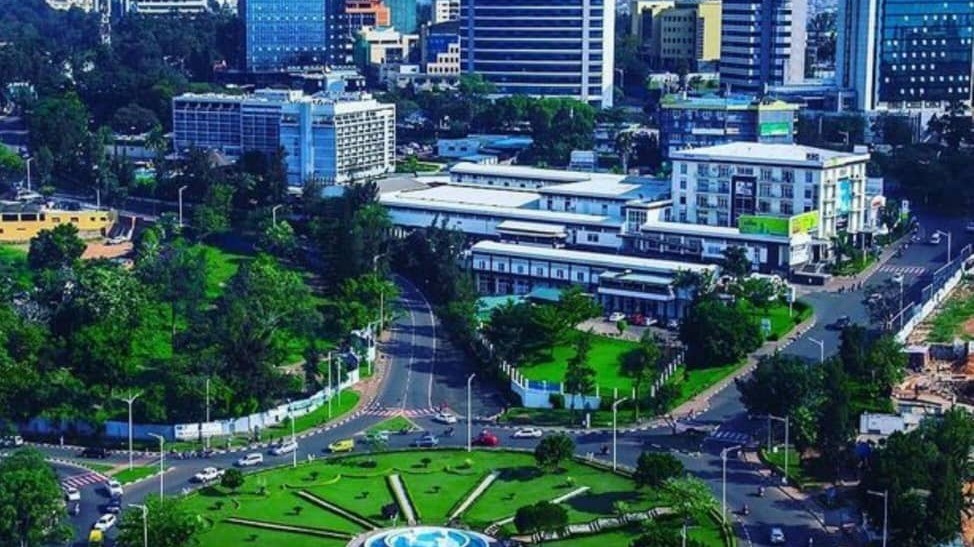
Immerse yourself in the serene ambiance of Kigali City while engaging in various transactions within the urban landscape. The currency utilized in Kigali is the Rwandan franc, although United States dollars ($) are also accepted for transactions.
The official languages spoken in Kigali are French, English, Kinyarwanda, and Swahili. Nonetheless, French is extensively utilized by individuals in Kigali and throughout Rwanda. English was then adopted as an official language in Rwanda to integrate with the global society and became a component of the East African society alongside Uganda, Kenya, Tanzania, and Burundi. The East African Community was established to enhance cooperation among member states and facilitate trade.
Kigali City operates in the GMT+2 time zone. Rwanda has a statewide community service day, known as Umuganda, on the final Saturday of each month, during which roads are closed for cleaning activities. Plastic bags are prohibited in Kigali and throughout Rwanda, with paper bags serving as an alternative.
Transportation options in Kigali include of taxis and moto-taxis, which are often utilized. Alternative transportation methods to reach Kigali include flights to Kigali International Airport. Rwandair, the national airline of Rwanda, operates throughout East, West, Central, and South Africa, as well as in Europe, the Middle East, and Asia.
Kigali city invites various types of tourists by providing diverse experiences through its array of attractions, including historical sites, leisure areas, shopping centers, dining establishments, nightlife, market tours, neighborhood strolls, sightseeing locations, cultural excursions, arts and crafts centers, museums, city tours, festivals, and numerous other potential tourist sites.
Kigali’s historical sites comprise;
Kigali Memorial Centre. This site serves as a memorial for more than 250,000 victims of the Rwandan genocide. The memorial facility was constructed at the site of the victims’ interment. The Kigali Memorial Center serves as a poignant reminder of the atrocities that occurred in Rwanda in 1994, where individuals who lost loved ones visit to commemorate their memories. Students visit the memorial center to get insight into the genocide and the repercussions of the mass executions. The Kigali monument Center comprises three exhibitions: the permanent display, the children’s monument, and an exhibition on the history of genocidal murder globally.
Memorial site for Belgian troops. This location is where all Belgian soldiers assigned to protect President Habyarimana’s wife were slain. The wife of the then-president, Madame Agathe Uwiligiyimana, harbored animosity towards the Tutsi population and received protection from Belgian soldiers. The bullet holes at the location remain, and during the troops’ shooting, Madame Agathe was also fatally wounded.
Hotel Mille des Collines. Hotel Rwanda inspired the film of the same name, depicting the hotel as a sanctuary for some Tutsi during the genocide, ultimately saving many lives with the assistance of Mr. Paul Rusesabagina, the hotel’s manager.
Museum of the Presidential Palace. This memorial marker indicates the location of President Habyarimana’s plane crash. The plane crash that resulted in the death of the then president of Rwanda was a catalyst for the 1994 Rwanda genocide, inciting animosity between the Hutu and Tutsi populations.
Statue of a gorilla. This statue signifies Rwanda’s tourism asset and is located in the Kigali city center at a roundabout. The statue depicts a male and female gorilla, symbolizing the immense significance attributed to gorillas globally. The statue was integral to the festivities in Rwanda, which featured the gorilla naming ritual.
Kandt House Museum. The museum housed Richard Kandt, the inaugural Belgian colonial administrator of Rwanda. The museum, previously referred to as the Kandt House Museum of Natural History, is dedicated to illustrating the evolution of the earth, fauna, flora, and the interdependence between humans and their environment.
Église de la Sainte-Famille. This is the Catholic Church where numerous Hutu and Tutsi sought refuge and were subsequently killed during the genocide. Subsequent to this occurrence, numerous individuals in Rwanda embraced Islam, as the priest at the Catholic Church assisted the Hutu militia in the massacre of those within the church.
Nyanza Genocide Memorial. This memorial contains four mass graves of Tutsi individuals who sought refuge at the Ecole Technique Officially grounds and were subsequently murdered due to the lack of protection after the killing of Belgian soldiers assigned to safeguard the then president’s wife, an event that instilled fear in other Belgian soldiers.
Kigali City is renowned for its arts and crafts facilities, which bring numerous tourists to the area. The art and crafts centers in Kigali are Inema Arts Center, Kigali Arts Center, among others.
Shopping destinations in Kigali encompass Rwanda Culture, Kigali Cultural Village, Haute Baso, House of Tayo, The Shop, Abraham Konga, and Kimironko Market.
To savor Rwandan cuisine and acquire culinary skills in its preparation, notable establishments include Repub Lounge, Heaven Restaurant, Fusion, Poivre Noir, Meze Fresh, and Fantastic Restaurant, among others.
For enthusiasts and visitors in search of amusement, notable gathering places in Kigali encompass Pilipili, Hotel Mille des Collines, Question Coffee, Inzora Rooftop Café, and Ikirezi Bookshop, among others.
Neighborhood excursions are offered in Kigali, with a visit to Nyamirambo, one of Rwanda’s oldest districts. This neighborhood tour entails visiting many homesteads in Nyamirambo to explore the Rwandan lifestyle, cuisine preparation and presentation, as well as local businesses. The neighborhood tour includes a visit to the local market to procure ingredients for Rwandan cuisine preparation. The tour is provided by the Nyamirambo Women’s Center (NWC).
Additional attractions in Kigali comprise Nyarugenge Hill, Kacyiru Hill, and Nyaturama Lake, among others.
Kigali is a city well of a visit to experience the warmth of the Rwandan populace, their culture and lifestyle, local cuisine, art, crafts, and traditions. Reflect on the memories of the thousands of Hutu and Tutsi who perished during the Rwandan genocide, and observe the optimism for a more peaceful future manifested in the overall ambiance of Kigali and the smiles of the Rwandan people as you traverse the land of a thousand hills.