
4x4 Road Rip Tanzania: The Ultimate Self-Drive Adventure Guide
4×4 Road Trip Tanzania, Tanzania is one of the last places on Earth where the sheer scale of wilderness can genuinely overwhelm you. This is a country of superlatives: the highest freestanding mountain on the planet (Kilimanjaro at 5,895 m), the world’s largest volcanic caldera (Ngorongoro), the most celebrated wildlife migration in history (the Great Wildebeest Migration in the Serengeti), and one of Africa’s most spice-rich islands (Zanzibar). Experiencing all of this from behind a steering wheel, at your own pace, is transformative.
A road trip in Tanzania is not the same as driving through Europe or North America. The roads range from smooth tarmac highways linking major towns to red-dust laterite tracks that demand four-wheel drive, high clearance, and nerves of steel. The rewards, however, are unmatched: pulling up to a lion pride at dawn without a convoy of minibuses in sight, camping under a sky so clear the Milky Way looks close enough to touch, or stopping at a roadside market to bargain for fresh pawpaw from a farmer who has never heard of a tourist itinerary.
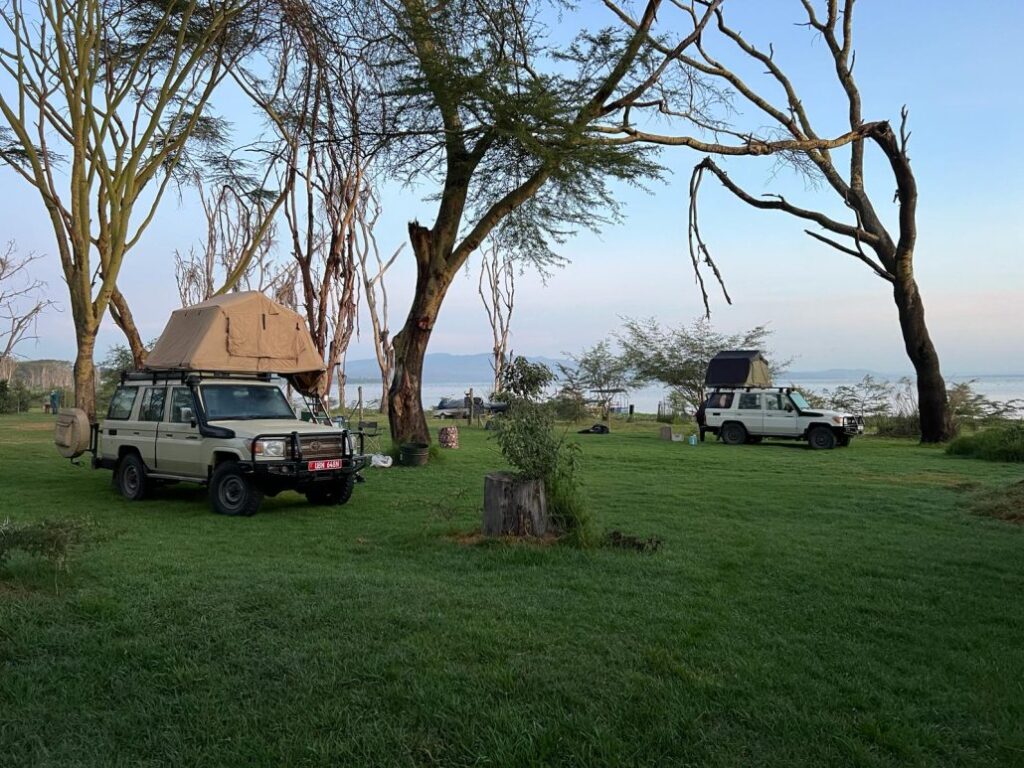
This guide covers everything you need to know — from choosing the right vehicle and understanding road conditions to planning multi-week itineraries, navigating bureaucracy, and staying safe. Whether you are a first-time visitor or a seasoned Africa overland traveller, this is your definitive companion for the open road in Tanzania.
When to Go: Seasons & Road Conditions
The Long Dry Season (June – October)
Widely considered the best time for road-tripping Tanzania. Roads are at their firmest, river crossings are manageable, and wildlife concentrates around permanent water sources making game viewing exceptional. The famous Serengeti wildebeest migration calvings occur from January–March, but the dramatic Mara River crossings happen from July–September, which overlaps perfectly with dry-season driving.
💡 Tip: Pack warm layers — June and July nights in the highlands around Ngorongoro and Arusha can drop to 5°C.
The Short Dry Season (January – February)
A secondary dry window that opens up reliable road access to most of the country. Excellent for southern circuit destinations like Ruaha and Selous (Nyerere National Park). Crowds are thinner and accommodation rates are often lower.
The Long Rains (March – May)
This is the most challenging season for road trippers. Many unpaved roads in the south and west become impassable even in 4WD. If you must travel during this period, stick to the northern tarmac circuit (Arusha–Moshi–Kilimanjaro) and ensure your vehicle has a winch, recovery boards, and a high-lift jack.
The Short Rains (November – December)
Brief afternoon showers, usually manageable. Roads dry quickly in many areas. Some remote tracks remain accessible, making this a viable — if unpredictable — time to travel.
Choosing the Right Vehicle
Your vehicle is the most critical decision you will make. Get it wrong and your dream trip becomes a mechanical ordeal. Tanzania’s road network consists of roughly 30% tarmac and 70% dirt tracks in varying states of repair. For any itinerary beyond the major highways, you need a 4WD vehicle.
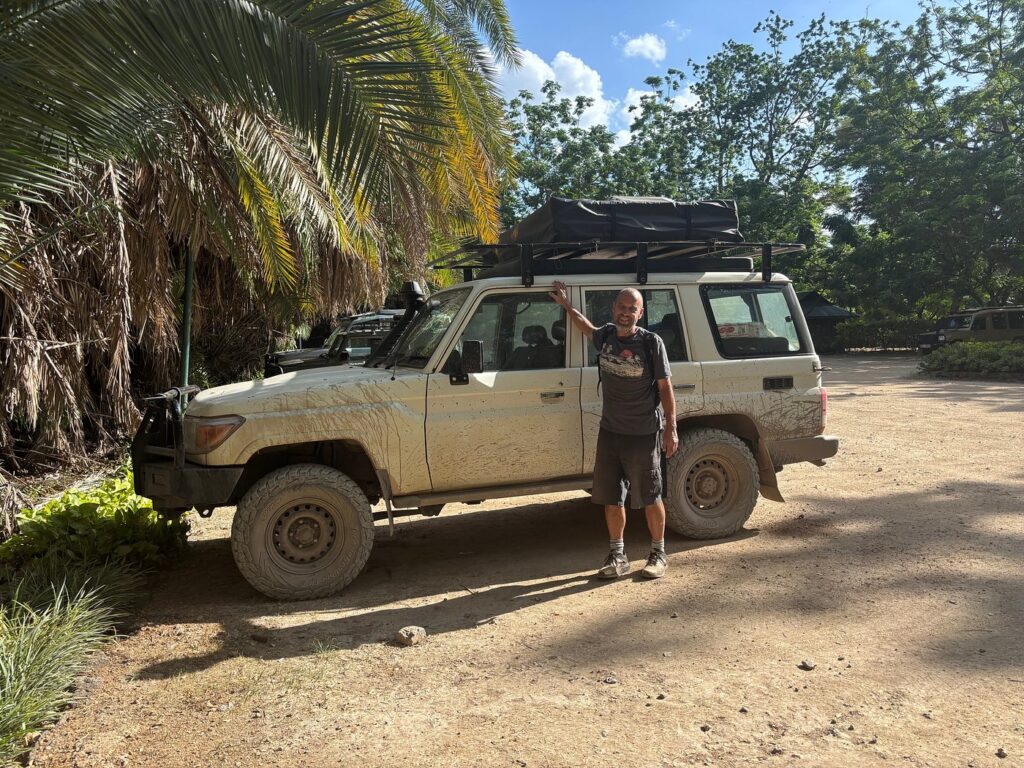

Vehicle Classes
Standard Sedan / Saloon Car
Suitable only for: Dar es Salaam city driving, the Dar–Morogoro–Dodoma highway, and the Arusha–Moshi tarmac corridor. Do not attempt any national park or off-tarmac route in a sedan.
4WD SUV (Toyota Land Cruiser / Prado, Land Rover Defender)
The gold standard for Tanzania road trips. The Toyota Land Cruiser 70 and 80 Series are the workhorses of the safari industry — spare parts are abundant, mechanics know them intimately, and their ground clearance handles corrugated laterite roads and muddy river crossings. If you can only choose one vehicle, choose a Land Cruiser.
Toyota Hilux / Ford Ranger Double Cab
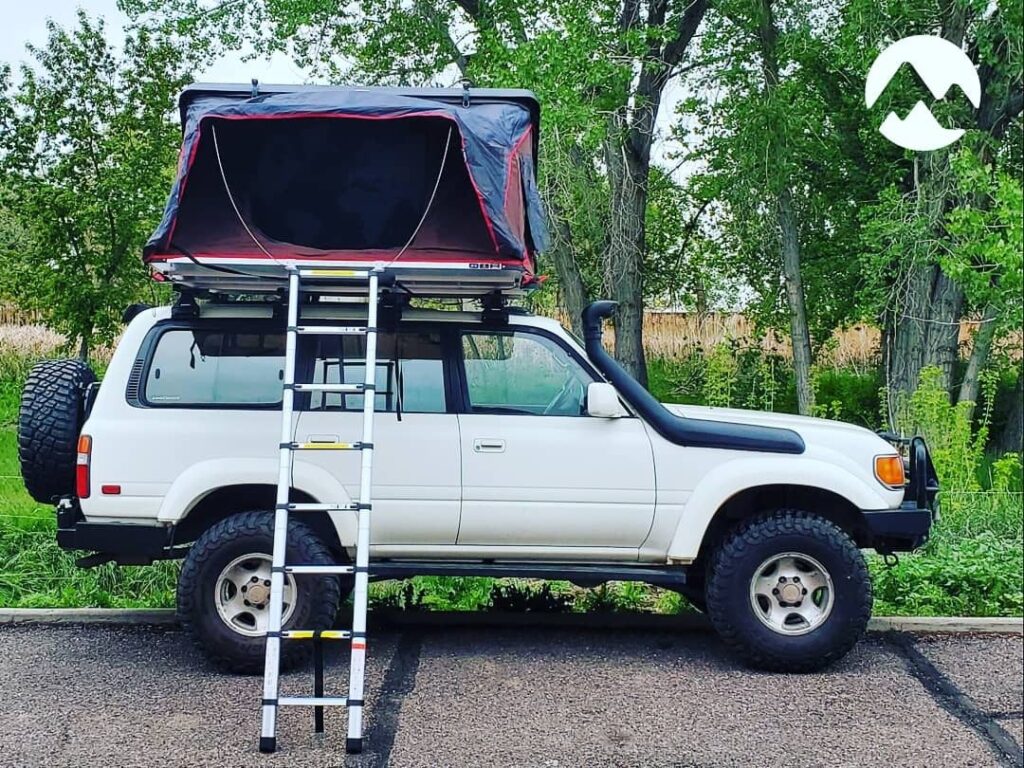
An excellent alternative, especially if you are camping. The load bed accommodates a rooftop tent and a 60–80L fuel jerrycan. Slightly less ground clearance than a Land Cruiser but far more economical on fuel.
Mitsubishi Pajero / Nissan Patrol
Reliable options with good availability in Dar es Salaam and Arusha. Ensure any rental vehicle has full-size spare tyres (ideally two), a snorkel, and underbody protection plating before heading into remote areas.
Toyota Land Cruiser Prado with Roof Top Tent
The 4x4 Toyota Land Cruiser LX
4×4 Toyota Land Cruiser Hardtop
4x4 Toyota Rav4 ( Car Rental Arusha)
Toyota Land Cruiser with Double Roof Top Tent
Toyota Land Cruiser Gx Single Roof Top Tent
What to Check Before You Drive Off
- Two full-size spare tyres (not a compact spare)
- Functional jack, wheel brace, and tyre deflator/inflator
- Jerrycan capacity (minimum 40L extra fuel for remote stretches)
- Recovery boards (MaxTrax or equivalent)
- Tow rope and shackles
- Basic toolkit: spanners, zip-ties, duct tape, hose clamps
- First-aid kit with snake bite protocol card
- Working battery with jump cables
- Navigation: offline maps downloaded on OsmAnd or maps.me
💡 Tip: Always test the 4WD engagement, diff lock, and all four tyres before leaving the rental yard. Document any existing scratches and dents with photos — this will save disputes on return.
Driving in Tanzania: Rules, Roads & Reality
License Requirements
Foreign nationals may drive with a valid home-country driving licence for up to 90 days. After that, or if you are resident, you need a Tanzanian licence. An International Driving Permit (IDP) is recommended alongside your home licence — police checkpoints, especially in the south, sometimes ask for it.
Road Types
- Class A Highways: Paved trunk roads connecting major cities. Generally good condition, though potholes appear on heavily trafficked stretches like Dar–Moshi.
- Class B Regional Roads: Mix of tarmac and graded murram (compacted laterite). Manageable in dry season in 4WD; verify condition before departure.
- Class C & D District Roads: Earth tracks, often corrugated. Essential for reaching many parks and villages. 4WD mandatory.
- Park Tracks: Unmaintained routes inside national parks. Report road conditions at park entry gates.
Traffic & Speed Limits
- Urban areas: 50 km/h
- Rural tarmac: 80 km/h
- National park tracks: 25–40 km/h (strictly enforced by rangers)
Tanzanian traffic police (TRA/SUMATRA officers) operate frequent speed traps and roadblocks. Always carry your licence, vehicle registration, third-party insurance certificate, and fire extinguisher — these are commonly checked.
Night Driving
Avoid driving after dark wherever possible. The risk factors multiply: unlighted vehicles and cyclists, livestock on roads, pedestrians in dark clothing, and a higher incidence of opportunistic crime on isolated stretches. If you must drive at night, keep speed below 60 km/h and stay on tarmac.
Fuel
Petrol and diesel are widely available in towns. In remote areas — western Serengeti, Mahale, Katavi, Ruaha — fill up every time the gauge drops below half. Diesel is the fuel of choice for 4WD vehicles; petrol is available but less common at small roadside stations.
💡 Tip: The Tanzanian standard for diesel meets Euro-4 in cities but can vary in quality at rural pumps. If your vehicle is modern (post-2015) with a common-rail engine, carry a fuel filter and replace it every 5,000 km during the trip.
Itinerary One: The Classic Northern Circuit (10–14 Days)
This is the most popular road trip in Tanzania and for good reason — it packs Kilimanjaro, Amboseli views, Tarangire, Lake Manyara, the Ngorongoro Crater, and the Serengeti into a single loop accessible largely on tarmac. It is manageable in a Hilux double cab with moderate off-road experience.
Start/End | Arusha |
Distance | ~1,400 km total loop |
Road Conditions | 60% tarmac, 40% murram/park tracks |
Min. Vehicle | 4WD (Toyota Hilux or better) |
Best Time | June – October; January – February |
Day 1–2: Arusha — Gateway to the North
Arusha sits at 1,400 m on the lower slopes of Mount Meru, Tanzania’s second-highest peak. It is the jump-off for the entire northern safari circuit and home to excellent vehicle rental companies, gear shops, and a vibrant food scene. Spend Day 1 acclimatising, collecting your vehicle, downloading offline maps, and stocking up on provisions.
Drive south of Arusha on Day 2 to visit Arusha National Park — a compact but stunning park with giraffe, buffalo, colobus monkeys, and flamingoes on the alkaline Momella Lakes, all with Kilimanjaro visible on clear mornings. The park roads are well-maintained and driveable in 2WD.
💡 Tip: Visit the Cultural Heritage Centre on the Dodoma Road for high-quality Tanzanian art, Tingatinga paintings, and Makonde woodcarvings at fair prices — ideal for gifts before or after your circuit.
Day 3: Arusha to Tarangire National Park
Head west from Arusha on the B144 toward Makuyuni, then south on the tarmac spur to Tarangire. The 128 km drive takes about 2.5 hours. Tarangire is famous for its colossal elephant herds — in the dry season, thousands congregate around the Tarangire River in numbers that must be seen to be believed. The ancient baobab trees silhouetted against the sunset are iconic Tanzania imagery.
- Recommended camp: Oliver’s Camp or Swala Camp for mid-range; Tarangire Public Campsite for budget
- Park entrance fee: ~$70 per person per day (2025 rates); vehicle fee ~$40
Day 4–5: Tarangire to Lake Manyara
Exit Tarangire north and continue to Lake Manyara National Park, famous for its tree-climbing lions and flamingo-fringed shores. The drive is under two hours. From Manyara, the road climbs dramatically up the Rift Valley escarpment to Karatu — a highland agricultural town with supermarkets, a fuel station, and comfortable lodges. Use Karatu as your base for Ngorongoro.
Day 6–7: Ngorongoro Conservation Area
The Ngorongoro Crater is a UNESCO World Heritage Site and arguably the single greatest wildlife spectacle in Africa. A collapsed volcanic caldera 20 km wide and 600 m deep, it shelters an estimated 25,000 large animals including the densest lion population in Africa and one of the last viable black rhino populations in Tanzania. The crater rim road to the descent tracks is a memorable experience in itself — mist often cloaks the rim at dawn.
Day 7: Drive north through the NCA to the Serengeti boundary at Naabi Hill Gate. The road transitions from tarmac to murram through Maasai boma territory — watch for cattle and children.
💡 Tip: Book your crater descent slot in advance through the Ngorongoro Conservation Area Authority website or through your vehicle rental company. The number of vehicles allowed in the crater per day is capped.
Day 8–10: Serengeti National Park
The Serengeti needs no introduction. At 14,763 km², it is the size of Northern Ireland and home to the most diverse large-mammal ecosystem on Earth. Plan for at least two full game-drive days. The Central Serengeti (Seronera) is the most accessible; the Northern Serengeti (Kogatende) requires a longer drive but offers the river crossings from July–October.
The roads within the Serengeti range from reasonable murram (central) to badly corrugated tracks (western corridor) — plan your daily distances conservatively at 60–80 km maximum inside the park.
- Seronera Valley: Big cats, cheetah, and year-round wildlife concentration
- Ndutu (southeastern): Wildebeest calving Jan–Feb
- Kogatende (north): Mara River crossings Jul–Oct
Day 11–12: Serengeti to Arusha
Exit via the Naabi Hill Gate and retrace south through the NCA, or take the longer but scenic western route via Ngorongoro down to Mto wa Mbu and back to Arusha via the Lake Manyara road. Allow a full day of driving — the route covers 340 km and the murram sections require careful progress.
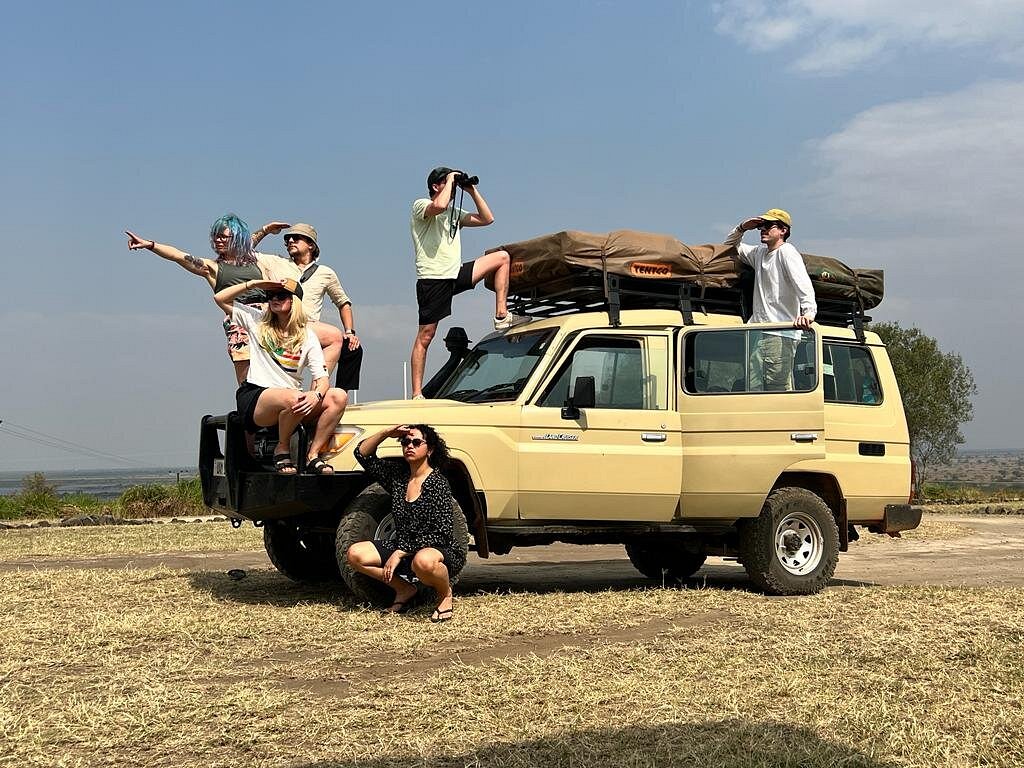
Itinerary Two: The Wild Southern Circuit (14–21 Days)
Fewer tourists, bigger wilderness, more adventure. The southern circuit takes in Mikumi, Ruaha, the Selous/Nyerere ecosystem, and the Udzungwa Mountains. Roads are rougher, distances greater, and self-sufficiency more critical — but the payoff is an Africa that feels genuinely unspoiled.
Start/End | Dar es Salaam |
Distance | ~2,200 km total loop |
Road Conditions | 40% tarmac, 60% murram/earth tracks |
Min. Vehicle | Land Cruiser 4WD with two spare tyres |
Best Time | June – October; January – February |
Dar es Salaam to Mikumi (Day 1–2)
Leave Dar es Salaam via the TANZAM Highway (A7). The road is good tarmac for 283 km to Mikumi National Park. Mikumi is sometimes called the ‘Little Serengeti’ — its open flood plain delivers lion, elephant, buffalo, zebra, and giraffe within minutes of the park gate, all visible from the highway that bisects the park.
💡 Tip: Drive through Mikumi slowly even when transiting. Elephants and lion regularly cross the highway. Rangers strictly enforce a 50 km/h speed limit.
Mikumi to Ruaha National Park (Day 3–4)
Continue west on the TANZAM Highway to Iringa — a charming highland town at 1,635 m with good restaurants, a lively market, and the haunting Isimila Stone Age Site nearby. From Iringa, a 120 km murram road descends to Ruaha’s Msembe Gate. Allow three hours for this stretch in dry season; up to five hours if there has been rain.
Ruaha is Tanzania’s largest national park and one of Africa’s least-visited great parks. It holds one of the world’s largest elephant populations — well over 12,000 animals — plus the highest density of African wild dog packs on the continent. Self-drive is permitted on most of the park’s 950 km of tracks.
Ruaha to Nyerere / Selous (Day 7–9)
From Ruaha, backtrack to Iringa and then drive southeast via Ifakara to reach the Nyerere National Park (formerly Selous Game Reserve). This requires careful route planning — the road via Mahenge can be impassable in wet season. Total distance from Iringa: approximately 380 km, allowing a full day of driving.
Nyerere is Africa’s largest protected area at 50,000 km² — roughly the size of Switzerland. Most of it is inaccessible to private vehicles but the designated self-drive zone around the northern sector (Mtemere Gate) allows excellent viewing of hippo, crocodile, wild dog, and plains game along the Rufiji River system.
Nyerere to Dar via Udzungwa (Day 10–12)
Return northeast via the Udzungwa Mountains National Park — a botanical paradise and biodiversity hotspot with endemic primates (Sanje mangabey, Iringa red colobus) found nowhere else on Earth. The park does not allow self-drive game drives but the trail system is spectacular. Park overnight at Sanje Waterfall Camp.
Complete the loop back to Dar es Salaam via Morogoro on the TANZAM Highway — a scenic final 200 km on good tarmac.
Itinerary Three: The Remote Western Circuit (21+ Days)
For experienced overland travellers only. This route reaches Lake Tanganyika, Katavi National Park, and the legendary Mahale Mountains — home to the world’s largest studied chimpanzee community. It requires full expedition preparation, satellite communication, and a mechanical tolerance for days between towns.
Key Destinations
- Dodoma: Tanzania’s official capital — a good overnight break on the long drive west
- Tabora: Historic Arab trade town; atmospheric railway junction
- Katavi National Park: An extraordinary remote wilderness, world-class hippo concentrations in the dry season
- Mahale Mountains: Chimpanzee trekking; only accessible via boat from Lagosa on Lake Tanganyika
- Kigoma: Tanzania’s main port on Africa’s deepest lake
- Gombe Stream: Jane Goodall’s original research site; smallest national park in Tanzania
💡 Tip: There is no all-weather road to Mahale Mountains. Leave your vehicle in Kigoma or Lagosa and charter a local wooden boat (approximately 4–6 hours south). Arrange this through your accommodation in advance.
The Zanzibar Extension: Island Detour
No Tanzania road trip is complete without crossing to Zanzibar. The Stone Town ferry from Dar es Salaam takes 90 minutes (fast ferry) or 2–3 hours (slow ferry). Vehicles can be shipped but it is far more practical to leave your car in Dar and hire a moped or dalla-dalla (minibus) on the island.
Zanzibar by Road
- Stone Town: UNESCO World Heritage labyrinth of spice merchants, carved doors, and rooftop restaurants
- Nungwi (north coast): Dhow-builders, white sand, turquoise water
- Paje (east coast): World-class kitesurfing, more relaxed vibe
- Jozani Chwaka Bay: Tanzania’s only national park on Zanzibar — the last stronghold of the endangered Zanzibar red colobus
- Prison Island (Changuu): Giant Aldabra tortoises; visible from the Stone Town waterfront
💡 Tip: Rent a scooter from Stone Town for 20,000–25,000 TZS per day to explore independently. The roads are paved across most of the island and traffic is manageable outside Stone Town.
Practical Information
Accommodation
Tanzania’s accommodation spans extraordinary variety: from permanent luxury tented camps ($400–$1,500 per night) to basic government campsites ($10–$30 per person) and everything in between. For road trippers on a budget, rooftop tents attached to the vehicle provide maximum flexibility — you can camp almost anywhere outside national parks and urban areas with appropriate permission.
- Public Campsites: Available in all major national parks; book through the Tanzania National Parks (TANAPA) website
- Special Campsites: Exclusive sites within parks; must be booked far in advance; no facilities
- Budget Guesthouses (Guest Houses / B&Bs): $15–$50 per night in most towns; variable quality
- Mid-range Lodges: $80–$250 per night; widely available on northern circuit
- Luxury Tented Camps: $400–$1,500 per night; iconic experience, worth splurging for 1–2 nights
Food & Water
Tanzanian food is hearty and inexpensive at local restaurants (hotelis). Ugali (stiff maize porridge) with grilled chicken or nyama choma (roasted meat) is the staple. On the coast and Zanzibar, seafood is exceptional. Carry at least 10L of bottled water per person per day when driving remote routes — dehydration is a serious risk in the lowland heat. Purification tablets and a portable filter are sensible backup.
- Mama Lishe (mama’s kitchen): Budget street food, always ask locals for recommendations
- Supermarkets: Shoprite, Uchumi, and Jumbo in Dar es Salaam and Arusha for provisions
- Markets: Every town has a central market — fresh fruit, vegetables, and dried goods at low prices
Health & Safety
Malaria is present throughout Tanzania, especially below 1,800 m. Take prophylactics (Malarone or doxycycline) and use DEET repellent and long sleeves at dusk. Yellow fever vaccination is mandatory for entry from endemic countries. Ensure your routine vaccinations (hepatitis A & B, typhoid, rabies pre-exposure) are up to date.
Medical facilities are limited outside Dar es Salaam, Arusha, and Moshi. Carry a comprehensive first-aid kit and consider a AMREF Flying Doctors annual membership ($50/year), which provides emergency air evacuation from anywhere in East Africa.
💡 Tip: Register your trip with your country’s foreign affairs department before departure. Share your itinerary with someone at home who can raise the alarm if you fail to check in.
Money & Costs
Cash (TZS) is essential — many rural fuel stations, campsites, and small lodges do not accept cards. ATMs are reliable in Dar es Salaam, Arusha, Moshi, and Zanzibar Stone Town. Carry USD in small denominations ($5, $10, $20) as a backup currency — park fees can be paid in USD. National park fees have risen significantly since 2023; budget $70–$100 per person per day for park entry alone on the northern circuit.
Budget per day (camping) | $80–$150 per person (fuel + park fees + food) |
Mid-range per day | $200–$400 per person (lodge + park fees + meals) |
Luxury per day | $600–$1,500 per person (camp + activities) |
Vehicle rental (4WD) | $80–$150/day (self-drive, without driver) |
Fuel cost (diesel) | ~$1.30–$1.50 per litre (2025 estimate) |
Avg. daily fuel consumption | 15–25L / 100 km depending on terrain |
Connectivity & Navigation
Tanzania has good mobile coverage (Vodacom, Airtel, Tigo) along major highways and in towns. Coverage drops significantly in remote parks and the western circuit. Safaricom cross-border roaming from Kenya works well in border areas. Purchase a local SIM at any town — data is inexpensive (~$5 for 5GB).
For navigation, download maps offline before entering any national park or remote area. Recommended apps: maps.me (best offline detail), OsmAnd (customisable), and Google Maps (download for offline). A dedicated Garmin GPS with Tanzania topo maps is worth the investment for western and southern circuit trips.
Visas & Entry
Most nationalities require a visa. Tanzania introduced the ETA (Electronic Travel Authorisation) in 2023, which must be obtained online before travel at eservices.immigration.go.tz. Cost is typically $50 USD. Citizens of East African Community (EAC) member states travel visa-free. The standard tourist visa allows 90 days with a possible 90-day extension from the Immigration Department.
Top 15 Road Trip Tips for Tanzania
- Start early every day: most wildlife activity and best light occurs 6:00–9:00 AM and 4:00–6:30 PM
- Never rush a murram road: high speed on corrugated tracks destroys tyres and suspension — 40–50 km/h is optimal
- Learn ten words of Swahili: ‘Habari’ (how are you), ‘Asante’ (thank you), ‘Pole pole’ (slowly slowly) — locals warm instantly to anyone who tries
- Park your vehicle facing out at every stop: a quick exit matters if an animal approaches
- Always have more water than you think you need: doubles as radiator emergency coolant
- Never off-road outside designated tracks in national parks: hefty fines and ecological damage
- Tipping is expected and meaningful: guides, camp staff, and rangers appreciate 10–15% or $5–$10 per day per person
- Carry a physical road atlas: OmniMap Tanzania 1:900,000 is the best available
- Negotiate fuel prices at remote stations: the ‘wazungu price’ is often applied; politely push back
- Check road conditions at each gate: rangers have up-to-date information on track closures and flooding
- Travel in convoy on western circuit routes: at least two vehicles if venturing beyond Katavi or Mahale
- Avoid displaying expensive equipment: store cameras, binoculars, and laptops out of sight in towns
- Allow buffer days in your itinerary: breakdowns, flooded roads, and extraordinary sightings all steal time
- Book Ngorongoro crater descent and Serengeti campsites months in advance: peak season fills up fast
- Leave No Trace: Tanzania’s ecosystems are irreplaceable — pack out all waste, use designated toilet facilities
Final Word: The Open Road Awaits
There is a moment on every Tanzania road trip — maybe on a dawn crater rim with fog rolling up from the caldera below, or on a silent Serengeti plain as the sunrise turns the grass to copper — when the sheer privilege of being there hits you. This is one of the last great wildernesses on Earth. The roads are rough, the logistics demanding, and the rewards extraordinary.
Plan carefully, drive respectfully, spend locally, and give yourself more time than you think you need. Tanzania does not reward hurry. The best moments almost always happen when you stop, switch off the engine, and simply watch.