
4x4 Rental with Rooftop Tent in Arusha
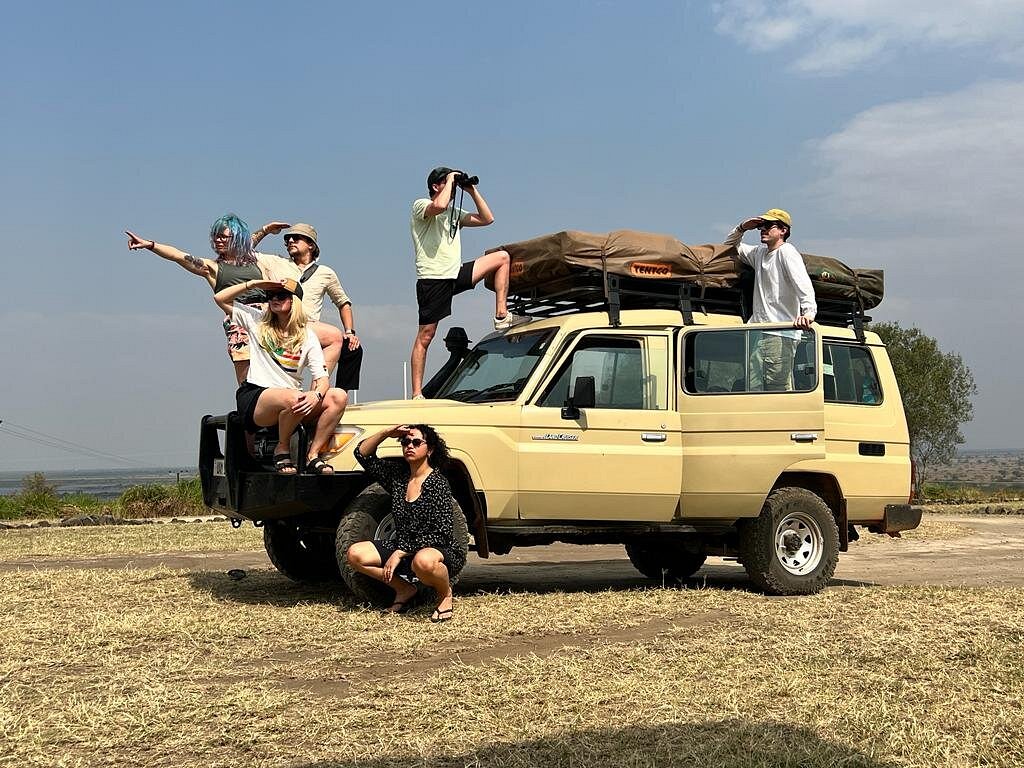
4×4 Rental with rooftop Tent in Arusha , Arusha, Tanzania, stands as the safari capital of East Africa — a vibrant city perched on the slopes of Mount Meru and positioned perfectly at the crossroads of the continent’s most spectacular wildlife destinations. For adventurous travelers seeking total freedom on the open savanna, renting a 4×4 vehicle with a rooftop tent from Arusha is one of the most rewarding, cost-effective, and authentically immersive ways to explore the region.
Unlike traditional package safaris that lock you into rigid itineraries, a self-drive 4×4 rental with a rooftop tent places you firmly in control. You choose where to go, when to stop, and how long to linger as a pride of lions saunters past at dawn. You sleep elevated above the African earth — safe, comfortable, and completely connected to the wilderness around you.
This comprehensive guide covers everything you need to know about 4×4 rentals with rooftop tents in Arusha — from the best vehicle options and top rental companies, to pricing, packing tips, safety advice, and the incredible destinations waiting just beyond the city limits.
What Is a Rooftop Tent Safari and How Does It Work?
The Concept of Overlanding in East Africa
Overlanding is the practice of self-reliant long-distance travel, typically in a four-wheel-drive vehicle equipped for camping in remote areas. In East Africa, overlanding has surged in popularity among both international visitors and East African adventure seekers who want to combine wildlife viewing with the freedom of independent travel.
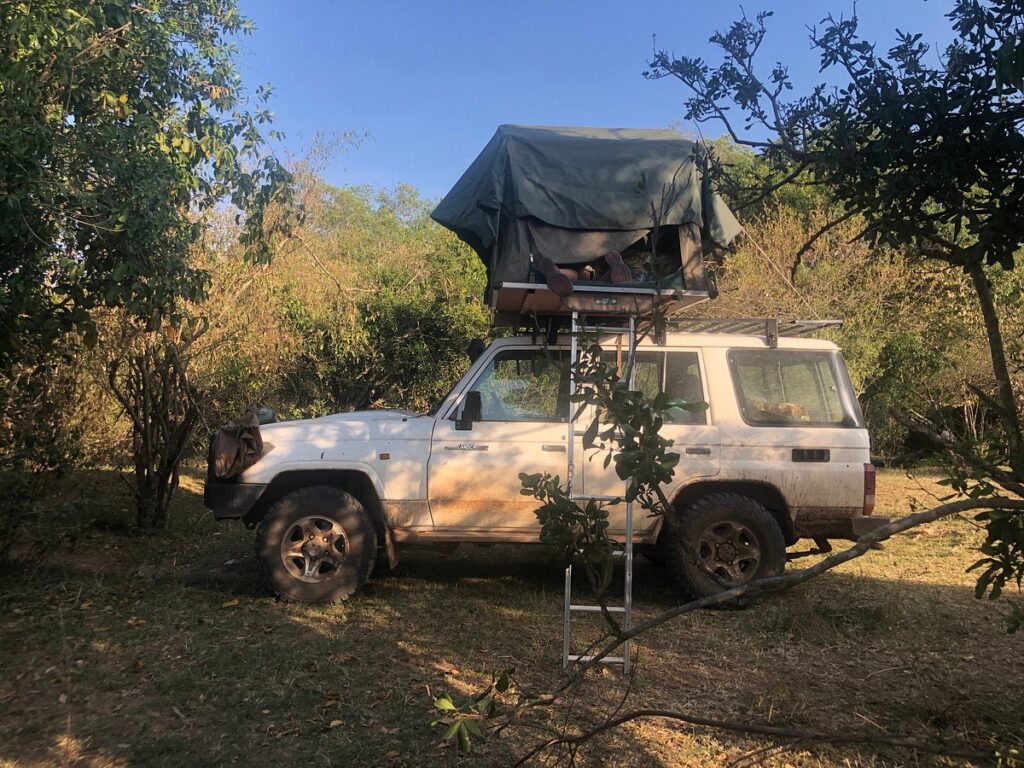
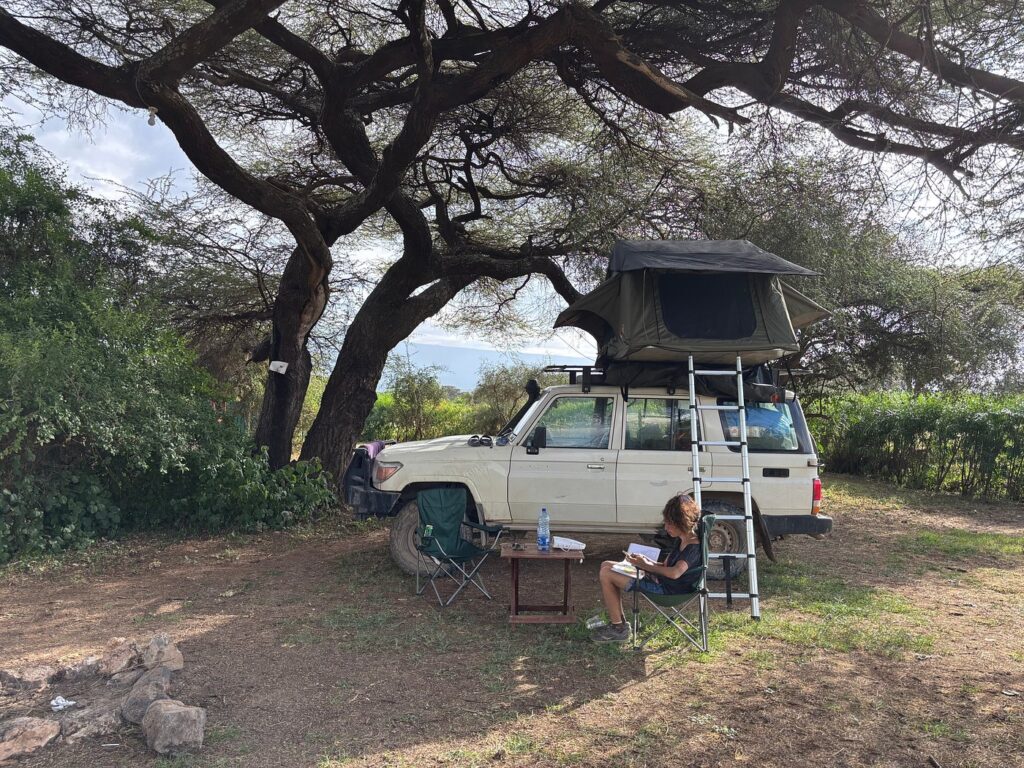
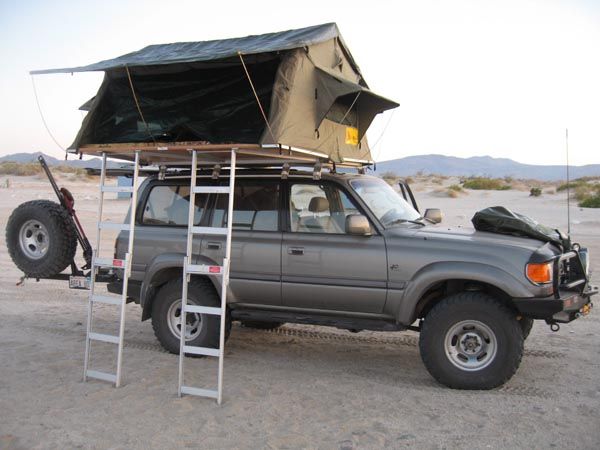
A rooftop tent (RTT) is a weatherproof camping tent mounted on the roof rack of a 4×4 vehicle. It unfolds quickly — usually within 2 to 5 minutes — deploying a comfortable sleeping platform elevated 1.5 to 2 meters above the ground. This elevation is not only practical for security in wildlife-rich areas but also offers sweeping panoramic views that simply cannot be matched from a ground tent.
Why Rooftop Tents Are Ideal for African Safari
Key Advantages of Rooftop Tent Safari • Elevation Safety: Sleeping above ground significantly reduces exposure to insects, scorpions, snakes, and curious wildlife. • Speed of Setup: Most RTTs deploy in under 5 minutes, allowing you to camp at flexible, spontaneous locations. • Comfort: High-density foam mattresses provide far superior sleep quality compared to ground mats. • All-Weather Protection: Designed for tropical downpours, strong winds, and intense sun. • Built-In Storage: Bedding stays stored inside the tent between uses — no repacking required. • Unique Experience: Wake up to sunrise over the Serengeti plains directly from your sleeping bag. • Cost Savings: Camping fees in Tanzania national parks are significantly lower than lodge or tented camp rates. |
Arusha as Your Safari Base: The Perfect Starting Point
Arusha’s Strategic Location
Arusha is located in northern Tanzania at an elevation of approximately 1,400 meters (4,600 feet) above sea level. The city sits between two iconic peaks — Mount Meru (4,566m) to the west and Mount Kilimanjaro (5,895m) to the east — and serves as the administrative hub for Tanzania’s Northern Safari Circuit.
Within a 6-hour drive of Arusha, you can access some of the world’s most celebrated wildlife destinations. This makes it the undisputed starting point for any northern Tanzania safari adventure.
2.2 Distances from Arusha to Key Destinations
| Destination | Approximate Distance from Arusha |
| Lake Manyara National Park | 126 km (approx. 2 hours) |
| Tarangire National Park | 118 km (approx. 2 hours) |
| Ngorongoro Crater | 180 km (approx. 3 hours) |
| Serengeti National Park | 335 km (approx. 5–6 hours) |
| Amboseli National Park (Kenya) | 240 km via Namanga border |
| Arusha National Park | 35 km (approx. 45 minutes) |
| Mount Kilimanjaro | 80 km (approx. 1.5 hours) |
| Lake Natron | 200 km (approx. 4 hours) |
Types of 4×4 Vehicles Available for Rental in Arusha
Arusha rental companies typically offer a range of 4×4 vehicles to suit different group sizes, budgets, and terrain requirements. The following are the most commonly available models:
3.1 Toyota Land Cruiser 70 Series (Land Cruiser Hardtop / Station Wagon)
The Toyota Land Cruiser 70 Series is the workhorse of African safaris. Its legendary reliability, robust suspension, and high ground clearance make it ideal for the corrugated dirt roads of the Serengeti and the volcanic tracks around Ngorongoro. Available in both station wagon (7-seat) and hardtop configurations, it offers excellent load-carrying capacity for camping gear.
- Engine: 4.5L V8 petrol or 4.2L diesel
- Ground Clearance: 230 mm
- Seating: 5 to 7 passengers
- Rooftop Tent Capacity: 2 to 3 adults
- Best For: Long-distance overland expeditions and rough terrain
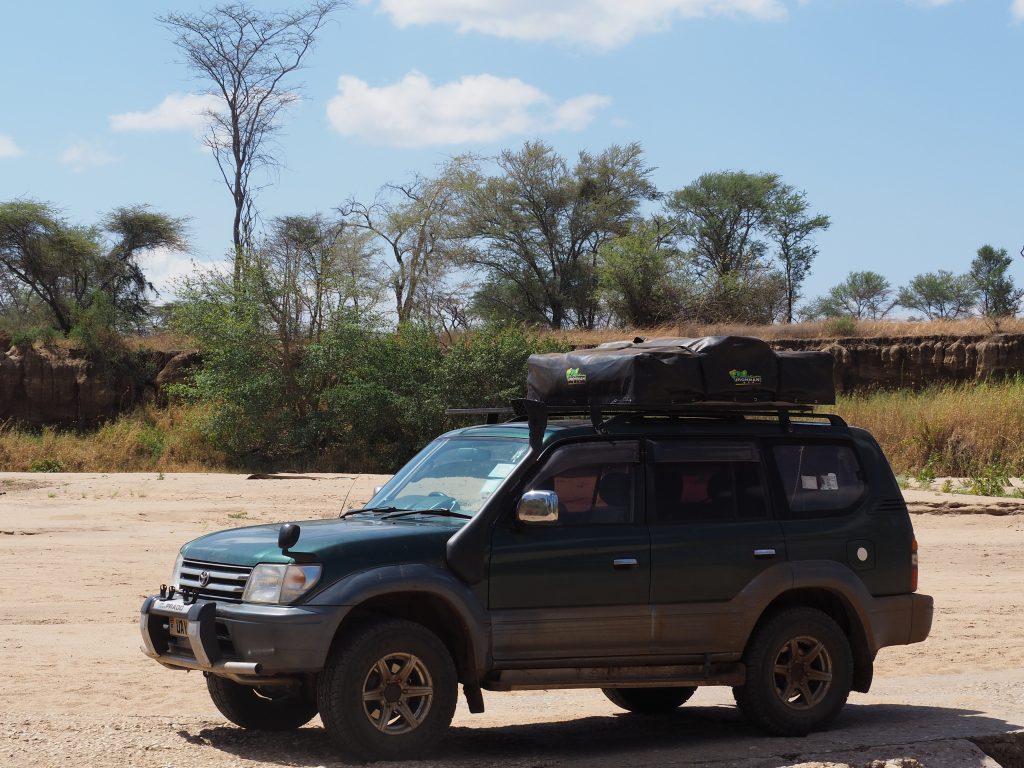
3.2 Toyota Land Cruiser Prado (120 or 150 Series)
The Prado offers a more comfortable, slightly more refined 4×4 experience while maintaining excellent off-road capability. It is particularly popular among couples and small families who want the practicality of a medium-sized SUV with modern amenities.
- Engine: 3.0L diesel or 4.0L petrol V6
- Ground Clearance: 215 mm
- Seating: 5 to 7 passengers
- Rooftop Tent Capacity: 2 adults
- Best For: Families, couples, and comfort-oriented travelers
3.3 Toyota Hilux Double Cab
The Hilux pickup with canopy and rooftop tent is a highly practical option for two to three people. The load bed provides excellent storage for camping equipment, cooler boxes, water reserves, and recovery gear, while the cab keeps passengers cool and protected.
- Engine: 2.8L diesel (most common)
- Ground Clearance: 279 mm
- Seating: 4 to 5 passengers
- Rooftop Tent Capacity: 2 adults
- Best For: Couples and small groups prioritizing gear storage
3.4 Nissan Patrol Y61
The Nissan Patrol is a rugged, time-tested alternative to the Land Cruiser. Common among Tanzanian overland operators, the Patrol is particularly valued for its torque and its ability to handle the steep volcanic slopes around Ngorongoro and Mount Meru.
- Engine: 4.2L diesel or 4.8L petrol
- Ground Clearance: 225 mm
- Seating: 5 to 8 passengers
- Rooftop Tent Capacity: 2 to 3 adults
- Best For: Larger groups and demanding terrain
Rooftop Tent Options: What You Get with Your Rental
Rental companies in Arusha typically offer one or more of the following rooftop tent types. Understanding the differences will help you choose the right setup for your trip.
Hard shell Rooftop Tents
Hard shell tents feature a rigid fiberglass or aluminum clamshell lid that opens to reveal a sleeping platform. They are the fastest to deploy — some opening in under 60 seconds — and are extremely aerodynamic and compact when closed. Hard shells are popular for rentals because they are durable and require minimal maintenance.
- Setup Time: Under 2 minutes
- Aerodynamics: Excellent (low fuel consumption impact)
- Durability: Very high
- Weight: 55 to 80 kg typical
- Popular Brands: ARB Simpson III, iKamper Skycamp, Autohome
Softshell Fold-Out Tents
Softshell tents use a hinged aluminum frame with a canvas or ripstop nylon cover. They fold out to the side or rear of the vehicle, providing a spacious sleeping area. Though slightly slower to set up than hard shells, they are generally more affordable to rent and offer excellent ventilation in hot conditions.
- Setup Time: 3 to 8 minutes
- Space: Typically more sleeping area per dollar
- Ventilation: Superior to hardshell in hot climates
- Weight: 35 to 55 kg typical
- Popular Brands: Tepui, Freespirit Recreation, Drifta
4.3 Standard Tent Equipment Included in Rental
Typical Rooftop Tent Rental Includes: • High-density foam mattress (minimum 50mm thickness) • Aluminum fold-down access ladder (usually 3 to 4 rungs) • Fitted waterproof mattress cover • Rain fly or fly sheet for additional weather protection • Integrated mosquito net on all windows and entrances • Interior LED lighting or battery-powered lantern • Shoe bag at ladder base • Storage pockets inside tent walls • Guy ropes and pegs for fly sheet in windy conditions • Vehicle-mounted roof rack (load-rated 150 to 200 kg) |
Pricing Guide: What to Expect for 4×4 Rooftop Tent Rentals in Arusha
Pricing for 4×4 rooftop tent rentals in Arusha varies based on vehicle type, rental duration, included equipment, insurance type, and the time of year. The following is a realistic guide based on current market rates as of 2026-2027.
Base Vehicle Rental Rates (Per Day)
| Vehicle Type | Daily Rate (USD, approx.) |
| Toyota Hilux Double Cab (basic) | $80 – $120 per day |
| Toyota Prado 120/150 Series | $110 – $160 per day |
| Toyota Land Cruiser 70 Series | $130 – $200 per day |
| Nissan Patrol Y61 | $100 – $150 per day |
| Land Cruiser 200 Series (luxury) | $200 – $280 per day |
Note: Rates typically include unlimited or high-kilometer mileage for Tanzania, basic insurance, rooftop tent, and standard camping equipment. Always confirm what is included before booking.
Rooftop Tent Add-On Rates (if not included)
| Tent Type | Daily Add-On Rate (USD) |
| Basic Softshell Tent | $15 – $25 per day |
| Premium Hardshell Tent | $25 – $45 per day |
| Second Tent (ground tent) | $10 – $20 per day |
| Awning/Annex Addition | $10 – $15 per day |
Optional Equipment Rentals
| Equipment Item | Daily or Fixed Rate (USD) |
| 60L Refrigerator/Cooler Box (12V) | $15 – $25 per day |
| Camping Kitchen Set (stove, pots) | $10 – $18 per day |
| Camp Chairs and Table | $5 – $10 per day |
| Satellite Phone / PLB | $15 – $30 per day |
| Roof Rack Storage Box | $8 – $15 per day |
| High-lift Jack & Recovery Kit | Often included |
| GPS Navigation Device | $8 – $15 per day |
| Portable Solar Panel (100W) | $10 – $20 per day |
What to Look for in an Arusha 4×4 Rental Company
Not all rental companies in Arusha are equal. Choosing the right operator can make the difference between a seamless adventure and a frustrating breakdown in the middle of the Serengeti. Use this checklist when evaluating rental companies:
Essential Checklist for Choosing a Reputable Rental Company
- Vehicle Age and Condition: Prioritize companies with fleets under 7 years old and documented service histories.
- Mechanical Support: Confirm the company offers 24/7 roadside assistance and has a local breakdown response team.
- Insurance Coverage: Ensure Collision Damage Waiver (CDW) and Third Party Liability are included or clearly offered.
- Vehicle Documentation: All vehicles should carry valid Tanzania Road Worthiness certificates, insurance papers, and national park permits.
- Test Drive Offered: Reputable companies allow a test drive or thorough vehicle inspection before departure.
- Detailed Handover: A thorough walkthrough of vehicle operations, tent setup, and equipment inventory should be provided.
- Clear Contract: Read the rental agreement carefully. Check excess amounts, fuel policy, cross-border fees, and late return penalties.
- Reviews and References: Check Google Reviews, TripAdvisor, and overlanding forums for verified customer experiences.
- TATO or TALA Membership: Tanzania Association of Tour Operators or Tanzania Association of Licensed Accommodation membership indicates legitimacy.
Questions to Ask Before Booking
- Is the vehicle set up for right-hand or left-hand drive? (Tanzania drives on the left)
- Are spare tyres included? How many? (Ideally two full-size spares for remote routes)
- Is a sand recovery kit, high-lift jack, and tow rope included?
- What is the fuel policy (full-to-full or pre-purchased)?
- Are cross-border trips to Kenya, Uganda, or Rwanda permitted and what fees apply?
- What is the process if the vehicle breaks down in a remote national park?
- Is there a mileage limit and what are the per-km overage charges?
Top Safari Destinations Accessible from Arusha by 4×4
One of the greatest advantages of renting a 4×4 with a rooftop tent from Arusha is the extraordinary range of safari destinations within reach. Below are the must-visit parks and attractions on the Northern Tanzania Safari Circuit and beyond.
Serengeti National Park
Tanzania’s most famous national park, the Serengeti covers 14,763 square kilometers of rolling savanna and is home to the Greatest Wildlife Spectacle on Earth — the Great Wildebeest Migration. Between January and March, over two million wildebeest, zebra, and gazelle calve on the southern Serengeti plains near Ndutu. The dramatic river crossings at the Grumeti and Mara rivers occur between June and October. Self-drive visitors with rooftop tents can access the Serengeti for a fraction of the cost of luxury lodge stays.
- Camping: Multiple public campsites with basic facilities. Special campsites (exclusive sites) also available.
- Best Time: Year-round, with migration peak June to October
- Wildlife Highlights: Big Five, cheetah, wild dog, over 500 bird species
Ngorongoro Conservation Area
The Ngorongoro Crater is a UNESCO World Heritage Site and one of Africa’s most dramatic wildlife arenas. The 260 square kilometer caldera floor supports an extraordinarily dense population of wildlife, including one of Africa’s highest concentrations of lions and a resident population of black rhinoceros. The crater rim campsites offer spectacular stargazing and cool temperatures at 2,286 meters elevation.
- Camping: Simba Campsite (public) and exclusive campsites on crater rim
- Note: 4×4 vehicles are mandatory for crater floor descent
- Wildlife Highlights: Black rhino, lion, hippo, flamingoes, elephant
Tarangire National Park
Often overlooked by first-time visitors, Tarangire is a hidden gem offering exceptional elephant herds — among the largest concentrations in Africa — alongside ancient baobab trees and the Tarangire River that attracts wildlife throughout the dry season. Its quieter atmosphere makes it ideal for self-drive exploration.
- Camping: Public campsites along the river and exclusive private campsites
- Best Time: June to October (dry season) for maximum wildlife concentration
- Wildlife Highlights: Elephant, lion, leopard, python, fringe-eared oryx
Lake Manyara National Park
Famous for its tree-climbing lions and large flocks of flamingoes along the alkaline lake shore, Lake Manyara is a compact but richly diverse park that makes an excellent first-day stop from Arusha. The park features groundwater forest, open woodland, and lakeshore habitats within a small area.
- Best Time: November to June for flamingoes; year-round for tree lions
- Wildlife Highlights: Tree-climbing lions, flamingoes, baboons, hippos
Arusha National Park
The closest national park to Arusha city (just 35 km), Arusha National Park is often used as a shakedown drive to test your vehicle and gear before heading to more remote destinations. The park encompasses Mount Meru, Momella Lakes, and the Ngurdoto Crater, offering excellent walking safaris with armed rangers and canoeing on the lakes.
- Entry: Self-drive permitted with a 4×4
- Wildlife Highlights: Giraffe, zebra, black and white colobus monkey, buffalo
- Activities: Game drives, guided walks, canoeing, Mount Meru trekking
Lake Natron
For adventurous overlanders, Lake Natron in northern Tanzania offers one of the most surreal landscapes on the continent. The soda lake turns deep crimson due to salt-loving microorganisms, and its shores support the world’s largest breeding colony of lesser flamingoes. The route from Arusha passes through dramatic Rift Valley escarpments and lava fields near Ol Doinyo Lengai volcano — a challenging but profoundly rewarding 4×4 journey.
Camping Gear Checklist for Rooftop Tent Safari in Tanzania
A well-prepared camping kit is essential for a comfortable and safe rooftop tent safari in Tanzania. While rental companies provide the core equipment, you should supplement with personal items and ensure everything is packed efficiently.
Essential Camping Equipment
Camping Checklist — Typically Provided by Rental Company • Rooftop tent with integrated mattress and mosquito net • Access ladder (secure when driving) • Camping kitchen: gas cooker (2-burner), pots, pans, plates, cups, cutlery • Cooler box / 12V refrigerator (powered from vehicle battery) • Water jerricans (minimum 20 to 40 liters capacity) • Camp table and folding chairs (2 minimum) • Portable outdoor shower (solar or pump) • Headlamps / lanterns • First aid kit • Recovery kit: high-lift jack, sand ladders, tow rope, shovel • Fire extinguisher (mandatory in national parks) |
Personal Items to Pack
- Warm sleeping bag rated to at least 5°C (crater rim nights are cold)
- Lightweight travel pillow
- Personal toiletries in biodegradable formulations
- Sunscreen SPF 50+ and lip balm
- Insect repellent (DEET-based for East Africa)
- Anti-malarial medication (consult your doctor before travel)
- Quick-dry microfiber towels (2 minimum)
- Safari clothing: neutral colors, long sleeves for evenings
- Fleece or down jacket for highland camping
- Rain jacket (rainy season May to June and November)
- Binoculars (minimum 8×42 magnification recommended)
- Camera with extra batteries and memory cards
- Power bank and 12V car charger for devices
- Tanzania park maps or offline GPS app (Maps.me or Gaia GPS)
- Cash in USD and Tanzanian Shillings for park fees and fuel
Safety Guidelines for Self-Drive Safari in Tanzania
Safety is paramount when self-driving in Tanzanian national parks with a rooftop tent. Follow these guidelines to ensure a safe, enjoyable, and responsible experience for yourself and the wildlife around you.
Driving Safety
- Always drive on the left — Tanzania uses left-hand traffic like most of East Africa.
- Keep your speed below 50 km/h inside national parks, and slow to a crawl near wildlife.
- Never drive off designated tracks inside national parks — this is illegal and damages fragile ecosystems.
- Start early: wildlife is most active at dawn. Plan to be at key locations by 6:30 AM.
- Return to camp before dark — many parks prohibit driving after sunset without a ranger.
- Always carry both spare tyres, especially on the corrugated murram roads of the Serengeti.
- Check road conditions and seasonal park closures before setting out.
- Do not attempt water crossings you cannot gauge depth on — request local advice.
Wildlife Safety
- Never exit your vehicle in areas with dangerous wildlife (lions, buffalo, elephants, hippos) unless at designated walking areas.
- Keep all windows closed when lions or hyenas approach — these animals are curious and can reach inside.
- Do not feed wildlife under any circumstances.
- Maintain a respectful distance: minimum 30 meters from predators, 50 meters from elephant herds with calves.
- At campsites: store all food in the vehicle, never leave food unattended outside, and zip your tent shut at night.
- At rooftop tent height, you are safe from most ground-level wildlife, but always use the buddy system when climbing the ladder at night.
Health and Medical Safety
- Tanzania is a malaria zone. Use prophylaxis, sleep under a mosquito net, and apply repellent every evening.
- Carry oral rehydration salts for dehydration in hot, dusty conditions.
- Drink only bottled or purified water. A water filtration bottle or tablets are useful backup.
- Carry a comprehensive first aid kit and know the locations of the nearest hospitals to each park.
- Travel insurance with medical evacuation coverage is strongly recommended for remote safari travel.
Tanzania National Park Entry Fees and Camping Rates
All foreign visitors to Tanzanian national parks pay entry fees managed by TANAPA (Tanzania National Parks Authority). Park fees must be paid in USD or equivalent, and most parks now accept credit card payment via the TANAPA online portal or at park gates.
Current Park Entry Fees (Per Person Per 24 Hours, Foreign Adults)
| National Park / Area | Foreign Adult Entry Fee (USD) |
| Serengeti National Park | $70 per person per 24 hours |
| Ngorongoro Conservation Area | $70 per person (crater fee extra) |
| Ngorongoro Crater Descent | $295 per vehicle + $70 per person |
| Tarangire National Park | $53 per person per 24 hours |
| Lake Manyara National Park | $53 per person per 24 hours |
| Arusha National Park | $45 per person per 24 hours |
| Lake Natron (Ramsar Site) | $35 per person per 24 hours |
Public Campsite Fees (Per Person Per Night)
| Park | Public Campsite Fee (USD) |
| Serengeti National Park | $30 per person per night |
| Ngorongoro Conservation Area | $70 per person per night (Simba) |
| Tarangire National Park | $30 per person per night |
| Lake Manyara National Park | $30 per person per night |
| Arusha National Park | $30 per person per night |
Note: Fees are subject to change. Always verify current rates on the official TANAPA website (www.tanzaniaparks.go.tz) or with your rental company before departure. Private and exclusive campsites command significant premiums but offer complete seclusion.
Best Time of Year for a 4×4 Rooftop Tent Safari in Arusha
Tanzania’s northern circuit is accessible year-round, but different seasons offer distinct wildlife experiences. Understanding the seasonal patterns will help you plan your ideal trip.
Seasonal Guide
| Season / Months | Safari Experience |
| Dry Season: June – October | Best overall game viewing. Wildlife concentrates around water sources. Great Migration river crossings (July–September). Roads firm and accessible. |
| Short Dry: January – February | Excellent for Serengeti calving season. Great cheetah sightings. Fewer visitors than main dry season. |
| Long Rains: March – May | Lush green landscape. Lowest tourist numbers and prices. Some roads may be impassable. Birdlife exceptional. |
| Short Rains: November – December | Migratory birds arrive. Landscape green. Generally brief afternoon showers. Good game viewing continues. |
Temperature and Climate Expectations
- Arusha City: 15°C to 27°C year-round. Cool, pleasant climate.
- Serengeti Plains: 18°C to 38°C. Hot midday, cool evenings.
- Ngorongoro Crater Rim: 5°C to 20°C. Can drop below freezing at night in July/August. A warm sleeping bag is essential.
- Tarangire and Manyara: 20°C to 35°C in dry season.
Cross-Border Self-Drive Options from Arusha
One of the great advantages of a 4×4 rooftop tent rental from Arusha is the ability to extend your journey into neighboring countries. Most reputable rental companies offer cross-border permits for Tanzania, Kenya, Uganda, Rwanda, and beyond — though additional fees and paperwork apply.
Popular Cross-Border Routes
- Tanzania to Kenya: Via Namanga border crossing to Amboseli, Tsavo, and Maasai Mara National Parks.
- Tanzania to Uganda: Via Rusumo or Mutukula border for Queen Elizabeth, Bwindi Impenetrable Forest (gorilla trekking), and Murchison Falls.
- Tanzania to Rwanda: Via Rusumo Falls border for Volcanoes National Park gorilla trekking.
- Tanzania Coastal Route: South via Dodoma and Mikumi to Selous (Nyerere NP) and Zanzibar ferry.
Cross-Border Requirements
- Written authorization from the rental company (Carnet de Passages or cross-border permit)
- Valid East African Tourist Visa or individual country visas as required
- Third-party insurance valid in destination countries (COMESA Yellow Card)
- Additional daily fee charged by rental company (typically $10 to $30 per day)
- Vehicle must meet roadworthiness standards of destination country
Budget Planning: Sample 7-Day Rooftop Tent Safari Itinerary
The following is a sample budget for two adults on a 7-day self-drive safari from Arusha using a Toyota Land Cruiser Prado with rooftop tent. All figures are in USD and are approximate guides only.
Sample 7-Day Itinerary: Arusha – Tarangire – Manyara – Ngorongoro – Serengeti – Arusha
| Budget Item | Estimated Cost (USD for 2 Adults) |
| Vehicle Rental (7 days @ $160/day) | $1120 |
| Fuel (approx. 900 km @ 12L/100km, diesel) | $200 – $250 |
| Rooftop Tent (7 nights) | Often included |
| National Park Entry Fees (7 days, 2 pax) | $630 – $840 |
| Campsite Fees (7 nights, 2 pax) | $280 – $490 |
| Food and Groceries | $200 – $350 |
| Optional Equipment Rental (fridge, kitchen) | $140 – $175 |
| Travel Insurance (per person) | $80 – $150 |
| Miscellaneous (tips, crafts, unforeseen) | $100 – $200 |
| ESTIMATED TOTAL (2 Adults, 7 Days) | $2,610 – $3,435 |
By comparison, an equivalent 7-day guided lodge safari in the same circuit would typically cost $6,000 to $15,000 or more per person. The self-drive rooftop tent option represents extraordinary value without sacrificing the quality of the wildlife experience.
Booking Tips and How to Reserve Your 4×4 Rooftop Tent Rental
Demand for quality 4×4 rooftop tent rentals in Arusha is high, especially during peak safari season (June to October and January to February). Follow these tips to secure the best vehicle at the best price.
Booking Timeline Recommendations
- Peak Season (June–October, January–February): Book at least 3 to 4 months in advance.
- Shoulder Season (November, March–May): 1 to 2 months advance booking usually sufficient.
- Last-minute (less than 4 weeks): Possible but limited vehicle selection and potentially higher prices.
How to Book
- Research and shortlist 3 to 5 reputable Arusha rental companies using online reviews and overland forums.
- Request a detailed quote specifying your exact dates, vehicle preference, equipment requirements, and any cross-border plans.
- Compare quotes carefully — ensure you are comparing like-for-like in terms of included equipment and insurance.
- Ask for a copy of the rental contract before committing. Read the fine print on insurance excess and fuel policy.
- Pay a deposit (usually 20 to 30%) by international bank transfer or credit card to confirm the reservation.
- Arrange airport pickup or confirm self-collection address and operating hours.
- Receive a pre-departure briefing pack: vehicle documentation, emergency contacts, park maps, and campsite information.
Conclusion: The Freedom of the Open Road Awaits in Arusha
Renting a 4×4 with a rooftop tent from Arusha is more than just a practical travel decision — it is a commitment to experiencing Africa on Africa’s own terms. There is something profoundly transformative about falling asleep to the sound of distant lions calling across the Serengeti, waking at first light to a crimson horizon over Ngorongoro, or spending an unhurried afternoon watching a leopard in a fever tree while the rest of the world rushes by.
Arusha gives you the perfect base. The vehicles, the tents, the equipment, and the expertise are all here — ready to set you on one of the world’s greatest adventures. Whether you are a seasoned overlander or a first-time self-drive safari traveler, the Northern Tanzania Safari Circuit rewards every kind of explorer.
Plan carefully, choose your rental company wisely, pack smart, and drive with respect for the extraordinary landscapes and wildlife you have come to see. East Africa’s wild heartland is waiting — and there is no better way to meet it than from behind the wheel of a well-equipped 4×4, with home on the roof.