Gishwati Mukura National park
Gishwati Mukura National Park: Mukura National Park in Rwanda is the fourth national park in the country, alongside Volcanoes, Nyungwe Forest, and Akagera National Parks. Rwanda, sometimes referred to as the ‘Land of a Thousand Hills,’ ranks among the premier tourist attractions in East and Central Africa. The nation is recognized not only for the cleanliness of its streets in Kigali but also for its rapidly expanding economy.
Gishwati-Mukura National Park in Rwanda has two forest reserves: Gishwati and Mukura woods. The Gishwati forest reserve is situated near Lake Kivu in northwestern Rwanda and is contiguous with the Mukura forest reserve. The government of Rwanda opened the national park to the public in late 2019.
The park was established in 2015 to augment the tree population in the Gishwati and Mukura forest reserves, thereby enhancing soil fertility, stabilizing hill slopes, and regulating water flow.
The histories of Gishwati and Mukura forest reserves trace back to the 1970s. From 1978 to 1986, over 80% of the Gishwati forest reserve was forested, until 1994, when the Rwandan Genocide compelled many Rwandans to abandon their homes and relocate to the forest reserve. Consequently, a significant majority of the refugees commenced deforestation to facilitate the establishment of their residences and agricultural areas. A significant portion of the forest reserve was obliterated, along with the species residing within it.
The Gishwati forest reserve formerly extended westward to Lake Kivu and into the tropical rainforests of the Democratic Republic of Congo. The southern region of Gishwati extended into Nyungwe Forest. By 2001, hardly a fraction of the Gishwati forest reserve remained, encompassing approximately 1,500 acres, in stark contrast to its previous expanse of 250,000 acres. Furthermore, the region began to undergo significant soil erosion, degradation, and landslides. Currently, extensive tea plantations dominate the middle and northern regions of the forest reserve.
In 2007, the Gishwati Area Conservation Program (GACP) was established in partnership with the Rwandan government and Great Ape Trust. The primary objective of this program was to establish a national conservation park to save the diverse biodiversity of the Gishwati forest region. In 2011, the Forest of Hope Association (FHA), a Rwandan non-governmental group, assumed responsibility for the GACP, currently overseeing the Gishwati region conservation initiative. This organization has successfully restored 67% of the Gishwati Forest.
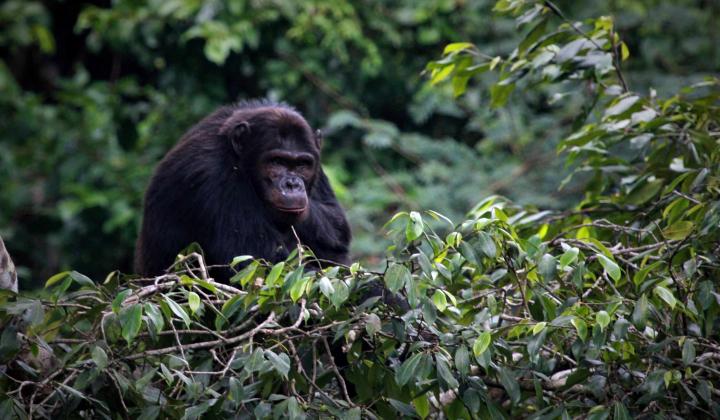
The new park in Rwanda covers an area of 34 square kilometers, rendering it the smallest national park in the country. The newly established national park is strategically located at the periphery of the Congo Nile Basin and comprises 60 species of trees, including native hardwoods and bamboo. The national park also harbors a population of 20 chimpanzees, along with other primate species such as golden monkeys, L’Hoest monkeys, and blue monkeys.
Gishwati-Mukura National Park boasts over 395 avian species, enhancing its array of attractions. In total, 232 avian species have been identified in Gishwati forest, while 163 species have been recorded in Mukura forest reserve.
Activities carried out in Gishwati-Mukura National Park.
Visitors to Gishwati-Mukura National Park can engage in activities include golden monkey trekking, birdwatching, chimpanzee tracking, waterfall hikes, community visits, and guided nature walks.
Accommodation options in Gishwati-Mukura National Park.
Visitors to this national park can secure lodging at the recently established Gishwati Lodge. It is a modest and environmentally sustainable lodge situated in the Gishwati Forest Reserve. The recently built lodge features 6 cabins and can accommodate a maximum of 12 guests.
How to access Gishwati-Mukura National Park in Rwanda.
Gishwati-Mukura National Park in Rwanda is situated at 157 kilometers from Kigali City, requiring an estimated 3 to 4 hours of travel by car.
Visitors to the Gishwati Forest Reserve may also combine their trip with gorilla trekking in Volcanoes National Park, a wildlife safari in Akagera National Park, or chimpanzee trekking in Nyungwe Forest National Park. This woodland reserve in the recently constructed Gishwati-Mukura National Park offers numerous attractions for travelers to explore.